
In Short
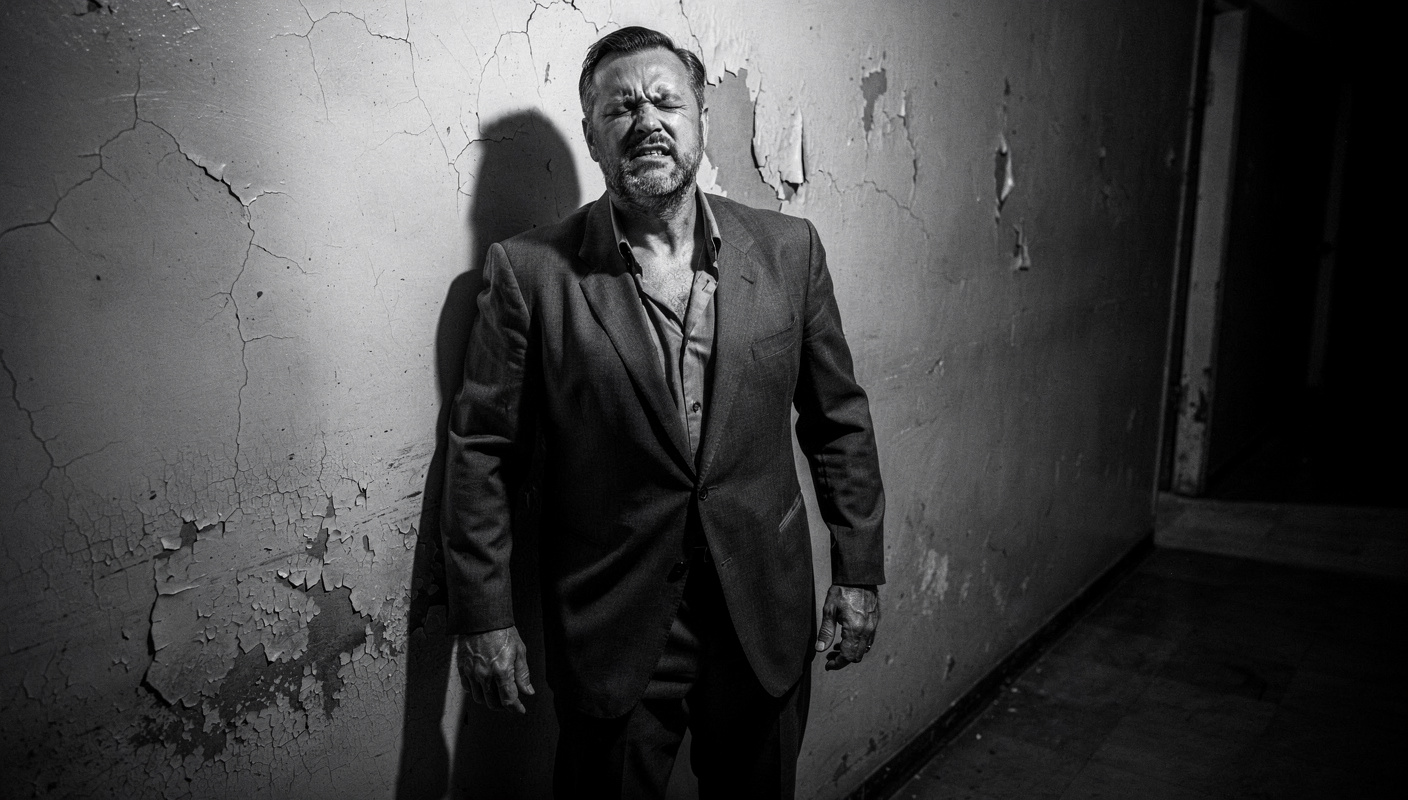
Emotional control in conflict does not mean feeling calm. It means acting with intention while anxiety is still present. The people who handle conflict best are not the ones who feel nothing, they are the ones who act anyway. Waiting for calm is itself a choice, and almost always the wrong one.
Emotional control conflict describes the capacity to engage in a difficult conversation or dispute with deliberate, purposeful behaviour even when anxiety, anger, or fear are active. It is not the absence of emotion but the ability to choose your response rather than be driven by it.
Most people I have watched walk into a conflict carry the same quiet belief: once I feel calmer, I will handle this properly. It is an understandable thought. It is also the reason so many conflicts outlast their welcome. Emotional control in conflict is rarely about achieving a peaceful internal state before you speak. It is about moving forward while the storm is still in you. After six decades of watching people avoid, delay, and prepare themselves right out of conversations they badly needed to have, I am certain of this: the wait for calm is often the conflict itself, prolonged by a different name.
What I want you to understand by the end of this piece is why acting despite anxiety is not recklessness. It is skill. And it is a skill you can build.
What Most People Get Wrong About Staying Composed Under Pressure
The popular picture of emotional control is someone who never appears rattled. They speak slowly. Their voice stays level. Nothing lands on them visibly. We admire that quality and assume it comes from the absence of anxiety. I spent years assuming the same thing.
Here is the truth of it: composure is not the absence of internal pressure. It is the presence of trained behaviour despite that pressure. The person who appears composed in conflict has not stopped feeling anxious. They have stopped letting anxiety determine what they do next.
This distinction matters enormously in practice. If you believe emotional control means you must feel calm first, then anxiety becomes a disqualification. You wait. You rehearse. You tell yourself the timing is not right. The conflict meanwhile hardens into something far more difficult than the original conversation would have been.
Understanding the role of emotional intelligence in team synergy begins with this same insight: the skill is not about managing how you feel, it is about managing what you do while you feel it.
"The Conversation You're Avoiding Is the One You Need to Have."
"The Conversation You're Avoiding
Is the One You Need to Have."
Stop rehearsing conversations you'll never have. Say It Right Every Time gives you 115 word-for-word scripts and 16 proven frameworks to speak with confidence in every conversation that matters.
The Real Mechanism Behind Emotional Control in Conflict
This is where most advice about conflict resolution stays on the surface. People are told to breathe, to pause, to count to ten. None of that is wrong, but none of it explains why anxiety appears in the first place or why acting through it changes anything over time.
When conflict arises, your nervous system reads it as a threat. It does not distinguish between a predator and a colleague who has just undermined you in a meeting. It activates the same alert response: heart rate rises, breathing shallows, attention narrows. If you have ever read about what the amygdala hijack is and how it silently blocks team synergy in high-pressure moments, you will know exactly what is happening in those seconds. Your body is preparing you to act, but your mind reads that preparation as a sign that you are not ready to act.
That is the core confusion. The physiological arousal you feel before a hard conversation is not a warning that something is wrong with you. It is energy. It is your system loading the resources you need. The mistake is interpreting that loading state as a reason to delay.
Here is what changes when you act despite anxiety rather than waiting it out. Every time you engage a difficult conversation while anxiety is present and the conversation does not destroy you, you teach your nervous system a new truth. The threat was survivable. Gradually, the arousal response recalibrates. The anxiety does not disappear, but its grip loosens because your experience has updated the risk assessment. Real emotional control is built through repeated exposure to the thing you fear, not through achieving the absence of fear first.
This is why avoidance is so corrosive. Every time you wait for calm before addressing a conflict, you confirm to your nervous system that the situation is too dangerous to approach. You do not feel better prepared next time. You feel more cautious. The cost of avoiding difficult conversations compounds quietly, the same way interest on a debt does, and people rarely notice until the balance is enormous.
What This Looks Like When It Goes Wrong in Real Life
Let me give you three patterns I have seen repeat across workplaces, families, and friendships for as long as I can remember.
The first is the manager who watches a team member's behaviour deteriorate and says nothing because she does not feel ready to have the conversation clearly. She waits a week. Then another. By the time she speaks, the behaviour has become a habit, the team has formed an opinion, and a short early conversation has become a formal performance issue. Her anxiety did not decrease during those weeks. It grew, because the stakes grew with it.
The second is the team lead who experiences a sharp, public disagreement with a peer in a meeting. He tells himself he will address it once emotions have settled. He sends a follow-up email instead, carefully worded to avoid direct confrontation. The peer reads the email as passive criticism. The relationship erodes. What needed a ten-minute direct conversation becomes a months-long tension that everyone around them feels. If he had understood how to use the D.E.A.L. method to resolve conflicts that are fracturing team synergy, he would have had a structured method to follow even while the anxiety was still fresh.
The third is the individual who finally does address a conflict, but waits so long that they deliver their point with an edge of resentment that had built up during the delay. The person they are speaking to hears the sharpness before they hear the content. The conversation derails immediately. The delay did not produce calm. It produced suppressed emotion that arrived first and poisoned the exchange.
In every one of these cases, the person believed they were practising emotional control by waiting. They were practising emotional avoidance. The two feel identical in the moment and produce opposite results over time.
Why Anxiety Before Conflict Feels Like a Red Light When It Is Actually a Green One
I have asked people in workshops a simple question for years: when you feel your heart rate rise before a difficult conversation, what does that feeling mean to you? Almost without exception, the answer is some version of: I am not ready, this will go badly, I need more time.
What the feeling actually signals is that your system has registered that something important is at stake and it is allocating resources to help you deal with it. That is not a red light. It is preparation. The anxiety is on your side, even when it does not feel that way.
The problem is that we have been conditioned, mostly through early experiences with conflict, to associate that arousal with danger. If you grew up in an environment where conflict reliably ended badly, your nervous system learned to treat the signs of approaching conflict as a reason to flee or freeze. That learning was appropriate once. It is outdated now, but your body does not know that unless you update it through action.
Psychological safety in teams is partly built by doing exactly this: by showing people through repeated evidence that engaging honestly, even under tension, does not result in punishment. The same principle applies to your own internal relationship with conflict. You build safety through exposure, not through waiting until safety already exists.
I cover this principle directly in Say It Right Every Time, where the chapter on building confidence makes the case plainly: confidence is the result of action, not a prerequisite for it. The Confidence-Competence Loop works in exactly this way. You act despite anxiety, the conversation goes well enough, that outcome builds a small measure of confidence, and that confidence makes the next conversation slightly easier to begin. Skip the action, and the loop never starts.
The Practical Difference: How to Act Despite Anxiety Without Losing Direction
Knowing that you should act despite anxiety does not, on its own, tell you how to do it without the conversation unravelling. This is where structure becomes your greatest tool. When your emotional state is elevated, your capacity for improvisation drops sharply. Do not try to improvise. Prepare a script instead.
Before any conflict conversation, identify three things: what the core issue is in a single sentence, what outcome you are aiming for, and how you will open. That is all. You do not need to plan every exchange. You need enough structure to begin, because beginning is where most people stall.
The C.O.R.E. Framework for staying calm when feedback triggers a defensive reaction applies directly here. Clarity, Openness, Respect, and Empathy are not just values. They are anchors. When anxiety is high and your thoughts are scattered, returning to a clear framework keeps your behaviour on track even while your feelings are turbulent. Structure does not remove the anxiety. It gives anxious energy a direction to move in.
One thing I have told people for years, and which emotional intelligence in feedback conversations reinforces well: you do not need to feel ready. You need to be prepared. Readiness is an emotional state you wait for. Preparation is a practical state you build. One is outside your control in the moment. The other is entirely within it.
The Say It Right Every Time S.T.R.O.N.G. Method gives you a six-step pre-conversation ritual built specifically for this: State your intention, Take a breath, Respect all perspectives, Offer specific examples, Navigate to solutions, and Gain commitment to action. Run through that sequence before you walk into the room and you have replaced the need to feel calm with a reliable method that works even when you do not.
Where Emotional Control Actually Gets Built
Most people think emotional control is something you train in calm moments and then apply in difficult ones. That is not quite right. The training happens in the difficult moments themselves.
Every conversation you choose to have despite anxiety rather than after it adds a small deposit to your capacity. Every time you choose structure over avoidance, prepare rather than delay, and open the conversation while your heart is still beating a little faster than you would like, you are practising the actual skill. It is not comfortable. It was never going to be comfortable. But comfort is not what you are after. You are after the kind of real strength that comes from knowing you can handle what you have already handled before.
Emotional control conflict, built this way, becomes something you trust in yourself. Not because you have eliminated anxiety from the equation, but because you have stopped requiring it to be absent before you act.
Frequently Asked Questions (FAQ)
What is emotional control in conflict?
Emotional control in conflict is the ability to act with intention and clarity even when anxiety, anger, or fear are running high. It does not require the absence of emotion, it means choosing your response rather than being driven by the feeling itself.
How do you manage emotional control during a difficult conversation?
Prepare before the conversation, not during it. Identify your goal, acknowledge the anxiety as a signal rather than a stop sign, and commit to one clear opening sentence. Structure replaces the calm you are waiting for and keeps the conversation moving forward with purpose.
Why does waiting for calm make emotional control harder?
Waiting for calm reinforces the idea that anxiety disqualifies you from acting. The longer you wait, the more the conflict grows and the harder the conversation becomes. Acting despite anxiety teaches your nervous system that difficult conversations are survivable, which builds real emotional control over time.
What is the difference between emotional control and suppressing emotions?
Emotional control means acknowledging what you feel and choosing how you respond. Suppression means denying the feeling exists. Suppression often backfires, the emotion surfaces later, louder. Emotional control keeps the feeling in view while ensuring it does not drive your words or decisions.
Can anxiety actually help with emotional control in conflict?
Yes. A measured level of anxiety sharpens focus, raises alertness, and signals that something important is at stake. The problem is not the anxiety itself, it is misreading the signal as a reason to avoid the conversation rather than as preparation energy for it.
How does preparation build emotional control before a conflict conversation?
Preparation reduces uncertainty, which is the main fuel for anxiety. When you know your opening sentence, your core point, and your desired outcome, your nervous system has a structure to follow. That structure does not eliminate the feeling, but it gives your behaviour somewhere to go.