
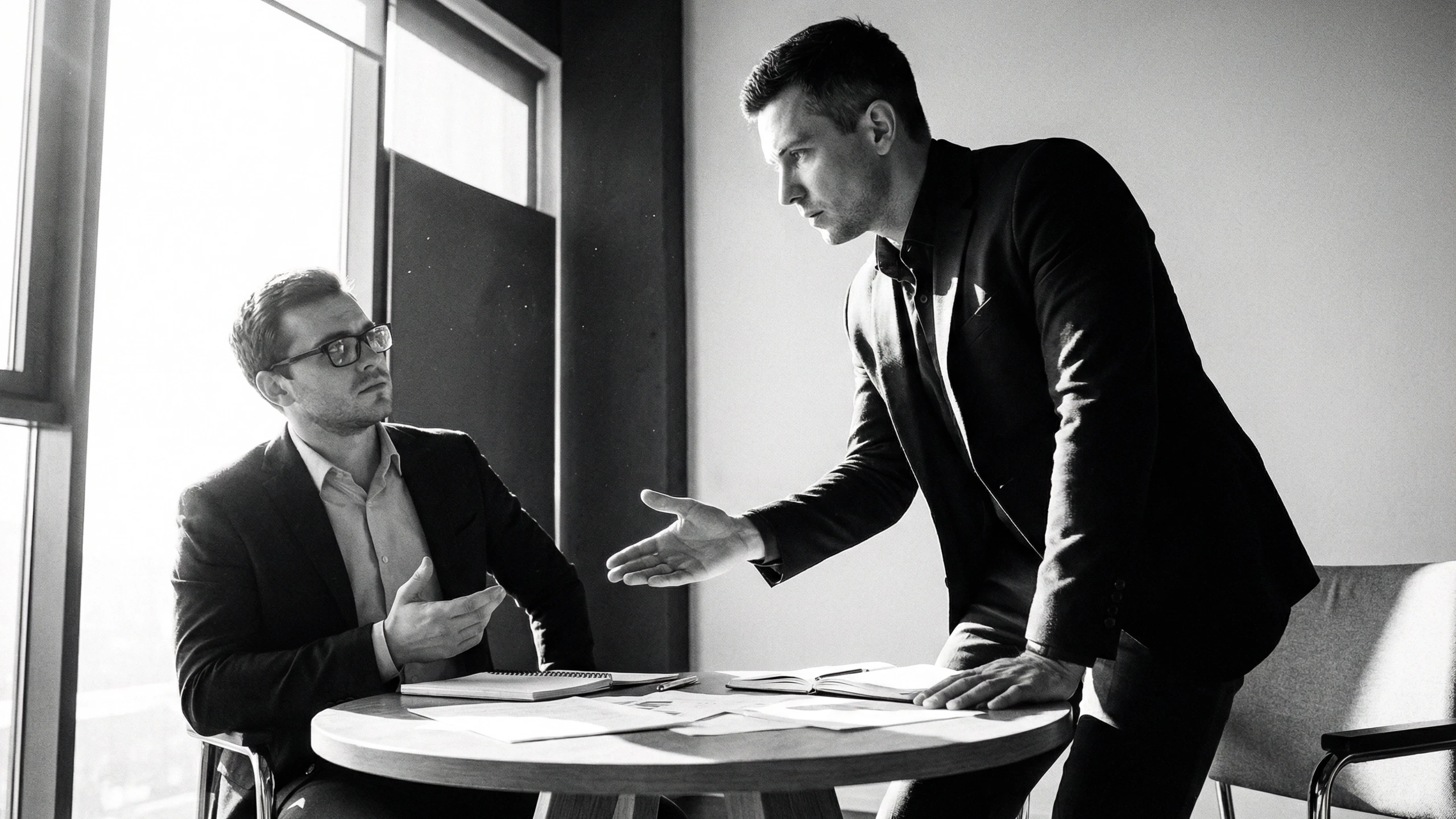
Power Balance
How power imbalances shape conflict dynamics and what can be done to level the communicative playing field toward fairer resolution.
Conflict does not occur between equals. Differences in organisational authority, social status, access to information, economic resources, and even the confidence to speak up all create power asymmetries that shape who gets heard, whose interests are prioritised, and whose version of events is treated as the default. Ignoring these dynamics in conflict resolution produces outcomes that look resolved on the surface but feel unjust to those with less power — and justice-resistant resolution does not hold.
This subtopic examines the role of power in conflict: how to recognise the power dynamics at play in a given conflict, how those dynamics influence the communication patterns and resolution options available to each party, and what practical steps can be taken to create a more level communicative environment — through the intervention of a neutral third party, the use of structured dialogue formats, or the explicit acknowledgement of the imbalance as part of the conversation itself. You will find guidance for both those in less powerful positions — how to advocate effectively when the odds feel stacked — and those in more powerful positions, who may be creating barriers to resolution without realising it.
Fair conflict resolution requires attention to power. These articles help all parties navigate the dynamics more honestly and constructively.
No articles yet
Check back soon for articles on Power Balance.