
In Short
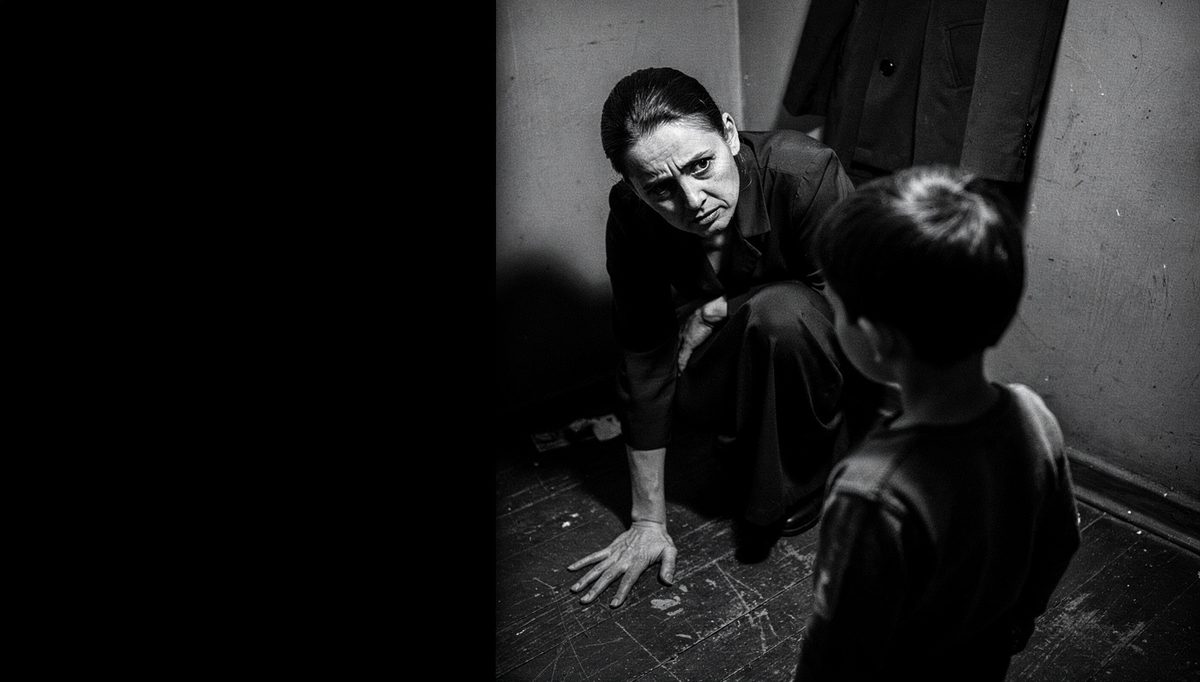
Parenting surfaces self-awareness by pulling emotional patterns into the open that decades of professional life left completely hidden. Children do not respect the composed version of you. They reach the instinctive version, and what they find there tells you more about your inner life than any personal development course ever will.
- Children mirror your unexamined emotional habits back at you in real time.
- The moment you recognise a pattern in your child is often the moment you see it in yourself.
- Parenting self-awareness is not about becoming a perfect parent; it is about becoming an honest one.
Parenting self-awareness is the capacity to recognise your own emotional triggers, habitual reactions, and inherited patterns as they surface in the daily experience of raising children. It means seeing yourself clearly enough to choose your response rather than repeat a cycle.
Why Parenting Gets Past the Defences Professional Life Never Does
I have sat with a lot of people over the years who would describe themselves as emotionally intelligent. They handle pressure well at work. They stay composed in difficult meetings. They know how to read a room. Then they became parents, and something cracked open that they were not expecting.
Here is the truth of it. Work gives you warning. You can prepare for the difficult conversation, manage the tone of an email, and choose when to engage. A four-year-old gives you nothing. No warning, no context, no patience for your composure. And when that child screams at you, defies you, or dissolves into tears at the worst possible moment, the response that comes out of you is not the managed version. It is the original one.
That is why parenting is one of the most powerful mirrors for self-awareness that exists. Not because parents are emotionally broken, but because children reach the emotional material that daily professional life simply does not touch. What follows are five scenarios I have either witnessed directly or heard told to me in careful, sometimes painful detail. Each one shows something distinct about how parenting surfaces what we did not know we carried.
"The Conversation You're Avoiding Is the One You Need to Have."
"The Conversation You're Avoiding
Is the One You Need to Have."
Stop rehearsing conversations you'll never have. Say It Right Every Time gives you 115 word-for-word scripts and 16 proven frameworks to speak with confidence in every conversation that matters.
What to Watch for Before You Read the Scenarios
Before you move into the examples, I want to give you one lens to hold. In each scenario, pay attention to the gap between what the parent intended and what actually happened. That gap is where self-awareness lives. When the gap is invisible to the parent, the pattern runs unchallenged. When the parent finally sees it, something changes. Not instantly, not painlessly, but genuinely. Watch for that moment of recognition. It looks different each time.
Five Moments When a Parent Finally Saw Themselves Clearly
Example 1: A Father Who Could Not Tolerate His Daughter's Tears
A man in his late thirties, a department head known for staying calm under fire, noticed that his eight-year-old daughter's crying made him furious. Not mildly uncomfortable. Furious. He would tighten up, leave the room, or say something sharp and immediately regret it. He could not understand his own reaction.
One evening, after snapping at her for crying about a dropped ice cream, he sat with himself long enough to ask a real question: when did crying become something I cannot bear? The answer came slowly, then clearly. His own father had treated tears as weakness. He had learned to suppress them entirely, and he had absorbed, without ever choosing to, the belief that visible emotion was a failure of character.
He was not angry at his daughter. He was reacting to what her tears reminded him of in himself: something he had never been allowed to feel. Recognising this did not fix everything overnight, but it changed the frame. He stopped treating her crying as a problem to be solved and started treating his own discomfort as the thing worth examining.
The pattern here is emotional inheritance. We absorb rules about feelings from the people who raised us, and we do not know those rules are running until something small and urgent forces them into the open.
Example 2: A Mother Whose Anxiety Became Her Child's Anxiety
A woman in her early forties was deeply attentive to her eleven-year-old son. She prepared him carefully for new situations, made sure he knew what to expect, and checked in frequently to see how he was feeling. She would have described herself as supportive.
Her son began to refuse new activities. He would not try the new swimming group, would not go on the school trip, and became increasingly anxious about anything unfamiliar. A teacher quietly suggested that the boy seemed to be absorbing worry rather than building confidence.
The mother sat with that observation for a long time. She realised that her careful preparation was not, at its root, about him. It was about her. She was anxious about his distress. Her constant checking was her own nervous system trying to manage its own fear of his discomfort. He had learned, through nothing more than watching her, that new situations required significant caution.
This is a subtler failure of self-awareness than open conflict. There was no shouting, no obvious rupture. The harm was gentle and invisible because the pattern was invisible. Signs Your Leadership Voice Is Driven by Anxiety Rather Than Intention. And How to Fix It describes this same dynamic in leadership contexts: anxiety masquerading as diligence. Parenting makes it undeniable.
Example 3: A Parent Who Confused Control with Care
Two parents, both professionals in their fifties, had raised a daughter who was now sixteen and beginning to push back on everything. The arguments were frequent and escalating. The father, in particular, experienced her independence as a form of attack. Every time she made a decision they had not sanctioned, he felt it as disrespect.
A quiet afternoon turned loud when she announced she wanted to change her subject choices at school without asking first. He told her she was being selfish. She told him he was being controlling. Both statements had some truth in them.
What took him much longer to see was that his need to sanction her decisions was not about her wellbeing. It was about his own discomfort with uncertainty. Controlling outcomes had always been his method of managing anxiety. It had worked well in his career. It was doing significant damage here. His daughter was not attacking him. She was simply growing up. His self-awareness had not yet caught up with that fact.
The cost was real. Several months of distance in that relationship. A daughter who stopped sharing things with him because sharing felt like asking permission.
Example 4: A Parent Who Got It Right, and Knew Why
Not every moment is a failure. A mother of two sons, aged nine and twelve, noticed that her older son was becoming sarcastic in arguments. She recognised it immediately because it was her pattern too: when she felt cornered, she used wit as a weapon.
Rather than correct him publicly, she waited for a quiet moment and said: "I noticed you got sarcastic with your brother when he pushed back on you. I do that too. It feels clever in the moment, but it usually makes things worse. Do you want to talk about what was actually bothering you?" He did. And the conversation that followed was honest in a way their arguments rarely were.
She was only able to do this because she had already seen the pattern in herself. She had worked on it for years, not perfectly, but consistently. That prior self-awareness meant she could meet him without judgment, because she understood the impulse from the inside.
This is what How to Use the C.O.R.E. Framework to Stay Calm When Feedback Triggers a Defensive Reaction describes in a professional context: the ability to pause, name what is happening, and respond with intention rather than reflex. At home, it looks like a mother sitting beside her son asking a genuine question instead of issuing a correction.
Example 5: A Parent Who Saw the Pattern Too Late
A father noticed only in his son's early adulthood that he had spent fifteen years communicating approval through achievement and withholding it through silence. He had not intended this. He remembered the praise he had given, the support he thought he offered. What he had not seen was that he went quiet when his son failed, and loud when his son succeeded. The emotional message transmitted was: my love has conditions.
His son told him this plainly, at twenty-two, in a conversation that was long overdue. The father was devastated. He genuinely had not known. His own self-awareness had been, for fifteen years, too shallow to catch what his behaviour was teaching.
This is the example that carries the most weight. Not because it is dramatic, but because it is ordinary. Most people who pass emotional patterns to their children do not know they are doing it. The absence of self-awareness is not usually malicious. It is simply unconscious, and the costs accumulate quietly until someone names them.
The Pattern Beneath All Five Scenarios
Look across these five scenarios and one thing stands out: in every case, the parent's blind spot was not new. The anxiety, the control, the conditional approval, the intolerance of tears, the sarcasm: each one had been present for decades. Parenting did not create these patterns. It revealed them by providing a context where they could no longer stay hidden.
The second pattern is equally important. The scenarios where something improved all share one feature: the parent became curious rather than defensive. They asked what their reaction was telling them, rather than what their child needed to do differently. That shift, from external blame to internal inquiry, is the core movement of self-awareness in practice.
This connects directly to what makes amygdala hijack so costly in any setting: when our instinctive brain takes over, we lose access to the reflective capacity that self-awareness requires. Parenting creates the conditions for that hijack constantly, which is precisely why it teaches so much about where your unexamined triggers actually live.
What You Can Do With What You Recognise
If any of these scenarios landed with some discomfort, good. That discomfort is information, not failure. The question worth sitting with is this: what does my strongest reaction as a parent tell me about what I am carrying?
You do not need to have it resolved to start working with it. The mother in Example 4 did not fix her sarcasm before she could help her son. She was simply honest about it. That honesty was the act of self-awareness, and it was enough to change the conversation.
This kind of inner work has direct consequences beyond your home. The confidence-competence loop in professional settings depends on the same foundation: knowing what you are actually doing and why, rather than assuming your intentions and your impact are the same thing. They frequently are not. Parenting makes that gap unavoidable. How the Confidence-Competence Loop Explains Why Some Managers Handle Workplace Tension Better Than Others shows what becomes available when professionals develop the same honesty about their patterns at work.
The practical step is specific. The next time you have a strong reaction to your child that surprises you, do not explain it away. Sit with the question: where have I felt this before? Not with your child. Before them. The answer will almost always point you somewhere worth looking.
What the Confidence-Competence Loop Reveals About Why Some People Give Better Feedback and How to Use the Confidence-Competence Loop to Make Your Team Synergy Conversations Less Terrifying both point to the same truth in a professional frame: the people who communicate best are the ones who have done the harder work of understanding their own default responses first.
Frequently Asked Questions (FAQ)
What is parenting self-awareness?
Parenting self-awareness is the ability to recognise your own emotional patterns, triggers, and default reactions as they surface in the daily work of raising children. Because children provoke instinctive responses, parenting exposes emotional habits that professional life rarely reaches.
Why does parenting trigger emotional patterns from childhood?
Children activate your nervous system in ways adults rarely do. Their dependency, their noise, their emotional honesty, and their defiance all bypass your rational mind and reach the older, more instinctive parts of you. Those are the parts shaped by your own childhood experiences.
How does self-awareness help you become a better parent?
When you recognise your own emotional triggers, you stop reacting from habit and start responding with intention. Self-awareness creates a gap between the stimulus and your reaction. That gap is where better parenting actually happens, because you choose your response rather than defaulting to an inherited pattern.
What does it mean when your child mirrors your emotional behaviour?
Children are expert observers who absorb and replay what they live with. When a child mirrors your anxiety, your anger, or your avoidance, it is not coincidence. It is direct reflection. Seeing it in them is often the first time a parent truly sees it in themselves.
Can parenting self-awareness improve your professional communication?
Yes. The emotional patterns you discover through parenting, reactivity under pressure, difficulty tolerating uncertainty, the urge to control outcomes, show up equally at work. Recognising them at home gives you the vocabulary and the self-knowledge to manage them in professional settings too.
How do you build self-awareness as a parent without feeling like you are failing?
Start by observing your reactions rather than judging them. The goal is not to be a perfect parent but to be an honest one. When you notice a reactive moment, name it to yourself. What triggered it? What did you feel first? Curiosity replaces shame with information you can actually use. Parenting self-awareness grows from honesty, not perfection.