
In Short
Most people carry emotions they cannot name because those emotions have never been given a form. Creative expression gives them one.
- Art bypasses the internal editor that filters honest emotional experience into acceptable language.
- What you make, the pressure you use, the images you reach for, reveals patterns your thinking mind overlooks.
- You do not need talent. You need the willingness to look at what comes out.
Creative expression self-awareness is the practice of using art, writing, or making to surface emotions that are difficult to access through ordinary reflection. By engaging the hands and the senses, it bypasses conscious filtering and reveals emotional patterns, reactions, and needs that words alone rarely reach.
When the Words Run Out
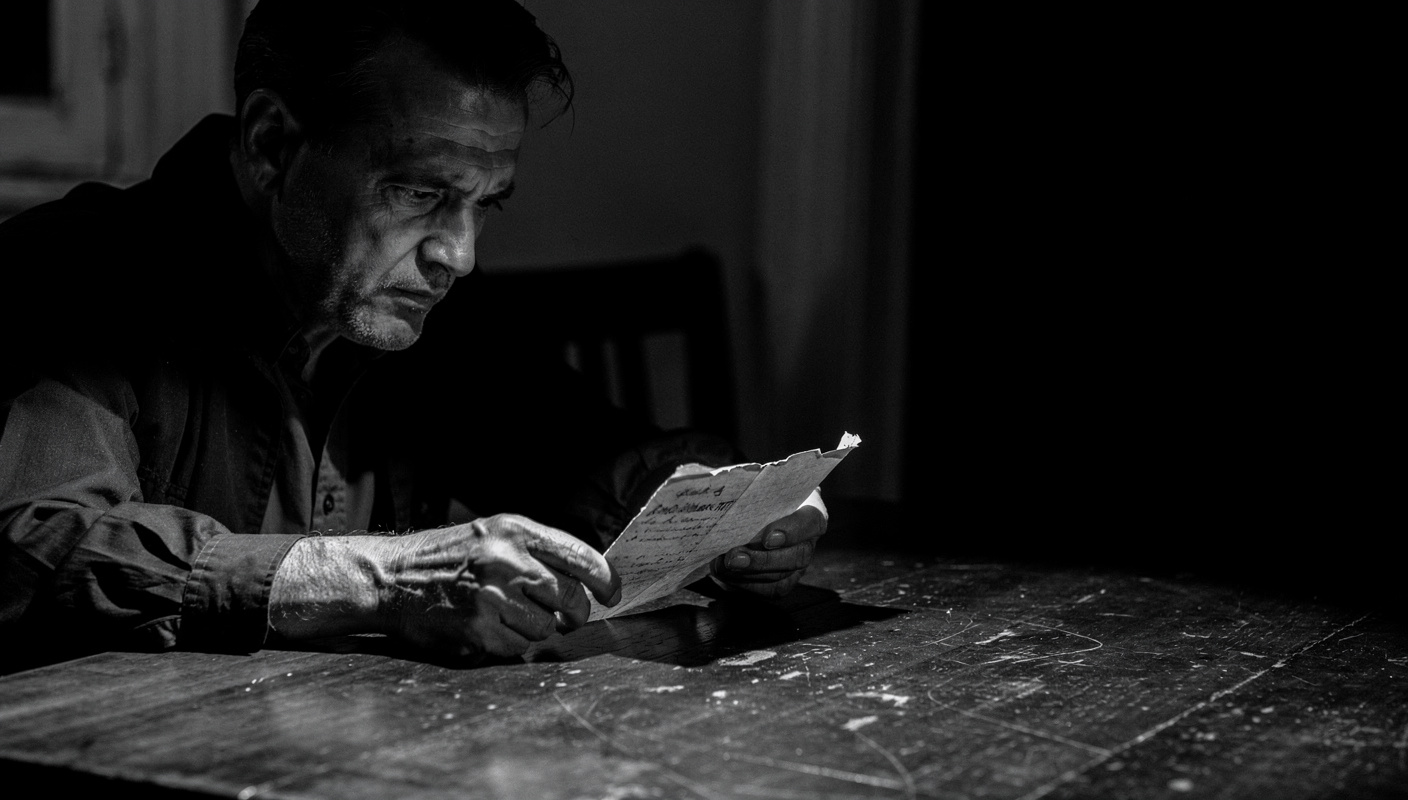
A man I knew, a senior manager, came to me after a difficult year. He had been through a restructure, a broken relationship, and the death of a close friend, all within eighteen months. He told me he was fine. He said it the way people say it when they are not fine at all, quickly, flatly, without looking up.
I asked him to draw how his week had felt. Not to describe it. Not to explain it. Just draw it.
He looked at me as though I had lost my mind. But he picked up the pen. What came out was a tightly coiled shape in the centre of the page, surrounded by sharp lines pushing inward from every edge. He stared at it for a long moment.
"I did not know I felt like that," he said.
That is the whole point of using creative expression as a self-awareness tool. The emotions were already there. The drawing just gave them a shape he could finally see.
"The Conversation You're Avoiding Is the One You Need to Have."
"The Conversation You're Avoiding
Is the One You Need to Have."
Stop rehearsing conversations you'll never have. Say It Right Every Time gives you 115 word-for-word scripts and 16 proven frameworks to speak with confidence in every conversation that matters.
Why Thinking Harder Does Not Always Work
Most approaches to self-awareness ask you to think your way into clarity. Reflect on your behaviour. Name your feelings. Notice your patterns. This is good advice, and I have spent decades practicing it. But there is a specific territory that thinking cannot reach: the emotions you have already decided are not worth examining, the ones you carry so habitually that you no longer register them as feelings at all.
Language is the problem and the filter. The moment you try to name an emotion, you activate the part of your mind that edits, justifies, and tidies. "I was a bit stressed" replaces something rawer and truer. The version you say out loud, even to yourself, is already a managed version.
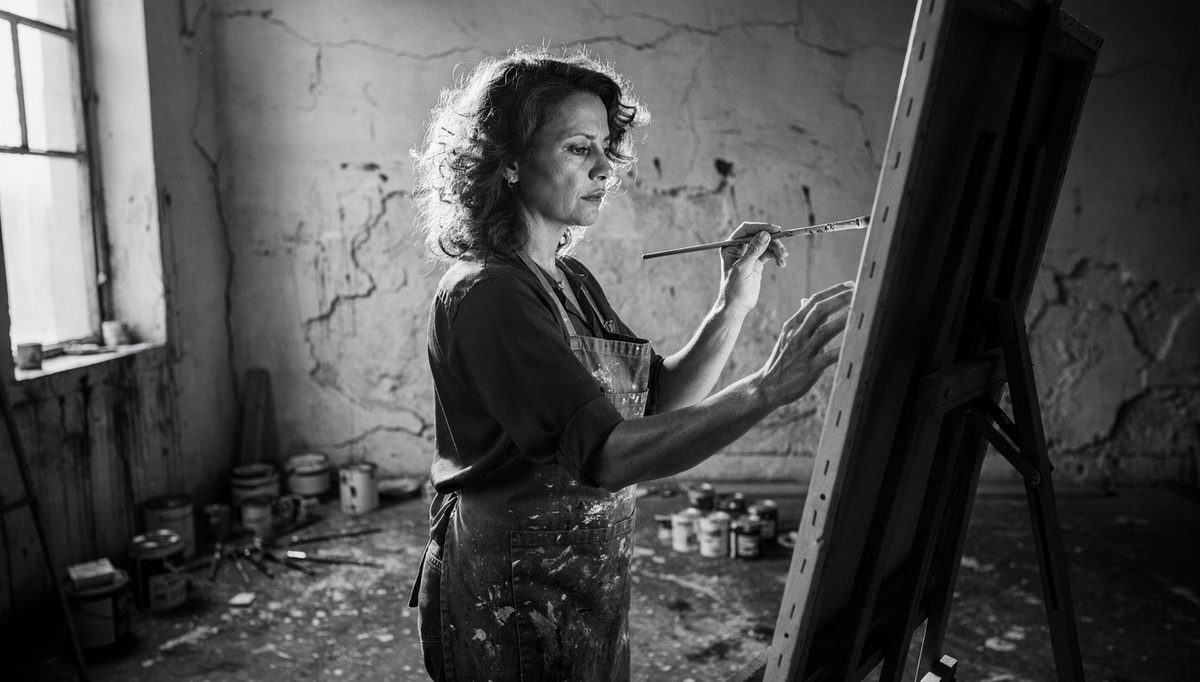
Creative work interrupts that process. When your hands are moving, your internal editor cannot keep up. The pressure you apply to a pencil, the colour you reach for without thinking, the word you write before you have decided to write it: these carry information your conscious mind has not yet processed. If you want to understand what your leadership voice is being driven by, or why you consistently react a certain way under pressure, the body often knows before the mind admits it.
What You Need Before You Begin
Before the process, one thing must be true: you need to have decided that the outcome is more important than looking capable. Creative expression work fails completely when you are performing for an invisible audience, even an audience of one.
This means lowering the standard before you start. You are not here to make something good. You are here to make something honest. A scribble that surprises you is worth more than a careful drawing that reveals nothing.
It also helps to have a private space for this work. Not because the output is shameful, but because the presence of others activates exactly the self-editing you are trying to bypass. Keep a notebook or a sketchpad that is yours alone. What you put in it is not for presentation. It is for looking at.
The Process: Six Steps for Surfacing What Is Hidden
Step 1: Choose a single question, not a topic
Before you pick up a pen or a brush, name what you are bringing to the work. Not a broad theme like "how I am feeling about work," but a specific, present-tense question.
"What is the thing I keep not saying in our team meetings?" "What does my relationship with this deadline actually feel like?" "What am I carrying right now that I have not told anyone about?"
One question is enough. More than one fractures your attention and lets the editing mind back in.
Step 2: Choose a form that requires less technique
The most useful forms for this kind of self-awareness are the ones that require the least skill: free writing without punctuation, gesture drawing, tearing shapes from paper, pressing clay, painting with a single colour. The less you have to think about technique, the more your hands can respond to what is actually there.
If you have never tried free writing, here is the method: set a timer for eight minutes, write continuously without lifting the pen, do not correct anything, do not re-read until the time is up. Write whatever comes, even "I do not know what to write," because the mind will eventually move on from that and say something true.
Step 3: Work without stopping or correcting
This step is simple and difficult. Once you begin, you do not stop to assess, adjust, or improve what you are making. No crossing out. No starting again on a fresh page. No holding the sketchpad at arm's length to judge proportion.
The correction instinct is the self-editing mind reasserting control. Every time you stop to evaluate, you shrink what can come through. Stay with the discomfort of the unfinished, the imperfect, the ugly mark on the page. That discomfort is often a signal that something real is nearby.
Step 4: Step back and look without interpreting
When the time is up, stop. Put down what you are holding. Take three slow breaths. Then look at the work without trying to explain it.
Do not ask "what does this mean?" yet. Ask instead: "what do I notice?" Look at what your body did. The marks that are heavy versus light. The shapes that cluster or press against the edge. The words that are bigger or underlined without your having planned them. The areas you avoided entirely.
You are reading signals, not decoding a message. Spend at least two or three minutes here before you allow any interpretation.
Step 5: Ask the one useful question
After sitting with the work, ask yourself: "What does this remind me of in my life right now?"
Not "what does this symbolise?" That is too abstract. Not "what am I trying to say?" That puts the editor back in charge. The question "what does this remind me of?" lets your mind make a connection rather than construct an explanation.
Write the answer down immediately, without editing. Even if it seems unrelated. Even if it seems obvious. The connection your mind makes in that first unguarded moment is almost always worth keeping.
Step 6: Name one thing you will do differently
Self-awareness is only useful when it changes something. After you have looked at the work and noted what it reminded you of, identify one concrete thing the insight suggests.
Not a resolution. Not a plan. One thing.
"I will tell my manager what I told this page before our next meeting." "I will take ten minutes before the presentation to do this again and read what comes." "I will stop pretending I am fine about this to myself, even if I keep pretending to everyone else."
That one thing is where the self-awareness becomes usable. It connects the inner work to the outer world. If you want a system for staying grounded once that emotional clarity is active under pressure, the C.O.R.E. Framework for tense workplace conversations gives you exactly that.
Adapting This for High-Pressure Work Environments
The process above assumes a reasonable amount of time and privacy. Neither is guaranteed in a demanding workplace. Here is how to adapt it when conditions are not ideal.
First, compress the form. A three-minute free-write during a lunch break produces something. Eight minutes is better, but three minutes of honest movement is worth more than none at all.
Second, use the physical environment as your material. If you genuinely have no paper and no privacy, notice what your hands are doing during a tense meeting. Are they gripping? Flat on the table? Hidden? This is embodied self-knowledge in real time. Write a single sentence about it afterward, even in a notes app. That sentence is the beginning of the process.
Third, build a brief weekly practice rather than relying on crisis-driven insight. When you wait until something has gone wrong to examine your emotional state, you are always working in retrospect. Ten minutes on a Sunday evening, one question, one form, one observation: this is a rhythm that builds honest self-knowledge over time. It is the same principle behind the Confidence-Competence Loop that explains why some leaders develop a stronger voice faster: small, repeated practice compounds into genuine capacity.
What Gets in the Way
Three mistakes show up consistently in people attempting this kind of work. All three are understandable. All three can be corrected.
The mistake: Waiting to feel inspired before beginning.
Why it happens: We associate creativity with motivation, and we wait for conditions to be right.
What to do instead: Start before you feel ready. The emotional material is always present. The work surfaces it; it does not require it to arrive first.
The mistake: Reading the work immediately and literally.
Why it happens: The analytical mind is faster than the intuitive one, and it rushes to explain before the slower knowing has had a chance to speak.
What to do instead: Apply Step 4 rigorously. Sit with the work for at least two minutes before allowing any interpretation. The first explanation your mind offers is usually the safest one, not the truest one.
The mistake: Producing something presentable instead of something honest.
Why it happens: Most of us have been evaluated on what we make since childhood, and the habit of performing for an audience runs deep.
What to do instead: Set a specific intention before you begin: "This is for no one." If it helps, plan to tear up or close the notebook immediately after the session. The output is not the point. What you notice while looking at it is the point.
This last mistake is particularly relevant for leaders. The same self-protective habits that drive anxiety-led behaviour in a team also show up in creative self-work. Recognising the pattern here is its own form of insight. The C.O.R.E. Framework for staying calm when feedback triggers a defensive reaction addresses that same self-protective mechanism in a different context.
A Practical Tool You Can Use This Week
Use this as your starting framework. Return to it each time you sit down to do this work.
Before you begin:
- Write your single question at the top of the page.
- Set a timer for eight minutes.
- State your intention aloud or in writing: "This is for no one. I will not stop, correct, or evaluate."
During the work: 4. Keep moving without pausing to assess. 5. If you freeze, write or draw the feeling of freezing. That is data too.
After the work: 6. Sit quietly for two to three minutes. Notice without interpreting. 7. Ask: "What does this remind me of right now?" 8. Write the answer immediately, without editing. 9. Identify one concrete thing the insight suggests you do differently.
Weekly review: 10. Keep three to five sessions before reviewing them together. Look for patterns across sessions, not just within a single one. Recurring images, repeated words, consistent pressure marks: these are the signals that something significant is present and waiting to be named.
This connects directly to the kind of emotional regulation that the C.O.N.N.E.C.T. Method builds for leaders under vocal pressure: knowing what you are carrying before you walk into a room changes everything about how you show up in it.
The Work That Carries You Forward
There is a particular kind of relief that comes when you finally see something you have been carrying without knowing it. I have watched it happen dozens of times, in people who were certain they were fine and discovered through a page of marks or a tumble of unedited sentences that they were not. The creative expression self-awareness process does not resolve what you find. But it gives you the truth of it, and the truth is always more workable than the managed version you have been living with.
The people who develop genuine emotional intelligence over time are rarely the ones who think hardest about their feelings. They are the ones who find ways to let those feelings become visible. When you make something, you externalise the internal landscape, and you can finally see the terrain you have been navigating blind.
Start with one question. Eight minutes. Do not stop. Then look at what your hands knew before your mind caught up. Understanding what drives your responses at that level is also what separates feedback that lands from feedback that defends, which is the same principle at work in what the Confidence-Competence Loop reveals about why some people give better feedback. And if you find that what surfaces affects how you show up with your team under pressure, it is worth understanding how the Confidence-Competence Loop explains why some managers handle workplace tension better than others. The inner work and the outer work are not separate. They never were.
Frequently Asked Questions (FAQ)
What is creative expression self-awareness?
Creative expression self-awareness is the practice of using art, writing, or making to surface emotions that are difficult to access through thinking alone. The process bypasses your internal editor and reveals emotional patterns, reactions, and needs that stay hidden in ordinary conversation or reflection.
How does creative expression help with self-awareness?
When you draw, write freely, or shape something with your hands, you engage the brain differently than when you analyze a problem. The resulting work often contains emotional signals you did not consciously put there, giving you raw material to examine and understand yourself more clearly.
Do I need to be artistic to use creative expression for self-awareness?
No artistic skill is required. The goal is not to produce something beautiful or technically accomplished. The goal is to externalise what is inside so you can see it. A rough sketch or a messy page of handwriting serves the same purpose as a finished painting.
What kind of creative activities work best for surfacing hidden emotions?
Free writing, gesture drawing, clay work, and abstract mark-making are particularly effective because they require less planning and allow your hands to move before your mind intervenes. The less technique involved, the more honest the emotional output tends to be.
How do I read the emotions that surface during creative work?
Look at the choices your body made without deliberating: the pressure you applied, the colours or words you reached for, the shapes that repeated. Do not interpret immediately. Sit with the work for a few minutes first, then ask one question: what does this remind me of in my life right now?
Can creative expression self-awareness replace therapy or counselling?
No. Creative expression is a self-awareness tool, not a substitute for professional support. It is useful for identifying emotional patterns and building honest self-knowledge. If what surfaces is overwhelming or distressing, working with a trained therapist alongside this practice is the right course.