
In Short
Leader behavior modeling in difficult conversations is not about having the right personality. It is about having the right preparation.
- Your team learns how to handle conflict by watching how you handle it.
- Word-for-word preparation builds the composure that makes hard conversations productive.
- The scripts below give you language for the moments most leaders either avoid or fumble.
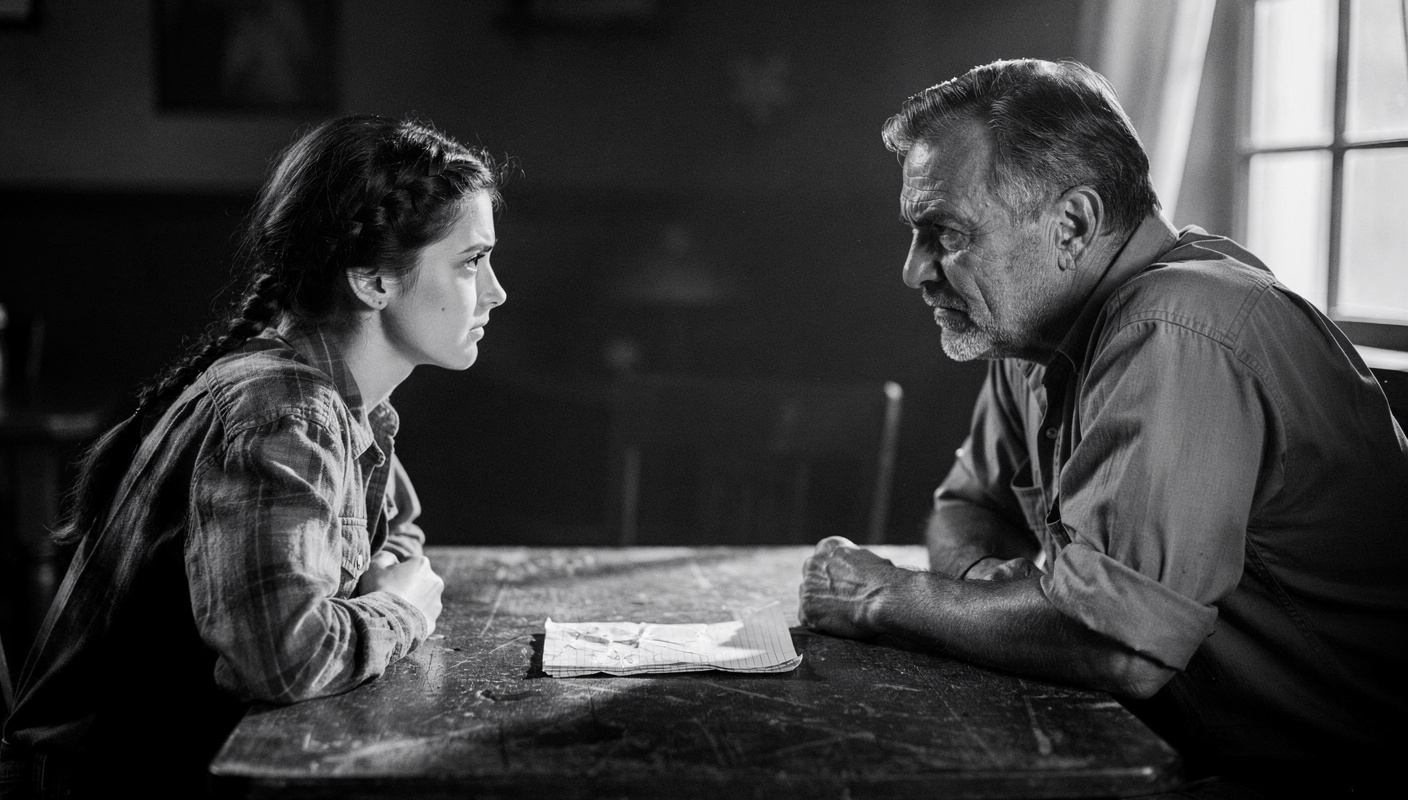
Leader behavior modeling in difficult conversations means demonstrating, through deliberate word choice and composure, how to engage with tension constructively. It teaches teams what courageous communication looks like in practice, setting a standard that shapes how everyone on the team handles conflict.
I once watched a senior manager dissolve a situation that was three days from becoming a formal grievance. She did not have special powers. She had prepared words, a steady voice, and the courage to say what needed saying. That moment changed what I understood about leader behavior modeling. The scripts themselves were not magic. But having them ready meant she could focus on the person in front of her rather than scrambling for language. That is the principle. Preparation frees your attention for the human in the room.
The difficult conversations that define a leader's reputation are rarely dramatic. They are the small, avoided conversations that fester, and the confrontational ones that go sideways because no one had the right words ready. These scripts are built for both.
How to Get the Most from These Scripts
Find the script that matches your situation. Read the context note first. Then read the language out loud, not in your head. Your mouth needs to rehearse this, not just your eyes. Swap the bracketed words for the specific names and details of your situation. Make the language yours. Then, when the moment comes, you will not be performing a script. You will be a prepared leader speaking clearly.
Every script below has a standard version and a formal version. Formal versions suit situations where the stakes are higher, the relationship is more distant, or the conversation may be documented. Use the standard version when a warmer tone fits. A casual version appears where the situation genuinely calls for one.
"The Conversation You're Avoiding Is the One You Need to Have."
"The Conversation You're Avoiding
Is the One You Need to Have."
Stop rehearsing conversations you'll never have. Say It Right Every Time gives you 115 word-for-word scripts and 16 proven frameworks to speak with confidence in every conversation that matters.
Scripts for the Most Common Difficult Conversations Leaders Face
Script 1: Opening a Performance Conversation Someone Has Been Avoiding
The situation: You have a team member whose performance has slipped, and every previous attempt to raise it has been deflected or rescheduled. You need to open the conversation in a way that is direct but does not trigger immediate defensiveness.
Why it works: It names the pattern without accusation. It signals that the conversation is happening now, and it sets a tone of problem-solving rather than judgment.
Standard version:
"[Name], I want to talk today about your work on [project or area]. I have held back from pushing this, and I should not have. I want us to work through it together, and I want to hear your perspective on what has been happening."
Formal version:
"[Name], I would like to discuss your performance in [specific area] during our time today. I recognise this is a conversation we have not yet had in full, and I think it is important that we do. I am committed to listening as much as I am to sharing my observations."
Watch for: A defensive response or deflection is common here. If it comes, do not retreat. Acknowledge it and hold the ground: "I hear that. And I still think we need to work through this together."
Eamon's note: The biggest mistake I see leaders make is softening this opening so much that the other person leaves without knowing a difficult conversation just happened. Be warm. Be direct. Those two things can coexist.
Script 2: Addressing Behavior That Is Affecting the Team
The situation: One team member's behavior, whether it is sharp responses in meetings, dismissing others' ideas, or chronic lateness, is affecting the group. You need to address it without making it a public event.
Why it works: It uses specific observable behavior rather than character judgments. It separates the person from the pattern. For guidance on structuring this kind of feedback with precision, the S.B.I. method gives you a clean framework for feedback that unifies rather than divides.
Standard version:
"[Name], I have noticed [specific behavior, e.g., a few instances where you cut across colleagues mid-sentence in team meetings]. I want to raise it because I think it is affecting how people contribute. I am not questioning your intent. I am raising the impact."
Formal version:
"[Name], I want to bring something to your attention that I have observed in recent team interactions. On [specific occasions], I noticed [specific behavior]. My concern is the effect this has on the team's ability to work openly together. I would like to understand your perspective and discuss how we might address it."
Watch for: Minimizing ("I was just being direct") or counter-accusation. Acknowledge the perspective, then return to the observable behavior: "You may well be right that others do it too. What I can speak to is what I have seen from you."
Eamon's note: The temptation here is to soften "I have noticed" into "some people feel that maybe." Resist it. Vague feedback is not kind. It is confusing.
Script 3: Stepping Into Conflict During a Meeting
The situation: A conversation in a meeting has escalated. Two team members are talking over each other, or the tone has shifted from tense to hostile. You need to step in without taking sides.
Why it works: It interrupts the pattern without humiliating anyone. It returns control to you as the leader without forcing anyone to back down publicly. You can find fuller guidance on this in how to handle conflict during meetings.
Standard version:
"Let me stop us here. I want to make sure we are solving the right problem, not just scoring points. [Name], I heard your concern about [X]. [Name], I heard you say [Y]. Let's slow down and take these one at a time."
Formal version:
"I would like to pause the discussion for a moment. I want to ensure both perspectives are heard properly, and I do not think that is happening right now. [Name], could you summarise your core concern in one sentence? Then I would like to hear [Name]'s response to that specifically."
Watch for: Silence that feels awkward after you intervene. Let it sit. Someone will fill it, and usually with something more measured than what came before.
Eamon's note: The leader who steps into a heated meeting and stays calm does something remarkable. They give everyone else permission to calm down too. That is leader behavior modeling at its most visible.
Script 4: Giving Feedback After a Public Mistake
The situation: A team member made a significant error in front of clients, the wider team, or senior leadership. You need to address it in a way that repairs their confidence and helps them learn, without minimizing the impact.
Why it works: It separates the person's worth from the mistake. It acknowledges the difficulty without dwelling on it. This is the kind of script that, used well, builds more trust than a smooth performance ever could.
Standard version:
"[Name], I know [today/the presentation/that meeting] was hard. I want to talk about what happened, not to dwell on it, but to understand it and help you move forward. What is your read on where things went wrong?"
Formal version:
"[Name], I would like to take some time to discuss [the incident/the presentation/the meeting]. I want to be clear from the outset: my aim here is to support your development and to understand what happened, not to assign blame. I would value your perspective first."
Casual version (for a close working relationship, informal setting):
"Okay. That was rough. I have been there too. Let's figure out what happened and what we do differently next time."
Watch for: Shame spiraling. If the person is already being very hard on themselves, your role shifts toward steadying them before any analysis happens. Premature problem-solving on top of genuine distress lands badly.
Eamon's note: I made this mistake for years. I thought moving quickly to solutions was efficient. It is not. It leaves the person feeling like their distress was an inconvenience. Slow down.
Script 5: Naming Tension That Everyone Can Feel But No One Is Saying
The situation: There is unspoken friction in the team, perhaps following a decision, a reorganisation, or a conflict that was never fully resolved. The tension is present in every meeting. You decide to name it directly. If the friction traces back to a specific breakdown, the B.R.I.D.G.E. method offers a structured path to rebuilding the relationship.
Why it works: Naming unspoken tension removes its power. Leaders who avoid naming it are modeling avoidance. Leaders who name it are modeling courage.
Standard version:
"I want to say something I think we have all been feeling. Since [event or decision], something has shifted in how we are working together. I am not pointing fingers. I am naming it because I think pretending it is not there is making things worse."
Formal version:
"I would like to take a few minutes to acknowledge something I believe has been affecting our team dynamics since [event or period]. I think there is value in naming it openly rather than allowing it to continue to operate beneath the surface of our interactions. I would welcome honest responses."
Watch for: Denials ("I don't know what you mean, everything is fine"). Hold the ground gently: "Maybe I am reading it wrong. But this feels important enough to check."
Eamon's note: This script takes courage every single time. I have used it dozens of times in my career and it still requires a breath before I begin. That discomfort means you are doing something important.
Script 6: Addressing a Direct Disagreement With a Senior Colleague or Peer
The situation: You disagree with a decision made by someone at your level or above. You need to raise it directly without it becoming a confrontation. You also need to model for your team that disagreement is handled with respect, not avoidance. You can find useful structural support in how to start a difficult conversation that is blocking your team's synergy.
Why it works: It signals respect for the relationship and the position, while making clear that you have a view that deserves to be heard. It is neither deferential nor combative.
Standard version:
"[Name], I respect the thinking behind [decision]. I want to raise a concern, because I think I would regret not having said it. My worry is [specific concern]. I am not asking you to change course. I am asking that we talk it through."
Formal version:
"[Name], I wanted to find some time to discuss [decision or direction]. I have a concern I feel I should raise directly with you. Specifically, [concern]. I would value the opportunity to understand your reasoning more fully, and to share my perspective."
Watch for: A dismissive response. If it comes, you can hold your ground without escalating: "Understood. I may be wrong. And I still think it is worth five more minutes." Knowing when to accept a final answer is also a skill.
Eamon's note: The D.E.A.L. method is genuinely useful when this kind of disagreement risks fracturing working relationships. You can read more in how to use the D.E.A.L. method to resolve conflicts that are fracturing team synergy.
Script 7: Closing a Difficult Conversation So That It Actually Ends
The situation: The hard conversation has happened. You have said what needed saying, the other person has responded, and now the conversation needs to close in a way that is clear, respectful, and forward-looking. Many leaders end difficult conversations poorly, trailing off or reverting to false warmth.
Why it works: A clear close signals that the conversation was serious and that the relationship is intact. It prevents the ambiguity that leads people to replay conversations for days. If a defensive reaction surfaced during the exchange, the C.O.R.E. framework gives you tools to stay calm when feedback triggers defensiveness.
Standard version:
"I want to make sure we are leaving this in the same place. Here is what I heard from you: [brief summary]. Here is what I am committing to: [your action]. And here is what I am asking of you: [their action]. Does that feel right?"
Formal version:
"Before we close, I want to confirm our shared understanding. Based on our conversation, I understand that [summary of their position]. My commitment is [your action]. I would like to confirm that you will [their action]. Please let me know if I have misunderstood anything."
Watch for: Vague agreement that leaves responsibility unassigned. If someone says "yeah, okay," that is not a close. Gently press for specifics: "What will that look like from your end this week?"
Eamon's note: The close is where most difficult conversations fall apart. People are relieved it is nearly over and they rush the ending. Do not rush the ending. The close determines whether the conversation did anything useful. It is also where the C.O.R.E. framework helps you stay grounded during a tense workplace conversation right until the final word.
Making These Words Your Own
A script is a starting point, not a transcript. The moment you read these as a performance, the other person feels it. They hear the formality, they sense the preparation, and they put their guard up.
Here is how you use these well. Read the script. Understand the intention behind each sentence. Then close it and ask yourself: what am I actually trying to say? Speak from that understanding, using the script's structure as your backbone. The brackets mark the places where your specific situation must replace the placeholder. Do not skip those. A script with "[Name]" still in it sounds like a form letter.
Practice the language out loud at least twice before the conversation. Your mouth and your mind process language differently. What reads smoothly on a page can trip you up at speed. Hearing yourself say it builds the muscle memory that holds when pressure arrives.
Where These Scripts Go Wrong
Difficult conversations fail not because people chose the wrong words, but because of predictable errors in how they used them. Here are the ones I have seen most often.
The mistake: Reading the script too closely and losing eye contact.
Why it happens: Anxiety makes people want to hold onto the words for safety.
What to do instead: Practice until you no longer need the paper. Use the structure, not the sentence.
The mistake: Abandoning the script at the first sign of pushback and reverting to softening language.
Why it happens: The discomfort of conflict pulls toward retreat.
What to do instead: Prepare a second line for when the first line meets resistance. Every script above includes a signal for what comes next.
The mistake: Using the formal version when a standard version fits, which creates distance when you need connection.
Why it happens: Leaders often default to formal language when anxious, because it feels more controlled.
What to do instead: Know your relationship with this person. Match the register to the reality.
The mistake: Closing too quickly, leaving the outcome ambiguous.
Why it happens: Relief that the hard part is over.
What to do instead: Use Script 7. Every time. Even when it feels unnecessary.
Frequently Asked Questions (FAQ)
What is leader behavior modeling in difficult conversations?
Leader behavior modeling in difficult conversations means a leader demonstrates, through their own words and actions, how to handle tension with composure and respect. It shows the team what good communication looks like in practice, not just in theory. This sets the standard for how everyone engages.
How do leaders model behavior during challenging workplace dialogues?
Leaders model behavior by staying calm, speaking directly, and refusing to avoid hard topics. They use clear, prepared language that acknowledges tension without amplifying it. Their tone, their willingness to listen, and their choice of words all teach the team how to handle conflict well.
Why does leader behavior modeling matter in difficult conversations?
Because teams mirror what they see. When a leader handles a difficult conversation with courage and composure, they give every team member permission to do the same. The reverse is equally true: a leader who avoids or escalates hard talks trains their team to do both.
What should a leader say to open a difficult conversation?
A strong opening names the issue directly, signals good intent, and invites dialogue. Something like: I want to talk about something important, and I want to hear your perspective as much as I want to share mine. Preparation matters more than finding perfect words.
How can a leader stay calm when a difficult conversation turns defensive?
Preparation is the greatest tool for composure. When you have a script ready, you are not scrambling for words under pressure. Slow your pace, name what you are observing without blame, and redirect to the outcome you both want. The C.O.R.E. framework can help you stay grounded.
Can scripts make difficult conversations feel less natural?
Only if you read them out loud like a legal document. Scripts are a preparation tool, not a performance. You internalize the structure and the intent, then speak in your own voice. A leader who has practiced the language sounds more confident and more human, not less.
Here is the truth of it. Leader behavior modeling is not a program you roll out or a skill you acquire once. It is what happens every time you choose to walk into a hard room instead of away from it. The seven scripts above will not eliminate the discomfort of difficult conversations. Nothing will. But they will make sure that when you stand in front of your team in one of those charged moments, you have the words, the composure, and the courage to show them exactly what good looks like.