
What Happened
The role of the modern CEO has shifted in a fundamental way. Today's top executives are not just running companies. They are functioning as media operations, publishing opinions, building audiences, and shaping narratives in real time across multiple platforms. The executives who understand this are pulling ahead. The ones treating communication as a side task are watching their relevance shrink quarter by quarter.
The Communication Angle
Picture two CEOs. Same industry, same revenue, similar products. One posts a monthly shareholder letter buried on a corporate website. The other shows up on LinkedIn every Tuesday with a clear, direct point of view on something happening in their space. Twelve months later, one of them is getting called by journalists, courted by partners, and trusted by employees who feel like they actually know their leader. The other is a name on a letterhead.
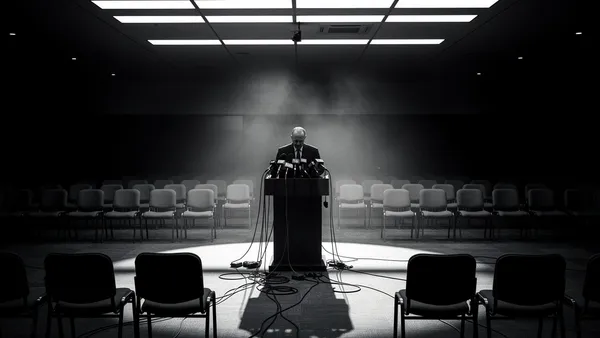
This is not about social media vanity. This is about narrative control. When a CEO goes silent, the world fills in the blanks. Competitors define you. Critics define you. Disgruntled former employees define you. The only antidote to someone else telling your story is telling it yourself, consistently, and with a specific point of view.
The mistake most executives make is confusing volume with clarity. They think being a media platform means posting more. It does not. It means posting with intention. The CEOs who are winning this game have one thing in common: they know exactly what they stand for, and every piece of communication they put out reinforces that same core idea. Think of Jensen Huang talking about computing as a force of transformation. Think of Jamie Dimon sending his annual letter like a manifesto, not a memo. They are not covering everything. They are repeating the thing that matters, in different formats, over time.
Here is what most professionals miss about this shift: your audience is not just consumers or investors. It is your own employees. Internal trust is built the same way external reputation is built. Through consistent, honest, direct communication from the top. A CEO who is a clear communicator externally but vague and corporate internally is leaving the most important audience completely cold.
The practical move is simple but uncomfortable for most executives. You have to pick a lane. Choose two or three ideas you genuinely believe in and let those ideas drive everything you say publicly. Not company talking points. Not PR-approved non-answers. Your actual perspective on where the industry is going, what you are building, and why it matters. That specificity is what makes people listen.
This is exactly the kind of scenario I break down in Say It Right Every Time. The chapter on owning your message covers how to identify the one central idea that should anchor every conversation you have, whether that conversation is a press interview, a board presentation, or a Tuesday LinkedIn post. Most people are saying plenty. Very few are saying anything memorable. The framework in that chapter fixes that directly.

Never Be Lost
for Words Again
Get word‑for‑word scripts for the conversations that shape your life, from job interviews and negotiations to difficult talks with family and partners, so you always know exactly what to say and how to say it.
Never Be Lost
for Words Again
Get word‑for‑word scripts for the conversations that shape your life, from job interviews and negotiations to difficult talks with family and partners, so you always know exactly what to say and how to say it.
Key Takeaway
This week, write down the one idea you want people to associate with you as a leader. Not your company's mission statement. Your personal conviction about the work. Then look at your last five public communications and ask honestly whether that idea shows up even once. If it does not, you have your assignment. Every communication you send from here forward should connect back to that single idea in some way.