
What Happened
Artificial intelligence tools can now draft emails, speeches, pitches, and presentations with startling speed and competence. This has sparked a growing debate among communication experts and workplace professionals about whether human communication skills are becoming obsolete. The emerging consensus, backed by behavioral research, is the opposite: because AI handles the words, your physical presence and delivery now carry more weight than ever before.
The Communication Angle
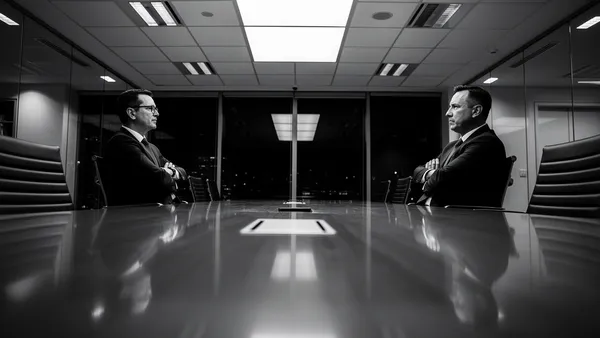
Picture this. You walk into a boardroom. Your AI-assisted proposal is polished. The structure is tight, the language crisp, the data well-organized. You open your mouth, and everything falls apart. You break eye contact. Your shoulders cave forward. Your voice trails up at the end of every sentence, turning statements into questions. The words were right. You were wrong.
This is the central problem nobody is talking about loudly enough. AI has raised the floor on written communication. Almost anyone can now produce a decent document. That means the differentiator has shifted entirely to the room. To your body. To your voice. To the signals you broadcast before you say a single word.
Research on nonverbal communication has long established that people form judgments within seconds of meeting you. Those judgments are sticky. They filter how your words land. If your posture signals uncertainty, your perfectly crafted AI sentence about your "proven track record" gets discounted before it registers. The words cannot save you. Your presence is the argument now.
Here is what most professionals are missing. They invest time learning to prompt AI tools better. They should be investing that same time in learning to stand still with authority, to pause before answering rather than filling silence with noise, and to make eye contact that reads as engaged rather than aggressive. These are learnable skills. They are not personality traits. They are techniques, and they can be trained.
The professionals who will win in an AI-saturated workplace are not the ones who write the best prompts. They are the ones who walk in, plant their feet, breathe, and own the space. AI gave everyone a polished script. Delivery is now the only competitive edge left.
This is exactly the kind of scenario I break down in Say It Right Every Time. The chapter on physical authority gives you a concrete framework for what I call "the first ten seconds rule": the specific posture, eye contact, and breath sequence that establishes your credibility before you speak a single word. In an age where AI writes the script, that chapter is not optional reading. It is the whole game.

Never Be Lost
for Words Again
Get word‑for‑word scripts for the conversations that shape your life, from job interviews and negotiations to difficult talks with family and partners, so you always know exactly what to say and how to say it.
Never Be Lost
for Words Again
Get word‑for‑word scripts for the conversations that shape your life, from job interviews and negotiations to difficult talks with family and partners, so you always know exactly what to say and how to say it.
Key Takeaway
Before your next presentation or important meeting, spend five minutes practicing your opening thirty seconds out loud, standing up, in front of a mirror or a phone camera. Watch specifically for two things: whether your chin drops when you start speaking (it signals defensiveness) and whether your sentences end on a rising tone (it signals doubt). Fix those two physical habits, and your credibility jumps before your content even lands.