
In Short
Emotional regulation in conflict is not about staying calm. It is about staying capable. When it fails, the damage compounds silently: relationships fray, trust erodes, and the original problem never gets solved. The warning signs are specific and learnable, and most people miss them entirely until the cost arrives.
Emotional regulation conflict describes the capacity to manage your internal emotional and physiological state during a disagreement, so that your thinking stays clear, your words stay considered, and your behaviour stays aligned with your actual intentions rather than your threat response.
Most people believe they handle conflict reasonably well. They do not shout. They do not storm out. They consider themselves professionals. Then someone says the wrong thing in a meeting, or a colleague takes credit for their work, and something shifts. The words come out harder than intended. The conversation closes down faster than expected. Later, sitting alone, they wonder what happened. Emotional regulation in conflict is rarely lost in a single dramatic collapse. It goes quietly, in small increments, long before anyone notices. The trouble is that the warning signs tend to look like something else entirely. They look like confidence, or directness, or simply having a bad day. That disguise is exactly what makes them dangerous. By the time the damage is visible, it has already been accumulating for a while. After reading this, you will be able to name what you are actually looking at.
Why the Earliest Warning Signs Are So Hard to Catch
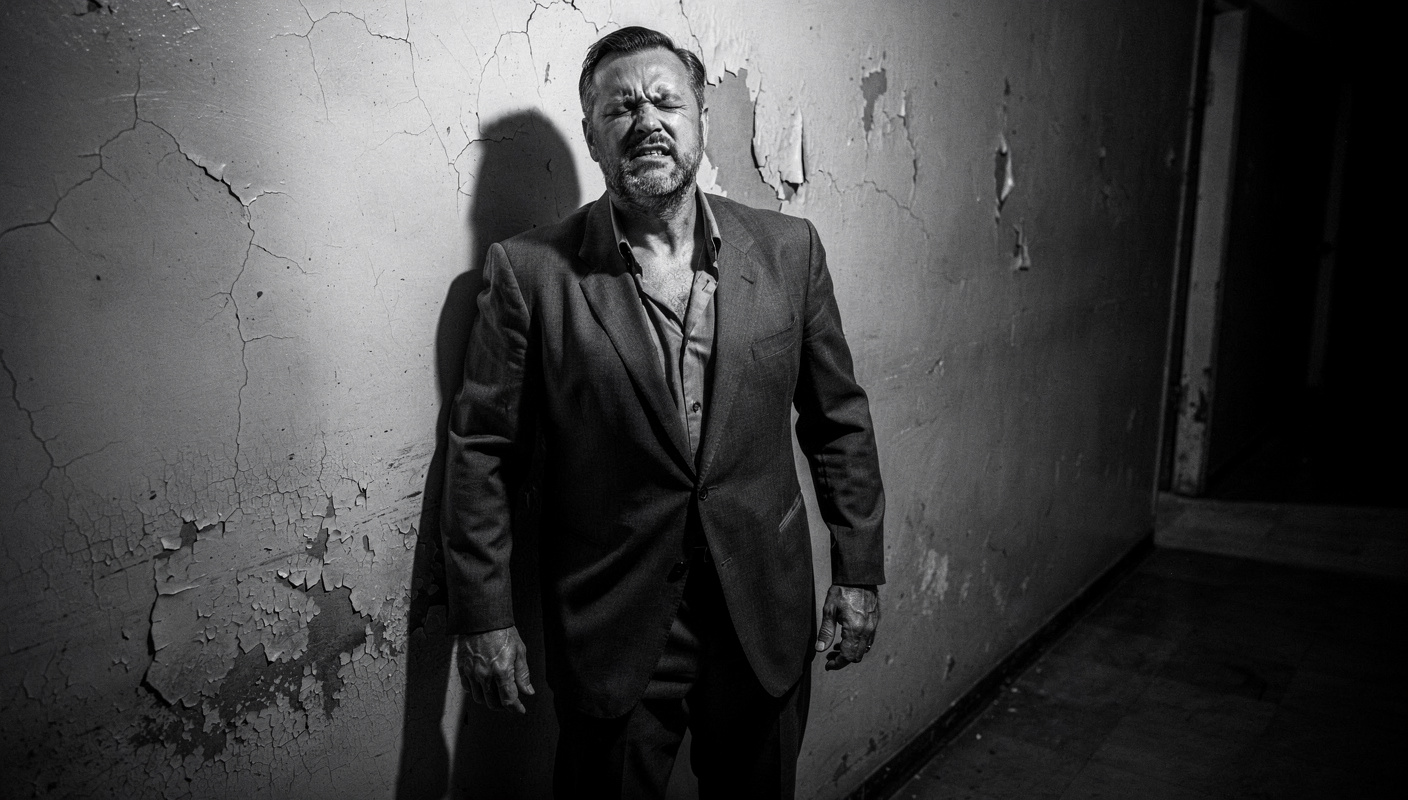
Poor emotional control in conflict wears a convincing disguise. It rarely announces itself as panic or rage. Instead, it presents as certainty. You become very sure you are right. You become very sure the other person is being unreasonable. That certainty feels like clarity, but it is the exact opposite: it is your threat response narrowing your thinking until nuance disappears.
The problem deepens because most professional environments reward composure as a performance. People learn to look regulated without being regulated. The voice stays level, the body language stays contained, but underneath, the nervous system is already in defensive mode. The gap between the performance and the reality is where the real damage happens.
I spent the better part of two decades mistaking controlled silence for genuine calm. I could sit through brutal conversations without flinching. I thought that was strength. What I did not understand was that I was suppressing, not regulating, and suppression has a bill that always comes due.
"The Conversation You're Avoiding Is the One You Need to Have."
"The Conversation You're Avoiding
Is the One You Need to Have."
Stop rehearsing conversations you'll never have. Say It Right Every Time gives you 115 word-for-word scripts and 16 proven frameworks to speak with confidence in every conversation that matters.
Six Warning Signs Your Emotional Regulation Is Failing Under Pressure
1. You Cannot Recall What the Other Person Actually Said
What it looks like: You walk out of a difficult conversation and realise you cannot accurately summarise what the other person argued. You remember your own points clearly. Theirs are blurry.
Why it happens: When the brain registers threat, it prioritises self-protection over information processing. You stop genuinely listening and start preparing your next defence. This is the amygdala hijack working exactly as designed, and understanding it is the first step toward interrupting it. You can read more about this in What Is the Amygdala Hijack and How It Silently Blocks Team Synergy in High-Pressure Moments.
Why it matters: If you cannot hear the other person accurately, you are not resolving the conflict. You are performing resolution while the real issue stays buried.
What to do: After your next difficult conversation, write down three things the other person said, in their words, not your interpretation of them. If you struggle to do this, you have your answer.
Eamon's note: I once left a negotiation convinced I had won. Three days later I realised I had agreed to something I never intended, because I had been too busy formulating responses to register what was being said.
2. You Explain Your Position More Than Once, Using More Words Each Time
What it looks like: The other person does not immediately agree, and you repeat your point. When they still do not agree, you say it again, longer, with more detail, perhaps with more edge.
Why it happens: Repetition like this is driven by rising internal anxiety, not logic. The nervous system interprets disagreement as danger, and the instinct is to push harder. It feels like emphasis. It is actually escalation.
Why it matters: Repetition signals to the other person that you have stopped listening. It raises the emotional temperature in the room. It also never works, which compounds the frustration.
What to do: State your position once, clearly. Then ask a question. The question forces you to listen and lowers the pressure simultaneously. "What is your concern with that?" costs you nothing and gains you information.
Eamon's note: The third time you say the same thing, you are no longer trying to communicate. You are trying to win.
3. You Start Managing the Other Person's Emotions Instead of Your Own
What it looks like: You find yourself walking on eggshells, softening every sentence to avoid a reaction, or alternatively, provoking slightly to get a response you can then point to as evidence of their unreasonableness.
Why it happens: When your own regulation begins to fail, it feels safer to focus outward. Managing the other person becomes a strategy for avoiding the discomfort of managing yourself. This is a subtle but serious error, and it is genuinely non-obvious.
Why it matters: Attempting to control another person's emotional state in conflict almost always produces the opposite result. It also means you have completely lost sight of your own internal state, which is the only thing you actually have the power to regulate.
What to do: When you catch yourself calibrating every word around the other person's likely reaction, pause. Ask yourself: what am I feeling right now? Name it specifically, frustration, embarrassment, fear of being dismissed. Naming it reduces its grip.
Eamon's note: You cannot regulate two nervous systems at once. Start with the one inside your own chest.
4. Physical Withdrawal During the Conversation
What it looks like: Leaning back, crossed arms, reduced eye contact, monosyllabic responses, or physical turning away. Not a dramatic exit, just a slow retreat inside the conversation.
Why it happens: The body moves into self-protection before the mind decides to. This is the freeze or fawn response: not fight, not flight, but shutdown. Psychological safety in a team conversation can be severely damaged when one person withdraws this way, even without saying a word. If this pattern is affecting your team, What Is Psychological Safety and How It Drives Team Synergy is worth your time.
Why it matters: Physical withdrawal communicates disengagement and contempt even when you intend neither. The other person reads it as dismissal. The conversation deteriorates without anyone raising their voice.
What to do: Practise leaning slightly forward when you feel the urge to pull back. It is a small physical act that interrupts the shutdown signal and sends the opposite message. Pair it with a direct question to re-engage.
Eamon's note: Silence in conflict is not neutral. It lands with weight.
5. You Revisit the Conflict Repeatedly in Your Head After It Ends
What it looks like: Hours after the conversation, you are still running it back, composing the responses you wished you had given, or rehearsing what you will say if it continues tomorrow.
Why it happens: Rumination is what happens when the nervous system does not return fully to baseline after a threat. The activation has not discharged, so the mind keeps processing. This is a strong signal that your regulation during the conflict itself was incomplete.
Why it matters: Chronic rumination after conflict keeps the physiological stress response elevated over time. It erodes your capacity to regulate in the next conflict, which arrives sooner than expected. It is a compounding problem. Understanding how unmet needs drive team conflict can sometimes break the rumination cycle by giving you something concrete to address.
What to do: Set a fifteen-minute limit on post-conflict reflection, then write down one thing you would do differently. Shift from replay to review. The distinction matters: one rehearses helplessness, the other builds skill.
Eamon's note: The conversations you cannot stop having in your head are the ones telling you something still needs to be said out loud.
6. Your Body Reacts Before Your Brain Catches Up
What it looks like: A specific person's name in an email makes your jaw tighten before you have read a word. A certain tone of voice sends your shoulders toward your ears. You feel it physically, immediately, without conscious thought.
Why it happens: The stress response operates faster than conscious reasoning. Your nervous system has catalogued certain people or situations as threats based on prior experience, and it acts on that catalogue instantly. This is the pattern that signs of amygdala hijack in teams describes in practical terms.
Why it matters: If your body is already in defensive mode before the conversation begins, you are starting every conflict ten steps behind. You are not responding to what is happening; you are responding to what happened last time.
What to do: Before a conversation with someone who routinely triggers this response, take two minutes to deliberately slow your breathing. Not as a performance of calm, but as a direct instruction to your nervous system. It is not poetic advice. It is physiology.
Eamon's note: Your body keeps the score from every conflict you have ever walked into. It is worth learning to read it.
The Root That Feeds All of It
These six signs look distinct. They are not. Every one of them points back to a single failure: the inability to create a gap between stimulus and response. When someone challenges you, criticises you, or disagrees with you in a high-stakes moment, your nervous system registers threat. Between that registration and your next action, there is a fraction of a second. Emotional regulation lives in that gap.
When the gap closes entirely, every warning sign on this list becomes possible. When you cannot create even a moment of separation between what you feel and what you do, you are no longer choosing your behaviour. Your threat response is choosing it for you. Emotional intelligence in teams cannot develop until this gap is protected and widened. And de-escalation in team conflict becomes genuinely possible only when someone in the room has done the work of widening it.
A Quick Self-Diagnostic You Can Run Today
Read each statement. Answer honestly with yes or no.
- After a difficult conversation, I can accurately restate the other person's main argument.
- When someone disagrees with me, I ask a question before I respond.
- I can notice physical tension in my body during a conflict and name what I am feeling.
- I rarely find myself explaining the same point more than once in the same conversation.
- I recover from a stressful interaction within an hour, without extended rumination.
- I can enter a conversation with a difficult person without a physiological reaction before they have said a word.
- When I feel the urge to withdraw physically, I can interrupt that impulse.
Scoring:
- 6-7 yes: Your regulation is holding reasonably well. The work now is consistency under higher pressure.
- 4-5 yes: You have a working foundation with specific gaps. Identify which signs appear most reliably and address those first.
- 3 or fewer yes: Your regulation is failing more often than you know. The good news is that every item on this list is a learnable skill.
Where to Start When You Know Something Needs to Change
The first move is not a technique. It is observation. Spend one week noticing, without judgement, where in your body you first register the onset of conflict. Is it your chest? Your jaw? Your breathing? The physical signal always arrives before the verbal reaction. Learn to catch it at the physical stage and you buy yourself the gap that emotional regulation lives in.
Once you can feel the signal early enough, a simple pause becomes available to you. Not a dramatic "I need a moment." Just a breath, a deliberate slow of pace, a question instead of a statement. Practise this under low stakes first. Small disagreements, minor friction, everyday tensions. How psychological safety enables honest communication in teams depends almost entirely on individuals doing exactly this work before they arrive at the table.
This much I know for certain: the gap between feeling and action is where your character actually lives. Protecting that gap under pressure is the whole practice. It is not always easy. But it is always worth the effort, and emotional regulation conflict by conflict is how you build it.
Frequently Asked Questions (FAQ)
What is emotional regulation in conflict?
Emotional regulation in conflict is the ability to manage your internal stress response during a disagreement so that you can think clearly, speak precisely, and make considered decisions rather than reactive ones. It is the skill that keeps difficult conversations productive rather than destructive.
Why does emotional regulation break down during conflict?
Conflict activates the brain's threat-detection system, triggering a physiological stress response that narrows thinking and speeds up reaction. This is the amygdala hijack at work. Under that kind of pressure, your capacity for calm reasoning shrinks before you are even aware it is happening.
What are the signs of poor emotional regulation in conflict?
Watch for raised voice volume, defensive interrupting, physical withdrawal from the conversation, over-explaining your position, and difficulty remembering what the other person said. These are signals that your nervous system has moved into threat mode and your emotional regulation is no longer holding.
How do you improve emotional regulation in conflict settings?
Start by learning to recognise your personal early warning signals, the physical sensations that arrive before you react. Then practise a brief pause before responding. Over time, with consistent practice, you build the capacity to stay regulated even when the pressure is significant.
Can emotional regulation be learned or is it a fixed trait?
It can absolutely be learned. Emotional regulation is a skill, not a personality type. It requires honest self-observation, deliberate practice under low-stakes conditions, and the courage to examine your own patterns without blame. Most people improve significantly once they stop treating their reactions as things that simply happen to them.
How does poor emotional regulation affect team conflict?
When one person loses emotional regulation in a team conflict, it often triggers the same response in others. The conversation shifts from problem-solving to self-protection, trust erodes, and the original issue rarely gets resolved. The damage to team relationships can outlast the conflict itself by weeks.