
In Short
Losing your patient hearing stance mid-conversation is not the end of the exchange. It is a moment you can recover from in seconds if you have a clear process. One reactive moment does not have to define what happens next.
- Your reaction broke the listening. A three-step process rebuilds it immediately.
- Recovery requires a physical reset, an honest verbal pivot, and a genuine re-engagement question.
- The repair itself, done well, often deepens trust more than if you had never reacted at all.
Patient hearing stance is the deliberate, sustained posture of listening with full attention and genuine curiosity, especially under pressure. It means staying open and non-defensive while a difficult person speaks, holding your response until they have finished, and treating their words as information rather than provocation.
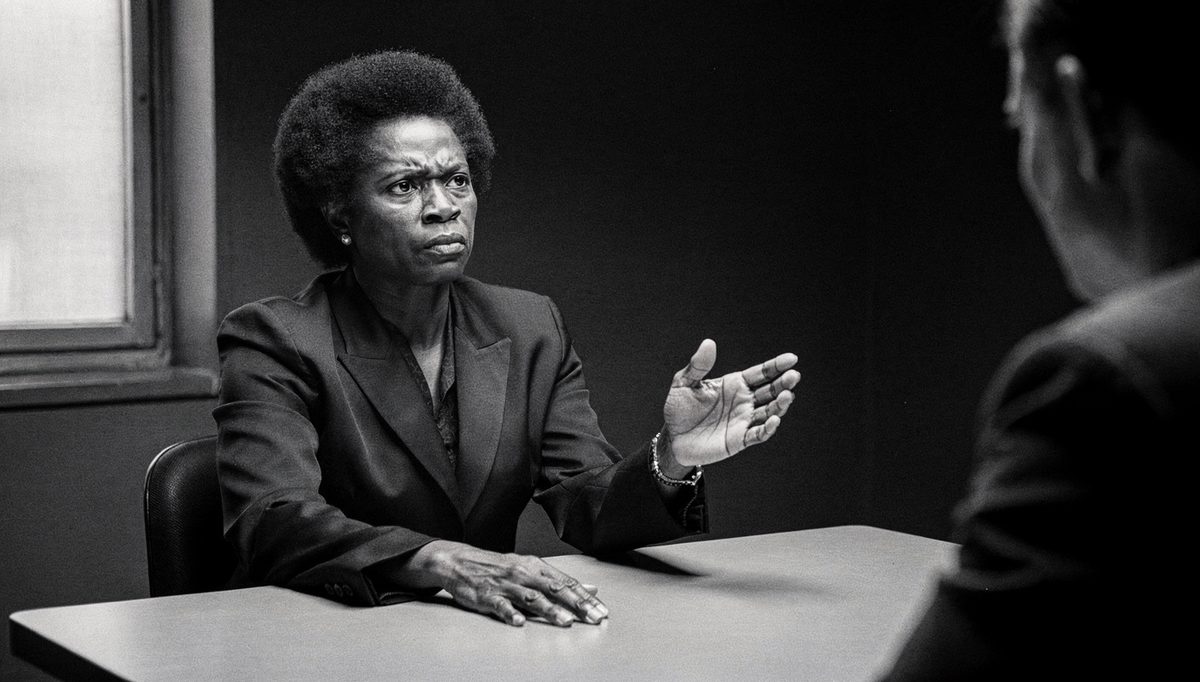
You were doing well. The conversation was tense, but you were holding it together. Then they said that one thing, and before you had any chance to stop it, you jumped in. You cut across them, or your voice sharpened, or you defended yourself. The patient hearing stance you had carefully maintained collapsed in about four seconds.
Now the conversation has changed shape. The other person has pulled back, or they have matched your tone, or they are watching you with that particular look that says they no longer feel heard. You feel it too. You know you reacted. And here is the part nobody teaches you: what to do next, inside the same conversation, in the next thirty seconds.
Patient hearing is hard enough to hold at the start of a difficult exchange. Rebuilding your patient hearing stance after you have already broken it is a different skill entirely, and most people do not have a process for it. They either bulldoze through and pretend nothing happened, or they spiral into apology and lose the thread of the conversation completely. Neither works.
This article gives you the three steps to take in the moments immediately after a reaction, so you can restore genuine listening before the damage compounds.
Why Losing Your Listening Posture Happens to Careful People Too
This is not a failure of character. It is a feature of how the brain works under conversational pressure.
When someone says something that feels like an attack, a dismissal, or a flat-out unfair accusation, your nervous system responds before your prefrontal cortex gets a vote. The emotional part of your brain fires first. The gap between their words landing and your reaction leaving your mouth is sometimes less than two seconds. You never had a chance to choose.
I have watched this happen to people I genuinely respect as communicators. People who are thoughtful, who prepare, who know what patient hearing looks like. One phrase from the other person, the right button pressed at the right moment, and all that preparation temporarily exits the building. The trigger is usually personal. It is the thing you are most sensitive about. And difficult people, whether they intend to or not, have a way of finding it.
The problem is not that you reacted. The problem is what you do in the ten seconds after.
"The Conversation You're Avoiding Is the One You Need to Have."
"The Conversation You're Avoiding
Is the One You Need to Have."
Stop rehearsing conversations you'll never have. Say It Right Every Time gives you 115 word-for-word scripts and 16 proven frameworks to speak with confidence in every conversation that matters.
What You Need Before the Process Can Work
The three-step recovery depends on one thing being in place: you have to know you reacted. Not in a self-critical way. Just a clean, factual recognition: I just stopped listening. I just defended. I just interrupted.
That moment of recognition is not automatic. Most people, when they react, feel a rush of justification. They were right to push back. The other person was out of line. The feeling is real, but it is also the thing that keeps you stuck in reaction mode. Justification and recovery cannot happen at the same time.
Before the steps begin, you need a split second of honest internal accounting. Not judgment. Just the simple observation: I just left my patient hearing stance, and I need to get back to it. That recognition is what makes the recovery possible. Without it, you are just continuing the argument with slightly different words.
The Three-Step Recovery Process
Step 1: Stop and Reset Physically
The moment you recognize you have reacted, stop speaking. Not dramatically. Not with a long pause that makes the other person uncomfortable. Just stop mid-sentence if you need to, take a single slow breath through your nose, and let your shoulders drop.
This is not performance. It is neuroscience in practice. A slow breath activates your parasympathetic nervous system and begins to pull you out of the reactive state. The shoulder drop releases the physical tension that compounds defensive listening. You are not doing this for the other person to see. You are doing it because your body needs to shift gears before your words can land differently.
Physically, you want to uncross your arms if they have crossed, place both hands flat and relaxed, and make deliberate eye contact. If you were leaning forward in a combative way, sit back slightly. Your body has been broadcasting that you stopped listening. The reset starts to change that signal. This takes five to eight seconds. Most people rush this step, and then wonder why the verbal pivot in Step 2 does not land.
Step 2: Name It Briefly and Honestly
After the physical reset, you need a short verbal pivot. Not a lengthy apology. Not a speech. A single, direct sentence that names what just happened without over-explaining or over-defending.
Here is the thing I have learned after years of getting this wrong: silence after a reaction, without any acknowledgment, creates a gap that the other person fills with their own interpretation. And their interpretation is almost always worse than the truth.
A simple naming statement sounds like this: "I want to be straight with you. I just reacted there, and I do not think I was fully listening." That is it. Nothing more is needed in most cases. You can adapt the words to your situation, but the structure stays the same: a brief honest statement, no blame, no explanation, no defense. For a deeper script and the psychology of why honesty in these moments builds rather than breaks credibility, I cover this in detail in Say It Right Every Time, particularly the section on conversational repair under pressure.
What you are doing here is naming the rupture so it does not fester beneath the surface of the rest of the conversation. Once it is named, it is no longer the elephant in the room. It is just a moment you moved through.
Step 3: Hand the Conversation Back with a Genuine Question
This is the step most people skip, and it is the one that determines whether the recovery actually holds. You have reset physically. You have named the moment honestly. Now you have to prove with your next action that you genuinely intend to listen.
The way you prove it is with a question. Not a rhetorical question. Not a leading question that subtly advances your own position. A real, open, curious question that invites the other person to continue.
Something like: "Can you take me back to what you were saying before I jumped in?" Or: "What is the part of this that feels most important to you right now?" The question has to be genuine. If you ask it with defensive energy still in your voice, it lands as a formality, and the other person will feel that. The physical reset in Step 1 and the naming in Step 2 are what make the question in Step 3 believable.
When you hand the conversation back this way, something interesting happens in most cases. The other person pauses. They often soften slightly. They re-engage. Because what they experienced was someone reacting, then catching themselves, then choosing to listen anyway. That sequence, done without drama, is one of the most trust-building things one person can do for another in a difficult conversation.
When the Other Person Is Already Escalating
The three-step process works cleanly in most difficult conversations. But when the other person was already escalating before your reaction, or when your reaction made their temperature rise further, you need to slow each step down and add a bridging phrase between Step 2 and Step 3.
If someone is hostile or visibly agitated, a single naming statement followed immediately by a question can feel abrupt. They are not ready to be asked a question yet. They need to know you have genuinely heard their level of feeling first.
In those situations, insert this between Step 2 and Step 3: "I can hear this matters a great deal to you." Say it without qualification, without the word "but" anywhere near it. Then pause for a full two or three seconds before asking your question.
That pause does real work. It lets the bridging phrase land before the question arrives. Rushing through it signals that you are executing a technique, not actually listening. The R.E.C.O.V.E.R. Method goes into considerable depth on de-escalation after a conversation goes sideways, and if you are dealing with regularly hostile interactions, that framework pairs well with what I have outlined here. For rebuilding trust after a full breakdown rather than a single reactive moment, the B.R.I.D.G.E. Method gives you the broader repair structure you will need.
What People Get Wrong When They Try to Recover
Three consistent mistakes come up when people attempt this process without guidance:
The mistake: They over-apologize in Step 2.
Why it happens: They confuse thoroughness with sincerity. A longer apology feels more genuine to them.
What to do instead: Keep the naming statement to one sentence. Extra words signal anxiety, not sincerity. The other person hears the anxiety and stays guarded.
The mistake: They skip the physical reset entirely and go straight to the verbal pivot.
Why it happens: They feel urgency to fix things quickly, and words feel more active than breathing.
What to do instead: Do Step 1 first, every time. A naming statement delivered in a tight, reactive body reads as defensive even when the words are right.
The mistake: They ask a question in Step 3 that steers the conversation back toward their own position.
Why it happens: They have not fully let go of their reactive agenda. The question sounds open but is actually leading.
What to do instead: Before you speak your question, ask yourself: am I genuinely curious about their answer, or am I trying to win? If you are still trying to win, go back to Step 1.
The D.E.A.L. Method addresses the deeper conflict structures underneath these kinds of reactive patterns. Equally, if your reactive moments tend to happen most during feedback exchanges, the S.B.I. Method gives you a clean behavioral structure that reduces the personal charge in those moments. For giving feedback without breaking the relationship in the first place, this guide on feedback that strengthens rather than fractures is worth your time before the next difficult conversation.
Your Recovery Checklist for the Next Difficult Conversation
Carry this into the conversation. Use it in the moment or review it immediately afterward.
Before the conversation:
- Identify your most likely trigger in this specific exchange. Name it to yourself.
- Decide in advance what your one-sentence naming statement will sound like if you need it.
- Set your intention: you are there to understand, not to win.
In the moment of reaction:
- Stop speaking. Even mid-sentence.
- One slow breath through the nose. Shoulders drop. Hands flat.
- Make deliberate, soft eye contact.
- Say your naming statement simply and directly. One sentence only.
- If they are escalating, add: "I can hear this matters a great deal to you." Then pause.
- Ask your genuine, open question and listen without preparing your next response.
After the conversation:
- Note the trigger that fired. Was it expected or a surprise?
- Did your Step 2 statement land cleanly, or did it carry an edge?
- Was your Step 3 question genuinely curious? How do you know?
Use this checklist before high-stakes conversations where you know your patience will be tested. The preparation is the practice. Over time, the three steps compress into a single fluid movement, and you will find yourself recovering in under ten seconds without consciously running through the sequence at all. That is what mastery looks like with this skill.
For a full framework on repairing a relationship after a significant conversational failure, the guide on how to apologize in a way that actually restores trust covers the territory beyond in-the-moment recovery. And when you want to address a problem before it escalates into a reactive exchange, learning how to deliver a neutral problem statement gives you the upstream tool. Say It Right Every Time pulls these repair and recovery skills into a connected system, with word-for-word scripts you can adapt directly to your own difficult conversations: read more about it here.
The Truth About Recovery
Most people believe that once they have reacted, the damage is done and they simply have to ride out the rest of the conversation. That is not true. A well-executed recovery, done with honesty and without drama, is not just damage control. It is an act of respect that often lands more powerfully than smooth, unbroken listening would have.
The root of patient hearing is not the absence of reaction. Roots go deep precisely because the ground above them is sometimes difficult. Your patient hearing stance will break. The question is whether you have the tools and the courage to rebuild it before the conversation ends. Now you do.
Frequently Asked Questions (FAQ)
What is a patient hearing stance in a difficult conversation?
A patient hearing stance is the deliberate posture of listening with full attention and genuine curiosity, especially under pressure. It means staying open and non-defensive while a difficult person speaks, holding your response until they have finished, and treating their words as information rather than provocation. It is a conscious choice, not a passive state.
How do you recover your patient hearing stance after you react?
You recover your patient hearing stance by stopping, resetting physically with a slow breath, and naming what just happened with a brief honest statement. Then you redirect the conversation back to the other person with a genuine question. The whole sequence takes under thirty seconds.
Why is it so hard to maintain patient hearing with difficult people?
Difficult people often say things that trigger your defenses directly. When that happens, the emotional part of your brain fires before your reasoning kicks in. You react before you choose to. The gap between the trigger and your response is exactly where patient hearing breaks down most often.
Can you really rebuild listening after you have already reacted?
Yes, and recovering quickly is far more effective than pretending the reaction never happened. A direct, honest reset statement followed by a genuine question repairs the moment and often deepens trust. Most people respond well when they see you make a real effort to re-engage.
What should you say when you lose your patient hearing stance mid-conversation?
A simple, direct statement works best. Something like: I want to be honest, I just reacted there and I do not think I was fully listening. Can we go back? That phrase takes ten seconds, costs nothing, and signals to the other person that you are genuinely trying to hear them.
How does patient hearing change when the other person is hostile or aggressive?
When someone is hostile, patient hearing requires a slower, more deliberate physical reset before you re-engage. You may need to name what you are noticing without accusation, something like: I can hear this matters a lot to you. Then ask one open question and listen without steering.