
In Short
This article teaches the B.R.I.D.G.E. Method, a single six-step framework from Say It Right Every Time designed to help you rebuild team synergy after a breakdown has damaged trust and collaboration.
- Begin with a genuine apology and reaffirm the relationship's value
- Identify the real breakdown and discuss new expectations together
- Gain clear agreement and establish a follow-up to hold it in place
The B.R.I.D.G.E. Method is a six-step relationship repair framework used to rebuild team synergy after conflict has damaged trust. It moves a team from acknowledgment through to structured commitment, restoring the collaborative foundation that breakdown erodes.
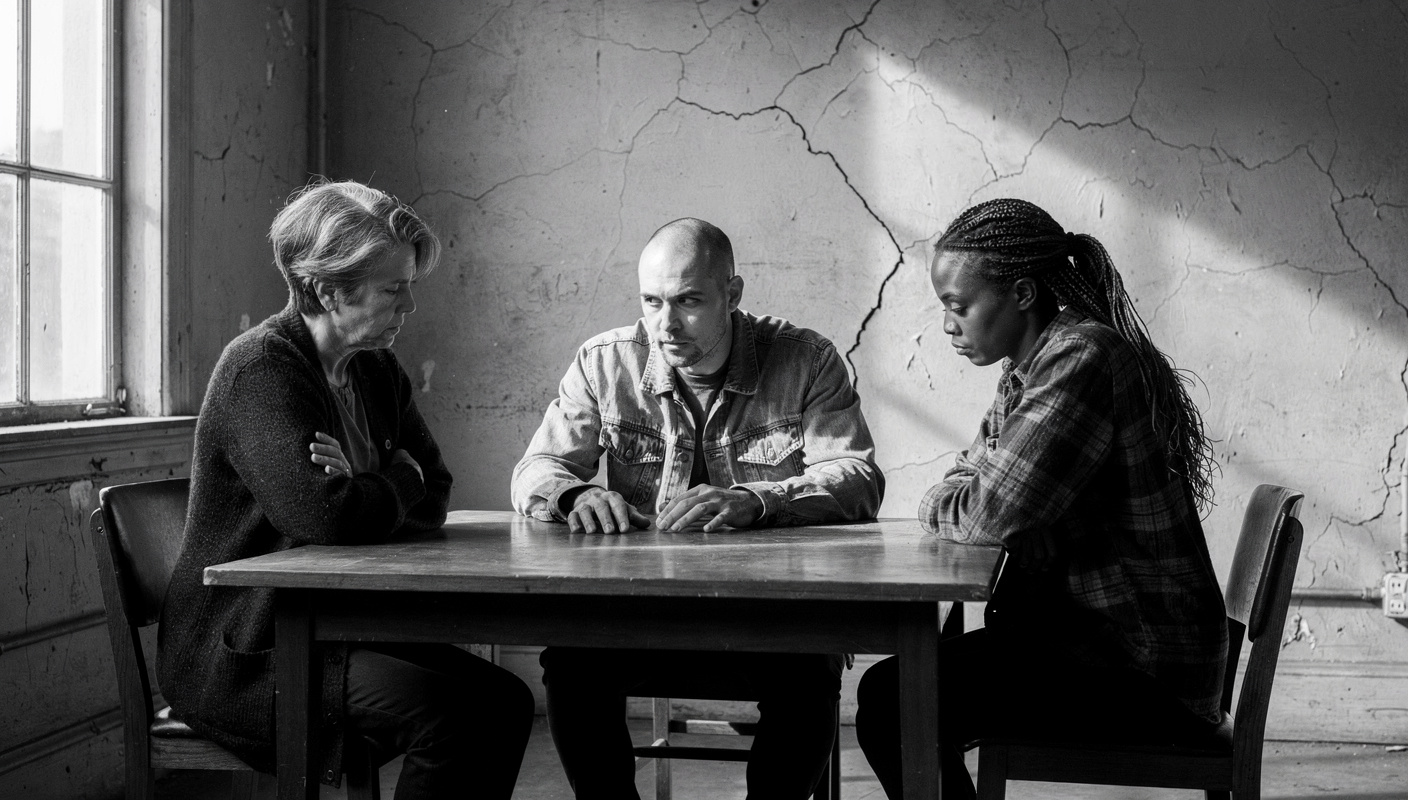
I have watched managers do everything right in a conflict and still lose the team afterward. They addressed the issue, kept it professional, reached a resolution. But then they stopped. The conversation ended, people went back to their desks, and the damage quietly hardened into permanent distance. The team never fully recovered its rhythm.
That is what happens when you resolve the conflict but skip the repair. Those are two different things.
To rebuild team synergy after a breakdown, you need more than a resolution. You need a structured process for healing the relationship itself: the trust, the shared purpose, the willingness to collaborate without bracing for the next collision.
In Say It Right Every Time, I call this the B.R.I.D.G.E. Method. It is a six-step framework drawn from Chapter 9 of Say It Right Every Time, designed specifically for the repair phase that most managers skip entirely. In this article, I will teach you every step in full, show you the method in action, and help you understand when and how to reach for it.
If you are still in the active conflict phase, you may want to start with How to Rebuild Team Synergy After Conflict or Organizational Change before coming back here.
Why Structure Matters More Than Good Intentions
Most people believe that if they care enough about their team, they will find the right words when it matters. That is a generous belief. It is also wrong.
Under pressure, without a structure to fall back on, people default to their least useful habits. They over-apologise and say nothing meaningful. They address the surface and avoid the root. They agree in the room and drift apart by the following week.
Here is where having a framework makes a genuine difference:
- When emotions are still raw and the instinct is to rush past the discomfort, a structured method keeps the conversation on track and productive.
- When one person wants to repair the relationship and the other is still guarded, a clear process gives both parties something neutral to follow rather than something personal to resist.
- When a team has a pattern of unresolved conflict, a repeatable framework builds the confidence that repair is actually possible, not just a one-off lucky conversation.
- When the stakes are high, such as a team that must keep delivering results while rebuilding trust, structure prevents the repair conversation from creating new damage.
- When a leader is mediating between two team members, a method gives the leader authority and direction without requiring them to take sides.
The frameworks in this article give you that structure. Use them until they become instinct.
"The Conversation You're Avoiding Is the One You Need to Have."
"The Conversation You're Avoiding
Is the One You Need to Have."
Stop rehearsing conversations you'll never have. Say It Right Every Time gives you 115 word-for-word scripts and 16 proven frameworks to speak with confidence in every conversation that matters.
The B.R.I.D.G.E. Method: A Framework to Rebuild Team Synergy After a Breakdown
The B.R.I.D.G.E. Method is a six-step relationship repair framework drawn from Chapter 9 of Say It Right Every Time. I developed it to address what I consistently saw missing in team conflict resolution: a deliberate, structured process for rebuilding the relationship after the dispute itself is settled. Each letter represents one step in a sequence that moves a team from damage to renewed trust.
What it is designed for: The B.R.I.D.G.E. Method is built for the repair phase. It is the right tool after an active conflict has been addressed, when trust is damaged and team synergy has broken down. It works between two individuals, between a manager and a team member, or between two groups whose collaboration has fractured.
How it works:
B: Begin with an Apology. This is not a formality. It is a genuine acknowledgment of harm, without conditions or qualifications. An apology that begins with "I am sorry you felt that way" is not an apology; it is a deflection. The apology must be specific: name what happened, own your part in it, and mean it. Example: "I want to start by apologising for how I handled that meeting. I cut you off in front of the client, and that was wrong of me."
R: Reaffirm the Relationship. Before you dig into what went wrong, you name why the relationship matters. This step signals that the goal of the conversation is repair, not recrimination. It also lowers defensiveness, which makes everything that follows easier. Example: "I value what we build together on this team, and I do not want this to define how we work from here."
I: Identify the Breakdown. This is where you name the real issue, not the symptom. Most team conflicts have a surface argument and a deeper cause: unclear expectations, a missed commitment, a pattern of being talked over, unspoken resentment that finally broke the surface. You need to identify the actual breakdown, or you will repair the wrong thing. Example: "I think the real issue is that we have never agreed on how decisions get made when we disagree. That has been building for months."
D: Discuss New Expectations. Once the breakdown is named, you build something better together. This step is not about issuing rules. It is about co-creating the norms that will govern how you work going forward. Both parties contribute. Both parties own the outcome. As I write in Say It Right Every Time: "A solution that is imposed on one person is not a solution; it is a temporary ceasefire." Example: "Going forward, if either of us has a concern before a client meeting, we raise it privately first. Can we agree to that?"
G: Gain Agreement. Verbal clarity is not enough. You need explicit, confirmed agreement on the new expectations. This step asks each person to state their commitment out loud, so there is no ambiguity about what was agreed. A vague nod at the end of a difficult conversation is not agreement; it is exhaustion. Example: "So we are both agreeing: no public challenges, private first. Is that right? Yes or no?"
E: Establish a Follow-up. This is the step most people skip, and it is the one that determines whether the repair holds. You schedule a specific check-in, in advance, to review how the new expectations are working. Without it, the repair conversation becomes a memory that fades under the pressure of daily work. Example: "Let us put 20 minutes in the diary for two weeks from today, just to check in on how this is going."
When to use it: Use the B.R.I.D.G.E. Method in the days following a significant team conflict, once the initial heat has cooled. It works best when both parties are willing to engage, when the relationship has genuine value worth preserving, and when the stakes of continued breakdown are high enough to motivate real honesty.
When not to use it: Do not reach for this method in the middle of a live dispute. The B.R.I.D.G.E. Method is a repair tool, not a de-escalation tool. If the conflict is still active, use a structured resolution process first. This method also requires genuine willingness from both sides; it will not work if one party is still in a defensive or adversarial posture.
A quick example in practice: Two team members, Priya and Marcus, had a public falling-out over a project decision that humiliated Priya in front of the wider team. Three days later, their manager sits with them both. Marcus begins: "I want to apologise for what happened in that meeting. I overrode your recommendation without explanation, and I should not have done that." He then says: "I think we are both good at what we do, and I want us to work well together." They identify the real breakdown: there was never a clear process for how project decisions were escalated. They agree on a new norm, both state it out loud, and book a 20-minute check-in for the following fortnight. Four weeks later, the team is delivering together again.
Eamon's take: I have seen broken teams become the strongest teams in a company, not despite going through a breakdown, but because they had the courage to repair it properly. A repaired relationship is often stronger than one that was never tested.
How to Choose the Right Framework for Your Situation
Knowing the frameworks is only half the work. Knowing which one to reach for is the other half.
The B.R.I.D.G.E. Method is a single framework with six components, each targeting a distinct phase of the repair. Here is a guide to matching each step to the right moment:
| Situation | Best B.R.I.D.G.E. Step |
|---|---|
| Trust is broken and the other person feels dismissed or disrespected | Begin with an Apology (B) |
| The conversation feels adversarial and both parties are guarded | Reaffirm the Relationship (R) |
| The same conflicts keep resurfacing without resolution | Identify the Breakdown (I) |
| The team has no shared norms for how they handle disagreement | Discuss New Expectations (D) |
| A repair conversation ended without clear commitments | Gain Agreement (G) |
| A previous repair effort fell apart within weeks | Establish a Follow-up (E) |
| Two departments have a history of blame and poor collaboration | Full B.R.I.D.G.E. sequence from B to E |
If you are unsure where the real damage lies, run the full sequence. The method is designed to surface what is broken even when it is not obvious at the start. For deeper inter-departmental breakdowns, you may also find value in How to Rebuild Trust Between Two Departments Whose Lack of Synergy Is Hurting Results, which builds on this approach at a larger scale.
When in doubt, start with the simplest framework. Complexity is not strength.
Common Mistakes When Using the B.R.I.D.G.E. Method
Frameworks only work when you use them with discipline, not as a script you recite.
Rushing through the apology. Many people treat the first step as a formality they want behind them quickly. A rushed, vague apology closes doors rather than opening them. Take the time to make it specific and genuine, or the rest of the method builds on sand.
Skipping Reaffirm because it feels awkward. The moment you say "I value this relationship" out loud in a tense room, the temperature drops. Most people skip it because it feels uncomfortable. That discomfort is the point.
Naming symptoms instead of the real breakdown. "We need to communicate better" is not a breakdown. It is a wish. The Identify step demands precision: what specifically failed, when, and why. If you cannot name it clearly, you cannot fix it.
Ending on agreement without scheduling the follow-up. This is the most common failure I have seen. The conversation goes well, both parties feel better, and then everyone goes back to work and the new norms quietly dissolve. The follow-up is not optional; it is the mechanism that makes the repair real.
Using the method when the conflict is still live. The B.R.I.D.G.E. Method is a repair framework, not a crisis tool. If someone is still angry and reactive, the structure will feel like a manipulation rather than an offer. Let the heat pass first.
A framework used badly is still better than no framework. But a framework used well is a genuine advantage.
How to Start Using the B.R.I.D.G.E. Method Today
Do not try to master all six steps at once. Learn the sequence in stages, and let each step become comfortable before you lean fully on the next.
Start by memorising the six letters. Before your next repair conversation, write out B.R.I.D.G.E. on paper and what each letter stands for. You do not need to have it memorised to use it; you just need to know the sequence so you can guide the conversation without losing your place.
Practise the apology step first. The opening step is the one most people do badly. Spend time crafting a specific, genuine apology before any repair conversation. Use the structure: name what happened, own your part, state its impact. Do this out loud, alone, until it sounds natural.
Run the full method in a low-stakes situation. Before you use B.R.I.D.G.E. in a high-stakes team breakdown, test it in a smaller repair: a minor misunderstanding with a colleague, a conversation where you have let something slide too long. The mechanics become clear when the pressure is low.
Build the follow-up habit. After every repair conversation, schedule the check-in before you leave the room. Make it non-negotiable for yourself. This single habit will transform how durable your repairs become over time.
Frameworks are tools. The more you use them, the less you have to think about them.
Key Takeaways
Here is what to carry with you from this article.
- The B.R.I.D.G.E. Method is not a conflict resolution tool; it is a relationship repair tool used after the conflict to rebuild what was damaged.
- Resolving a dispute and repairing a relationship are two different tasks. Most managers do the first and skip the second.
- The six steps, Begin, Reaffirm, Identify, Discuss, Gain, Establish, are sequential for a reason. Each one prepares the ground for the next.
- The follow-up step is the one that determines whether the repair holds. Without it, even a strong repair conversation fades under the pressure of daily work.
- Genuine apology, co-created expectations, and explicit agreement are the three non-negotiables for any repair that actually lasts.
If you want to understand the warning signs that team synergy has broken down before you reach crisis point, read Signs Your Team Lacks Synergy and How to Fix It. If you want a complementary repair framework, the How to Use the C.O.R.E. Framework to Restore Team Synergy After a Breakdown article covers a different approach worth knowing. And for the psychological foundation that prevents breakdowns from happening in the first place, What Is Psychological Safety and How It Drives Team Synergy is essential reading.
You can also find the full B.R.I.D.G.E. framework, alongside the scripts that bring it to life, in Say It Right Every Time.
To rebuild team synergy is to choose, deliberately and with structure, to make something better than it was before it broke.
Frequently Asked Questions (FAQ)
What is the B.R.I.D.G.E. Method for rebuilding team synergy?
The B.R.I.D.G.E. Method is a six-step relationship repair framework designed to rebuild team synergy after conflict has damaged trust. It guides a team through apology, reaffirmation, honest diagnosis, new expectations, agreement, and a structured follow-up to restore trust and working momentum.
How do you rebuild team synergy after a serious conflict?
To rebuild team synergy after a serious conflict, you need a structured process, not just a conversation. The B.R.I.D.G.E. Method works by acknowledging what happened, reaffirming the relationship, identifying the root breakdown, and locking in new shared expectations with a follow-up plan.
When should you use the B.R.I.D.G.E. Method with your team?
Use the B.R.I.D.G.E. Method when trust has broken down between team members and the damage is affecting collaboration. It works best in the days following a serious conflict, not in the heat of the moment, and it requires both parties to be willing to engage.
How long does the B.R.I.D.G.E. Method take to rebuild team synergy?
The initial B.R.I.D.G.E. conversation typically takes 45 to 90 minutes. However, the real rebuild of team synergy happens over weeks, driven by the follow-up step. The framework sets the direction; consistent behaviour over time closes the gap.
What is the difference between the B.R.I.D.G.E. Method and the D.E.A.L. Method for team conflict?
The D.E.A.L. Method is designed for active conflict resolution, helping a team define an issue and agree on a solution in the moment. The B.R.I.D.G.E. Method comes after that, focused on repairing the relationship and rebuilding synergy for the long term.
Can the B.R.I.D.G.E. Method rebuild synergy between two departments?
Yes. The B.R.I.D.G.E. Method works between departments as well as individuals. The steps scale up when more people are involved, but the structure remains the same: acknowledge the breakdown, reaffirm the shared goal, identify what failed, and build new working agreements together.