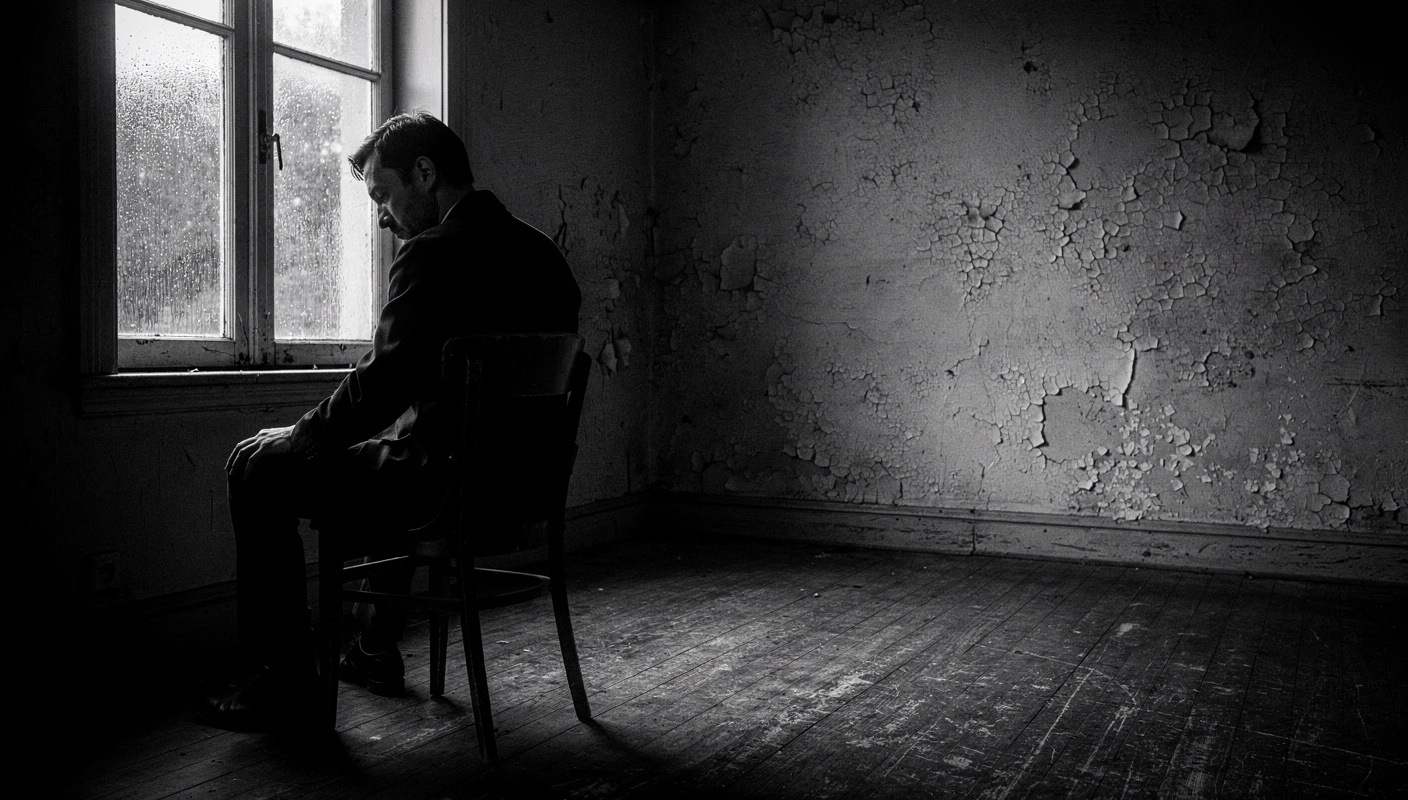

In Short
Unprocessed anger does not stay as anger. It transforms into the stories you accept as true about yourself: that you are too much, not enough, or permanently outside the circle. Self-awareness means seeing those stories for what they are, not simply living inside them.
- Old anger reshapes your self-concept gradually, so the distortion feels like clarity.
- The signs rarely look like anger; they look like personality, realism, or just "the way things are."
- Naming the pattern is the first act of reclaiming your self-perception.
Unprocessed anger self-perception is the slow distortion of your self-concept caused by anger that was never fully acknowledged or resolved. Over months and years, that emotional residue embeds itself into your identity as fixed beliefs about your worth, your capabilities, and what you deserve.
I have sat across from people, sharp, experienced, genuinely capable people, who could not understand why they kept pulling back at exactly the moment they should have stepped forward. One man I worked with, a manager of fifteen years, described it simply: "I just know I am not the person who gets chosen." He said it the way you state a fact about the weather. No self-pity. Just a quiet certainty. It took us months to trace that certainty back to its root, and what we found there was not weakness. It was unprocessed anger, years old, that had quietly settled into his identity like sediment in still water.
Unprocessed anger self-perception rarely announces itself. It does not arrive wearing its own name. It arrives dressed as self-awareness, as realism, as knowing your limits. That is what makes it so hard to catch. By the time it has shaped how you see yourself, it feels like the truth of you rather than a distortion of you. What follows is a guide to recognising the signs before another year passes inside them.
Why This Kind of Distortion Stays Hidden for So Long
Anger that gets expressed and resolved leaves a trace, but it moves through you. Anger that does not get resolved does not disappear. It finds somewhere to live.
Most of the time, it lives in your internal narrative, the running commentary you hold about who you are and how the world works. It masquerades as insight. "I know how this goes" feels wise until you realise you are using it to foreclose possibilities before they open.
The distortion develops slowly, which is exactly why your self-awareness cannot catch it in real time. You are inside the process the whole way through. A photograph changes gradually enough that you only notice the difference when you hold it next to a picture from a decade earlier.
"The Conversation You're Avoiding Is the One You Need to Have."
"The Conversation You're Avoiding
Is the One You Need to Have."
Stop rehearsing conversations you'll never have. Say It Right Every Time gives you 115 word-for-word scripts and 16 proven frameworks to speak with confidence in every conversation that matters.
Six Signs That Old Anger Is Rewriting Your Self-Concept
1. You Describe Your Own Limits with Unusual Certainty
What it looks like: You state boundaries on your ability, your potential, or your place in a room with a finality that does not invite discussion. Not "I tend to struggle with this" but "I am not someone who does that."
Why it happens: When anger at a situation, a person, or an injustice goes unacknowledged, the psyche often converts it into a belief about the self. The pain of "they did not choose me" becomes the safer, more controllable story "I am not someone who gets chosen."
Why it matters: These fixed self-descriptions act as a ceiling. You do not even attempt what the ceiling covers.
What to do: Write down three things you have told yourself you "just are not." For each one, ask when you first believed it. If you can name a specific period, you have found a thread worth following.
I have done this myself. I once told anyone who would listen that I was not someone who could hold an audience. What I actually was, was someone who had been publicly humiliated in front of forty people at twenty-three and had never addressed it.
2. Praise Lands Badly, Even When You Want It
What it looks like: Compliments make you uncomfortable, dismissive, or quietly suspicious. You deflect them quickly. You explain why they are not quite right.
Why it happens: Unprocessed anger, particularly anger at situations where you were overlooked or treated as less than, can create a defensive posture even toward positive attention. Your threat-detection system has learned that approval is unreliable, so it flags even genuine praise as suspect.
Why it matters: If you cannot receive recognition, you cannot accurately assess your own competence. Your self-perception stays tethered to the old wound rather than the current reality.
What to do: The next time someone compliments your work, say "thank you" and stop there. Do not explain, deflect, or qualify. Sit with the discomfort for ten seconds. That discomfort is worth examining.
This is the counterintuitive one. We expect unprocessed anger to make people defensive about criticism. But in my experience, it just as often makes people defensive about being seen at all.
3. You Read Neutral Situations as Mildly Hostile
What it looks like: A colleague's brief reply feels like a snub. A meeting you were not included in feels pointed. You often catch yourself constructing explanations for why someone meant something sideways.
Why it happens: Old anger creates a perception filter. Your brain, shaped by past experiences where your position was threatened or disrespected, begins to scan for similar patterns in the present. This is not weakness; it is your nervous system doing what it was trained to do.
Why it matters: Your self-perception is built partly from how you believe others see you. If you consistently read neutral signals as negative, you build an identity as someone who is tolerated rather than valued. For more on how this kind of threat-detection can spiral in group settings, signs your team's amygdala hijack problem is destroying synergy in real time is worth your time.
What to do: When you catch yourself constructing a negative interpretation of a neutral event, write it down. Then write two equally plausible neutral interpretations. You are not trying to be positive. You are trying to break the automatic read.
4. Your Tone Sharpens Before the Conversation Warrants It
What it looks like: People have told you, more than once, that you came across as harsh when you did not intend to be. Or you notice, looking back, that you escalated faster than the situation called for.
Why it happens: Suppressed anger does not stay suppressed. It leaks. It colours your tone and your word choice in ways that are invisible to you in the moment because you have normalised a certain level of internal tension.
Why it matters: How you come across shapes how people respond to you, which in turn feeds your story about your relationships and your place in them. If you consistently read others as defensive or cold, part of the reason may be that your tone invited it before a single difficult word was spoken. The C.O.R.E. Framework for staying calm when feedback triggers a defensive reaction offers a practical method for interrupting this before it costs you.
What to do: After your next tense conversation, replay your opening thirty seconds. Ask: was I already in a defensive posture before the other person gave me any reason to be?
5. You Have Quietly Stopped Expecting Certain Things
What it looks like: There are categories of professional or personal possibility that you no longer consciously pursue and rarely think about. Not because you decided they were wrong for you, but because at some point they stopped feeling available.
Why it happens: This is perhaps the most insidious sign of all. Anger at being passed over, dismissed, or underestimated, when left unprocessed, does not stay as anger toward others. It turns inward and becomes resignation. You stop asking for the promotion, stop pitching the idea, stop trusting that your voice belongs in certain rooms. It no longer feels like a wound. It feels like realism.
Why it matters: Resigned self-perception is the most stable form of identity distortion because it requires nothing of you. It does not hurt. It just quietly narrows your life, year by year.
What to do: Name one thing you stopped expecting. Ask yourself honestly: did I decide this was not for me, or did something happen that taught me not to reach?
I know a man who was so certain he was not a leader that he turned down three promotions over eight years. He was the best natural communicator I have ever known. The certainty came from one manager, twenty years earlier, who told him he lacked gravitas. He had never questioned it.
6. You Are More Comfortable Giving Feedback Than Receiving It
What it looks like: You are perceptive, even generous, when assessing others. But when the mirror turns toward you, you go quiet, rigid, or dismissive.
Why it happens: Unprocessed anger often emerges from experiences where your adequacy was judged harshly or unfairly. The protective response is to become the one doing the assessing rather than the one being assessed. Staying in the role of evaluator feels safer.
Why it matters: Self-awareness depends on your ability to take in accurate information about yourself. If feedback triggers a shutdown response, your self-perception stays fixed at whatever it was the last time you were genuinely open. The confidence-competence loop and how it affects feedback quality explains precisely why this gap compounds over time.
What to do: The next time you receive feedback, ask one follow-up question before responding. Just one: "Can you tell me more about what you observed?" You are buying yourself time and building the muscle of receiving.
7. Your Leadership Voice Carries Tension You Cannot Fully Account For
What it looks like: Others describe your communication style as guarded, clipped, or unpredictable. You feel clear and direct. The gap between those two experiences is the sign.
Why it happens: When anger shapes your self-perception, it also shapes how you present yourself. You may have developed a version of authority that is built on control rather than connection, because historically, lowering your guard cost you something. If this resonates, signs your leadership voice is driven by anxiety rather than intention maps this territory in detail.
Why it matters: A communication style built on old anger rather than present intention is never fully yours. It is a defence mechanism with a job title.
What to do: Ask one trusted person, not someone who will soften everything, to describe how you sound when you are under pressure. Listen without justifying.
The Root That Feeds All of These Signs
Each sign above looks different on the surface. But they share a common root: anger that was felt, never named, and never resolved. Instead of moving through you, it became a lens.
That lens does the one thing a lens always does: it organises everything you see into a coherent picture. The problem is that the picture is organised around a wound, not around reality. Your self-concept, your expectations, your posture in conversations, all of it gets shaped by that original unacknowledged experience.
This is why addressing one sign rarely resolves the others. The C.O.R.E. Framework for staying grounded during a tense workplace conversation can help you manage the symptoms in the moment. But the systemic work is about tracing the emotional residue back to its source and naming what actually happened there.
A Simple Diagnostic: Do Any of These Describe You Right Now?
Be honest. A yes or no is enough.
- I have described my own limitations with certainty in the last month.
- I have deflected or dismissed genuine praise in the last two weeks.
- I have interpreted a neutral message from a colleague as a slight.
- Someone has told me, in the last year, that my tone surprised them.
- There is at least one category of professional possibility I have quietly stopped pursuing.
- I find it easier to assess others than to sit with assessment of myself.
- There is a gap between how clear I feel inside and how others describe me.
If you answered yes to one or two: Worth watching. These signs can belong to a difficult week, not a pattern.
If you answered yes to three or four: A pattern is present. Something worth examining with honesty and without self-blame.
If you answered yes to five or more: Old anger has had real influence over your self-perception. This is not a judgment. It is information you can act on.
Where to Begin
You do not need to excavate your entire history. Start smaller than that.
Pick the one sign that landed heaviest as you read. Not the most dramatic one. The one that came with a quiet recognition, the slight internal shift that said "yes, that one."
Write down the belief about yourself that sits underneath that sign. Then write down when you first held that belief. You are looking for a period, not a precise moment. Something around the time you learned that particular version of yourself.
Understanding how the confidence-competence loop shapes how managers handle tension can also help you see how your self-perception affects your professional range in real situations. And if the amygdala hijack is a new concept to you, understanding it will help you see why old anger does not stay past; it recruits your neurology to keep it present.
Here is the truth of it: unprocessed anger self-perception does not require a dramatic intervention. It requires one honest question, asked with courage, and then the patience to follow where it leads. The person on the other side of that question is not someone you need to become. They are someone you have always been, waiting behind the distortion to be clearly seen.
Frequently Asked Questions (FAQ)
What is unprocessed anger self-perception?
Unprocessed anger self-perception is the gradual distortion of how you see yourself caused by anger that was never fully acknowledged or resolved. Over years, that emotional residue settles into your identity as fixed beliefs about your worth, your limits, and what you deserve.
How does unprocessed anger change the way you see yourself?
Unprocessed anger rewires your internal narrative in small, nearly invisible steps. You begin to see yourself as someone who gets overlooked, someone who must stay guarded, or someone who is fundamentally difficult, and you stop questioning where those beliefs came from.
What are the signs that old anger is affecting your self-awareness?
Key signs include a persistent sense of being underestimated, reflexive defensiveness during calm conversations, difficulty accepting praise, and a quiet certainty that certain doors are closed to you. These patterns feel like personality traits, but they are emotional residue wearing a disguise.
Can unprocessed anger affect how you come across to others without you realising?
Yes. Old anger shapes your tone, your posture, and the assumptions you project onto others long before you are conscious of it. People around you often sense the tension before you do, which is why self-awareness work requires honest feedback from trusted sources.
How do you start addressing unprocessed anger that has shaped your self-perception?
Start by naming one belief you hold about yourself that arrives with heat or heaviness. Ask when you first held that belief and what happened around that time. You are not looking for a revelation, just a crack of daylight between the event and the identity you built around it.
Why is unprocessed anger so hard to detect in your own self-perception?
Because it does not feel like anger after a while. It feels like realism. The stories it writes become your working assumptions about the world, and we rarely interrogate our assumptions. That is precisely why an outside perspective, or structured self-reflection, is often the first step toward seeing it clearly.