
In Short
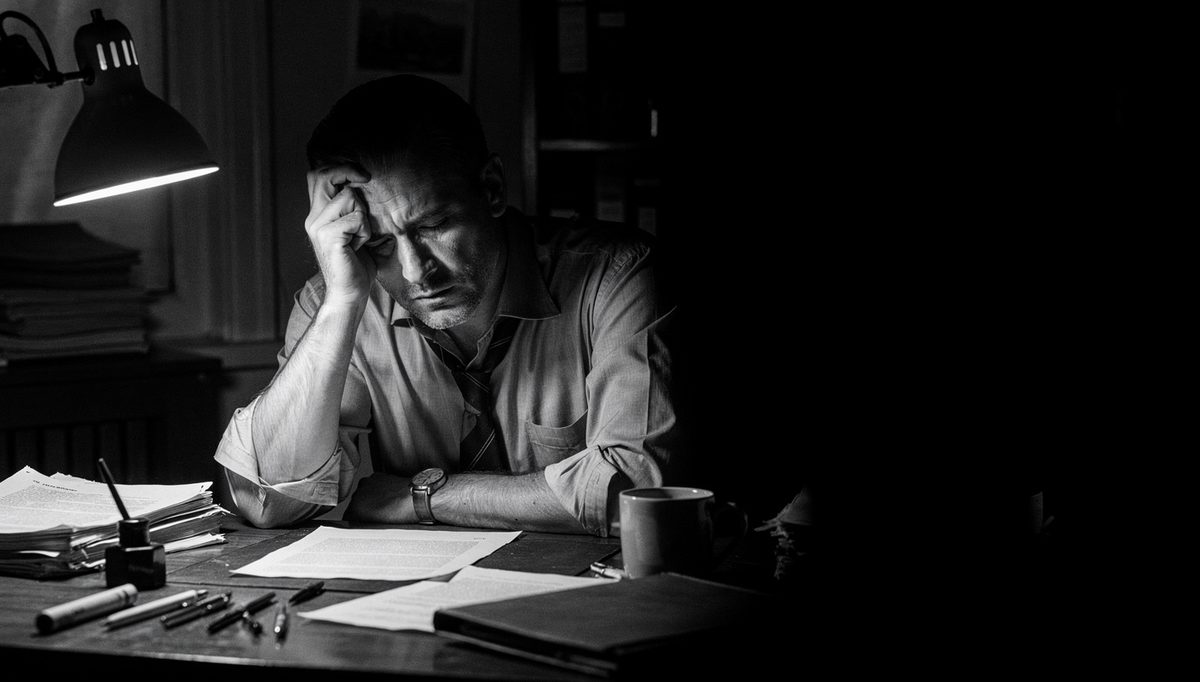
Decision fatigue and emotional self-awareness are connected by a shared resource pool. Every choice you make across a day draws from the same cognitive reserve you need to monitor your internal state accurately. When that reserve runs low, your self-awareness does not switch off cleanly; it degrades quietly, leaving you reactive, misreading your own signals, and believing you are still operating clearly.
- Self-awareness is an active cognitive process that requires mental energy, not a fixed trait that stays constant.
- Decision fatigue reduces your capacity for self-monitoring before you feel the effects consciously.
- The moments when accurate self-awareness matters most are often the same moments fatigue has compromised it furthest.
Decision fatigue self-awareness describes the erosion of your capacity to accurately read your own emotional state as a direct result of accumulated decision-making. Each choice depletes the cognitive resources that power honest self-monitoring, leaving you reactive and internally opaque when clarity matters most.
What Most People Understand About Self-Awareness (and Where That Understanding Stops)
Most people who take self-awareness seriously think of it as a personal quality. You either have it or you are working to build it. You know yourself, you notice your reactions, you catch yourself before you say something you will regret. That is the common understanding, and it is not wrong. It is just incomplete.
What that picture misses is that self-awareness is not a fixed trait you carry with you unchanged through the whole day. It is a capacity, and like every capacity, it runs on fuel. Specifically, it runs on the same cognitive fuel that powers every other demanding mental task you perform, including every decision you make from the moment you wake up.
Here is what I have noticed after six decades of watching people communicate: the person who handled a difficult conversation brilliantly at nine in the morning can handle an almost identical conversation badly at four in the afternoon. Same person. Same situation. Completely different level of self-knowledge in the room. The difference is almost never about skill or character. It is about depletion.
Understanding why self-awareness degrades across the course of a day is not an academic exercise. It is the difference between being able to trust your self-knowledge and being blindsided by your own reactions.
"The Conversation You're Avoiding Is the One You Need to Have."
"The Conversation You're Avoiding
Is the One You Need to Have."
Stop rehearsing conversations you'll never have. Say It Right Every Time gives you 115 word-for-word scripts and 16 proven frameworks to speak with confidence in every conversation that matters.
The Shared Resource Problem: Why Every Decision Costs You Twice
Here is the mechanism you need to understand. Your brain does not run separate systems for decision-making and self-awareness. Both processes draw from a shared pool of attentional and cognitive resources.
When you make a decision, any decision, your brain allocates mental resources to weigh options, anticipate consequences, and commit to a course of action. That process has a cost. A small decision has a small cost. A complex or emotionally loaded decision has a much larger one. But every single choice across your day draws something from the same pool.
Self-awareness works the same way. Noticing what you are feeling, naming the emotion accurately, observing your own impulses before they become words or actions: all of that requires active cognitive effort. It is not passive. Your brain has to turn some of its attention inward, observe what is happening, and interpret it honestly. That takes resources.
The problem is that by mid-afternoon on a demanding day, you have already spent a considerable portion of those resources. You answered twenty emails, sat through three meetings, made judgment calls you did not even log as decisions. Your pool is lower than it was at nine. Self-awareness does not disappear, but it weakens. The signal your emotions send becomes harder to read. The gap between what you are feeling and what you consciously notice widens. You lose the early-warning system that keeps reactive behaviour in check.
This is directly relevant if you work in a role that demands frequent emotional regulation under pressure. When cognitive depletion reduces self-monitoring, the amygdala's signals pass through with less conscious oversight. You do not catch yourself getting defensive. You just become defensive, and only notice it afterwards.
What This Erosion Actually Looks Like in Practice
The insidious thing about this kind of depletion is that it does not feel like losing capability. It feels normal. You are tired, perhaps, but you do not feel less self-aware. You feel like yourself.
Consider this pattern, which I have watched play out more times than I can count. A manager spends her morning in back-to-back strategy sessions, making calls on budget, personnel, and priority. By early afternoon she is still sharp, still capable. Then a colleague asks for feedback on a piece of work. The colleague is hoping for a real conversation. Instead, they get something clipped, slightly dismissive, and noticeably cooler than usual. The manager does not intend this. She would be surprised if you told her that is how it landed. She has no idea that her self-awareness has degraded to the point where she could not feel the edge in her own tone.
That is the erosion in action. Not a dramatic breakdown. Not an obvious emotional outburst. Just a slow flattening of internal perception, until the signals your emotions are sending become noise you no longer register.
Recognising defensive reactions in yourself depends entirely on catching the early signal before it becomes a full reaction. Decision fatigue does not make you more emotional; it makes you less able to notice the emotion arriving. That is a crucial distinction. The emotion still comes. You just lose the early-warning window that self-awareness normally gives you.
A second scenario: a leader heading into a difficult performance conversation at the end of a long day. He has rehearsed what he wants to say. He knows the content. But by that point in the day, his capacity for real-time self-monitoring has worn thin. He loses the thread of how he is coming across. He cannot feel himself hardening when the conversation gets uncomfortable. He walks out thinking it went reasonably well. His team member walks out rattled.
Why People Do Not Notice This Happening to Them
There is a particular cruelty in this mechanism: the more depleted your self-awareness becomes, the less equipped you are to notice that it is depleted. Your internal observer goes quiet, and you do not miss it, because the very faculty you would use to notice the absence is the one that has gone quiet.
Most people attribute their late-day reactivity to the situation rather than to their own state. The colleague is irritating. The conversation was difficult. The problem was genuinely complex. All of that may be true. But it does not explain why the same situation that would have been manageable at ten in the morning becomes genuinely difficult at three in the afternoon.
There is also something worth naming about the confidence trap. People with strong baseline self-awareness often trust themselves most in exactly the conditions that have most eroded their clarity. They know they are emotionally intelligent. They have practiced self-monitoring. They assume they are still doing it well, because they cannot feel the degradation. The confidence-competence relationship is complicated here: high confidence in your self-awareness, at exactly the moment fatigue has reduced it, is one of the more dangerous places to be.
The people who handle this best are not necessarily the ones with the strongest self-awareness under ideal conditions. They are the ones who treat their self-awareness as a resource to be managed, not a fixed capacity to be trusted unconditionally. They build systems around it. They schedule accordingly. They develop honest patterns for recognising when they are no longer reliable internal observers. This is precisely what separates managers who handle tension consistently well from those who do not.
What to Do Differently When You Understand the Mechanism
The practical implications here are specific, and they follow directly from the mechanism.
Protect your most demanding communication for the right time of day. If you know that a conversation will require genuine self-monitoring, sharp emotional discernment, and real-time awareness of your own reactions, do not schedule it at the end of a decision-heavy day. This is not about avoiding hard conversations. It is about giving your self-awareness the conditions it needs to serve you well. The strongest leadership voices are built partly on this discipline: choosing when to engage, not just how.
Build micro-pauses between demanding tasks. Even five minutes of genuine disengagement between cognitively loaded stretches helps restore attentional resources. You are not resting from work; you are resetting the self-monitoring capacity that the next conversation will need. This is a practical tool, not a luxury.
Develop a personal depletion signal. After decades of practicing this myself, I know the specific ways my self-awareness degrades before I consciously register it. My sentences get shorter. My patience for ambiguity drops. I stop asking questions and start making statements. Learn your own early markers. They are there if you look for them honestly. Once you know them, they become a reliable signal to slow down rather than push forward.
Use structure when your self-awareness is low. The C.O.R.E. framework exists precisely for situations where you cannot fully trust your in-the-moment self-monitoring. A clear method gives you external scaffolding when internal clarity is compromised. This is not a workaround; it is intelligent preparation.
Audit your schedule honestly. Look at where your most emotionally demanding conversations typically fall. Look at how much decision load you carry before them. If you routinely front-load your day with back-to-back choices and end with your most sensitive interactions, you are systematically scheduling yourself into diminished self-awareness. That is a structural problem with a structural solution.
The Long View on Self-Awareness as a Managed Resource
Here is the truth of it, which took me longer to fully accept than I would like to admit. Self-awareness is not a character trait you either have or lack. It is a practice, and that practice depends on real cognitive conditions being reasonably met.
The most emotionally intelligent people I have worked with over six decades were not people who had infinite self-awareness on tap. They were people who respected the limits of their self-monitoring, built habits around protecting it, and treated their own clarity as something worth maintaining deliberately. They did not confuse discipline with suppression. They understood that staying clear about your own interior life is active work, and that work gets harder when you are cognitively depleted.
Managing decision fatigue is, in this sense, a form of self-respect. It is an acknowledgment that your capacity for honest self-knowledge deserves to be protected, not assumed. The decisions you make about when to have hard conversations, when to push forward, and when to pause are themselves acts of self-awareness, if you make them with this mechanism clearly in mind.
Decision fatigue self-awareness is not a niche concern for people with unusually demanding jobs. It is a daily reality for anyone who makes decisions, interacts with others, and cares about doing both well.
Frequently Asked Questions (FAQ)
What is decision fatigue self-awareness?
Decision fatigue self-awareness refers to the way repeated decision-making depletes the mental resources you need to accurately read your own emotional state. As cognitive energy drops, your capacity for honest self-monitoring shrinks, and you become more reactive and less reflective without realising it.
How does decision fatigue affect emotional self-awareness?
Each decision you make draws on the same mental resources that power self-monitoring. As those resources deplete across the day, your ability to notice what you are feeling, why you are reacting, and what your emotions are telling you becomes progressively weaker, often without any conscious awareness of the change.
Why do I lose self-awareness when I am tired or overwhelmed?
Fatigue and overwhelm reduce the attentional resources your brain needs to observe its own activity. Self-awareness is an active cognitive process, not a passive one. When your mental energy is low, your brain defaults to automatic, reactive patterns and stops allocating resources to internal monitoring.
Can decision fatigue cause emotional reactivity at work?
Yes. When decision fatigue reduces your self-awareness, you lose early access to your own emotional signals. You stop noticing the tension building before it peaks. This means small frustrations escalate faster, defensive reactions arrive without warning, and you are more likely to respond from impulse rather than intention.
How can I protect my self-awareness from decision fatigue?
Protect your highest-stakes communication for earlier in the day when your self-monitoring capacity is strongest. Build brief pauses between demanding tasks to restore attentional resources. Notice patterns in when your self-awareness typically drops, and treat that window as a signal to slow down, not push through.
Is decision fatigue the same as burnout?
They are related but distinct. Decision fatigue is a short-term depletion that resets with rest and can happen within a single day. Burnout is a long-term state of chronic exhaustion. Decision fatigue is one of the daily mechanisms that, if unmanaged over time, contributes to the deeper depletion that becomes burnout.