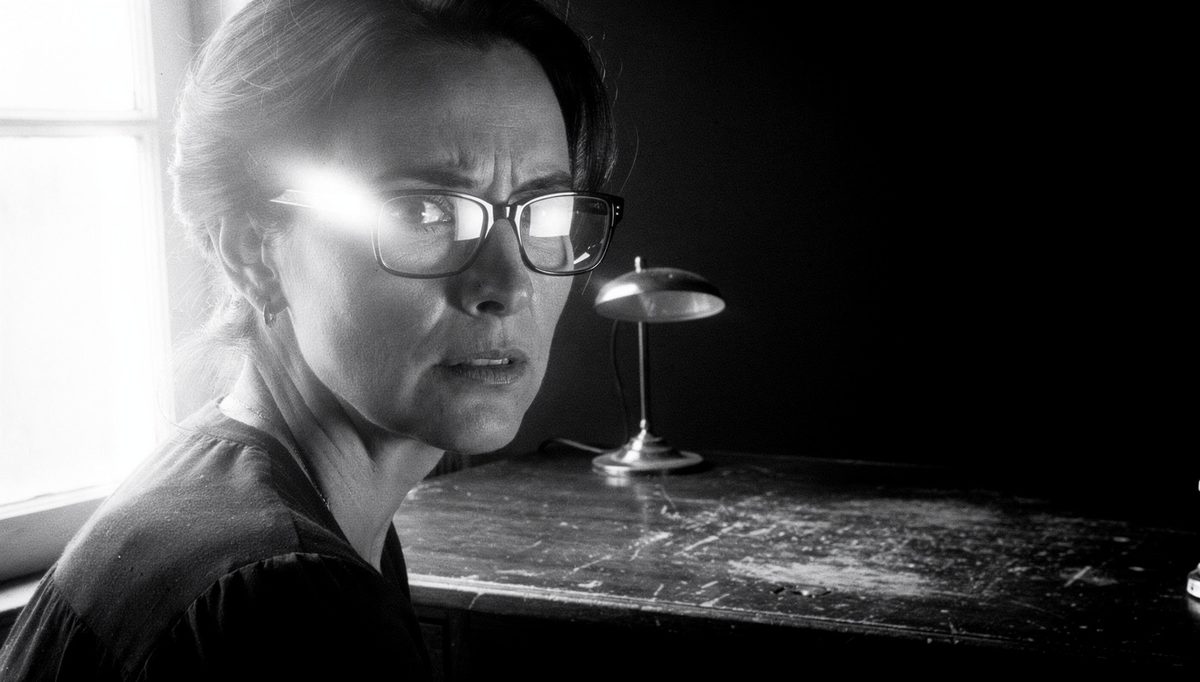

In Short
Glasses, sunglasses, and screen glare distort gaze perception in ways neither speaker nor listener consciously registers, yet both feel the damage.
- Reflective lenses and glare can make direct eye contact appear avoidant or absent.
- Tinted frames reduce the visibility of the signals people use to judge your genuine attention.
- These problems are invisible to the wearer and quietly corrosive to trust.
Gaze perception glasses distortion occurs when eyeglass lenses, tints, or reflected light alter how another person reads the direction, intensity, or presence of your eye contact, creating a false impression of your actual attentiveness or intent during face-to-face or on-screen interaction.
Why This Problem Catches Good Communicators Off Guard
A colleague told me once that a client had complained about her. The client said she seemed distant, even cold, in their meetings. She was devastated. She had spent years building the skill of direct, warm eye contact. She prepared carefully for every meeting. She was fully present. What neither of them had identified was that she had recently changed her glasses, and the new lenses had a slight tint that darkened in indoor light.
Gaze perception problems caused by glasses rarely announce themselves. The person wearing the frames has no idea what their lenses are broadcasting. They feel engaged, so they assume they look engaged. Meanwhile, the person across the table or on the other side of a video call is quietly registering something they cannot name, a sense that the eyes are not quite reachable.
The trouble with silent damage is that people do not bring it to you. They simply start trusting you a little less, engaging a little less, and they could not tell you exactly why.
"The Conversation You're Avoiding Is the One You Need to Have."
"The Conversation You're Avoiding
Is the One You Need to Have."
Stop rehearsing conversations you'll never have. Say It Right Every Time gives you 115 word-for-word scripts and 16 proven frameworks to speak with confidence in every conversation that matters.
What Lenses, Glare, and Tint Actually Do to Your Eye Contact
Here are the specific signs that gaze perception is being distorted by what sits in front of your eyes. Each one is observable. Each one carries a real cost.
1. Your direct gaze reads as avoidant because of lens reflection.
What it looks like: The person you are speaking with glances at your eyes and sees their own reflection, or a wash of white light, instead of your pupils. From their position, it appears that your eyes are turned away or unfocused.
Why it happens: Light hitting the lens surface at certain angles creates a mirror effect, particularly with polished or uncoated lenses. The reflection overwrites whatever is behind it.
Why it matters: Eye contact is how people confirm that you are with them. When that signal is obscured, they register your absence even when you are completely present.
What to do: Shift your light source so it falls from the side rather than directly in front of you. Anti-reflective coatings on lenses are not a vanity option; they are a communication tool.
Eamon's note: I spent two years wondering why people interrupted me more in morning meetings than afternoon ones. The light through the east-facing window was killing my eye contact every time.
2. Sunglasses in outdoor or transitional settings destroy the trust signal entirely.
What it looks like: You are standing with a colleague outside, or you have walked through a glass door where the light is still bright. Your transition lenses have not cleared. You are speaking while your eyes are completely hidden.
Why it happens: Transition lenses respond to UV levels, not social context. They do not know you are in the middle of an important conversation.
Why it matters: Hidden eyes remove the primary signal people use to judge honesty. Without access to your eyes, people unconsciously default to a state of mild uncertainty. For nonverbal communication in tense situations, this uncertainty can be the match that lights the fire.
What to do: Pause the conversation for thirty seconds while you move somewhere the lenses can clear, or hold your glasses briefly. The pause costs you almost nothing. The alternative costs you credibility.
Eamon's note: Nobody will tell you your lenses are still dark. They will just feel, without quite knowing why, that you are hiding something.
3. Screen glare during video calls masks your eye contact at the moment it matters most.
What it looks like: On a video call, your lenses catch the brightness of your monitor, creating bright white reflections that sit directly over your eyes. Participants see a face with light where the eyes should be.
Why it happens: The screen is a direct light source positioned precisely where it will create the worst reflection angle on your lenses. Most people never see this because they are looking at the gallery view, not at their own preview.
Why it matters: Video calls already strip out most of the warmth and depth of in-person communication. When screen glare then removes the only reliable visual signal you have left, the connection becomes almost entirely mechanical.
What to do: Check your own thumbnail in any video call before it begins. Tilt your frames down slightly on your nose so the lens sits further from the screen angle. Raise your screen so the camera is at eye level, which changes the reflection geometry.
Eamon's note: This is the non-obvious one. Most people only see their video image in full-screen. The problem only becomes obvious when you check the small preview box.
4. Heavy frames cast shadows that narrow and harden your eye expression.
What it looks like: Thick, dark-framed glasses create a band of shadow directly under the brow, which makes the eye region look smaller, more guarded, and more severe than it actually is. You can appear to be frowning when you are not.
Why it happens: The geometry of how light falls across a wide, dark frame is not something the brain corrects for consciously. It simply registers the shadow as a contracted, cautious expression.
Why it matters: In any meeting where you need to appear open and approachable, this matters enormously. If you are trying to ensure every participant gets heard, you need your face to broadcast welcome, not guardedness.
What to do: Be aware of this in rooms with overhead fluorescent lighting, which is the worst offender. Lean slightly forward so the natural light from a window catches your eye region directly.
Eamon's note: A man I admired enormously used to be described as intimidating in meetings. He was one of the gentlest people I knew. He changed his frames to a lighter, thinner style and people started using the word warm within a month.
5. Tinted lenses reduce the visibility of pupil dilation, killing the signal of genuine interest.
What it looks like: You are listening carefully to someone's idea. You find it genuinely interesting. Your pupils have naturally dilated slightly, the biological signal of real engagement. But your lightly tinted lenses filter out that signal entirely.
Why it happens: Pupil dilation and iris visibility are two of the primary nonverbal cues people use to gauge authentic attention. They are processed subconsciously and quickly. Tinted glass does not have to be dark to suppress this.
Why it matters: This is the counterintuitive one. People do not consciously think, "I cannot see their pupils." They simply feel, without evidence, that the engagement is performative rather than real. This matters in any high-stakes conversation, from handling conflict during meetings to building trust with someone new.
What to do: If you wear tinted lenses for comfort, reserve them for situations where high-stakes listening is not required. In important conversations, clear lenses serve your communication better than any slight comfort benefit.
Eamon's note: The research on pupil dilation as a trust signal goes deep. You do not need to understand the biology. You just need to know: clear eyes read as honest eyes.
6. Progressive or bifocal lenses cause gaze direction to appear inconsistent.
What it looks like: You drop your chin slightly to read a document, then raise your head to speak. From the other person's view, your eyes appeared to shift away and then return, creating an impression of wandering attention even when your attention was fully present.
Why it happens: The optical zones of progressive lenses require small but visible head movements to shift focus. These movements look, from the outside, like natural gaze breaks.
Why it matters: Inconsistent eye contact is one of the signals people associate with discomfort or evasion. In a meeting where dominant voices are already pulling the room, your apparent gaze breaks can quietly remove your authority in the conversation.
What to do: When you are in a high-stakes exchange, put the document down. Hold the conversation without reference material where possible. Trust that you can return to the notes after. Your eyes in the room are worth more than any note you might miss.
Eamon's note: I learned this one late. For years I thought looking down at my notes was professional preparation. What I was actually doing was repeatedly breaking the eye contact that held the room.
7. Forgetting to clean smudged or dusty lenses creates a dull, unfocused appearance.
What it looks like: Smudges, dust, or oil on your lenses soften and diffuse your eyes as seen by others. Your gaze appears slightly glassy, less sharp, less alert.
Why it happens: Lenses accumulate surface debris through normal handling. Most people do not notice because they are looking through the lens, not at it.
Why it matters: Sharpness of gaze is one of the fastest signals of intelligence and presence. A diffused, dull appearance through a smudged lens undermines the quality of your eye contact even when your attention is completely dialled in.
What to do: Clean your lenses before any important meeting or call. This takes thirty seconds. It is as basic a preparation as reviewing your agenda, and it is overlooked far more often.
Eamon's note: This is the smallest item on this list and the easiest to fix. I mention it because I have sat across from brilliant people whose eyes looked foggy simply because nobody told them to clean their glasses.
The Root Behind All of These Signs
Here is the truth of it. Each item above is a different version of the same problem: a physical barrier sits between your eyes and the person reading them, and you cannot see that barrier from your side.
Every other nonverbal signal you send, your posture, your expression, your gestures, is something you can feel and adjust in real time. Eye contact through lenses is different. The barrier is invisible to you and visible to everyone else. That asymmetry is what makes this so difficult to self-correct without a system.
The root cause is not carelessness. It is that most people never think of their eyewear as a communication variable. Once you begin to think of it that way, every item above becomes manageable. The role of eye contact in successful meetings depends on visibility; anything that reduces that visibility needs to be treated as a problem worth solving.
A Practical Self-Diagnostic for Gaze Visibility
Run through these statements before your next important meeting or video call. Answer yes or no to each one.
- My lenses have an anti-reflective coating, or I have checked that they produce no visible glare in my current environment.
- My lenses are clean and free of smudges, dust, or surface marks.
- My glasses frames do not cast a shadow across my eye region under the lighting in this room.
- If I wear transition lenses, I have confirmed they are fully clear for this setting.
- On video calls, I have checked my camera preview and confirmed no screen glare covers my eyes.
- My lenses are untinted or lightly enough tinted that my pupils and iris are clearly visible at arm's length.
- My frames do not require head movements that would appear, to an observer, as gaze breaks.
Scoring:
- 6 to 7 yes: Your gaze is visible and clear. Your eye contact is reaching people the way you intend.
- 4 to 5 yes: Some distortion is likely present. One or two of the signs above are probably affecting how others read your attention.
- 3 or fewer yes: Real damage is being done to how your eye contact is perceived. At least one of the problems above is actively working against your credibility, and you likely have no idea it is happening.
Where to Go from Here
The first move is the simplest one available to you today: check your own camera preview the next time you are on a video call. Look specifically at your eyes. If you see light instead of eyes, you have just diagnosed the problem that may have been quietly costing you trust for months.
For in-person situations, ask someone you trust to look directly at your eyes from arm's length under your normal working light. Ask them what they see. It is an unusual request. Do it anyway. The conversation you have after that thirty seconds of observation will be more valuable than anything you could read about the subject.
The connection between a listener and a speaker runs through the eyes before it runs through words. When something physical sits in the way of that connection, all the skill and preparation in the world cannot fully compensate. The empathy bridge technique and every other method for building genuine connection in conversation depends on one thing above all others: that the other person can actually see your eyes. Remove the physical barrier, and the rest of your communication does what it was always meant to do. Gaze perception glasses problems are not permanent; they are fixable, once you know you have them.
Frequently Asked Questions (FAQ)
How do glasses affect gaze perception in conversation?
Glasses can obscure the direction and intensity of your eye contact through lens glare, tint, and frame shadow. The person you are speaking with may read your gaze as distant, distracted, or evasive even when you are fully engaged and looking directly at them.
Do sunglasses hurt eye contact in professional settings?
Yes. Sunglasses block the eye region entirely, removing the most trusted signal of attention and intention. Without visible eyes, people unconsciously fill the gap with doubt. Even brief sunglasses use in a professional conversation can register as dismissive or untrustworthy.
Why does screen glare change how others read my eye contact on video calls?
Screen glare on glasses creates a reflective barrier over your eyes during video calls, making it appear that you are looking away or distracted. Even when your gaze is directed at the camera, reflected light can completely mask that signal for everyone watching your face on screen.
What is gaze perception glasses distortion and why does it matter?
Gaze perception glasses distortion occurs when lenses alter the visible direction, intensity, or presence of your eye contact. It matters because eye contact is the primary channel through which people judge your attentiveness, honesty, and respect. Distortion in this channel quietly damages trust before you notice it.
How can I fix gaze perception problems caused by my glasses?
Tilt your frames slightly downward so the lens sits below the brow line. Move your light source to reduce glare angle. On video calls, raise your screen so the camera aligns with your eye level. Anti-reflective lens coating removes the most persistent source of gaze distortion.
Does lens tint affect how engaged I appear during a meeting?
Yes. Even lightly tinted lenses reduce the visibility of your pupils and iris, which are the two features people read when judging genuine interest. In dim rooms, tinted lenses can make your eyes appear completely flat, signalling boredom or detachment you do not actually feel.