
In Short
Eye contact demands are not fixed. They shift the moment you change the channel. In-person conversation, video calls, and phone all impose different gaze expectations on both speakers, and misreading those expectations is one of the quietest ways trust breaks down across mediums.
- In-person settings allow natural mutual gaze; video calls distort it; phone removes it entirely.
- The channel you choose determines what signals your eyes send and what signals you can read.
- Matching your gaze behaviour to the medium is a skill most people never consciously develop.
Eye contact demands are the gaze expectations a communication medium places on speakers and listeners: how long to hold a look, when to break it, and what that look signals to the other person. These demands change significantly depending on whether the conversation happens face-to-face, over video, or by phone.
What Most People Assume About Eye Contact
Most people treat eye contact as a single, universal skill. Hold it long enough, you appear confident. Break it too soon, you look nervous or dishonest. That is the surface understanding, and it is not wrong, exactly. It is just incomplete.
Here is what that understanding misses: the rules of gaze are not fixed. They are set by the environment. The moment you change the medium of a conversation, you change the whole architecture of what your eyes are supposed to do. In-person eye contact and video call eye contact are not the same skill dressed in different clothes. They are genuinely different things, with different mechanics, different pressures, and different consequences when you get them wrong.
I have watched this confusion play out across sixty years of observing how people talk to one another. A manager who commands a room with effortless eye contact looks shifty on camera. A soft-spoken person who stumbles in face-to-face meetings holds authority on a phone call. The gaze itself has not changed. The medium has. And the medium changes everything.
"The Conversation You're Avoiding Is the One You Need to Have."
"The Conversation You're Avoiding
Is the One You Need to Have."
Stop rehearsing conversations you'll never have. Say It Right Every Time gives you 115 word-for-word scripts and 16 proven frameworks to speak with confidence in every conversation that matters.
The Core Mechanism: How Medium Rewrites the Rules of Gaze
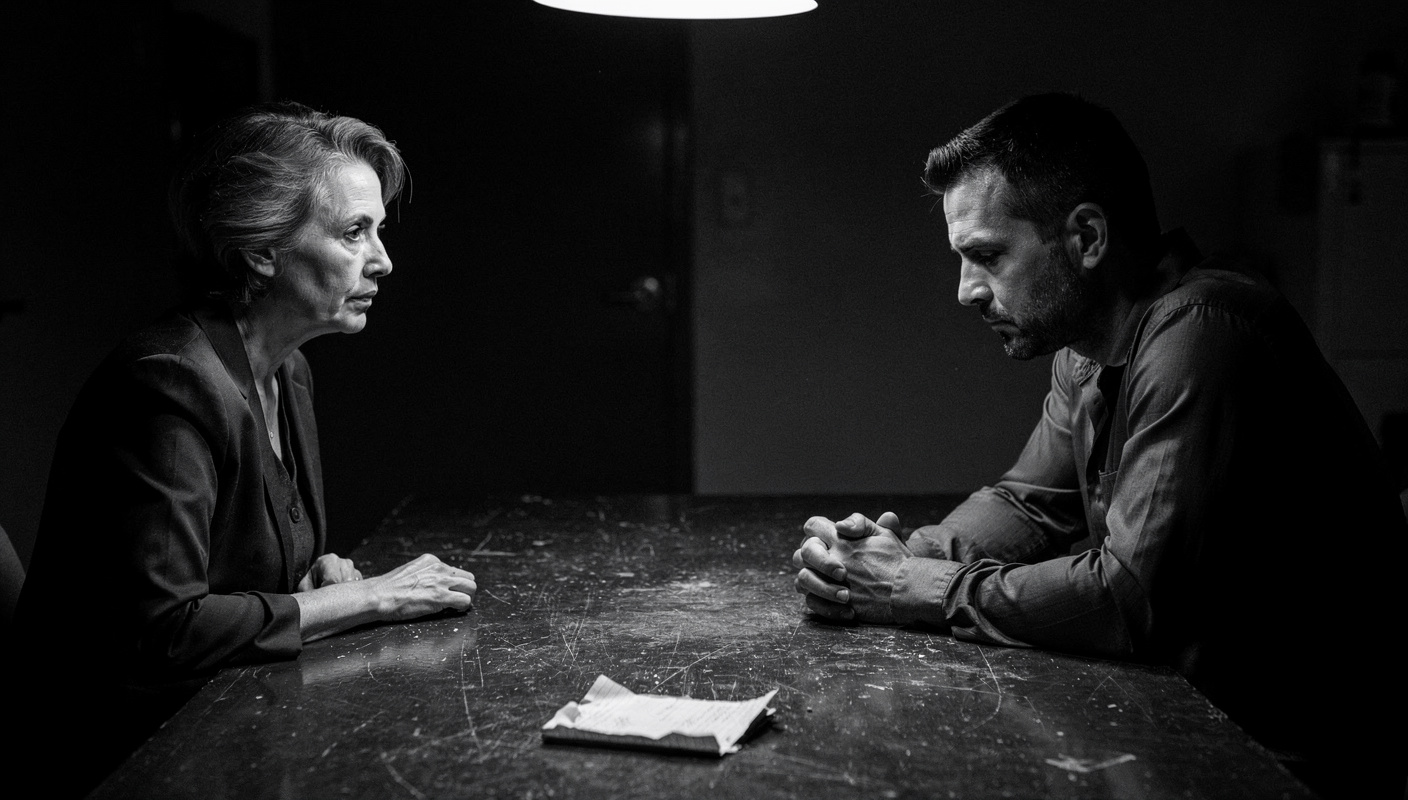
In a face-to-face conversation, eye contact is a shared act. When you look at someone and they look back, you are doing the same thing at the same time in the same space. The feedback is immediate and honest. You can see when someone's attention drifts. They can see yours. Gaze becomes a conversation within the conversation: I am here, I am listening, I am with you.
The demands of that gaze are also self-regulating. Natural conversation allows for breaks. You look away to think, to gather words, to absorb what was just said. Neither person reads these breaks as disrespect, because the body is still present, the posture is still oriented, and the overall orientation is one of engagement. Eye contact in person is part of a larger nonverbal system, and the system carries the weight.
Video calls strip away most of that system. What remains is a frame. Within that frame, gaze becomes the dominant signal, because the other nonverbal cues, body posture, physical orientation, proximity, are either absent or flattened. This creates a paradox: the eye contact demands on a video call are arguably higher than in person, even though video makes natural gaze technically impossible. To look at someone's eyes on screen, you look at their face on your monitor. But to appear as though you are making eye contact with them, you must look at your camera, which means looking away from their face entirely. You cannot do both at once.
This is not a small detail. It means that on every video call, both speakers are choosing, constantly, between presence and connection. You either watch the person's reactions or you signal your engagement to them. For an in-depth look at how this tension plays out in virtual meetings, the dynamics of screen presence deserve careful attention. The best video communicators learn to alternate between the two, making camera-directed eye contact during key statements, then dropping to the screen to read reactions during the other person's response. That rhythm takes deliberate practice.
Phone calls do something different again. They remove visual gaze entirely. There are no eye contact demands in the traditional sense, because neither speaker can see the other. You might expect this to be a loss. In many cases, it is a release. Without the pressure of managed gaze, people often speak more honestly. The absence of visual scrutiny reduces self-consciousness. I have seen people navigate deeply difficult conversations with more openness over the phone than they could ever manage face to face, precisely because the eye contact demands dropped away.
This insight connects directly to how you choose between email, instant messaging, and phone for any given message. The right channel is never just about convenience. It is about what the conversation needs, including what it needs from the eyes.
What This Looks Like in Real Situations
Consider a performance conversation between a manager and a direct report. In person, the manager can let their gaze soften during a difficult moment, look down while searching for the right word, and then return to steady eye contact as they deliver a clear expectation. The employee reads all of this. The gaze tells them when the manager is thinking, when they are certain, when they are human. The eye contact demands are shared and naturally paced.
Put that same conversation on a video call, and the manager now faces a technical problem. Every time they look away from the camera to think or to read the employee's reaction, they appear to be breaking eye contact. The employee, watching their manager's face drift toward the corner of the screen, may read this as evasion or discomfort, even if neither is present. The manager's honest, thoughtful pause reads as hesitation. Nonverbal signals in tense situations carry enormous weight, and a video call distorts them in ways neither person may consciously recognise.
Now put the same conversation on the phone. The manager's voice carries the full weight of the message. Tone, pace, pause, and warmth do the work that gaze would do in person. Neither party is managing visual signals. The result is often a more direct, less self-conscious exchange, especially when the content is emotionally loaded.
These are not three versions of the same conversation. They are three different conversations, governed by different rules, and the eye contact demands each one places on both speakers are genuinely distinct.
Why This Goes Unnoticed
Most people walk into each communication medium carrying the gaze expectations they developed in a different one. They treat eye contact as a single habit rather than a context-specific skill. A person trained in the confident, sustained gaze of boardroom presentations brings that same intensity to a video call, staring into the camera so hard they seem to be performing rather than conversing. The intention is right. The application is off.
The reverse happens too. Someone comfortable with the natural, broken gaze of in-person conversation sits in front of a camera and does what feels natural: they look at the screen, watch the other person's face, glance away to think. On camera, every one of those natural breaks reads as evasion. They leave the call not understanding why they felt so disconnected.
The role communication plays in meeting success hinges partly on this. Meetings fail not only because of what is said but because of what is misread. And gaze is one of the most misread signals there is, especially when the medium has changed and the rules have changed with it.
I have also seen leaders mismanage this in ways that cost them real trust. A confident in-person leader who struggles on video often compensates by talking more, as if volume can replace visual connection. It cannot. The solution is not more words. It is understanding what eye contact demands the medium actually places on you, and building the specific habit that medium requires. I cover this kind of medium-matched communication in depth in Say It Right Every Time, particularly in the sections on high-stakes conversation preparation, where the choice of channel is treated as a communication decision in its own right.
For leaders specifically, understanding and adapting to these gaze shifts is part of staying visible and credible in virtual workspaces. Visibility online is not just about being on camera. It is about appearing present and trustworthy within whatever medium your team is using.
The Practical Weight of Getting This Right
Once you see that eye contact demands shift with the medium, three things change in how you prepare for any important conversation.
First, you start choosing your channel more deliberately. A high-stakes conversation about someone's performance or your own needs carries specific gaze requirements. If the conversation needs warmth and reading of reactions, in-person is your strongest tool. If it needs honest disclosure from both sides without the performance of sustained eye contact, the phone may serve better than video. In-person and digital channels resolve conflict differently, and the gaze dynamic is a significant part of why.
Second, you stop judging your own discomfort on video as a personal failing. The discomfort is partly structural. The medium creates a genuine cognitive load by splitting your attention between watching and signalling. Knowing that does not eliminate the challenge, but it lets you address it practically: camera at eye level, deliberate camera-directed gaze during your key statements, permission to look at the screen while the other person speaks.
Third, you start reading the other person's gaze with more accuracy. Someone who looks away frequently on a video call is probably not being evasive. They are probably watching your face. Someone who holds long camera contact may be compensating for the absence of other nonverbal signals. Understanding the medium means you stop misreading the signals it produces.
Emotional intelligence in leadership communication depends on accurate signal reading. If you are misreading eye contact because you have not accounted for the medium, you are making decisions about people based on distorted information.
The Say It Right Every Time framework for high-stakes conversations includes a concept called the Communication Medium Richness Hierarchy, which ranks channels from in-person down to text message by how much nonverbal information each one carries. Eye contact demands sit at the top of that hierarchy because face-to-face interaction carries the fullest gaze signal. Every step down the hierarchy reduces and distorts it. Matching your conversation to the right level of richness is not a minor preference. It is a communication decision with real consequences.
What You Actually Control
You cannot change the physics of a video call. You cannot make a phone conversation visual. What you can control is your preparation and your awareness.
Before a high-stakes conversation, ask what the medium demands of your eyes and your reading of the other person's eyes. If you are meeting in person, prepare to hold steady, warm eye contact during key moments, and let your gaze rest naturally during thought. If you are on a video call, decide in advance to look at your camera when you deliver your most important point. If you are on the phone, trust your voice completely and release the anxiety of managed gaze.
These are not performance tricks. They are honest adaptations to the actual conditions of the conversation. A good communicator does not apply the same gaze behaviour in every medium. A good communicator reads the room, and when the room is a screen or a speaker, they read that instead.
Here is the truth of it: the eye contact demands you face today depend entirely on the channel you chose, or the channel that was chosen for you. The sooner you understand that, the sooner you stop fighting the medium and start using it well.
Frequently Asked Questions (FAQ)
What are eye contact demands in communication?
Eye contact demands refer to the expectations and pressures placed on speakers and listeners to maintain, hold, or signal gaze during a conversation. These demands shift depending on the communication medium used, from in-person meetings to video calls to phone conversations.
How do eye contact demands change on video calls?
On video calls, eye contact demands become distorted because looking at a person on screen and looking at the camera are two different things. Speakers who look at the screen appear to be looking away, while those who look at the camera cannot see facial reactions, creating a constant tension between presence and connection.
Why does choosing the right communication medium matter for eye contact?
The medium determines the rules of gaze for everyone in the conversation. In-person settings allow natural mutual gaze, while digital channels replace or simulate it imperfectly. Choosing the wrong medium for a high-stakes conversation can make speakers appear evasive or disengaged without either party understanding why.
Do eye contact demands differ between phone and video calls?
Yes. Phone calls remove eye contact entirely, which actually reduces the pressure on both speakers. Without gaze expectations, people often open up more freely. Video calls reintroduce gaze but in an artificial form, creating higher eye contact demands than a phone call without the natural feedback of in-person contact.
How can I manage eye contact demands in virtual meetings?
Position your camera at eye level, look at the lens when making key points, and use natural breaks in the conversation to glance at the screen and read reactions. Accepting that you cannot do both simultaneously reduces the anxiety that unmanaged eye contact demands create in virtual settings.
What happens when eye contact demands are mismatched to the medium?
When the medium cannot support the gaze expectations both speakers bring to it, trust erodes quietly. A speaker who avoids the camera on a video call reads as evasive. A leader who insists on screen-to-screen eye contact creates performance anxiety. Matching expectations to the medium prevents these misreadings.