
In Short
Children and pets work as natural social icebreakers because they solve the hardest part of starting a conversation: they move the focus away from you. Neither party feels exposed. Both people respond to a shared, innocent subject, and real connection follows without anyone having to perform it.
- They redirect attention to a neutral third party, removing the pressure of deliberate conversation-starting.
- They create genuine, unscripted moments that planned openers cannot replicate.
- Understanding why they work lets you apply the same principle even when no child or pet is present.
Social icebreakers children and pets provide are a form of attention deflection: a neutral, emotionally warm third party draws two strangers into shared focus, lowering social inhibition and creating a natural entry point for conversation without either person needing to perform or initiate deliberately.
I have watched thousands of conversations begin over the course of my life. I have stood in parks, waiting rooms, school gates, and awkward conference rooms and noticed the same pattern play out again and again. Two people stand near each other, rigid and silent, both clearly aware of the other's presence, neither willing to make the first move. Then a child tugs at a stranger's coat, or a dog strains at its lead toward an unknown hand, and within thirty seconds those same two people are laughing. The social icebreakers children and pets provide are not a coincidence. They operate through a specific psychological mechanism, and once you understand it, you will see it working everywhere. More importantly, you will know how to use it.
What Most People Think Is Happening When Kids and Pets Break the Ice
Most people assume it is simply about cuteness. A puppy is adorable, a toddler is disarming, and warmth naturally follows. That is true as far as it goes. But it does not explain why two introverted strangers who would never speak to each other at a networking event will spend ten minutes in genuine conversation over a Labrador. Cuteness alone does not do that.
The common understanding stops at the surface: children and pets are appealing, so they invite comment. But the real mechanism is structural, not aesthetic. It is about who carries the social weight of starting a conversation, and what happens when that weight is removed entirely.
"The Conversation You're Avoiding Is the One You Need to Have."
"The Conversation You're Avoiding
Is the One You Need to Have."
Stop rehearsing conversations you'll never have. Say It Right Every Time gives you 115 word-for-word scripts and 16 proven frameworks to speak with confidence in every conversation that matters.
The Core Mechanism: Why Attention Deflection Changes Everything
Here is the truth of it. Starting a conversation with a stranger is, for most people, a small act of courage. You are putting yourself forward. You are risking a flat response, a polite brush-off, or simply the creeping embarrassment of trying too hard. That risk, however small, is enough to keep most people silent.
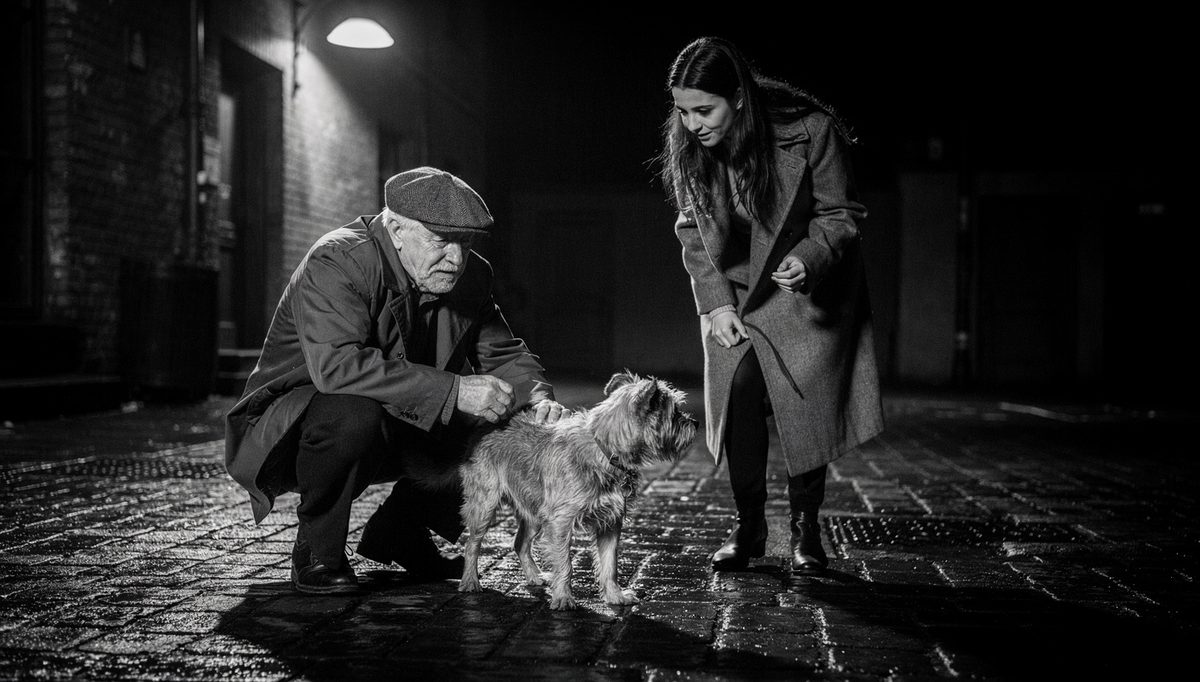
Children and pets remove that risk completely. They do not start the conversation so much as they make the conversation inevitable. When a dog approaches you and you reach down to pat it, you are not initiating contact with the owner. You are responding to the dog. And when the owner smiles and says, "She does that to everyone," they are not initiating contact with you either. They are responding to the moment. Nobody chose to start anything. It just started.
This is what I mean by attention deflection. The child or the pet becomes a shared focal point, and both parties direct their energy toward that focal point rather than toward each other. The social pressure dissolves. Two people who would otherwise have stayed behind their internal walls now have something outside themselves to talk about, something that carries no judgment, no political charge, and no professional stakes.
The second part of the mechanism is permission. In most social situations, approaching a stranger requires a reason. Children and pets supply that reason instantly and innocently. You did not walk over to talk to someone; you walked over because a three-year-old just handed you a plastic dinosaur. The intent is invisible. The contact is made. The conversation finds its own ground.
There is a third layer worth naming. Children and pets signal something about the person who has them. A parent at a playground communicates warmth, responsibility, a willingness to be seen in an unguarded moment. A person with a well-loved dog signals care and patience. These are not judgments. They are social cues that lower defensiveness before a single word is spoken. You walk into the conversation already trusting the other person slightly more than you would a cold stranger. That is a gift most planned icebreakers cannot give you. For the workplace equivalent of this kind of trust-building before the conversation begins, the principles behind effective icebreakers for team meetings draw on a similar logic.
Where You Can See This Mechanism at Work in Real Life
Think about the last time you sat in a waiting room. Strangers facing forward, phones out, silence maintained. Then a toddler escapes its parent's grip and toddles toward the water cooler. Every adult in the room glances up. Two or three smile. Someone says something. Suddenly the room is different. Nobody engineered that. The child did it by simply being a child.
Or consider the difference between two neighbours who have lived beside each other for a year without more than a nod, and what happens when one of them gets a dog. Within a week, they know each other's names. The dog does not know that it is serving a social function. It is simply being a dog.
I have seen the same principle operate in professional settings. A leader who mentions, in passing, that her daughter said something funny at breakfast humanises herself in a way that no amount of confident public speaking achieves. The child is not in the room. But the reference to the child performs the same deflection. It gives the group a warm, neutral moment to gather around before the harder work begins. If you want to understand how this kind of human signal shapes leadership voice, the connection is direct.
Why We Underestimate This in Organised Settings
The reason most people fail to use this principle deliberately is that it looks accidental. We credit the child or the pet, not the mechanism. We say, "Animals just bring people together," and leave it at that. But that framing makes us passive. It suggests we can only benefit from this effect when a child or animal happens to be present.
There is also a belief, particularly in professional contexts, that conversations should be started with purpose and structure. We design agendas. We prepare questions. We follow scripts. All of that has its place. But it misses what children and pets teach us: the most disarming conversations begin when nobody is trying to begin them. For meetings that struggle with stiff openings, the thinking behind how to run productive meetings that don't waste time addresses exactly how to build that human warmth into structure without losing efficiency.
The same principle applies to remote work, where connection is harder to manufacture. People apologise when their cat climbs into frame during a video call. They should not. That moment, handled well, does more for team cohesion than a formally scheduled check-in. A brief, genuine response to the cat is the digital equivalent of a stranger reaching down to pat the dog. Maintaining connection in remote environments depends on exactly these unscripted human signals, and learning to welcome them rather than suppress them is a genuine skill.
What This Means for How You Handle Social Situations
Once you understand the mechanism, you can apply it. Not by dragging a child into your next networking event, but by understanding what the child provides and finding other ways to provide it.
The core of what children and pets offer is a shared focus that nobody had to engineer. You can create a version of that in any setting where you introduce something warm, neutral, and slightly outside the formal agenda before the conversation proper begins. A reference to something small and personal, a story that invites a response rather than a presentation, a question directed genuinely outward rather than designed to make you look good.
Redirect attention outward. When you are in an awkward social moment, resist the instinct to talk about yourself. Find something in the environment or the situation that both of you can respond to. Ask the other person a question that has nothing to do with professional status or outcomes.
Welcome the unplanned moment. When a child or a pet creates an unexpected opening, use it fully rather than returning to the formal agenda immediately. Those thirty seconds of genuine warmth are worth more than a prepared opener. Humor works on the same principle, when it lands naturally rather than being performed.
In virtual settings, treat interruptions as assets. A pet on screen, a child calling from another room: these are not embarrassments to manage. They are the closest thing a video call has to a natural icebreaker. Use them. For leaders specifically, these visible human moments are among the most powerful tools for staying visible and real in virtual workspaces.
Before formal meetings, allow one genuinely personal exchange. Not a structured "icebreaker round" where everyone performs, but a single spontaneous moment acknowledged and briefly shared. Best practices for virtual meeting communication consistently point to this kind of human opening as the difference between a meeting people engage in and one they endure.
The Principle That Outlasts Any Particular Icebreaker
Children and pets are not tricks. They are reminders of something we already know but keep forgetting: people connect most easily when neither of them is carrying the weight of making connection happen. The best conversations begin in the space where social pressure has been lifted, even briefly, by something that belongs to nobody and demands nothing.
The question worth holding onto is this: in any given situation, what can you offer that shifts attention outward, signals warmth without performance, and gives the other person a reason to respond that has nothing to do with status, judgment, or professional calculation? That is the real function of social icebreakers children and pets provide so naturally. It is also a function you can learn to provide yourself, with practice and attention, in every conversation you enter.
Frequently Asked Questions (FAQ)
How do social icebreakers children and pets actually work?
Children and pets redirect attention away from you and onto a shared, neutral subject. This removes the social pressure of deliberate conversation-starting. Both parties focus on the child or animal, which creates a low-stakes entry point where conversation begins naturally without either person feeling exposed.
Why are children and pets better icebreakers than planned openers?
Planned openers require conscious effort and carry the risk of rejection. Children and pets create spontaneous, shared moments that feel genuinely unscripted. Neither party chooses to start the conversation. The child or animal makes the move, so both adults arrive at the same place without awkwardness or social calculation.
Can you use children and pets as icebreakers deliberately?
Yes, but the key is directing attention toward the child or animal rather than toward yourself. Ask the other person a question about the child or pet. Keep your focus outward. The moment you make it about you, the natural ease disappears and the conversation starts to feel managed.
What makes children and pets psychologically safe as conversation starters?
They offer an innocent, non-threatening subject that carries no political charge, no professional status, and no risk of judgment. Both parties can respond warmly without revealing anything personal. The subject creates warmth without vulnerability, which is exactly the condition that allows two strangers to lower their guard simultaneously.
How can I apply this icebreaker principle at work or in meetings?
Introduce a low-stakes shared focus before the agenda begins. A brief mention of something personal and neutral, like a child's milestone or a pet story, works the same way. It signals humanity before business begins. For more structured approaches, explore effective icebreakers for team meetings designed for professional settings.
Does this approach work in virtual or remote settings?
It works remarkably well. A pet walking across the screen or a child appearing in the background does the same psychological job online as it does in person. Lean into it. Ask about the pet or the child. That unplanned moment is a gift; use it rather than apologising for it.