
In Short
Icebreakers for shy children are not about forcing fun. They are about designing the first moment of connection so carefully that a quiet child can step toward the group without fear of being exposed.
- The format matters more than the activity: parallel tasks and paired sharing protect anxious children far better than whole-group spotlighting.
- A failed icebreaker does real damage; it confirms what a shy child already fears about new places.
- The best icebreakers for shy children feel invisible: the child barely notices they have made a connection until it is already made.
Icebreakers for children are brief, structured activities used in new school settings to help pupils begin forming connections with classmates. They work by reducing the social pressure of unscripted conversation, giving each child a clear prompt or task so that the first step toward belonging feels safe rather than exposed.
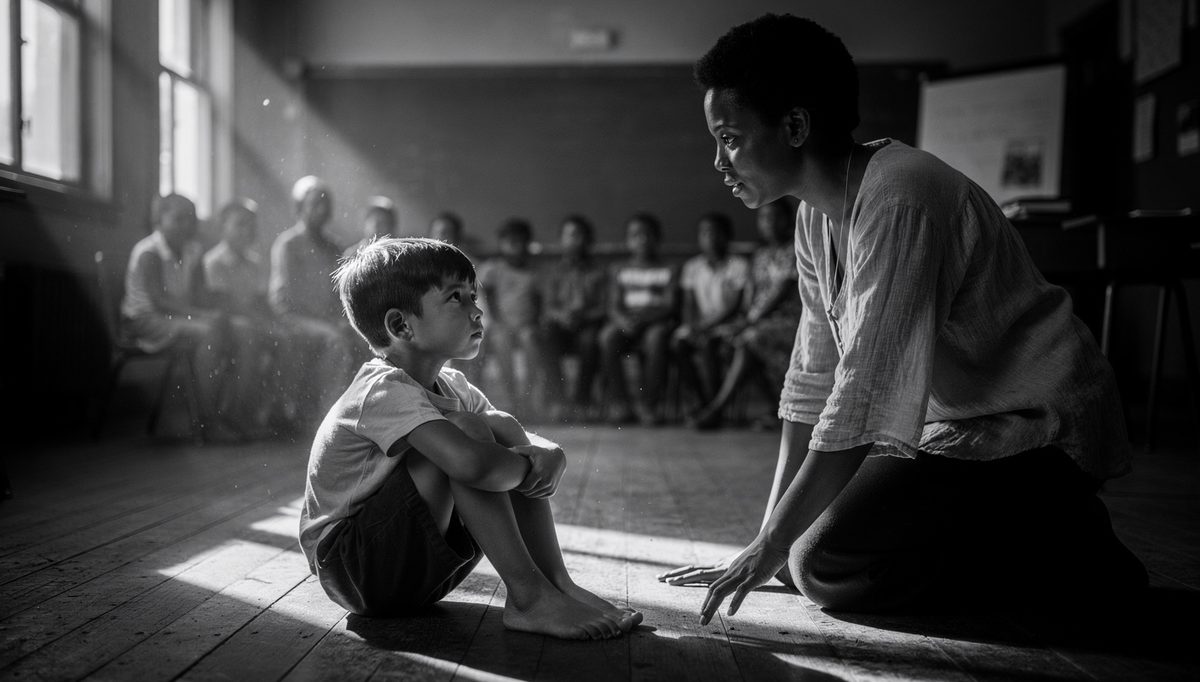
Every teacher has seen it. The child who sits completely still while the rest of the class churns with noise and movement on the first morning. Arms close to the body. Eyes fixed on the desk. Willing themselves invisible. Icebreakers for children exist precisely for that moment, but the wrong one can confirm every fear that child walked through the door carrying. I have spent years watching these activities land well and land badly, and the difference is rarely the activity itself. It is the design: who gets put in the centre, who gets to stay on the edge, and how much silence is treated as a failure rather than a reasonable response to a frightening situation.
What to Watch for Before You Read the Scenarios
Before you read these examples, I want to tell you what to look for. The question is never simply whether the icebreaker "worked." The question is: did the shy child get to participate at their own pace, or were they pulled faster than they were ready to move?
Watch for the structure of attention in each scenario. Is one child in the spotlight, or is everyone doing the same thing at the same time? Watch for the role of the teacher: are they managing the activity, or are they managing the child's fear alongside it? And watch for what happens in the twenty minutes after the icebreaker ends. That is often where you see the real outcome.
Running inclusive meetings with diverse teams taught communication professionals the same lesson that applies here: when you design for the most hesitant person in the room, the whole group benefits.
"The Conversation You're Avoiding Is the One You Need to Have."
"The Conversation You're Avoiding
Is the One You Need to Have."
Stop rehearsing conversations you'll never have. Say It Right Every Time gives you 115 word-for-word scripts and 16 proven frameworks to speak with confidence in every conversation that matters.
Five Scenarios That Show How Icebreakers for Children Actually Work
Example 1: The Name Game That Went Wrong
A newly appointed primary teacher, energetic and well-intentioned, decided to open the first morning with a circle name game. Each child had to stand, say their name, and share their favourite animal, then mime that animal for the class to guess.
The first six children loved it. Then it reached a boy who had transferred from another school mid-term and had spoken to almost no one in three days. He stood. The room went quiet. He whispered his name, said nothing else, and sat back down, face flushed. The teacher, trying to rescue the moment, said brightly, "That's okay, maybe you'll share next time!" The rest of the class moved on. He did not look up again for the rest of the morning.
The activity itself was not cruel. But it was built for children who were already comfortable, not for a child who needed the group's gaze off him entirely. The cost was not just one awkward minute. It was a child who learned, on day three, that this classroom was another place where he would be found out. The lesson here is direct: icebreakers that require individual performance before trust exists do not break ice. They freeze it harder.
Example 2: The Object from Home
A reception teacher, preparing for a cohort that included four children new to the school, sent a note home the week before: "Please ask your child to bring one small object that is special to them. It will stay in their bag; they will not have to show anyone unless they want to."
On the first morning, the teacher held up her own object first: a small, smooth river stone she said her father had given her. She talked about it briefly, then put it away. Then she invited children, quietly and without pressure, to hold their object in their hands under the table while she read a short story aloud. She did not ask anyone to share. Three children voluntarily showed their objects to the child sitting next to them during the story. One of the new children was among them.
This worked because the object gave the shy child something to do with their hands, something private to anchor to, and a natural conversation starter that required no performance. The connection happened sideways, not head-on. That is what the best icebreakers for children do: they create conditions for connection rather than commanding it.
Example 3: The Paired Drawing Task
A classroom assistant working with a group of seven-year-olds decided to try a paired activity for the first week. She matched each new child with one established pupil, gave them a single sheet of paper, and asked them to draw a place they both wished they could visit. They could not talk yet; they had to point and nod to agree. Then they could talk as they drew.
A girl who had barely spoken in two days of school was paired with a calm, patient classmate. Within four minutes of silent pointing, they were both drawing a beach with cartoon fish. They were not talking about themselves or their families or anything that required vulnerability. They were talking about imaginary fish. By the end of the week, they sat together at lunch without anyone suggesting it.
The non-verbal starting point was the key. For a shy child, being asked to speak before comfort is established is like being asked to run before you have found your footing. Give them something physical and parallel to do first, and the words come naturally afterward. This principle applies just as much in adult settings: effective icebreakers for team meetings that start with a shared task consistently outperform those that open with round-the-table introductions.
Example 4: A School That Skipped Icebreakers Entirely
Here is the truth of it: some schools do not use icebreakers at all. They rely on the assumption that children settle naturally, that the playground sorts it out, that structured activities are unnecessary fuss. I watched this approach play out over a full term at a small rural school that prided itself on its community feel.
Two new children arrived in October. One was outgoing and integrated within a week. The other was quiet, watchful, and by Christmas had still not formed a consistent friendship with any classmate. Her teacher described her as "a bit of a loner" and suggested she might simply prefer her own company. What no one had done was build a structure that made it easier for her to take the first step. The community feel the school was proud of was a community that had formed without her.
Absence is its own kind of failure. Not doing something is still a choice, and it carries a cost. A shy child without a designed entry point into a group will not find one magically. They will wait, and they will get better at waiting, and eventually waiting will become their permanent position. This is the hardest lesson to sit with, because the harm is invisible. No one did anything wrong. And yet something went wrong. Thinking about how to maintain connection in remote work environments surfaces the same truth: when connection is not designed, it falls to the most confident to create, and the quiet ones are left behind.
Example 5: The Choice Board
A Year 2 teacher, working with a class that had three new starters and several children with social anxiety, created what she called a "choice board" for the first two weeks. Each morning, there were four short activities on offer before the formal day began: draw something about your weekend, build something with blocks, read quietly, or sit with a partner and do a puzzle. No child was directed to any activity. No one was asked to share what they had done.
The teacher watched. Two of the shy new children chose the puzzle activity on the second day because another child was already sitting there, and the puzzle required no conversation to join. By day four, they were all talking. The child who had chosen to read quietly for three days came to the puzzle on day five, uninvited, and no one noticed because there was no moment to notice: it just happened.
The choice board worked because it gave shy children control over the pace of their own entry. That is a profound thing to offer a child who has spent days feeling that everything is out of their hands. The teacher's skill was in resisting the urge to direct. She prepared the conditions and then trusted them to work. That restraint is itself a form of courage, and I do not underestimate it.
What Recurs Across These Scenarios
Three things appear in every example where an icebreaker worked, and they are absent in every example where it failed.
First, the activity protects the shy child from being the sole focus of attention. Whether it is drawing together, holding an object under a table, or choosing from a board, the child is never the only one in the frame. When you remove the spotlight, you remove the most common source of fear.
Second, the teacher's role shifts from performance director to environment builder. The best teachers in these scenarios did less visible work during the activity, not more. They designed carefully beforehand, then stepped back. You cannot coach a shy child into confidence during a group activity; you can only build a structure safe enough that confidence appears on its own.
Third, the connection happens as a byproduct of something else, not as the stated goal. The children drawing beaches were not trying to make a friend; they were trying to agree on the colour of imaginary fish. That indirection is not a trick. It is an honest recognition of how human connection actually forms. How humor can ease workplace tension when used right rests on the same idea: the best social lubricant never announces itself.
What You Can Do with This Before the Week Is Out
If you are a teacher reading this, the single most useful thing I can suggest is to look at whatever you currently do in the first two days of a new intake and ask one question: does this activity require a shy child to perform before they feel safe?
If the answer is yes, you do not need to scrap it entirely. You may only need to restructure the order of participation. Run the activity in pairs before you run it in the group. Let children opt in to sharing rather than waiting to be called on. Give them something to hold or make or point at so the interaction has a physical anchor. Consider onboarding new employees remotely with clear communication as a parallel frame: the principles of structured, low-pressure first contact apply whether the newcomer is five or forty-five.
Think carefully about what your icebreaker asks a child to do in the first ten seconds. That first ten seconds is where a shy child decides whether this is safe or not. Get that moment right, and the rest of the morning takes care of itself. Get it wrong, and no amount of warmth in the rest of the day fully repairs it. Knowing what productive meetings look like when run well and understanding virtual meeting communication best practices both point to the same root discipline: design the opening, because the opening sets the temperature for everything that follows.
The same holds for a classroom at half past eight on a September morning.
Frequently Asked Questions (FAQ)
What are icebreakers for children starting at a new school?
Icebreakers for children are short, structured activities that help new pupils begin connecting with classmates without the pressure of open-ended conversation. They lower social anxiety by giving every child a clear role or prompt, so no one has to perform or think on the spot.
Why do icebreakers for shy children need to be different from standard ones?
Standard icebreakers often require confident self-presentation, which overwhelms shy children. Effective icebreakers for shy children use parallel tasks, paired formats, or non-verbal choices so quiet pupils can participate fully without being spotlighted or forced to speak in front of the whole class.
What makes an icebreaker low-pressure for a nervous child?
A low-pressure icebreaker removes the fear of a wrong answer and avoids putting one child at the centre of attention. Activities where every child does the same thing simultaneously, or where pairs share privately before sharing with the group, are the safest formats for anxious newcomers.
How long should icebreaker activities last for young children?
For primary school children, icebreaker activities work best when kept to ten to fifteen minutes. Long enough to build a small moment of connection, short enough to end before anxiety builds. Stopping while children are still engaged leaves them with a positive memory of the interaction.
Can icebreakers for children work without the teacher speaking much?
Yes. Some of the most effective icebreakers for children rely on visual prompts, drawing, object-sharing, or movement rather than teacher-led talk. Quiet formats reduce the pressure on shy children who find it hard to process verbal instructions when they are already anxious.
What should a teacher avoid when running icebreakers with shy pupils?
Avoid any activity that singles out one child, requires performing in front of the group before trust is established, or puts a shy child on the spot with an unexpected question. Hot-seat formats, rapid-fire name games, and stand-up introductions are the most common mistakes teachers make.