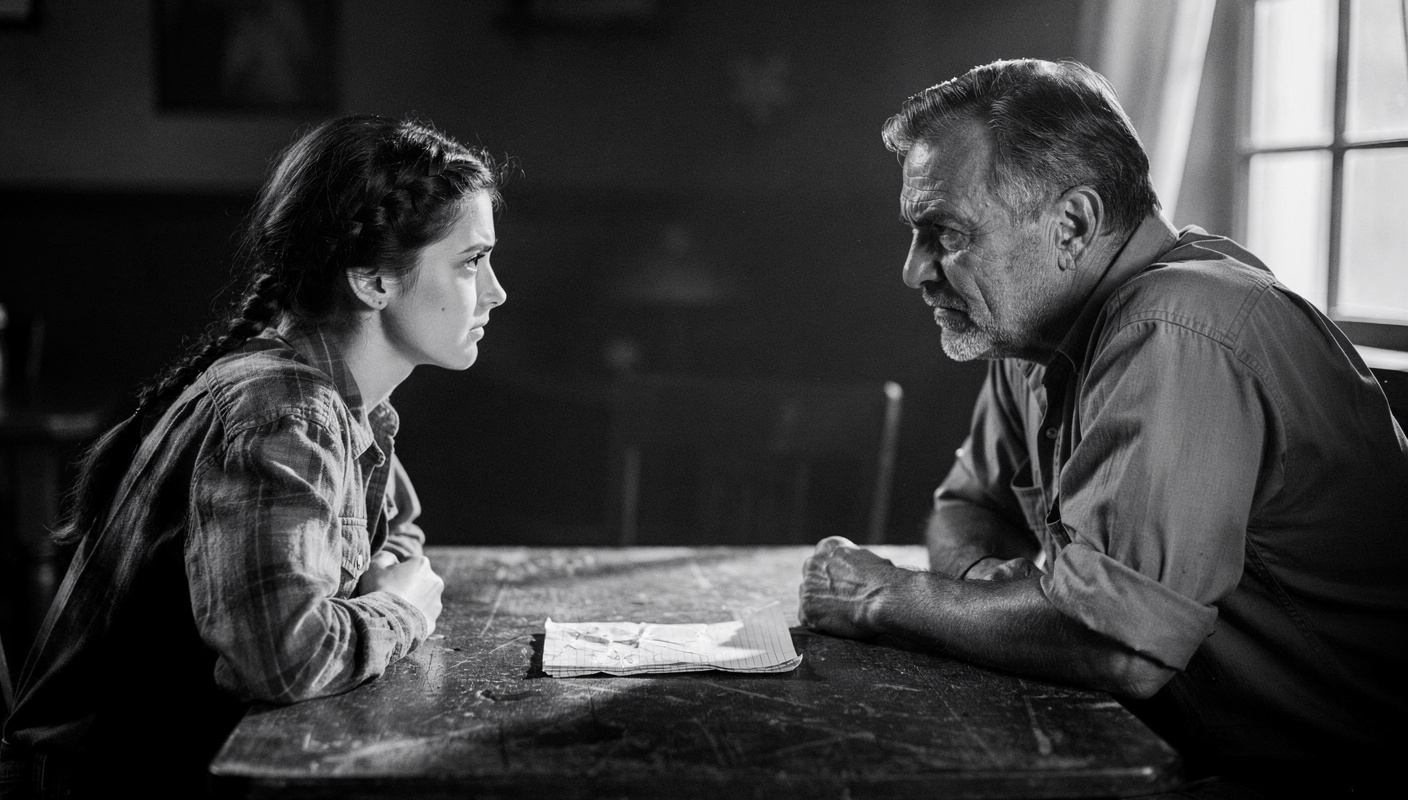

In Short
When workplace standards shift, someone has to name the gap between the old behavior and the new expectation. That conversation is one of the hardest in any manager's toolkit. Done well, it preserves the relationship, builds respect, and gives the person a genuine path forward. Done poorly, it creates resentment that lingers for years.
- Clarity about what changed matters as much as clarity about what you expect.
- The person's history is context, not a weapon.
- The goal is correction, not punishment.
Difficult conversations in the workplace are direct, purposeful discussions that address behavior, performance, or conduct that is causing harm or falling short of current expectations. They require courage, preparation, and a clear method to be effective without damaging the working relationship.
I watched a senior manager lose one of his best people over a conversation he never had. The employee had a habit of making jokes that had passed without comment for years. Then the team changed, the culture shifted, and those same jokes began to sting. Nobody said a word to him for six months. When the conversation finally happened, it came with a formal warning and a history lesson he had never been given the chance to correct. He left within three months. The manager told me later: "I just kept waiting for the right moment." There is no right moment. There is only the moment you choose, and the method you use when you get there.
These difficult conversations in the workplace are genuinely different from ordinary feedback. You are not simply saying "you did something wrong." You are saying "this used to be acceptable, and now it is not, and I may not have told you that clearly enough." That complexity is what makes most managers avoid the conversation entirely, or wait until the problem is so large they have no choice.
This guide gives you a process. Use it, and you will be able to hold that conversation with confidence, honesty, and respect for the person sitting across from you.
Why This Kind of Behavioral Conversation Is Uniquely Difficult
Most feedback conversations deal with a clear standard that was always in place. This one does not. The person you are speaking to may have every right to say: "Nobody told me the rules had changed." They are not necessarily wrong.
Workplace norms shift over time. What was tolerated in one era, whether it is a certain kind of humor, a blunt communication style, or an aggressive approach to competition, can become genuinely harmful as teams evolve and expectations rise. The difficulty here is that you are asking someone to change behavior they may have built an identity around. And you are doing it in the context of a working relationship that may span years.
This is why preparation matters more for this conversation than for almost any other. You need to know exactly what you want to say before you say it. If you go in with vague discomfort and half-formed concerns, you will walk out having accomplished nothing except leaving the other person confused and vaguely threatened.
"The Conversation You're Avoiding Is the One You Need to Have."
"The Conversation You're Avoiding
Is the One You Need to Have."
Stop rehearsing conversations you'll never have. Say It Right Every Time gives you 115 word-for-word scripts and 16 proven frameworks to speak with confidence in every conversation that matters.
What Needs to Be True Before You Start
Do not walk into this conversation until you have three things in place.
First, a specific example. Not a general impression, not a pattern described in the abstract. One clear, recent instance of the behavior, described in concrete terms. "In the all-hands meeting on Tuesday, you interrupted Sarah twice before she could finish her point" is usable. "You tend to talk over people" is not.
Second, clarity about the standard. What is the actual expectation now? If you cannot state it clearly yourself, you are not ready to hold someone else to it. Write it down before the meeting.
Third, a private setting. These conversations should never happen in passing, in a group, or in writing where the nuance will be lost. Book a room. Give it time. Allow for the reaction you may not expect.
If you have not yet learned a structured way to open this kind of discussion, the approach in How to Start a Difficult Conversation That's Blocking Your Team's Synergy will give you that foundation before you continue here.
A Step-by-Step Process for Addressing Outdated Behavior
Here is the truth of it: most of these conversations fail in the first ninety seconds, before the other person has said a word. The opening sets everything. Follow these steps, in order.
Open with context, not accusation. Start by naming the fact that standards have shifted, before you name the behavior. This is not an excuse for the person; it is an honest acknowledgment of the situation. Try this: "There are some expectations on our team that have evolved over the past year, and I want to make sure we are both clear on where things stand." This positions you as someone managing a transition, not building a case.
Name the specific behavior clearly. Describe what you observed in plain, neutral language. No loaded adjectives. No references to how it made others feel, not yet. Just the fact of what happened. "In Tuesday's meeting, you cut across Sarah twice while she was presenting her figures." State it once. Do not repeat it three times for emphasis. Repetition feels like a lecture, and lectures make people defensive.
Acknowledge the shift honestly. This step is where most managers skip over something important. Say, out loud, that this behavior may not have been challenged before. "I know this kind of thing has passed without comment in the past. That is partly on me, and partly on how things used to run here. It does not work for us now." This is not weakness. This is the sentence that keeps the other person from feeling ambushed, and it earns you the right to what comes next.
State the expectation going forward. Be direct. Be specific. "Going forward, I need everyone in meetings to hold space for whoever is presenting to finish before responding. That applies to all of us." Make the standard universal where you can. It reduces the feeling of being singled out, which helps the message land rather than trigger defensiveness.
Invite their perspective. Stop talking and listen. "How does that land with you?" is enough. Give them room. They may push back. They may be embarrassed. They may surprise you with something you did not know. Your job at this stage is to hear them fully before responding. This is one of the most consistently underused tools in difficult conversations, and it is free. You just have to be quiet.
Handle defensiveness without retreating. If they push back, do not abandon your position, but do not escalate it either. Acknowledge what they have said, and then return to the future. "I hear that this feels like it is coming out of nowhere. What I want us both to focus on is where we go from here." This phrasing, or something close to it, keeps the conversation from becoming a debate about history.
Close with a clear, shared next step. Never leave one of these conversations without naming what happens next. This does not have to be a formal performance plan. It can be as simple as: "I will check in with you in two weeks. If anything comes up in the meantime, come and find me." The follow-up is what transforms a conversation into an agreement.
The D.E.A.L. Method for resolving conflicts pairs well with this process if the behavioral issue has already created visible friction within the team.
When the Conversation Happens Remotely
Remote and hybrid settings add a real complication to this process. Without the physical cues that tell you how the other person is receiving what you are saying, you are operating with less information than you think you have.
A few adjustments matter here. First, always use video. A phone call for a conversation this sensitive is inadequate; you need to see each other. Second, give explicit verbal cues where the silence would usually do the work. In a room, a pause communicates that you are waiting for a response. On a screen, the other person may not read that the same way. Say: "I want to pause there and hear what you think." Third, follow the conversation with a brief written summary, sent privately, the same day. Not a formal record, but a note that says: "I wanted to put into words what we agreed on." This protects both of you, and it gives the other person something to return to.
For more on reducing interpersonal tension before it reaches this stage, Word-for-Word Scripts for De-escalating Tension With a Colleague Before It Becomes a Conflict gives you language you can adapt immediately.
Where These Conversations Go Wrong
Let me tell you something I learned the hard way: most failed correction conversations fail not because of what was said, but because of what was left unsaid, or said too soon, or said too often.
Here are the patterns I have seen most consistently, and what to do instead.
The mistake: Piling on historical examples.
Why it happens: You have been storing up incidents for months, and the moment you finally have the conversation, they all come out at once.
What to do instead: Use one example. The most recent, clearest one. The others can wait unless the person claims the behavior is isolated.
The mistake: Softening the message until it disappears.
Why it happens: You want to preserve the relationship, so you hedge and qualify until the central point is lost.
What to do instead: Deliver the core message in one direct sentence. Kindness lives in the tone, not in obscuring the truth.
The mistake: Turning it into a comparison.
Why it happens: You believe contrast will help the person see the problem more clearly.
What to do instead: Never reference how other colleagues handle similar situations. This introduces competition and resentment into a conversation that needs to stay between you and one person.
The mistake: Declaring victory and leaving.
Why it happens: The conversation went better than expected, so you wrap it up quickly and feel relieved.
What to do instead: Agree on the follow-up before you close. A conversation without a next step is just a conversation.
Understanding why people react the way they do in these situations connects to a deeper truth about how unmet needs drive conflict, and knowing that can make you significantly more prepared.
Your Pre-Conversation Preparation Checklist
Run through these before you sit down. This much I know for certain: the quality of the conversation is almost entirely determined by the quality of your preparation.
- I can name one specific, recent example of the behavior I am addressing.
- I can state clearly what the current expectation is, in one sentence.
- I know what changed, and when, that made this behavior no longer acceptable.
- I am prepared to acknowledge that the standard may not have been communicated clearly before now.
- I have a private, uninterrupted space and enough time for the other person to respond fully.
- I know what I will say if they become defensive, without retreating from my position.
- I have a specific follow-up step ready to propose before the conversation ends.
If you cannot check all seven, you are not ready. Go back and prepare the gaps.
For situations where the conversation has escalated beyond what one manager can hold alone, the D.E.A.L. Method for defusing tension between colleagues who refuse to cooperate offers a structured framework that extends what you have here.
The Weight of What You Say Next
Good feedback, delivered with skill and courage, is one of the most respectful things one person can do for another. If you want to understand that more fully, Why Effective Feedback Is the Backbone of Workplace Growth is worth reading before or after you hold this conversation.
And if things become heated during the meeting itself, How to De-escalate Arguments During Meetings gives you specific techniques for bringing the temperature down without losing your footing.
There is a kind of courage required for difficult conversations in the workplace that nobody hands you. You build it one hard conversation at a time. The manager I mentioned at the start of this article learned that lesson at too high a cost. You do not have to. Go in prepared. Say what needs to be said. And then follow through.
Frequently Asked Questions (FAQ)
What are difficult conversations in the workplace?
Difficult conversations in the workplace are discussions that address uncomfortable truths, behavioral issues, or interpersonal tensions. They include feedback on performance, conduct that needs to change, and conflict that has gone unresolved. Most people avoid them, which makes the underlying problem worse over time.
How do you start a difficult conversation about outdated behavior?
Start by stating the specific behavior clearly, without framing it as a character flaw. Acknowledge that standards have changed, and that the person may not have received clear guidance. Then explain what the expectation is going forward. This combination of honesty and respect makes the conversation easier to hear.
Why are difficult conversations about past behavior especially hard?
Because the person being addressed can reasonably say they were never told the rules had changed. That is not an excuse, but it is a real complication. These conversations require you to correct behavior while also acknowledging a failure of communication that likely predates this meeting.
What should you never do in a difficult conversation about workplace behavior?
Never ambush someone with a list of historical examples, never compare them unfavorably to colleagues, and never leave the conversation without a clear statement of what changes you expect and by when. Vagueness is the most common reason these conversations fail to produce lasting change.
How do you follow up after a difficult conversation about behavior?
Schedule a short check-in within two weeks. Acknowledge any progress you have seen, however small. If the behavior has not changed, name that clearly using the same calm, specific language from the original conversation. Consistency between the first conversation and the follow-up is what builds accountability.
How do you handle it when someone gets defensive during a difficult conversation?
Pause. Let them finish. Then return to the specific behavior, not their reaction. Say something like: I hear that this feels unfair. What I want to focus on is what happens next. Do not get drawn into a debate about the past. Keep the conversation anchored to the future.