
In Short
Challenging an industry expert in public is not about winning an argument. It is about using your leadership voice precisely, so your disagreement earns respect rather than triggers defensiveness.
- Prepare your challenge as a specific, evidence-grounded question, not a general objection.
- Frame the challenge toward the idea, not the person, and acknowledge expertise before you push back.
- Hold your ground with composure if the expert dismisses you; how you respond under pressure defines your credibility more than the challenge itself.
Leadership voice challenge refers to the deliberate use of your professional voice and authority to publicly question or contest an expert's position. It combines intellectual courage with precise, respectful communication to raise a credible disagreement without damaging your reputation or the exchange.
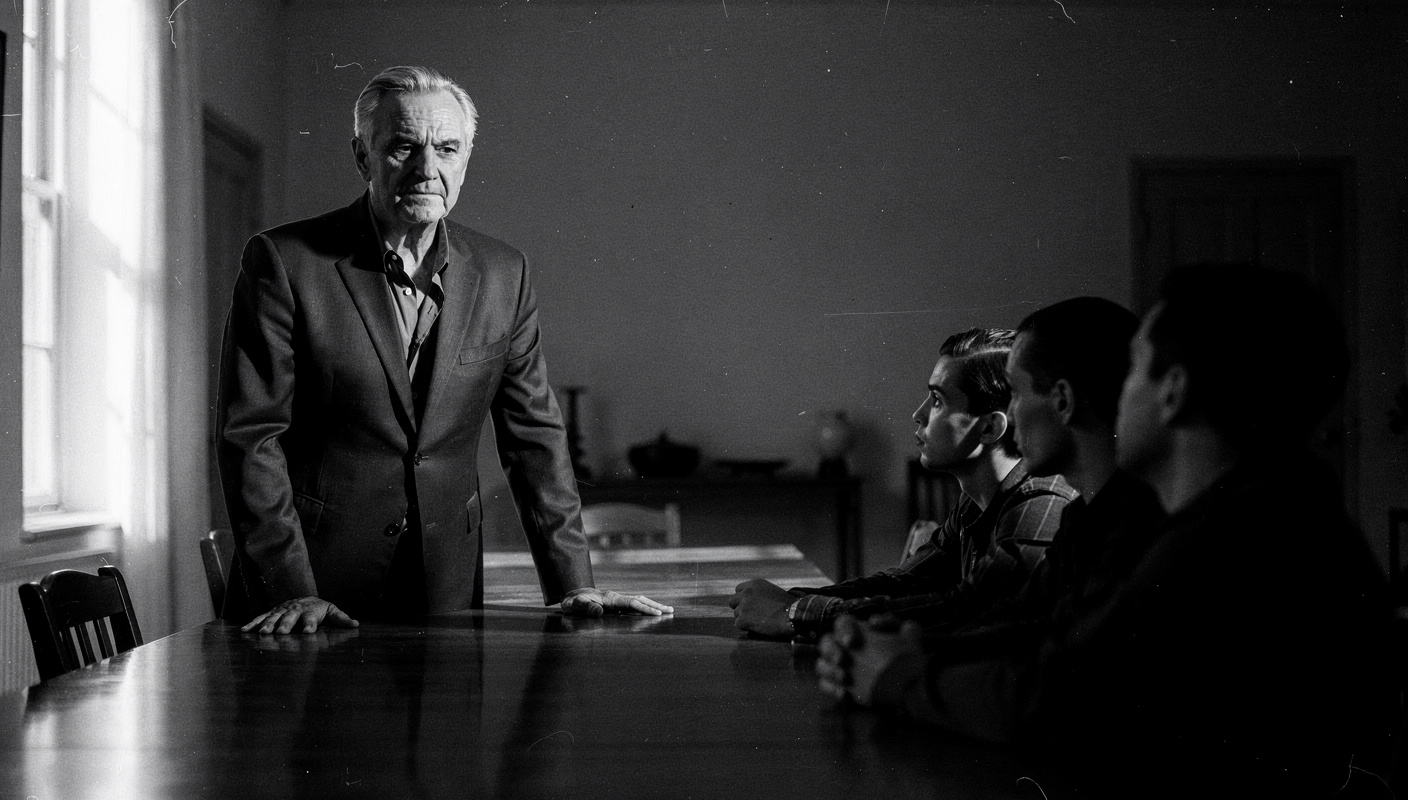
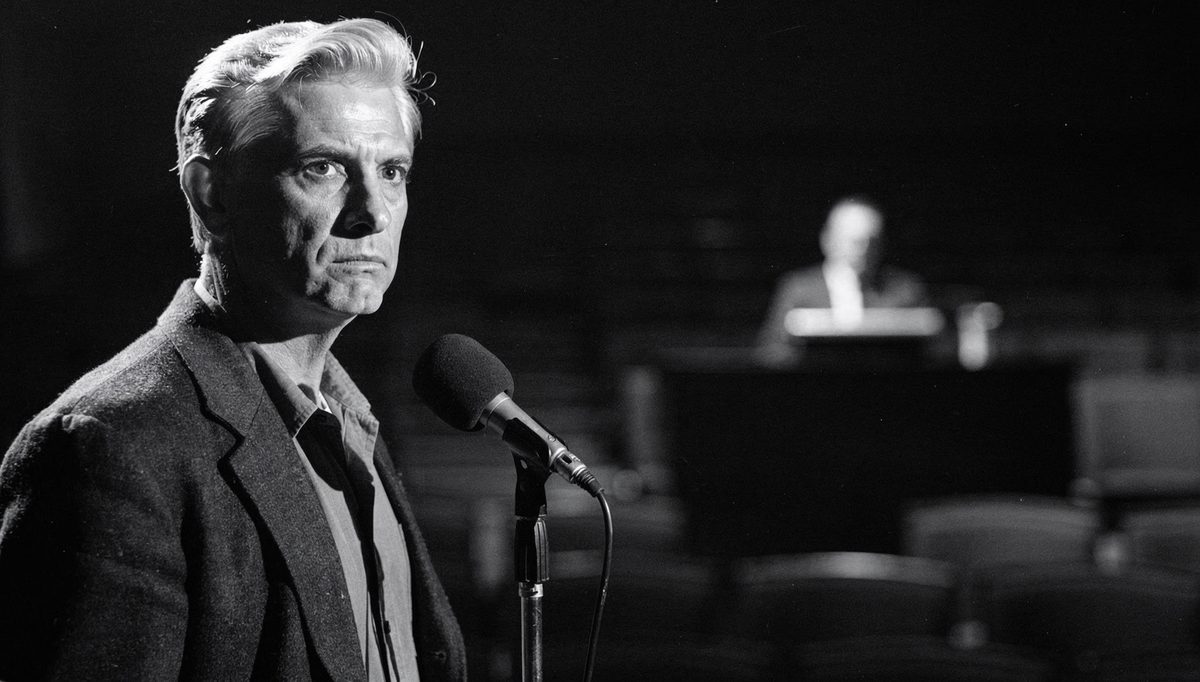
You have been in that room. An industry expert stands at the front, speaking with complete confidence, and something they say stops you cold. You know it is wrong, or at best incomplete, and it matters. It will affect decisions. It will affect your team. The moment sits there, waiting.
Most people say nothing. They tell themselves they will raise it later, in private. Later never comes. A few speak up, but they do so badly. They stumble into the challenge without a clear frame, their voice rising defensively, their words tangled in over-qualification. The expert deflects. The room shifts. And suddenly the person who asked the question looks smaller, not larger.
This is the hard truth about a leadership voice challenge in a public setting: doing it badly is often worse than not doing it at all. But doing it well is one of the most powerful things you can demonstrate as a professional. This article gives you a step-by-step process for exactly that.
Why Challenging an Expert in Public Feels So Risky
The authority gradient is real. When someone stands in front of a room with a reputation behind them, the social weight of that position presses down on everyone listening. To challenge them is to swim against a current that most people cannot even name.
There is also a fear of being publicly wrong. If the expert dismantles your challenge cleanly, you have not just lost an argument. You have lost it in front of colleagues, clients, or peers. That risk is not imaginary. It is why this particular test of your leadership voice requires more than courage. It requires preparation.
There is a third difficulty that nobody talks about enough. Even when you are right, the way you raise a challenge can make you look arrogant, point-scoring, or threatened. Your tone carries as much weight as your evidence. The room is always watching both.
"The Conversation You're Avoiding Is the One You Need to Have."
"The Conversation You're Avoiding
Is the One You Need to Have."
Stop rehearsing conversations you'll never have. Say It Right Every Time gives you 115 word-for-word scripts and 16 proven frameworks to speak with confidence in every conversation that matters.
What Must Be in Place Before You Speak
Before any step in this process works, you need two things in place.
The first is clarity about what exactly you are challenging. Not a vague discomfort. Not a general disagreement with someone's approach. A specific claim, conclusion, or assertion that you believe is factually wrong, dangerously incomplete, or based on evidence that does not hold in your context. If you cannot state the challenge in one precise sentence, you are not ready to raise it publicly.
The second is a genuine understanding of the expert's position. You do not challenge what you have half-heard. You listen carefully enough to know exactly what they are arguing and why. That discipline protects you from challenging a position the expert never actually held, which is a fast way to lose all credibility in the room.
If you feel uncertain whether your concern fits a public setting at all, it is worth reading about how to raise a concern in a team meeting without disrupting synergy. The principles around timing and framing carry across.
The Six-Step Process for a Leadership Voice Challenge
Step 1: Anchor Your Challenge in Specific Evidence
The difference between a credible challenge and a grandstanding complaint is specificity. Before you open your mouth, know exactly what evidence, observation, or experience supports your position.
This is not about winning a debate. It is about demonstrating to everyone in the room that your challenge is grounded. Say: "In our sector, we have seen the opposite result in three consecutive years of data," rather than, "I'm not sure I agree with that." One invites engagement. The other invites dismissal.
Write this anchor down in the hours before the session if you can. A single clear sentence. That sentence is the spine of your challenge.
Step 2: Acknowledge the Expertise Before You Push Back
This step is the one most people skip, and it is the most important one for managing how you appear to the room. Acknowledge what the expert has contributed before you raise your concern.
This is not flattery. It is positioning. It signals that you have listened, that you are not attacking the person, and that your disagreement is professional rather than personal. A short, direct acknowledgement is all you need.
Say something like: "You have made a strong case for the X approach, and the evidence from your context is clear." Then follow immediately with your challenge. The contrast between genuine respect and a precise disagreement is exactly what a confident professional looks like.
Step 3: Frame Your Challenge as a Question, Not a Verdict
Your leadership voice carries more authority when it asks than when it pronounces. Framing your challenge as a question rather than a direct contradiction does three things: it invites the expert to respond without being cornered, it signals intellectual curiosity rather than aggression, and it gives you room to adjust if the expert's answer reveals something you had not accounted for.
A practical script: "I want to raise something that sits uneasily with what we have observed. In [specific context], we have consistently seen [specific outcome], which seems to run counter to your conclusion. How do you reconcile that?"
You are not backing down. You are stating a clear factual concern and asking them to address it directly. That is a challenge. It is also respectful.
Step 4: Speak at the Speed of Someone Who Is Not Worried
Pace and tone do more work than most people realise. When we are nervous, we speak quickly, our pitch rises, and we over-qualify. All of that signals insecurity, and the room reads insecurity as weakness.
Slow down. Deliberately. Take a full breath before you begin speaking. Drop your pitch slightly. Speak as if you have made this kind of challenge before and it has always been fine, even the first time you do it.
Your leadership voice is not just your words. It is the physical authority you bring to those words. Composure under a small amount of social pressure is what separates a challenge that lands from one that gets brushed aside. This is a skill you can practice. It simply takes repetition.
Step 5: Hold Your Ground Under a Deflective Response
Here is where most people lose what they built. The expert responds dismissively, or pivots to a different point, or speaks over your concern as if it were minor. And under that pressure, the challenger backs down.
Do not back down before your point has actually been addressed. There is a difference between updating your view based on new information and retreating because you felt uncomfortable. The first is intellectual honesty. The second is a failure of your leadership voice.
If the expert deflects, say: "I understand the broader point you are making. My specific concern is still [restate it cleanly]. Has that particular situation come up in your experience?"
You are not escalating. You are staying precisely on your point. For more on managing moments when tension builds in a public exchange, the guidance on how to handle conflict during meetings is directly relevant here.
Step 6: Close the Exchange with Your Position Clear
Once the exchange has run its course, close it cleanly. Do not let your challenge trail off into silence or vague agreement. Either you have updated your view based on what the expert said, and you say so clearly; or you have not, and you say that too.
A clean close sounds like: "I appreciate that framing. I am not fully persuaded on [specific point], but I want to think about what you have said about [specific thing]. That is useful." Or: "Thank you for engaging with that. My concern stands, but I will take this further with you after the session."
Both of those close the public moment with your credibility intact. Neither sounds petulant or aggressive. They sound like someone who knows their own mind.
Adapting This Process for Remote and Hybrid Settings
In an online conference or hybrid panel, the leadership voice challenge becomes harder in two specific ways. First, you lose the physical cues that establish your composure. The room cannot see your posture. Second, the mechanics of speaking up are more awkward: you may need to unmute, use a chat function, or wait for a moderator to give you the floor.
Prepare your anchor sentence in writing before the session and have it visible on your screen. When you get the floor, start with your name and organisation to establish presence quickly. "This is [your name] from [context]. I want to raise something specific about the point you made on X."
The framing steps remain identical. What changes is that you need to be slightly more explicit verbally, since you cannot let your body language carry any of the weight. Speak slightly more slowly than you think you need to. The slight delay of remote audio will compress your pacing in transmission.
You may also find it useful to read about how to deal with dominant voices in a discussion, particularly when a remote session is being controlled by a moderator who has a clear preference for the expert's position.
Where People Go Wrong and How to Fix It
The first mistake: over-qualifying until the challenge disappears. Why it happens: We fear seeming arrogant, so we hedge until there is nothing left. What to do instead: State your anchor clearly before you qualify. Lead with the evidence, then acknowledge uncertainty. Never bury a clear challenge inside five layers of apology.
The second mistake: challenging the person rather than the position. Why it happens: Frustration with someone's certainty can bleed into the tone of your challenge. What to do instead: Keep every sentence focused on the claim, the data, or the conclusion. The moment your challenge sounds personal, you have lost the room regardless of whether you are right.
The third mistake: choosing the wrong moment. Why it happens: The impulse to speak up is real, but not every moment in a public session is the right one. What to do instead: Wait for a natural pause or a designated Q&A. A challenge that interrupts mid-flow reads as aggression. The same words, asked at the right moment, read as professional engagement.
If the aftermath of a public challenge creates tension in your team, the approaches covered in how to manage tension after a public disagreement in a team meeting will help you repair it. And if the situation escalates during the session itself, the how to de-escalate arguments during meetings framework gives you a clear path down from heightened tension.
Your Pre-Challenge Preparation Checklist
Use this before any public session where a leadership voice challenge may be needed.
- Write your anchor sentence: what exactly do you disagree with, and what specific evidence supports your position?
- Confirm that you have understood the expert's full argument, not just the part that troubles you.
- Prepare your acknowledgement: one sentence that recognises the expert's expertise genuinely.
- Draft your challenge as a question, not a verdict. Read it aloud. Does it sound curious or combative?
- Practise saying your anchor sentence at a slower pace than feels natural. Record yourself once if you can.
- Decide in advance: if the expert deflects, what is your one-sentence restatement?
- Decide how you will close: will you update your position, hold it, or defer to a follow-up conversation?
This checklist takes ten minutes to work through. That ten minutes is the difference between a challenge that lands and one that misfires.
For situations where the tension is not between you and an expert but between two colleagues who refuse to engage with each other, the D.E.A.L. method for defusing tension between colleagues gives you a structured approach. And if you need to advocate for a concern to a manager who is dismissing the problem entirely, the V.A.L.U.E. method for advocating tension resolution applies directly.
Frequently Asked Questions (FAQ)
What is leadership voice challenge?
A leadership voice challenge is the deliberate act of using your professional authority and communication skill to question or push back on an expert position in a public setting. It requires preparation, composure, and precision to earn credibility rather than appear combative or arrogant.
How do you challenge an expert without seeming arrogant?
You challenge an expert without arrogance by grounding your question in specific evidence, framing it as inquiry rather than accusation, and acknowledging their expertise before raising your concern. Your tone and your preparation signal respect, which separates a credible challenge from a grandstanding attack.
How do you use your leadership voice in a public setting?
Using your leadership voice in public means speaking with deliberate pacing, clear language, and controlled tone. You anchor your position in concrete observation or experience, address the idea rather than the person, and remain composed regardless of how the expert responds to your challenge.
When should you challenge an industry expert publicly?
Challenge an industry expert publicly when you have a specific, evidence-grounded concern that affects your team, your organisation, or the broader audience. If the disagreement can wait for a private conversation, it usually should. Public challenge is warranted when silence would allow a harmful position to go unchallenged.
What preparation do you need before challenging an expert in public?
Before challenging an expert in public, clarify exactly what you disagree with and why, prepare a precise one or two sentence challenge, anticipate the expert's likely response, and decide in advance how you will hold your position under pressure without escalating the exchange.
What is the biggest mistake people make when challenging an expert?
The most common mistake is burying the challenge in excessive qualification. Overusing phrases like "just a thought" or "I might be wrong" signals insecurity and invites dismissal. State your position clearly, support it with a specific observation, and let the quality of your thinking carry the weight.
I have watched skilled, knowledgeable professionals stay silent in rooms where their challenge was genuinely needed. They were not cowards. They simply had no reliable process. What they lacked was not courage but preparation, a clear frame, and the knowledge that a leadership voice challenge, done with precision and respect, is one of the most credible things a professional can do. Now you have that process. The next time the moment arrives, you will not have to improvise.