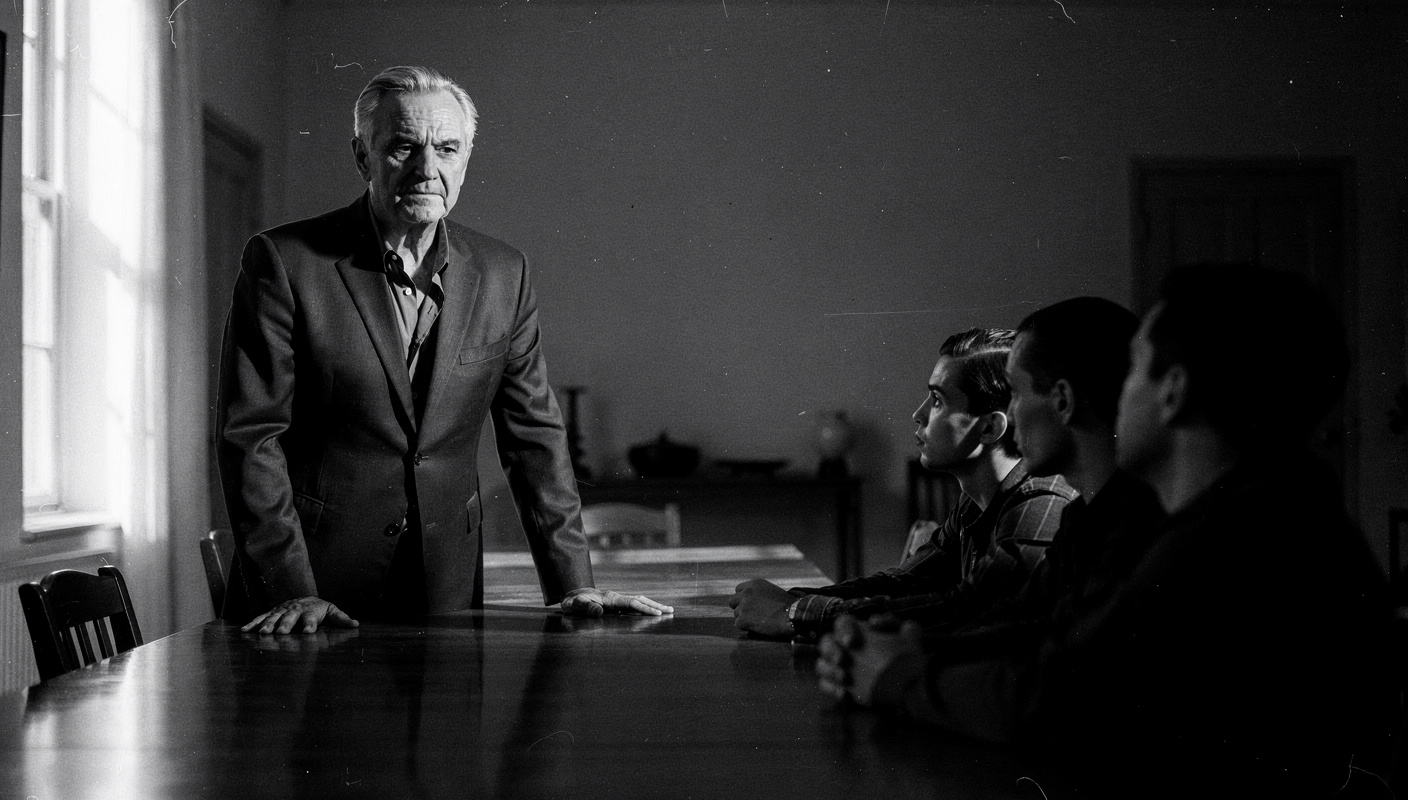

In Short
Your leadership voice is the most powerful force in any brainstorming session you run. Use it wrong and you narrow every mind in the room before a single idea hits the wall.
- Speak first and the room anchors to your thinking, not their own.
- Neutral framing, deliberate silence, and specific redirection are the tools that keep thinking wide.
- The process below gives you a step-by-step method you can apply in your next session.
Leadership voice brainstorming is the intentional management of how a leader speaks, what they say, when they stay silent, and the tone they use, to create conditions where a team generates ideas freely without being anchored to the leader's own preferences or assumptions.
The Quiet Problem With Running a Brainstorm
I watched a senior manager kill a brainstorm in under three minutes once. She did not shout anyone down. She did not dismiss a single idea. She simply said, "I have been thinking we probably need a campaign-based approach. What does everyone think?" The room gave her campaign ideas for the next forty minutes. Nobody floated anything else.
She was confused afterwards. She felt she had asked an open question. And technically she had. But her leadership voice had already answered it.
This is the specific difficulty with using your voice to run a brainstorm well. You are not trying to be neutral in the abstract, which is impossible anyway. You are trying to speak in ways that actively widen the range of what people believe they are allowed to think. That is a skill. It takes practice, and most leaders have never been shown how to build it.
If you want to run productive meetings that genuinely generate value, this is one of the most leveraged places to start.
"The Conversation You're Avoiding Is the One You Need to Have."
"The Conversation You're Avoiding
Is the One You Need to Have."
Stop rehearsing conversations you'll never have. Say It Right Every Time gives you 115 word-for-word scripts and 16 proven frameworks to speak with confidence in every conversation that matters.
Before You Open Your Mouth: What Has to Be True First
The steps below will not work unless two preconditions exist. Check both before you plan a session.
First, the group needs to believe that unusual or impractical ideas will not be mocked or quietly ignored. If your team has watched ideas die in previous meetings, they have already learned to self-censor. You cannot fix that with technique alone. You may need to have a direct conversation before the session about what you are trying to do differently and why.
Second, you need to be genuinely curious about what the room thinks. If you already have a strong preferred answer and you are running the session to build consensus around it, your leadership voice will broadcast that fact no matter how carefully you script your questions. People are good at reading leaders. They will follow your signal, not your words.
If both preconditions are real, you are ready to work the steps.
How to Use Your Leadership Voice Without Anchoring the Room
Step 1: Frame the Problem in Pure Neutral Terms
Write your opening statement before the session. Read it out loud. Listen for any word that signals a direction. The phrase "probably" narrows the room. So does "as we have done before," "the obvious approach," and anything that names a category of solution. Strip those out.
What you want is a statement that is specific about the problem and silent about the solution. "Our onboarding process is losing new hires in the first ninety days. I want to understand every possible reason why, and I want every possible response on the table" is a clean opening. "We need to improve our onboarding, maybe through better training or communication" is not.
Then stop. Say nothing more. Let the silence sit.
Step 2: Hold the Silence Longer Than Feels Comfortable
Most leaders fill a five-second pause. The room knows this. They wait you out, expecting you to answer your own question. When you hold the silence for ten to fifteen seconds, something shifts. The message becomes clear: you are not going to do this for them.
This matters because the first idea out of a brainstorm is usually the most familiar one. The better ideas live a few layers deeper. Silence creates the space to reach them. If you speak before the room does, you have collapsed that space permanently for this session.
Understanding the role of communication in meeting success means recognising that what you do not say shapes the room as much as what you do.
Step 3: Receive Every Idea With the Same Weight
When the first idea comes in, your voice will do one of two things. It will signal that this idea is better or worse than you expected, or it will hold steady and receive it neutrally. The room watches your face and listens to your tone before they listen to your words.
Use a consistent, short acknowledgment for every idea. "Good, that is on the board." "Got it." "Write that up." These phrases do the job. They confirm the idea has been received without ranking it. The moment you say "Oh, I like that one" or "Interesting, yes" with a note of real enthusiasm, the room shifts toward that idea. Every subsequent suggestion gets measured against it.
Save evaluation for later. Your voice should communicate only two things during idea generation: I heard you, and keep going.
Step 4: Direct Traffic Specifically, Not Generally
Open invitations like "anyone else?" rarely work once a pattern has formed. If three people have spoken and seven have not, the silent seven have already decided the session is not for them. You need to call on people by name, warmly and directly.
"Paula, you have a different vantage point on this than most of us. What are you seeing?" is better than "Does anyone have a different take?" The specific invitation communicates that you genuinely want that person's perspective. The general one gives the room permission to let the louder voices continue.
This is especially important for managing dominant voices in a discussion. Your leadership voice is the most effective tool you have for redistributing airtime without creating conflict.
Step 5: Ask the Question That Goes Further
Midway through the session, when the obvious ideas are on the board, there is a natural plateau. The energy drops slightly. People feel they have done the job. This is the moment to use your voice to push through to the less-explored territory.
The phrase that works best in this moment is a variant of: "We have good ideas up here. What is the one thing nobody has said yet because it feels too risky, too strange, or too expensive?" That question gives explicit permission to go further. It names the barrier directly and removes it.
You can also try: "If we had no constraints at all, what would the ideal answer be?" That question is not about pretending constraints do not exist. It is about ensuring the group's thinking reaches its natural edge before you bring the constraints back in.
Step 6: Reflect Back Without Ranking
Partway through and at the close of the generation phase, summarise what you have heard. This is a critical use of your leadership voice and most leaders do it badly. They summarise selectively, emphasising the ideas that interest them most and glossing over the ones that do not fit their intuition.
Your summary should be a mirror, not a filter. Read back every cluster of ideas with the same tone and the same number of words. "We have suggestions around process redesign, around culture, around the entry criteria, and around the technology support system. All four are on the table." That is it. No editorialising. No "and the most interesting of these is..."
Ensuring every participant gets heard is partly about speaking time, but it is equally about whether their contribution survives the facilitation process intact.
Step 7: Give Your View Last, and Name What You Are Doing
After the generation phase is genuinely complete, you can share your perspective. But name the transition explicitly. "You have given me a lot to think with. Here is where I am landing after hearing all of that."
That framing matters. It signals that your view is a response to the room's thinking, not a conclusion you held before you arrived. It also models something valuable: that a leader can form a position from listening, rather than defending a position they walked in with.
This is where your leadership voice earns long-term trust. The room learns that their thinking actually changes where you land. That knowledge makes the next session richer still.
Running This Process With a Remote Team
The same steps apply remotely, but two things need deliberate adjustment.
First, silence lands differently on a video call. A ten-second pause feels like a technical failure. Before you use silence, name it: "I am going to sit with that question for a moment and I want you to do the same." That brief instruction converts the silence from awkward to intentional.
Second, the visual cues you use in a room to signal reception, the nod, the brief eye contact, the slight forward lean, do not carry across a screen. You have to do more of the work verbally. "That is on the board, thank you" needs to land with a small note of real acknowledgment in your voice, not as a flat administrative statement.
For larger remote groups, consider using a shared digital board where ideas appear in writing as they are spoken. This removes the filtering problem almost entirely. The idea exists on the screen before you have had a chance to react to it, which protects it from your unspoken response.
Meeting facilitation skills for managers covers the broader set of tools for running structured sessions, including remote ones, well beyond the brainstorming context.
Where Leaders Go Wrong With Their Facilitation Voice
These are the three mistakes I see most often. I have made all of them.
The mistake: Sharing your idea in the first five minutes to "get things moving."
Why it happens: The silence feels unproductive and you want to show you are engaged and prepared.
What to do instead: Save your idea for Step 7. Your job in the first phase is to ask and receive, not to contribute. The room does not need your idea to start. It needs your silence.
The mistake: Paraphrasing ideas in ways that subtly improve the ones you prefer.
Why it happens: You are trying to be helpful and make ideas clearer, but the framing always ends up serving your intuition.
What to do instead: Reflect ideas back in the exact words the person used. If you need to clarify, ask a question rather than restating. "Can you say more about what you mean by that?" is safe. "So what you mean is..." is not.
The mistake: Calling time on the generation phase too early because you are satisfied with what is on the board.
Why it happens: You have what you came for. You stop noticing that others have more to give.
What to do instead: Set a fixed time for the generation phase before the session starts, and commit to it. How to de-escalate arguments during meetings becomes relevant here too, because a truncated session where people feel cut off before they were finished is a common source of meeting friction.
Your Facilitation Voice Checklist
Use this before and during every session you run.
Before the session:
- Write your opening problem statement. Remove any word that names a category of solution.
- Identify the two or three quieter team members you will call on by name.
- Decide the length of the generation phase and commit to it regardless of how satisfied you feel at the midpoint.
During the session:
- Hold silence for at least ten seconds after your opening question.
- Use only neutral acknowledgment phrases during idea generation: "Got it," "That is on the board," "Keep going."
- At the plateau, ask the question that gives permission to go further.
- Summarise all ideas with equal weight and equal airtime.
- Share your own view last, and name the transition.
After the session:
- Ask yourself: did my voice stay neutral during the generation phase, or did it signal preferences?
- Look at the idea list. Were there contributions from everyone in the room, or did a few voices dominate?
- If the same people stayed quiet, adjust your direct invitation strategy for next time.
How to deal with dominant voices in a discussion pairs well with this checklist if you find participation is consistently uneven across your sessions.
The Practice That Changes Everything
There is a version of leadership voice that sounds humble but is actually controlling. It asks open questions while signalling closed answers. It says "what does everyone think?" while its tone says "I already know." The people in your room can feel the difference between those two things even when they cannot name it.
Building a leadership voice that genuinely opens thinking is not about suppressing your own perspective. It is about timing: knowing when your view helps the room expand and when it shrinks it. That timing is a practice, developed session by session, mistake by mistake.
If you also want to address how your voice functions before a difficult conversation even begins, the empathy bridge technique is worth your time. And if you are looking to sharpen your broader meeting communication skills, the communication in meeting success piece will give you context that extends well beyond brainstorming.
Here is the truth of it: leadership voice brainstorming is not a technique you perfect once. Every room is different, every team has its own patterns, and your own blind spots will keep showing up in new forms. What changes with practice is not that you stop making mistakes. It is that you start catching them faster, and correcting them in the moment rather than the morning after.
Frequently Asked Questions (FAQ)
What is leadership voice brainstorming?
Leadership voice brainstorming is the deliberate use of how a leader speaks, the words they choose, the tone they use, and when they stay silent, to create conditions where a team generates ideas freely. It means leading the process without steering the content toward your own preferences.
How do you use your leadership voice without influencing the team too early?
Stay silent after asking the opening question. When you do speak, use neutral language that does not signal a preferred direction. Reflect ideas back without ranking them. Save your own view for after the team has fully exhausted their thinking, not before.
Why does a leader sharing their idea first kill brainstorming?
When a leader speaks first, the room anchors to that idea. People stop generating and start refining what the leader said instead. This is called anchoring bias. It narrows the range of ideas dramatically, often without anyone in the room realising it has happened.
What should a leader say to open a brainstorming session effectively?
Open with a clear, neutral problem statement, not a suggested direction. Try something like: "We need to solve X. I want every possibility on the table before we evaluate anything. Nothing is too big or too early." Then stop talking and let the silence work.
How do you handle dominant voices in a brainstorming session?
Acknowledge the contribution without amplifying it. Then redirect to others specifically: "That is on the board. Let us hear from someone who has not spoken yet." Naming people by name, gently and warmly, is more effective than open invitations when one voice is dominating the room.
What is the difference between facilitating and leading a brainstorming session?
Facilitating means managing the process: the structure, the pacing, who speaks, and when. Leading means owning the outcome. In a brainstorming session, your job is to facilitate, not to lead toward your preferred answer. The room does the thinking. You create the conditions for it.
How long should a leader stay silent at the start of brainstorming?
Long enough for the discomfort to pass. Most leaders rush to fill a five-second silence. Hold it for ten to fifteen seconds after your opening question. That extended pause signals that you genuinely expect the room to think, not just react to what you have already said.