
In Short
After reading this, you will know how to deliver a team-wide performance conversation that addresses real problems without fracturing the trust and synergy your team depends on.
- Address collective behavior, never individual people, in the group setting
- Use the L.E.A.D. method to structure the conversation so it ends with clarity
- Follow up after the conversation to lock in the gains and rebuild momentum
A team synergy conversation is a structured, leader-led discussion that addresses collective performance gaps while protecting the trust and cooperation that hold a team together. It focuses on shared behavior and group accountability, not individual blame, so the team leaves stronger than it arrived.
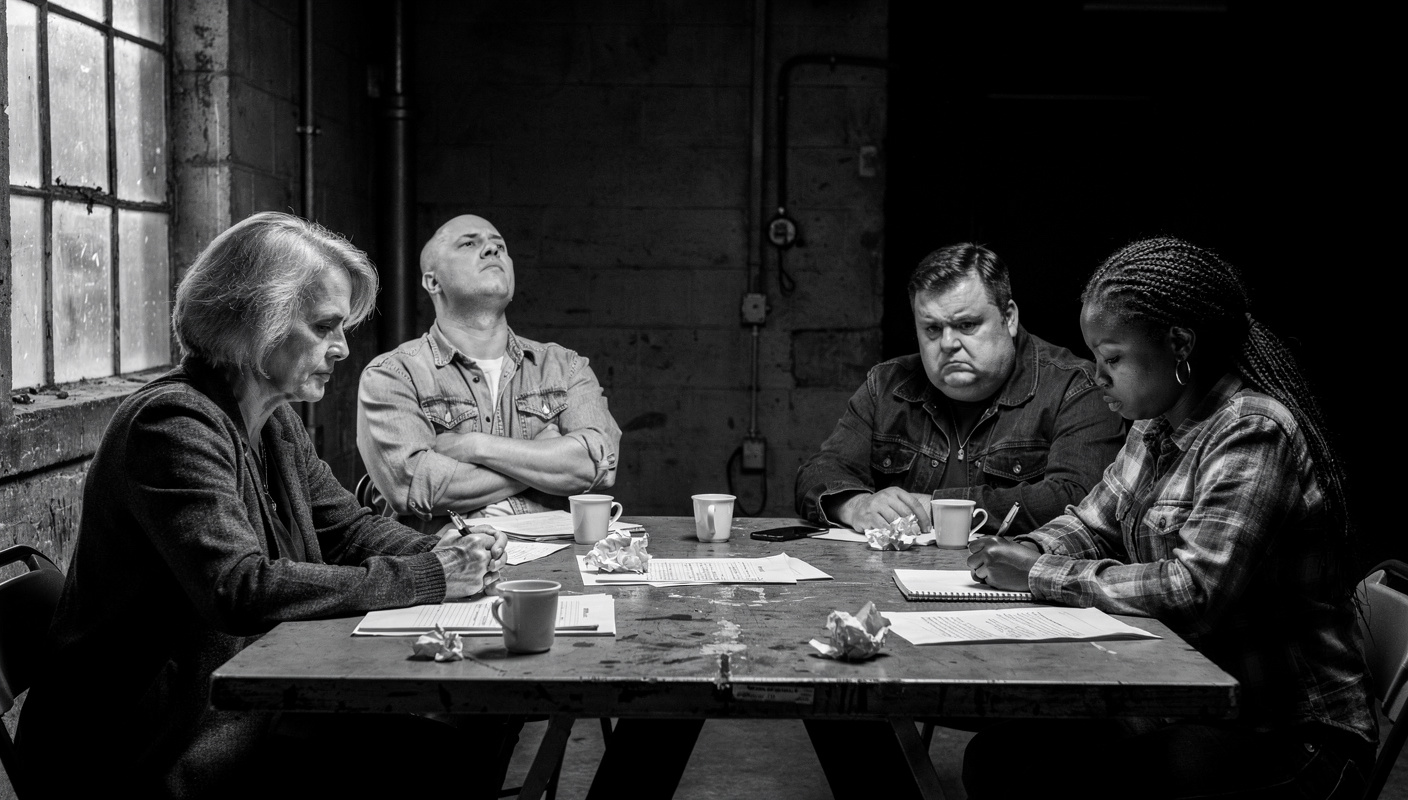
You called the meeting. The whole team is in the room. You know something has to be said. Performance has slipped, standards have dropped, and everyone knows it. Then you open your mouth, and you watch the energy drain out of the room in real time. People stare at the table. Someone crosses their arms. The team that was, even an hour ago, still capable of pulling together has suddenly fractured. You did not mean to do it. But you did.
This is the most common failure point for leaders attempting a team-wide performance conversation. The problem is rarely a lack of courage. It is a lack of structure. Leaders walk in with a message but no method, and the message lands like a hammer instead of a hand.
The deeper fear is real too. Say too little and nothing changes. Say too much and you destroy the team synergy you have spent months building. That tension paralyses good leaders every day.
In this guide, you will get a clear, practical process for navigating this conversation that you can use immediately.
Why Team-Wide Performance Conversations Are Harder Than They Look
Knowing that a conversation needs to happen and knowing how to have it are two entirely different things. Most leaders understand the first. Very few have the system for the second.
Here is what makes this particular type of conversation so difficult:
You are addressing a group, not a person. Individual feedback follows a predictable arc. Group feedback does not. Every person in the room filters what you say through their own sense of guilt, fear, or defensiveness, and you cannot manage all of those reactions simultaneously.
The same words land differently on different people. Something you intend as a general observation about team standards will feel like a personal accusation to the person who is actually underperforming, and like an unfair slight to the person who has been carrying the load. You are speaking to one room but having a dozen separate conversations.
Fear of destroying what you have built holds you back. Team synergy is hard to earn. Leaders know this. So they soften the message until it has no meaning, or they delay until the problem compounds. Both options cost you more than the honest conversation would have.
Vague feedback protects no one. As I note in Say It Right Every Time, "Vague feedback is useless feedback." When you speak in generalities to a group, no one changes because no one feels responsible.
The amygdala hijack is a real threat in group settings. When people feel publicly criticised, their nervous system responds before their reasoning mind does. You lose the room before you finish the sentence.
The goal is not to eliminate these difficulties. It is to build a system that works in spite of them.
"The Conversation You're Avoiding Is the One You Need to Have."
"The Conversation You're Avoiding
Is the One You Need to Have."
Stop rehearsing conversations you'll never have. Say It Right Every Time gives you 115 word-for-word scripts and 16 proven frameworks to speak with confidence in every conversation that matters.
The Foundation: What You Need Before You Start
Before you begin, there are three things that need to be clear. Skip any one of them and the conversation will drift, defensiveness will spike, and team synergy will suffer.
Know exactly what changed. Before you say a word to the team, you need to be precise about what behavior or outcome has shifted. Not "morale feels low" or "things have been off." Specific, observable, recent. What did the team do or fail to do, and when? Without this clarity, your conversation will be too vague to act on. This is the core principle behind the S.B.I. Method, covered in depth in How to Use the S.B.I. Method to Give Team Members Feedback That Unifies Instead of Divides: Situation, Behavior, Impact. Know all three before you walk in.
Check your intention. Ask yourself honestly: are you having this conversation to fix a problem, or to relieve your own frustration? This question matters. The team will feel the difference. A conversation driven by genuine concern for collective performance lands differently than one driven by exasperation. The intention shapes the tone before you say a single word.
Decide what you want the team to leave with. Every difficult group conversation needs a clear destination. What specific commitment, change, or understanding do you need the team to carry out of the room? If you cannot state that in one sentence before you start, you are not ready.
Get these right first. The steps that follow will not work without them.
Step 1: Open with the Shared Context, Not the Complaint
This step sets the entire tone of the conversation, and most leaders get it wrong by leading with the problem.
When you open a performance conversation with what has gone wrong, the first thing people feel is accused. Their nervous system responds, their walls go up, and you have lost the collaborative tone you need before the conversation has even started. The alternative is to open with shared context: what you are all part of together, what matters collectively, and why this conversation is worth having.
In Chapter 7 of Say It Right Every Time, I introduce the L.E.A.D. Method for leadership conversations: Listen First, Empathize, Articulate Your Vision, and Define the Next Steps. This step is where Empathize lives. Before you name the gap, you acknowledge the ground you all stand on together.
How to do it:
- Name something the team has genuinely done well in the recent past. Be specific. Not a platitude, a real example.
- State your intention clearly: this conversation is about getting back to that standard, not punishing anyone.
- Acknowledge any difficulty or pressure the team has been under that may have contributed to the current situation.
Example script:
"Before I get into what I need to talk to you about today, I want to say this clearly: the work this team did on the client rollout in March was excellent. That is the standard I know we are capable of. The last six weeks have been harder. There have been pressures on all of us. What I want us to do today is talk honestly about where we are, and figure out together how we get back to where we know we can be."
This opening does not minimize the problem. It establishes that the leader sees the team, not just the failure, and that changes everything about what follows.
Step 2: Name the Behavior, Not the People
This is the step where most leaders either go too vague or too personal, and both are damaging to team synergy.
Too vague: "Some of us have not been pulling our weight lately." This creates suspicion. Every person in the room looks sideways at their colleagues and wonders who you mean. Trust fractures.
Too personal: "What happened in last Tuesday's client call cannot happen again." If only one person was responsible, you have publicly shamed them. If more than one person was involved, the others feel targeted anyway. Either way, you have broken something.
The correct approach is to name the collective behavior clearly, using the S.B.I. structure, without assigning it to individuals.
How to do it:
- Name the situation: when and where the pattern occurred.
- Name the observable behavior: what the team did or did not do, described factually.
- Name the impact: what it cost, on clients, on the organization, on each other.
- Do not use names. Do not say "some of you." Say "we" or "the team."
This is where How to Give Feedback That Strengthens Team Synergy Instead of Breaking It goes deeper. Read it alongside this guide if you want to sharpen your delivery at the individual level after the group conversation ends.
When you speak in "we," something shifts. The team stops trying to work out who is being blamed and starts listening to the actual message.
Step 3: Invite the Room Before You Prescribe the Solution
This step is where leaders most often shortcut the process, and it is where team synergy is most often lost.
After naming the behavior and the impact, the instinct is to move immediately into what needs to change. You have prepared the solution. You want to deliver it. But if you do, you convert a conversation into a lecture, and lectures produce compliance, not commitment.
The L.E.A.D. Method is specific here: Listen First. Even in a conversation you have called and prepared for, you create space for the team to respond before you prescribe.
How to do it:
- After naming the behavior and impact, stop and ask an open question: "I want to hear from you. What has your experience of the last six weeks been?"
- Let the room respond. Do not fill the silence.
- Listen without defending your position or correcting what people say.
- Acknowledge what you hear before you add to it.
Example script:
"I have told you what I have observed and what I believe the impact has been. But before I say anything else, I want to understand your experience. What has been getting in the way? What are we not seeing from the outside that you are living from the inside?"
Then wait. Genuinely wait.
What you will hear will often surprise you. Sometimes the cause of the performance gap is something you have direct power to fix. Sometimes the team names a systemic issue that individual effort alone cannot solve. In either case, the act of asking transforms the conversation. People who feel heard will act differently than people who feel lectured. This is what How Psychological Safety Enables Honest Communication and Sustains Team Synergy explores in full: the environment that makes honest responses possible.
Step 4: Articulate the Standard Going Forward
After listening, you have the information you need to speak clearly. This is where you name the expectation, not as a punishment but as a shared commitment.
The standard you set here must be specific. Vague standards produce no change. "We need to do better" is not a standard. "Client calls begin on time, every time, and someone on the team confirms attendance 24 hours before" is a standard. The difference is everything.
How to do it:
- State the specific behavioral standard in plain language.
- Connect it directly to what the team told you they care about. Use their words where possible.
- State what you, as the leader, will do differently to support the standard.
- Ask if the standard is clear. Not whether they agree with it. Whether it is clear.
This is the Articulate Your Vision step in the L.E.A.D. Method from Say It Right Every Time. Vision here is not inspirational language. It is a precise picture of what the team is committing to.
Micro-actions:
- Write the standard down before the meeting. Speak from clarity, not improvisation.
- Use "we will" language, not "you must" language, so the standard is shared.
- State your own role in maintaining it.
- Pause after stating the standard and invite one clarifying question.
This step is also where you prevent the conversation from becoming a one-directional mandate. When people can see themselves in the standard, they are far more likely to hold themselves to it.
Step 5: Define the Next Steps with Precision
A performance conversation that ends without specific next steps is a conversation that changes nothing. This is where too many leaders let the work slip.
You have opened well, named the behavior, listened, and set the standard. Now you need to close the loop with clear, time-bound actions. Not general intentions. Specific commitments, assigned to specific people or to the team as a whole, with a clear date.
How to do it:
- Name two or three specific actions the team will take before the next check-in.
- Assign ownership: who is responsible for each action.
- Name the date or timeframe for the first check-in.
- Ask if anyone needs anything from you to make these actions possible.
Example script:
"Here is what I need us to walk away with today. By this time next week, I want each of you to send me one specific thing you are committing to change in how we operate as a team. I will compile those and share them back with the whole group. In two weeks, we will meet again, briefly, to see where we are. That is it. That is the plan. Does anyone need anything from me before we close this out?"
This is the Define the Next Steps component of the L.E.A.D. Method, and it is what separates a conversation that transforms behavior from one that simply documents a complaint. For a deeper look at how to close this kind of conversation effectively, How to Close a Difficult Team Conversation in a Way That Locks In Synergy Gains gives you the full toolkit.
The meeting ends with clarity, not ambiguity. That clarity is what preserves team synergy when the room empties.
Step 6: Follow Up Individually Within 48 Hours
The group conversation is not the end of the process. It is the beginning. What happens in the 48 hours after the meeting determines whether team synergy holds or quietly unravels.
Some people will have heard things in the group setting that they need to process. Others will have felt unfairly implicated. A few will have said things in the room that they want to walk back privately. If you do not create space for these conversations, they happen in the corridors instead, and that is where morale erodes.
How to do it:
- Reach out individually to every team member within 48 hours. A short message is enough: "How are you doing after today's conversation? Anything you want to talk through?"
- For anyone who seemed particularly affected, make the contact a brief one-on-one conversation, not a message.
- Acknowledge the difficulty of what just happened. Sitting through a group performance conversation takes courage.
- Reinforce the standard privately. A brief, direct message: "I meant what I said earlier. I am counting on you."
- Note any individual issues that surfaced and decide whether they need a separate, private conversation.
If a team member's behavior was a significant contributor to the group problem, that conversation happens privately, using the S.B.I. method at the individual level. You do not bring it into the group setting. How to De-escalate Team Conflict Without Destroying Synergy will help you navigate any defensiveness that arises in those private exchanges.
Individual follow-up is where the leader earns trust. Group conversations create accountability. Individual follow-up creates connection.
Adapting This Process for Remote or Hybrid Teams
Remote and hybrid teams present unique challenges for this kind of conversation because you cannot read the room the way you can when everyone is physically present.
Replicate presence deliberately. On a video call, turn your camera on and require everyone else to do the same. Body language carries as much of the message as the words do. Without it, the conversation becomes flat and impersonal.
Manage the silence differently. Silence on a video call feels longer and more uncomfortable than silence in a room. Prepare the team for it: "I am going to ask some questions and I want you to take a moment before you answer. Silence is fine." This removes the pressure to fill the gap.
Use a shared document as an anchor. In remote settings, people lose the thread of a conversation more easily. Have a shared document on screen that shows the two or three key points you are making. This gives people something to focus on and reduces the chance of misinterpretation. If a conflict arises from misunderstanding what was said, How to Use the D.E.A.L. Method to Resolve Conflicts That Are Fracturing Team Synergy gives you a reliable repair process.
Follow up asynchronously as well as directly. After the live conversation, send a written summary to the whole team within 24 hours. Keep it short: what was said, what was agreed, what happens next. This removes ambiguity and gives everyone the same version of events.
The core process holds in every environment. Only the execution changes.
Common Mistakes to Avoid
Let me tell you about the mistakes I see most often. I have made most of them myself.
The mistake: Naming individuals in the group setting.
Why it happens: The leader is frustrated and believes public accountability will motivate change.
What to do instead: Address all behavior at the group level in the group setting. If one person needs a harder conversation, have it privately after.
The mistake: Using vague language like "some of us" or "a few people here."
Why it happens: The leader wants to signal awareness without full confrontation.
What to do instead: Speak in collective terms ("we," "the team") or be fully specific at the behavioral level. Vague signals create paranoia, not improvement.
The mistake: Skipping the listening step and going straight to the solution.
Why it happens: The leader has done their preparation and feels ready to prescribe. It feels efficient.
What to do instead: Ask at least one genuine open question before you name the standard. Compliance without input is short-lived.
The mistake: Delivering the conversation without a clear next step.
Why it happens: The leader mistakes naming the problem for solving it.
What to do instead: Every performance conversation must end with at least one specific, time-bound action owned by someone in the room.
The mistake: Not following up individually.
Why it happens: The leader feels the group conversation was enough, or they want to avoid further discomfort.
What to do instead: Contact every team member within 48 hours. Brief contact is sufficient. The absence of contact says more than you intend. How to Apologize to a Team Member in a Way That Actually Restores Synergy is useful here if the follow-up reveals that a relationship needs repair.
These are not character flaws. They are gaps in the system. Fix the system.
Your Practical Checklist
Use this checklist before you begin and after each cycle.
- I can name the specific behavior or outcome that needs to change, not a general feeling.
- I know the situation, behavior, and impact clearly before I open my mouth.
- I have checked my own intention and I am leading with a genuine desire to help the team improve.
- I know in one sentence what I need the team to leave the conversation with.
- I have prepared an opening that acknowledges something the team has done well.
- I have at least one open question ready to invite the team to respond before I prescribe.
- I have stated the standard in specific, behavioral terms, not general hopes.
- I have named two or three concrete next steps with clear ownership and a timeframe.
- I have a plan to contact each team member individually within 48 hours.
- I have decided in advance how I will handle any defensive reactions in the room.
If you cannot check most of these, that is your starting point.
Summary and Next Steps
You now have a clear, structured process for delivering a team-wide performance conversation that addresses real problems without fracturing the trust and collective momentum your team depends on.
- Open with shared context, not complaint. The tone you set in the first 90 seconds determines whether people listen or defend.
- Use the S.B.I. structure to name behavior clearly at the group level, without assigning blame to individuals.
- Listen before you prescribe. One genuine question changes the entire dynamic of the room.
- Set the standard in specific, behavioral terms. Vague expectations produce no change.
- Close with precise next steps, owned by specific people, with a clear timeframe.
- Follow up individually within 48 hours. This is where team synergy is either reinforced or quietly lost.
- The L.E.A.D. Method from Chapter 7 of Say It Right Every Time gives you the four-step backbone for every leadership conversation you will ever have.
From here, the most useful next steps are to sharpen your delivery at the individual level with How to Give Feedback That Strengthens Team Synergy Instead of Breaking It, and to build the environment where honest conversations become possible with How Psychological Safety Enables Honest Communication and Sustains Team Synergy. Both of those articles extend what you have learned here into the broader territory of building a team that communicates honestly over time.
Building team synergy is not a gift. It is a practice, and this is one of the most important conversations in that practice.
Frequently Asked Questions (FAQ)
What is a team synergy conversation?
A team synergy conversation is a structured, leader-led discussion that addresses collective performance issues while protecting the trust and cooperation that hold a team together. It focuses on shared behavior and group accountability rather than singling out individuals, so the conversation builds cohesion rather than destroying it.
How do you start a team-wide performance conversation without damaging morale?
Start with the shared context, not the complaint. Acknowledge what the team has done well before naming what needs to change. Framing the conversation around collective standards rather than personal blame protects individual dignity and keeps morale intact while still delivering the message clearly.
How does a team synergy conversation differ from individual feedback?
A team synergy conversation addresses patterns of collective behavior, not one person's actions. It holds the group accountable as a unit, which requires different framing, tone, and structure than one-on-one feedback. The goal is to realign the team without triggering defensiveness or turning members against each other.
What should a leader avoid saying in a team performance conversation?
Avoid naming individuals in front of the group, using vague language like "some of you" without specifics, and making threats disguised as standards. These approaches fracture team synergy by creating suspicion among members. Speak to behavior, not character, and keep the focus on the team's shared future.
How does the L.E.A.D. method help in a team-wide performance conversation?
The L.E.A.D. method, outlined in Chapter 7 of Say It Right Every Time, gives leaders a four-step structure: Listen First, Empathize, Articulate Your Vision, and Define the Next Steps. This keeps the conversation grounded, prevents it from becoming a lecture, and ends with clarity that the whole team can act on.
How do you protect team synergy after a difficult performance conversation?
Follow up individually within 48 hours, acknowledge the courage it took to sit through a hard conversation, and move immediately into forward-facing action. Team synergy is restored through what happens after the conversation, not during it. Consistency in follow-through is what rebuilds trust and collective momentum.