
In Short
After reading this, you will have a clear, step-by-step process to rebuild team synergy following conflict or significant organisational change.
- Name the breakdown honestly before attempting any repair
- Re-establish shared purpose and clear ground rules together
- Build trust incrementally through small, consistent commitments
Team synergy is the combined energy and coordinated effort a group produces when its members communicate well, trust each other, and work toward a shared purpose. It is the difference between a collection of individuals and a team that genuinely multiplies each other's strengths.
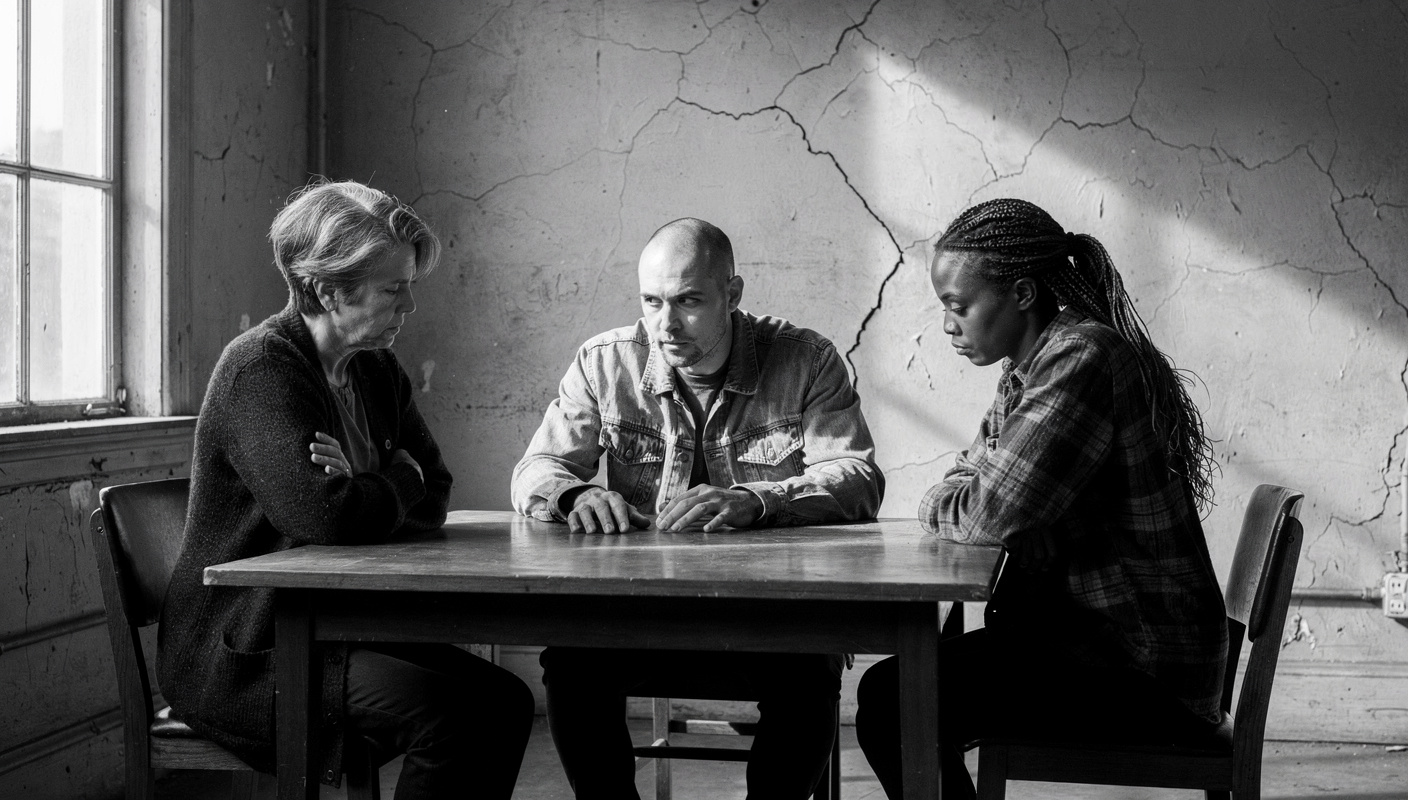
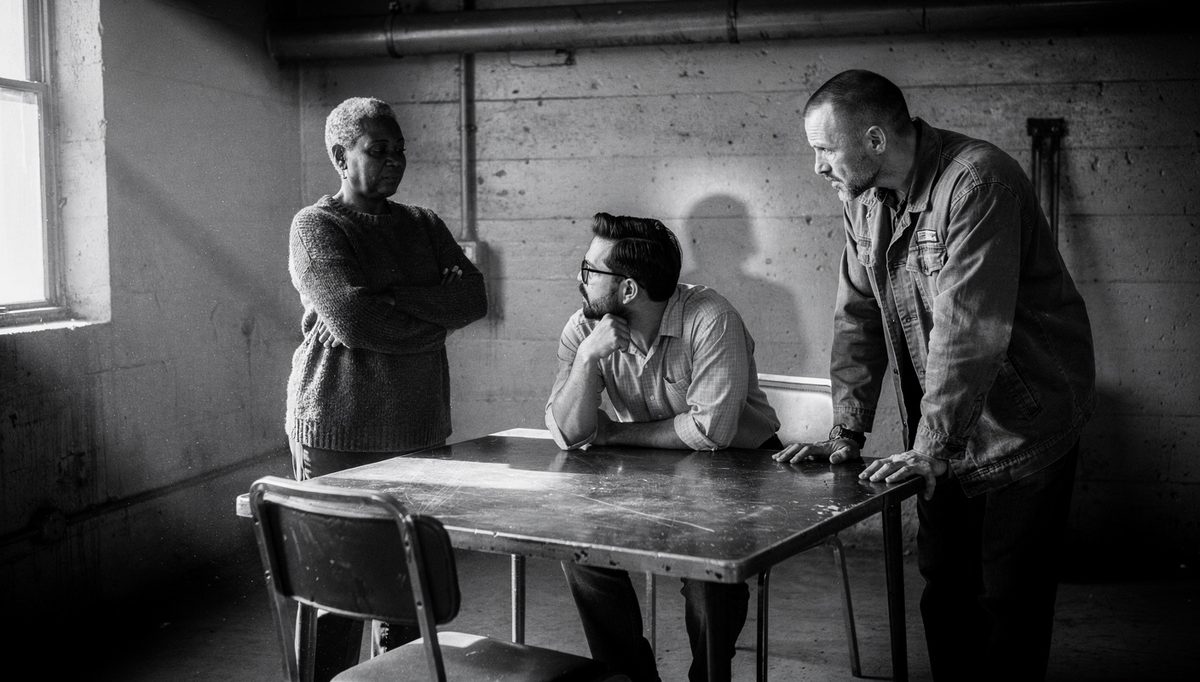
You had two talented people on the same project team who had stopped speaking directly to each other. Everything went through a third person. Decisions slowed. Errors crept in. The rest of the team felt it too, that quiet tension that makes every meeting feel slightly dangerous. The manager waited, hoping it would pass. It did not pass. It spread.
This is how fractured team synergy tends to behave. The initial break is visible; what follows is slower, quieter, and far more damaging. Most leaders struggle to rebuild team synergy not because they lack the will, but because they lack a clear sequence to follow. They attempt to repair trust while the source of the fracture is still unnamed. They push for collaboration before the ground beneath the team is solid again.
Fear of confrontation, confusion about where to start, and a lack of structure: these three things cause more failed repair attempts than any shortage of goodwill. In this guide, you will get a clear, practical process for rebuilding team synergy that you can use immediately.
Why Collective Team Momentum Is Harder to Restore Than It Looks
You already know that a fractured team costs you results. What you may not yet have is a clear picture of why the repair effort so often stalls, even when everyone wants it to work.
Knowing something needs to change and knowing how to change it are two very different things. Here is what actually makes restoring team synergy so difficult in practice.
The original fracture is rarely fully visible. What looks like a conflict between two people almost always has roots that run through the wider team. Addressing only the surface leaves the deeper tension intact, and it re-emerges under the next round of pressure.
Trust cannot be mandated. You can announce a fresh start all you like. Trust returns through repeated, reliable behaviour over time, not through declarations. Most leaders underestimate how long this takes and give up too early.
Organisational change creates competing griefs. When structures, roles, or leadership shift, different people lose different things. Someone may mourn their old team; another may resent a new reporting line. When those griefs go unacknowledged, they become friction.
People protect themselves by retreating into silos. Once a team has been hurt, individuals naturally reduce their exposure. Less sharing, fewer direct conversations, more guarded communication. This self-protection is rational but it actively prevents the repair work from taking hold.
Leaders often skip the acknowledgement phase. Moving straight to solutions feels efficient. It is not. Teams need to feel that what happened has been genuinely seen before they are willing to move forward together.
The goal is not to eliminate these difficulties. It is to build a system that works in spite of them.
"The Conversation You're Avoiding Is the One You Need to Have."
"The Conversation You're Avoiding
Is the One You Need to Have."
Stop rehearsing conversations you'll never have. Say It Right Every Time gives you 115 word-for-word scripts and 16 proven frameworks to speak with confidence in every conversation that matters.
The Foundation: What You Need Before You Start
Before you begin, there are three things that need to be clear.
Your own accountability is settled. Before you lead any repair process, you need to have examined, honestly, what role you played in the breakdown. This does not mean accepting blame for things outside your control. It means being willing to name your own missteps plainly. A leader who skips this step loses credibility the moment the team senses it, and they always sense it.
The process has genuine safety. The conversations you are about to have will only work if people believe they can speak without being punished for honesty. If there is a history of retaliation, blame-shifting, or defensive reactions from leadership, you need to address that directly before you open the floor. You cannot ask for candour and then penalise it.
You have allocated real time. Rebuilding collective cohesion after a significant fracture is not a one-hour workshop exercise. It requires consistent, dedicated time over several weeks. Clear that time in advance. If the team sees this treated as a quick fix, they will treat the process accordingly.
Get these right first. The steps that follow will not work without them.
Step 1: Name the Breakdown Directly
This step creates the foundation for everything that follows, because repair cannot begin where the damage is still unspoken.
Gather your team and name what happened plainly. Not with blame, not with softened euphemism, but with clear and respectful honesty. The team already knows something went wrong; what they need is to hear their leader acknowledge it without spin. This act alone shifts the atmosphere in a room.
- State what happened in one or two sentences, factually and without assigning personal fault.
- Acknowledge the impact on the team's work, trust, and energy.
- Name your own role in the breakdown, however small, without deflection.
- Invite the team to add to your account, not to debate it.
- Close this opening with a clear statement of intent: you are here to repair, not relitigate.
Example: A manager whose team had fractured during a rapid restructure opened the first repair session this way: "Six weeks ago, the team lost two colleagues to redundancy, and I told you the change was finished before I knew that to be true. That cost us trust. I want to start today by saying that clearly, and to hear what the past six weeks have felt like from your side." The room, which had been guarded and quiet, shifted. People spoke. That is what honest naming does.
This step does not fix the problem. It opens the door through which all the real work walks.
Step 2: Create Structured Space to Be Heard
Once the breakdown has been named, every person on the team needs a genuine opportunity to speak before solutions are discussed.
Most leaders underestimate how much unspoken resentment accumulates in a fractured team. People have feelings they have never voiced, interpretations they have never tested, and questions they have been afraid to ask. If you skip straight to action planning, you are building on that uncleared ground. It will give way. If you want to rebuild trust between team members, you need to create a reliable structure for honest communication, not just an open invitation that only the brave will take.
- Use a structured round, where each person speaks uninterrupted for two to three minutes about their experience of the breakdown.
- Ask a single, clear prompt: "What has been most difficult for you, and what do you need to feel able to move forward?"
- Listen without rebuttal, justification, or problem-solving during this phase.
- Reflect back what you heard, using the speaker's own words where possible.
- Acknowledge recurring themes aloud so that individuals feel collectively heard, not just personally noted.
Take time here. Do not rush it for the sake of getting to the action items. This phase, handled well, does more for restoring collaborative rhythm than any team-building exercise you will ever run. You can also use peer-to-peer feedback techniques to strengthen team bonds during this phase, structured carefully so the conversation stays constructive.
Step 3: Re-Establish Shared Purpose and Ground Rules
With the breakdown named and the team heard, you now have the emotional space to build something new on cleared ground.
A team without shared purpose pulls in separate directions even when every individual is working hard. After a period of conflict or change, that shared sense of direction often needs to be rebuilt from scratch, not assumed. The same is true for ground rules: the unspoken agreements about how the team communicates, handles disagreement, and holds each other accountable. These need to be made explicit now, because the old norms were part of what failed.
- Ask the team: "What do we agree on about why this team exists and what we are trying to achieve together?"
- Write the answers on a shared surface and distil them into two or three clear statements.
- Ask: "What behaviours made this team hard to work in? What behaviours would make it feel safe and effective?"
- Co-create a short list of ground rules, no more than five, using the team's own language.
- Have each person verbally commit to one specific behaviour from the list they will personally uphold.
Example script: "I want us to spend thirty minutes today agreeing on two things: why this team matters, and how we will treat each other when things get hard. I will write what I hear, and we will agree it together before we leave. This is not a poster on a wall. It is a working agreement we will refer back to."
Once shared purpose and ground rules are in place, the team has a common reference point. That reference point is what makes every subsequent conversation easier. For teams navigating broader leadership change, sustaining team synergy during leadership transitions addresses how to hold this common ground through continued disruption.
Step 4: Build Accountability Into the Structure
Purpose and ground rules only hold if there is a system for keeping them alive between meetings.
This is where many repair efforts break down. The initial session goes well. People leave feeling lighter. Then two weeks pass, old habits creep back in, and without any mechanism to catch the drift, the team slides back toward the previous patterns. Accountability here does not mean discipline or surveillance. It means building regular, low-friction checkpoints that keep the agreements visible and the team honest with each other.
- Schedule a brief weekly check-in, fifteen minutes maximum, dedicated solely to team health rather than task progress.
- At each check-in, ask one question: "How are we doing against our ground rules this week?"
- Rotate the facilitation of this check-in across team members so it does not remain the leader's sole responsibility.
- When someone names a slip, respond with curiosity rather than judgment, asking what got in the way and what would help.
- Review the shared purpose statement monthly and adjust it if the team's work or context has shifted.
Accountability works best when it is shared rather than imposed. A team that holds itself to its own agreements develops a collective strength that no amount of external pressure can replicate. If your team is working through a significant framework for rebuilding, the C.O.R.E. Framework for restoring team synergy offers a structured approach to this phase.
Step 5: Repair One-to-One Relationships Where Needed
Group repair is necessary. It is not sufficient. Some fractures run between specific individuals, and they need direct attention that a group setting cannot provide.
After the group work is underway, identify the relationships within the team where the damage is sharpest. These are usually visible: people who avoid each other in meetings, who communicate through intermediaries, or whose interactions carry a persistent edge even after the group sessions have improved the broader atmosphere. Leaving these unaddressed is like repairing a wall while leaving a crack in the foundation. The broader repair will hold only as long as it takes for the next stressor to find that crack.
- Have a private conversation with each person individually before facilitating any direct repair conversation between them.
- Ask each person separately: "What would you need to hear from the other person to be able to work with them constructively again?"
- Facilitate a structured bilateral conversation using a clear format: each person speaks about their experience, then their need, then their commitment.
- Stay in the room as a neutral holder of the process, not as an arbitrator of who was right.
- Follow up with both individuals one week later to check whether the agreement is holding in day-to-day work.
Example: A leader facilitated a repair conversation between two colleagues who had been in open conflict during a change process. She gave each person ten minutes to speak without interruption, using the prompt: "Tell me what this period has cost you, and what you would need to be able to work well with this person again." Neither knew the other's answer in advance. What emerged was that both had felt unsupported, and both had assumed the other knew it. The conversation that followed took forty minutes. They left with a working relationship. Not a friendship. A working relationship. That is enough.
For teams where bilateral conflicts are frequent or deeply embedded, the B.R.I.D.G.E. Method for rebuilding synergy after breakdown provides a detailed structure for this kind of repair work.
Step 6: Communicate Change and Progress Clearly
As the repair process unfolds, how you communicate its progress matters as much as the process itself.
Teams in recovery are acutely sensitive to what leaders say, what they do not say, and whether those two things align. Mixed signals, vague reassurances, or selective communication will undo weeks of careful repair. If a strategic decision is coming that will affect the team, communicate it early and directly, even if the details are incomplete. A team that learns about changes through rumour loses trust in its leader faster than almost any other single event. When you are communicating a major shift, use a clear, considered approach: communicating strategic change in a way that preserves synergy offers a practical method for doing exactly that.
- Share progress updates on the repair process openly and regularly, naming what is working and what still needs attention.
- When you do not have an answer, say so plainly rather than offering a comforting guess.
- Acknowledge small improvements in the team's collaboration explicitly and publicly.
- When setbacks occur, name them without catastrophising and bring the team back to the shared agreements.
- Ask the team periodically: "Is the way I am communicating with you building or eroding your trust?"
Clear, consistent communication is the mortar between the bricks of every other repair step. Without it, the structure will not stand.
Adapting This Process for Remote and Hybrid Teams
Remote and hybrid teams face additional obstacles when rebuilding collective cohesion, because the informal moments that naturally repair small fractures in a shared physical space simply do not exist online.
The absence of ambient connection is real. In a shared office, trust accumulates through small interactions: a nod in a corridor, a shared laugh before a meeting starts. Remote teams do not have these, which means the repair process has to be more deliberate and more frequent than it would be for a co-located group.
Structure your structured moments more carefully. The group listening session in Step 2 requires a tighter facilitation framework online than it does in person. Use breakout rooms for smaller conversations before bringing insights back to the full group. People speak more honestly in pairs than in a group of eight on a video call.
Written communication needs explicit tone. In a repair context, ambiguous written messages are read in the most negative available interpretation. Ask your team to flag tone concerns immediately rather than sitting with them. A brief norm like "if a message reads badly, ask before assuming" reduces the volume of unnecessary conflict significantly.
One-to-one repair conversations work well remotely provided both people have privacy, no time pressure, and the call is video-on. The structure from Step 5 translates directly to a video format; what matters is the quality of attention, not the location.
Check-ins need to be shorter and more frequent. A weekly five-minute individual check-in with each team member replaces much of what a leader absorbs passively in a shared space. These are not performance conversations. They are temperature checks that catch drift before it becomes fracture.
The core process holds in remote and hybrid contexts. Only the execution changes.
Common Mistakes When Trying to Restore Team Cohesion
Let me tell you about the mistakes I see most often. I have made most of them myself.
The mistake: Moving to solutions before the breakdown has been named.
Why it happens: Leaders want to be constructive, and sitting with discomfort feels unproductive.
What to do instead: Hold the acknowledgement phase for as long as the team needs it. Nothing you build on unacknowledged pain will stand.
The mistake: Treating the repair as a single event rather than a sustained process.
Why it happens: A good first session creates the illusion that the work is done.
What to do instead: Build the accountability structure in Step 4 before you leave the first session. The work begins after the room empties.
The mistake: Expecting the whole team to repair before addressing the specific fractured relationships within it.
Why it happens: One-to-one conversations feel riskier and more time-consuming than group sessions.
What to do instead: Do both. Group repair and individual repair serve different functions and neither replaces the other.
The mistake: Asking for honest feedback without first demonstrating that honesty is safe.
Why it happens: Leaders assume their invitation is enough. It is not.
What to do instead: Model vulnerability first. Share your own missteps before you ask others to share theirs. The team takes its cue from you. If conflict during meetings is part of the pattern, handling conflict during meetings offers practical guidance for keeping those spaces safe.
The mistake: Ignoring the cross-departmental dimension when the fracture spans teams.
Why it happens: It feels outside your control or remit.
What to do instead: If poor collaboration between departments is part of the problem, address it directly. Rebuilding trust between two departments whose lack of synergy is hurting results offers a structured path for exactly this situation.
These are not character flaws. They are gaps in the system. Fix the system.
Your Practical Checklist
Use this checklist before you begin and after each cycle.
- I have examined my own role in the breakdown honestly and without deflection
- I have confirmed that the team has genuine psychological safety before opening the process
- I have allocated dedicated, protected time for each phase of the repair
- I have named the breakdown directly, plainly, and without blame
- Every person on the team has had structured, uninterrupted space to speak
- The team has co-created a shared purpose statement in its own words
- Ground rules have been agreed, written down, and verbally committed to
- A regular accountability check-in has been scheduled and assigned
- I have identified which one-to-one relationships need direct repair conversations
- Communication about ongoing changes is consistent, clear, and timely
- I have followed up with individuals after repair conversations to check whether agreements are holding
- I am tracking small improvements in team collaboration and naming them aloud
If you cannot check most of these, that is your starting point.
Summary and Next Steps
You now have a sequenced, practical process for rebuilding team synergy after conflict or organisational change, one that addresses both the group dynamic and the individual relationships within it.
- Name the breakdown before you attempt any repair. The team needs to hear honest acknowledgement, not managed optimism.
- Create structured space for every person to be heard. Unspoken experience does not disappear; it resurfaces as resistance.
- Re-establish shared purpose and ground rules together, using the team's own language, not yours.
- Build accountability into the structure with regular, low-stakes check-ins that keep the agreements visible.
- Address fractured one-to-one relationships directly. Group repair and individual repair are both necessary.
- Communicate change and progress clearly, consistently, and without spin. Mixed signals undo careful work faster than almost anything else.
- Adapt the process for your context, whether remote, hybrid, or cross-departmental, without abandoning the core sequence.
For teams dealing with recurring patterns of breakdown, the C.O.R.E. Framework for restoring team synergy gives you a repeatable structure to embed into your team's rhythm. If your situation involves interdepartmental tension, start with rebuilding trust between departments before applying the steps above.
Building team synergy is a practice, not a gift. Every team that works well together has earned it through exactly this kind of deliberate, honest, repeated effort.
Frequently Asked Questions (FAQ)
What does rebuild team synergy mean in the workplace?
To rebuild team synergy means to restore the collective energy, trust, and coordinated effort a group needs to work effectively together. It involves repairing damaged communication, re-establishing shared goals, and creating the conditions for genuine collaboration to return after conflict or disruption.
How do you rebuild team synergy after a major conflict?
Start by acknowledging the breakdown honestly, then work through a structured process: name what happened, hear every perspective, re-establish shared ground rules, and build small wins together. Skipping the acknowledgement step almost always causes the fracture to reopen under pressure.
How long does it take to rebuild team synergy after organizational change?
Most teams need between four and twelve weeks of deliberate effort to rebuild team synergy after significant change. The timeline depends on how deep the trust damage runs, how consistently the leader models the new norms, and whether the team gets regular structured space to communicate openly.
Why does team synergy break down after organizational change?
Organizational change disrupts the unspoken agreements and working rhythms teams rely on daily. People lose clarity about roles, feel unheard in decisions, and often carry unresolved anxiety that hardens into friction. Without deliberate repair, those patterns settle in and become the new normal.
What is the first step to restore team synergy after conflict?
The first step is to name the breakdown directly and create a structured space for the team to be heard. Most leaders skip this and move straight to solutions, which leaves the emotional residue intact. Unaddressed feelings do not disappear; they resurface as resistance.
Can team synergy be rebuilt without a new leader?
Yes. The same leader who presided over the conflict can rebuild team synergy, provided they demonstrate genuine accountability for their own role in the breakdown. What teams cannot tolerate is a leader who expects change from everyone else while remaining unchanged themselves.