
What Happened
Harvard Law School's corporate governance forum recently spotlighted the gap between effective board leadership and the real costs of getting it wrong. The piece examined how boards succeed or fail based largely on how well their leaders communicate direction, manage conflict, and speak with clarity under pressure. The central argument: leadership technique is not a soft skill. It is the whole job.
The Communication Angle
Let's start with the event itself. A Harvard forum dedicated to corporate governance chose to frame board effectiveness not around strategy, not around fiduciary duty, but around the art of doing it well. That framing is a communication choice, and it's a revealing one. When an institution with that kind of authority says the problem is execution and not knowledge, you listen.
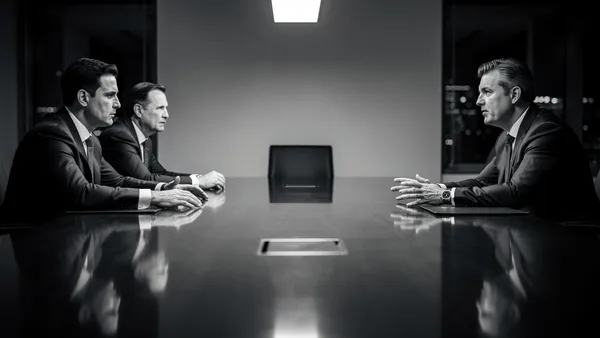
Here is what most board leaders get wrong: they confuse authority with communication. They assume that because they hold the chair, their meaning lands. It does not. A boardroom full of intelligent, high-status people is one of the hardest communication environments on earth. Everyone has a position to protect. Nobody wants to be the person who misread the room. So people talk around the issue instead of at it. The chair lets it happen because confrontation feels disruptive. The result is a meeting that produces warmth but no clarity.
Effective board chairs do the opposite. They name the tension out loud. They say: "We have two competing views here, and we need to resolve them before we leave this room." That single sentence does three things. It acknowledges reality. It signals that ambiguity will not be tolerated. And it puts the group on notice that a decision is required. That is not aggressive. That is precise. Precision is the most underrated communication skill in leadership.
The other failure the forum points to is the gap between what boards say in the room and what they signal outside it. A board can vote unanimously and still undermine its own decision through vague follow-up communication, inconsistent messaging to management, or silence when clarity was needed. Execution breaks down at the communication handoff. Every time.
The fix is not more meetings or better agendas. It is developing the habit of closing every decision with a single, spoken sentence that states what was decided, who owns it, and what success looks like. Boards that do this consistently outperform those that do not. That is not opinion. That is pattern recognition from watching hundreds of leadership teams operate.
This is exactly the kind of scenario I break down in Say It Right Every Time. The chapter on closing conversations gives you a framework for ending any high-stakes discussion with the kind of clarity that actually sticks. Most leaders spend all their energy on how to open a difficult conversation. The close is where decisions either solidify or dissolve. That chapter will change how you run every meeting you lead from here forward.

Never Be Lost
for Words Again
Get word‑for‑word scripts for the conversations that shape your life, from job interviews and negotiations to difficult talks with family and partners, so you always know exactly what to say and how to say it.
Never Be Lost
for Words Again
Get word‑for‑word scripts for the conversations that shape your life, from job interviews and negotiations to difficult talks with family and partners, so you always know exactly what to say and how to say it.
Key Takeaway
After your next board or leadership meeting, before anyone leaves the room, say this out loud: "Here is what we decided, here is who owns it, and here is how we will know it worked." Write it down. Send it within the hour. This one habit eliminates more confusion than any agenda redesign or facilitation technique I have ever seen.