
What Happened
The expectations placed on corporate leaders have shifted dramatically. Today's CEOs are not just judged on earnings reports and market performance. Employees, consumers, investors, and the public now expect them to speak clearly on social issues, company culture, and their organization's role in the world. The corner office now comes with a microphone, and most executives have no idea how to use it.
The Communication Angle
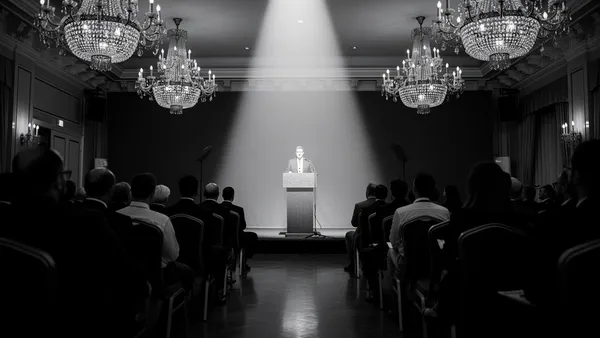
Picture a CEO stepping to a podium after a controversial news cycle. The company's stock is steady, the quarterly numbers look fine, but the room is electric with tension. Employees want to know where leadership stands. The CEO clears his throat and says: "We are monitoring the situation and remain committed to our core values." Applause? None. Respect? Gone.
That response is what I call the "nothing sentence." It sounds like communication. It has words, structure, even a vague moral nod. But it communicates exactly zero. The audience leaves knowing less about this person than before he spoke. And here is the brutal truth: silence dressed up in corporate language is not neutral. It reads as evasion, and people punish evasion far more harshly than an honest, unpopular opinion.
The new expectation of CEOs is not that they become politicians or activists. It is that they become real. Audiences today are extraordinarily good at detecting performance. They have been marinated in media since birth. They know when someone is speaking from conviction versus speaking from a script drafted by a communications committee at 11pm the night before. The moment they sense the latter, trust evaporates.
The CEOs who have navigated this era well share one communication habit: specificity. They do not say "we support our people." They say "here is what we changed, here is what it cost us, and here is why we did it anyway." Specificity is courage made audible. Vague language is fear made audible. Audiences know the difference without being able to name it.
The practical lesson here is not complicated. Before any public statement, a CEO needs to answer three questions privately: What do I actually believe? What am I willing to own if this goes sideways? What is the one concrete thing I can point to that proves I mean it? If a leader cannot answer all three, they are not ready to speak. Going public before you have answered those questions does not protect you. It exposes you.
This is exactly the kind of scenario I break down in Say It Right Every Time. The chapter on speaking with authority covers the precise difference between statements that build trust and statements that quietly destroy it. It gives you a framework for stripping the "nothing sentences" out of your communication before they leave your mouth, and replacing them with language that actually lands with the people you need in your corner.

Never Be Lost
for Words Again
Get word‑for‑word scripts for the conversations that shape your life, from job interviews and negotiations to difficult talks with family and partners, so you always know exactly what to say and how to say it.
Never Be Lost
for Words Again
Get word‑for‑word scripts for the conversations that shape your life, from job interviews and negotiations to difficult talks with family and partners, so you always know exactly what to say and how to say it.
Key Takeaway
Before your next public statement, whether that is a company-wide email, a press comment, or a town hall answer, write down one specific, concrete action your organization has taken that backs up what you are about to say. If you cannot name one, do not make the statement yet. Go do the thing first. Then speak.