
What Happened
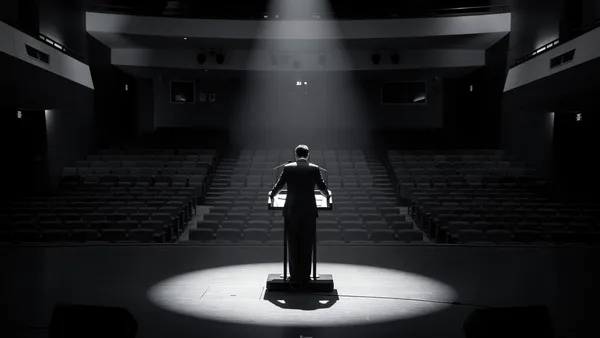
Business media is waking up to something that forward-thinking leaders already know: CEOs are no longer just executives who occasionally give interviews. They are now full-time content creators whether they want to be or not. Every LinkedIn post, every earnings call, every keynote appearance feeds an always-on media machine. The question is no longer whether a CEO should communicate publicly. It is whether they will do it deliberately or accidentally.
The Communication Angle
Here is the event worth dissecting: the business world has collectively realized that the CEO chair comes with an invisible media studio attached. And most executives are sitting in that studio with no script, no strategy, and no understanding of what they are actually broadcasting.
The failure I see constantly is one of framing. Most CEOs treat communication as a reporting function. They show up to tell people what happened. Revenue numbers. Headcount decisions. Strategy pivots. But audiences do not want a ledger. They want a point of view. The CEOs who are building genuine platforms, think Satya Nadella or Brian Chesky, are not reporting. They are narrating. There is a massive difference. Reporting gives you information. Narrating gives you a reason to care.
The second layer is consistency, and this is where most executives completely fall apart. They communicate in bursts. Big announcement, then silence. Crisis statement, then silence. IPO roadshow, then silence. That is not a media platform. That is a fire alarm. You only hear it when something is wrong. The leaders who have built real trust with their audiences show up on a cadence. Not every day, but predictably. Their audience knows what to expect and when to expect it. That predictability is itself a form of credibility.
The third layer is the one nobody wants to talk about: specificity. Vague communication is a power move that backfires. When a CEO says "we remain committed to our people," that sentence means nothing and everyone knows it. Specificity signals confidence. "We are keeping all 400 employees in the Austin office through Q3 while we reassess" is a sentence that builds trust, even if the news is uncertain. Vague language does not protect you. It just tells your audience that you do not respect them enough to be clear.
The executives who are winning the media platform game have figured out that communication is not a soft skill. It is a leadership instrument. They use it to shape how decisions are perceived before critics can shape it for them.
This is exactly the kind of scenario I break down in Say It Right Every Time. The chapter on intentional framing gives you a framework for deciding what lens you want your audience to use before they ever hear your message. Because once they form a first impression, you are not communicating anymore. You are correcting. And correction is three times harder than getting it right the first time.

Never Be Lost
for Words Again
Get word‑for‑word scripts for the conversations that shape your life, from job interviews and negotiations to difficult talks with family and partners, so you always know exactly what to say and how to say it.
Never Be Lost
for Words Again
Get word‑for‑word scripts for the conversations that shape your life, from job interviews and negotiations to difficult talks with family and partners, so you always know exactly what to say and how to say it.
Key Takeaway
Before your next public communication, whether it is a company-wide email, a LinkedIn post, or a town hall, write down this sentence and finish it: "After hearing this, my audience should believe that..." If you cannot finish that sentence in one clear clause, you are not ready to communicate yet. Go back and figure out what you actually want people to think, feel, or do. Then build everything around that single outcome.