
What Happened
Forbes recently spotlighted three unconventional competencies that contribute to executive presence, a quality often discussed but rarely defined in practical terms. The piece challenges the common assumption that presence is built through polished speeches or confident body language alone. Instead, it points toward less obvious skills that separate leaders who command rooms from those who merely occupy them.
The Communication Angle
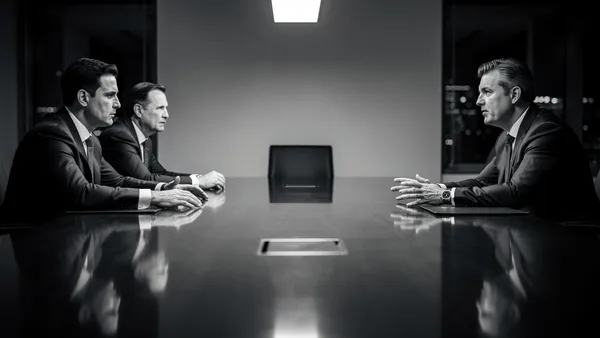
Picture this: you walk into a boardroom, say nothing, and every senior leader in the room has already decided whether they trust you. That decision happened in roughly four seconds. That is not a metaphor. That is the reality of executive presence, and most professionals spend zero time preparing for it.
Here is what Forbes got right by pointing toward "unlikely" skills. The word unlikely is the whole story. It signals that what most people practice, rehearse, and obsess over is the wrong thing entirely. Professionals drill their pitch delivery. They rehearse their handshake. They practice eye contact in mirrors. None of that is what moves the needle on presence.
What actually moves the needle? The ability to listen with visible intention. When a leader listens well, physically leans in, pauses before responding, and reflects back what they heard accurately, the room shifts. Every person watching that exchange registers the same thing: this person is paying full attention. Full attention is rare. Rare things carry weight. That weight is what people call "presence."
The second skill hiding in plain sight is the ability to hold silence without apology. Most professionals treat silence as a failure. They fill every pause with filler words, hedge phrases, or nervous energy. A leader who can absorb a tough question, sit with it for three full seconds, and then respond directly sends an unmistakable signal: I am not rattled. Unrattled people get followed. Rattled people get managed around.
The third skill, and the one I find most underestimated, is the ability to name the tension in a room. When a meeting has an unspoken conflict floating over it, most people pretend it is not there. The leader who says, calmly and without drama, "I think there is a real disagreement here and we should surface it," becomes the most trusted person in the room instantly. That move requires courage, precision, and control. It is a communication skill, not a personality trait. You can learn it.
This is exactly the kind of scenario I break down in Say It Right Every Time. The chapter on reading the room gives you a framework for identifying the unspoken tension before you walk in, so you are not discovering it in real time when the pressure is highest. You will know what to say and, just as important, when to say it.

Never Be Lost
for Words Again
Get word‑for‑word scripts for the conversations that shape your life, from job interviews and negotiations to difficult talks with family and partners, so you always know exactly what to say and how to say it.
Never Be Lost
for Words Again
Get word‑for‑word scripts for the conversations that shape your life, from job interviews and negotiations to difficult talks with family and partners, so you always know exactly what to say and how to say it.
Key Takeaway
Before your next high-stakes meeting, write down one thing that might go unsaid in that room. A conflict no one wants to raise. A concern people are dancing around. A decision that keeps getting deferred. Write one sentence that names it clearly and neutrally. Then decide whether you are willing to say it out loud. If you are, say it early. Leaders who name the elephant own the room.