
What Happened
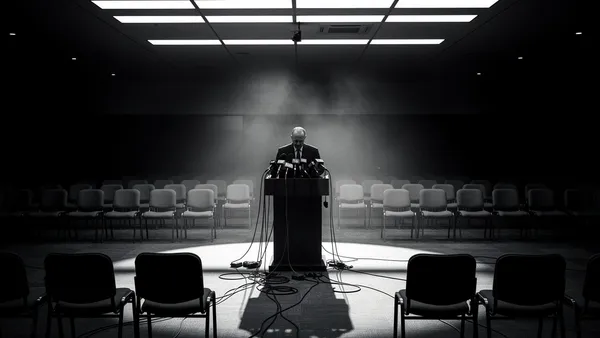
Brand reputation is fragile, and most businesses learn that lesson too late. A damaged reputation does not fix itself quietly over time. It requires a deliberate, structured communication response. Business News Nigeria recently addressed this reality, outlining a framework for companies trying to recover lost public trust. The core challenge is not fixing what went wrong internally. It is convincing the outside world that something real has changed.
The Communication Angle
Can you actually talk your way back from a ruined reputation? Yes. But only if you stop treating communication as decoration on top of action.
Most companies in reputation crisis make the same fatal mistake: they lead with the press release. They draft carefully worded statements full of phrases like "we take this seriously" and "our customers are our priority." Nobody believes it. Not because people are cynical (though they are), but because those words arrive without evidence. You are asking an audience that already distrusts you to simply take your word for it. That is not communication. That is wishful thinking.
The first rule of reputation repair is this: action before announcement. Do something real, then talk about it. Not the other way around. If a product hurt people, compensate them before you hold the press conference. If your leadership behaved badly, make a visible personnel decision before you publish a values statement. The sequence matters more than the message itself. Your audience is reading the order of events as a signal of your priorities.
The second rule is specificity. Vague apologies and vague promises are worse than silence. They confirm the suspicion that nothing real is changing. Compare "we are committed to doing better" with "we have hired an independent auditor, and their report will be published publicly in 90 days." One is noise. The other is a commitment with a deadline and a consequence. Specificity is the only currency that buys back trust.
The third rule is consistency over time. One good statement fixes nothing. Neither does one good action. Reputation is rebuilt through repeated, boring, predictable follow-through. The brands that recover are the ones that keep showing up with evidence long after the news cycle has moved on. That is the part most companies skip, because it requires discipline instead of drama.
This is exactly the kind of scenario I break down in Say It Right Every Time. The chapter on high-stakes messaging gives you a framework for sequencing your words and your actions so that what you say is actually believed. Most people focus entirely on crafting the right message. The real skill is understanding what your audience needs to see before they are ready to hear you at all.

Never Be Lost
for Words Again
Get word‑for‑word scripts for the conversations that shape your life, from job interviews and negotiations to difficult talks with family and partners, so you always know exactly what to say and how to say it.
Never Be Lost
for Words Again
Get word‑for‑word scripts for the conversations that shape your life, from job interviews and negotiations to difficult talks with family and partners, so you always know exactly what to say and how to say it.
Key Takeaway
Before your company sends out any public statement during a reputation crisis, write down two things on a single sheet of paper: the one concrete action you have already taken (not plan to take, have taken), and the specific, dated promise you are prepared to be held to. If you cannot fill in both lines, you are not ready to communicate publicly. Wait until you can.