
What Happened
Malaysian Prime Minister Anwar Ibrahim signaled that a wave of government announcements is coming, starting late August and running through the tabling of the 2027 Budget in early October. No specifics were given. He essentially told the public: something significant is coming, just not yet. It is a deliberate communication choice, and it deserves scrutiny.
The Communication Angle
Here is the comparison that matters: Anwar's approach versus what a sharp communicator would have done instead.
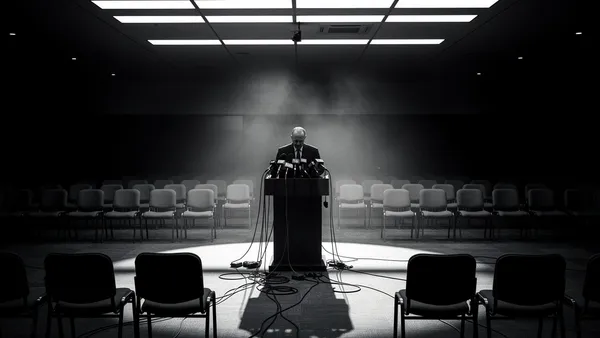
What Anwar did is called a pre-announcement. He announced that he will announce something. On the surface, it looks like transparency. In practice, it is the opposite. He created anticipation without substance, which sounds strategic until you realize what it actually produces: speculation, anxiety, and a news cycle he cannot control. Every journalist, opposition figure, and social media commentator now gets to fill the blank he left open. He handed them the pen.
The contrast is a leader who front-loads the substance. Think of how effective crisis communicators handle uncertainty. They do not say "big news is coming." They say: "We are addressing three problems. Here is what we know now. Here is our timeline. Here is what changes first." That structure gives the audience something real to hold. It signals competence, not just movement.
The deeper problem with Anwar's approach is the cumulative framing. Stringing announcements from late August to October sounds like momentum. It is actually fragmentation. You are asking your audience to stay engaged across six-plus weeks with no anchor point. Most people will not. They will tune in for the Budget tabling and ignore everything before it. The pre-announcement achieves almost nothing for ordinary citizens, and it signals to political observers that the government is managing optics rather than driving policy.
What should have happened? One of two things. Either say nothing until you have something concrete to say, or give the audience one specific, meaningful detail that makes the upcoming announcement feel real and earned. "We will be addressing civil service restructuring" is a sentence that does actual work. "Urgent changes are coming" is noise.
The lesson here applies far beyond politics. Whenever you tease a message without delivering substance, you are spending credibility you have not earned yet. The audience gives you attention on credit. If the payoff does not match the buildup, you do not just disappoint them. You make them suspicious of the next thing you say.
This is exactly the kind of scenario I break down in Say It Right Every Time. The chapter on managing high-stakes announcements gives you a framework for sequencing information so your audience stays oriented instead of anxious. The core principle: people can handle incomplete information, but they cannot handle the feeling that you are hiding something. The difference between those two experiences is entirely in how you structure what you say first.

Never Be Lost
for Words Again
Get word‑for‑word scripts for the conversations that shape your life, from job interviews and negotiations to difficult talks with family and partners, so you always know exactly what to say and how to say it.
Never Be Lost
for Words Again
Get word‑for‑word scripts for the conversations that shape your life, from job interviews and negotiations to difficult talks with family and partners, so you always know exactly what to say and how to say it.
Key Takeaway
Before your next big announcement, write down one specific thing you can reveal right now, even if the full picture is not ready. A single concrete detail (a date, a name, a number) does more to build trust than any amount of "stay tuned." If you cannot name one real thing, you are not ready to make the announcement at all. Wait.