
What Happened
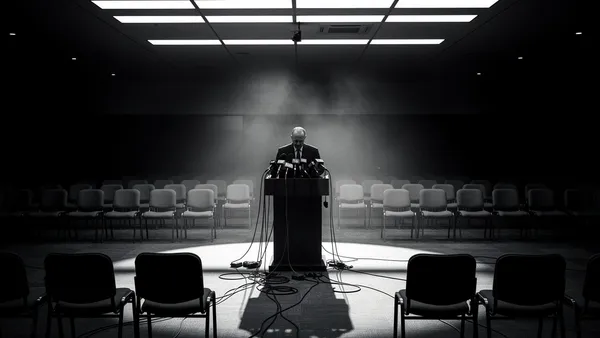
Researchers at the Keough School of Global Affairs studied what politicians actually get from using divisive, attacking language against their opponents. The findings confirmed what many suspected but few wanted to admit: insults and inflammatory rhetoric do deliver measurable political rewards. This is not a story about bad behavior going unpunished. It is a story about a communication strategy that works, which makes it far more dangerous.
The Communication Angle
Here is the lesson, stated plainly: a message that triggers emotion travels farther than a message that informs. Political insults are not communication failures. They are communication choices, and they work for specific, identifiable reasons that every professional needs to understand.
The first reason insults work is contrast. When a politician attacks an opponent, they are not just criticizing someone else. They are defining themselves by opposition. Contrast is one of the most powerful tools in any communicator's kit. Your brain processes "I am the opposite of that corrupt failure" faster and more vividly than it processes "I have a detailed infrastructure plan." Negative framing cuts through noise. That is not an opinion. That is how attention works.
The second reason is tribal signaling. Insults do not persuade the middle. They are not designed to. They energize the base. Every sharp attack tells your existing supporters: "I am fighting for you. I see the enemy clearly." This is the part most professionals miss. They assume the goal of communication is to persuade everyone. It is not. Sometimes the goal is to deepen loyalty among the people already in your corner. Politicians who use divisive rhetoric have made a calculated targeting decision, not an emotional outburst.
The third reason, and the one with the most practical application outside politics, is memorability. "Crooked Hillary." "Sleepy Joe." "Lyin' Ted." You just recalled those without effort. Now name three policy positions from the same campaigns. You cannot. This is the power of a sharp, specific, repeated label. It lodges. It defines. It persists. The communicator who gives you a vivid image beats the one who gives you accurate information, almost every time.
Now here is where I draw the line for professionals outside the political arena. These techniques work, but the cost structure is different. A politician can afford to alienate 40 percent of the population and still win. You cannot alienate 40 percent of your clients, your colleagues, or your team and survive. The tactics translate. The targeting does not. Use contrast, yes. Use vivid, specific language, yes. Use emotional resonance, absolutely. But the "destroy the opponent" framing will cost you relationships that politicians never had to begin with.
This is exactly the kind of scenario I break down in Say It Right Every Time. The chapter on audience targeting gives you a framework for identifying the difference between the people you need to move and the people you need to activate. Those are two completely different communication jobs, and confusing them is where most professionals lose the room before they ever open their mouths.

Never Be Lost
for Words Again
Get word‑for‑word scripts for the conversations that shape your life, from job interviews and negotiations to difficult talks with family and partners, so you always know exactly what to say and how to say it.
Never Be Lost
for Words Again
Get word‑for‑word scripts for the conversations that shape your life, from job interviews and negotiations to difficult talks with family and partners, so you always know exactly what to say and how to say it.
Key Takeaway
Before your next high-stakes presentation or difficult conversation, write down who your actual audience is and what emotional state you want them to leave in. Not what you want them to know. What you want them to feel. Then build your language backward from that feeling. That is what political communicators do instinctively. Most professionals never do it at all.