
What Happened
A communication educator, drawing on years of teaching leadership and storytelling, challenged a common assumption about letter writing. Most people blame their avoidance of personal letters on a lack of time. This educator argues the real barrier is something deeper and more psychological. The finding cuts to the heart of how people relate to putting honest, personal communication on paper.
The Communication Angle
Here is the contrast that matters. On one side: the person who says "I don't have time to write a real letter." On the other side: the person who sits down, stares at a blank page for twenty minutes, and closes the laptop. Same result. Completely different problem.
The first person is managing your expectations. The second person is running from something. Blaming busyness is one of the oldest communication deflections there is. It sounds responsible. It lets you off the hook without exposing the real issue, which is almost always fear. Fear of saying the wrong thing, fear of being too much, fear of being seen.
The educator's instinct here is correct, and it points to something professionals need to hear plainly: avoidance is never about logistics. When someone on your team stops giving you direct feedback, stops speaking up in meetings, stops responding to your messages promptly, the reason is not their calendar. The reason is that something in the communication environment has made honesty feel risky. You cannot fix a fear problem with a scheduling solution.
Now here is where the comparison gets sharp. Leaders who diagnose the logistics problem ("let's add a feedback form," "let's schedule a one-on-one") are doing something different from leaders who diagnose the fear problem ("what would make it safer to say the hard thing here?"). The first approach produces compliance. The second produces actual communication. They look similar on the surface. The results are not similar at all.
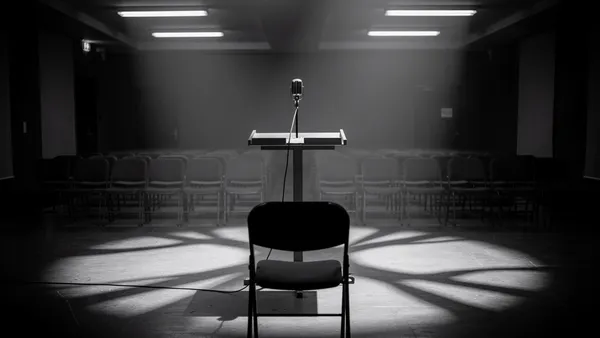
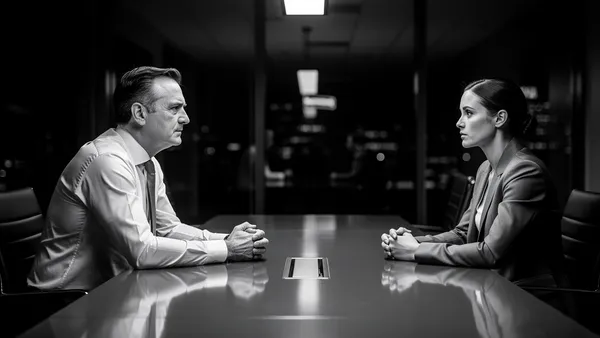
Letter writing is just a clean, visible example of a universal dynamic. The blank page is honest. It will not fill itself with polite filler the way a meeting will. It demands that you decide, clearly and on purpose, what you actually want to say. That is terrifying for most people. And that terror tells you everything about what is really happening when communication breaks down anywhere, on paper, in a room, or across a conference table.
This is exactly the kind of scenario I break down in Say It Right Every Time. The chapter on removing communication barriers gives you a framework for identifying whether a silence problem is a skills problem or a safety problem, because the fix for each one is completely different, and mixing them up is where most leaders waste months of effort.

Never Be Lost
for Words Again
Get word‑for‑word scripts for the conversations that shape your life, from job interviews and negotiations to difficult talks with family and partners, so you always know exactly what to say and how to say it.
Never Be Lost
for Words Again
Get word‑for‑word scripts for the conversations that shape your life, from job interviews and negotiations to difficult talks with family and partners, so you always know exactly what to say and how to say it.
Key Takeaway
The next time someone on your team goes quiet, do not send them a scheduling link. Instead, send them one sentence: "I want to hear your honest read on this. You can be direct with me." That single sentence removes the performance pressure. It names what you actually want. It gives them a specific permission they may not have known they had. You will get more truth from that sentence than from a dozen structured feedback sessions.