
In Short
After reading this, you will know how to use the Empathy Bridge to position your body before a difficult conversation so the other person feels safe before you speak.
- Ground your physical stance and release visible tension before entering the room.
- Choose your position deliberately: no barriers, no angles that signal dominance.
- Regulate your breathing to signal calm and invite the same from the other person.
The empathy bridge body position is the deliberate physical arrangement of your posture, proximity, and expression before a difficult conversation, designed to signal openness and lower the other person's defenses before any words are exchanged.
You sat down across the table. You had the right words ready. You had thought through the issue for days. But within thirty seconds, you could see it going wrong. The other person's jaw tightened. Their shoulders pulled back. They crossed their arms and looked sideways. Nothing you said after that landed. The conversation was already over before it began.
This happens to people every day. They prepare what to say and completely neglect how they arrive. The empathy bridge body position is not about tricks or performance. It is about understanding that your physical presence sends a signal before your first sentence does, and that signal either opens the door or closes it.
The real problem is that most people enter difficult conversations carrying the tension of the conversation in their bodies. They walk in braced for conflict, and they look it. The other person reads that physical message instantly, and they respond in kind.
In this guide, you will get a clear, practical process for physical expression before a difficult conversation that you can use immediately. If you want to understand the full Empathy Bridge framework first, How to Use the Empathy Bridge Before Delivering Critical Feedback is a strong place to start.
Why Physical Presence Is Harder to Control Than You Think
Knowing that body language matters and actually managing it under pressure are two entirely different things. Most people reading this already know that posture signals confidence, that eye contact builds trust, that an open stance invites conversation. They know it. They still walk into hard conversations looking like they are bracing for a storm.
Here is why this gap exists in practice:
Your body carries your emotions before your brain catches up. When you are anxious about a conversation, your muscles tighten, your breathing shortens, and your posture closes before you make a conscious decision about any of it. You cannot think your way out of a physical stress response. You have to interrupt it deliberately.
Most people prepare their words, not their bodies. Hours spent rehearsing what to say. Almost no time spent preparing how to arrive, where to sit, or what to do with their hands. The body is an afterthought, and it shows.
The room itself shapes your physicality. Sitting directly opposite someone across a wide desk, standing while they sit, or positioning yourself near the door sends messages you may not intend. The environment affects physical expression in ways most people never consider.
Adrenaline destroys fine physical control. Once the amygdala fires, the subtle physical signals, the soft eye contact, the gentle lean forward, all become much harder to produce. The body defaults to fight or flee. Preparation before the conversation is the only reliable counter to this.
We mirror what we receive. If the other person arrives tense, your body will naturally begin to match their tension. Without awareness of this, you can find yourself physically closed and defensive without having made any choice to be.
The goal is not to eliminate these difficulties. It is to build a system that works in spite of them.
"The Conversation You're Avoiding Is the One You Need to Have."
"The Conversation You're Avoiding
Is the One You Need to Have."
Stop rehearsing conversations you'll never have. Say It Right Every Time gives you 115 word-for-word scripts and 16 proven frameworks to speak with confidence in every conversation that matters.
The Foundation: What You Need Before You Start
Before you begin, there are three things that need to be clear.
Know what outcome you need. Before you position your body, you need to know what you are walking toward. This is the first principle of the C.O.R.E. Framework I outline in Say It Right Every Time: Clarity before anything else. If your intention is vague, your body will signal uncertainty, and uncertainty reads as threat. A clear, specific outcome gives your physical presence direction and steadiness.
Accept that emotions are part of this. As I write in Chapter 2 of Say It Right Every Time: "Emotions are not the enemy of a good conversation; they are a vital part of it." Your physical expression will not be robotic neutrality. You are allowed to feel concerned, or even nervous. What the Empathy Bridge asks is that you feel those emotions without letting them close your body down and signal danger to the other person.
Choose the setting with intention. The physical space shapes every physical expression within it. A private room signals respect. A neutral location signals equality. A space with no physical barriers between you signals openness. Decide where this conversation will happen before it happens, and choose a space that supports the signal you want to send.
Get these right first. The steps that follow will not work without them.
Step 1: Release Physical Tension Before You Enter
This step sets the baseline for everything that follows, because you cannot signal openness if your body is braced.
The body holds stress visibly: in the jaw, the shoulders, the hands, the belly. When you carry that tension into a room, the other person reads it as aggression or anxiety, neither of which invites honest conversation. The Empathy Bridge begins before you open the door.
Give yourself two minutes before you enter. Find a private moment, a corridor, a bathroom, an empty stairwell. Then do this:
- Drop your shoulders away from your ears and roll them back gently once.
- Unclench your jaw. Let your teeth separate slightly. Breathe through your nose.
- Shake out your hands at your sides, loosening the grip tension from your fingers.
- Take three slow breaths: four counts in, hold for two, six counts out. This is not meditation. It is neurological regulation.
- Notice where you are still holding tension and consciously release it before you step in.
Here is what this looks like in practice. A manager named Sarah had to deliver a difficult performance message to a team member she genuinely liked. She had rehearsed the words. But she walked into my office before that meeting looking like she was walking to a firing squad: shoulders up, jaw set, arms wrapped around a folder like a shield. We spent three minutes on the release process above. When she walked into that conversation, she looked calm. Her team member relaxed visibly within the first minute. The words worked because the body had already done its job.
After this step, you will feel the difference physically. That shift is the foundation for every signal that follows.
Step 2: Choose Your Position in the Room Deliberately
Where you sit or stand relative to the other person is a physical statement about how you see the relationship in this moment.
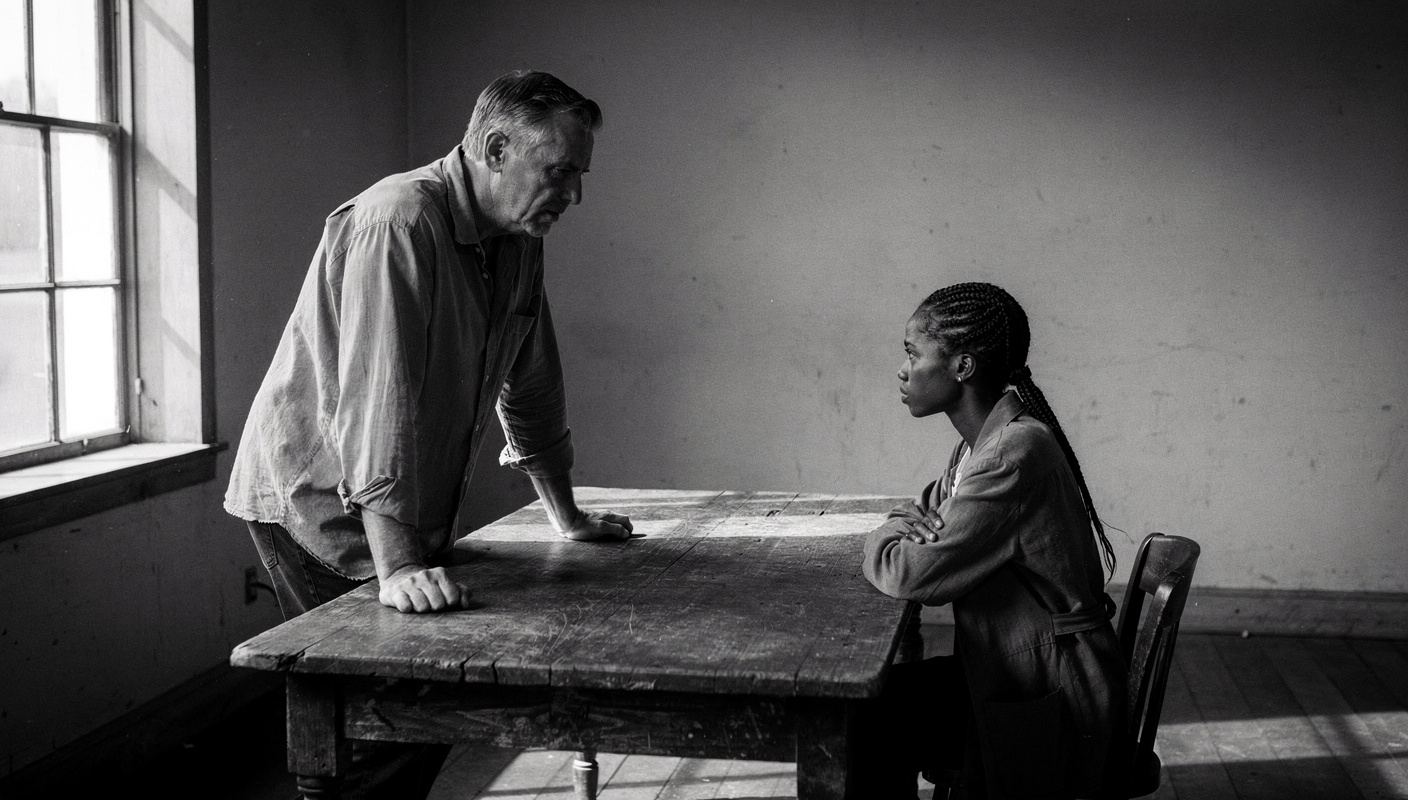
Directly opposite, across a wide table, is the adversarial position. It is what courtrooms use for a reason. Side by side, on the other hand, can feel too casual for a serious conversation. The ideal for a difficult exchange is a slight angle: two chairs at a 45-degree angle, close enough to signal engagement, angled enough to remove the confrontational face-off.
Consider each of these choices before the other person arrives:
- Remove or avoid sitting behind a desk or any wide barrier between you.
- Position your chair at a 45-degree angle rather than directly opposite.
- Ensure your chair and theirs are at the same height. Do not stand while they sit.
- Sit close enough to show engagement but far enough to give them physical space to breathe.
- Place any papers or notes to the side, not as a barrier on the table between you.
This connects directly to the psychological safety that makes honest conversations possible. When people feel physically cornered or dominated, their nervous system shifts into self-protection. When they feel physically equal and unblocked, they stay open. You can read more about how physical environment shapes this in What Is Psychological Safety and How It Drives Team Synergy.
Once you have chosen your position, you have already communicated something important: that you are here as an equal, not an adversary.
Step 3: Establish Your Open Stance and Settle Into It
Open physical expression is not a momentary pose. It is a settled, sustained signal that you maintain throughout the conversation.
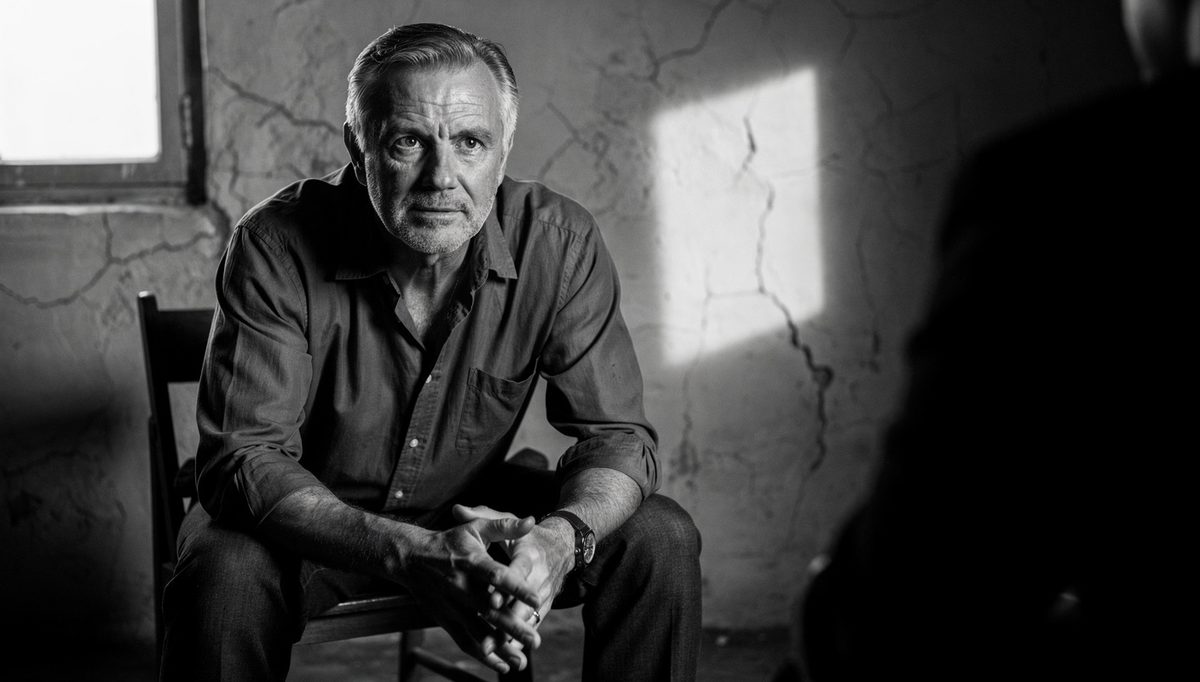
The open stance means: feet flat on the floor and shoulder-width apart if standing, both feet on the ground if seated, hands visible and relaxed (not hidden, not gripped), and arms uncrossed. This is the physical baseline of the Empathy Bridge. It tells the other person, at a biological level, that there is no threat coming.
Here is how to establish and hold it:
- Before the other person speaks, settle your weight evenly and let both feet rest flat on the floor.
- Rest your hands open on your thighs or loosely on the table. Do not grip anything.
- Keep your arms uncrossed for the duration of the conversation, even when listening.
- Lean slightly forward from the hips, perhaps ten degrees, to signal presence without encroaching.
- When the conversation gets harder, consciously check and reset your stance. Tension will creep back in.
Here is what this looks like in practice. I once watched a senior leader open a difficult team conversation with arms folded, leaning back in his chair, head slightly tilted. He thought he looked relaxed. His team read him as closed and superior. When I coached him to lean forward slightly with both hands open and resting on the table, the change in the room was immediate. One of his team members, who had been defensive and curt, physically softened and began to engage. Nothing had changed except the leader's physical expression.
This step is where the Empathy Bridge becomes visible. Words say what you mean. Your body says whether you mean it.
Step 4: Set Your Eye Contact and Facial Expression
Eye contact is not about staring someone down. It is about holding enough steady presence that the other person knows you are with them, not performing at them.
Hard, unbroken eye contact signals dominance or aggression. Avoiding eye contact signals anxiety or dishonesty. The Empathy Bridge requires a middle path: soft, steady, and warm. Think of it as the look you give someone when you are genuinely listening, not evaluating.
Practice these four habits before and during the conversation:
- When the other person is speaking, hold steady eye contact for five to seven seconds at a time, then briefly glance to the side before returning. This is natural and attentive.
- Soften the muscles around your eyes consciously. A hard brow or tight squint reads as judgment even when you intend concentration.
- Let your face reflect what you actually feel: concern, interest, or care. Do not mask emotion with a neutral expression. Blankness reads as coldness.
- When you are speaking, maintain consistent eye contact rather than looking down at notes. This signals confidence in what you are saying.
How Psychological Safety Enables Honest Communication and Sustains Team Synergy makes a point I have always believed: people cannot honestly engage with someone they do not feel is genuinely seeing them. Your eyes are the primary physical instrument of that signal.
After this step, the other person will feel seen rather than assessed, and that shift makes what comes next possible.
Step 5: Regulate Your Breathing to Anchor the Conversation
Your breathing is the most powerful and least visible physical regulator you have. It controls your nervous system, shapes your voice, and signals your internal state to anyone close enough to notice.
Shallow, rapid breathing raises your shoulders, tightens your throat, and produces a voice that sounds strained or urgent. Slow, deep breathing keeps your voice steady, your body relaxed, and your thinking clear. The Empathy Bridge depends on the latter.
Here is how to use breathing as a physical tool during the conversation itself:
- Before you speak your opening line, take one slow breath through your nose. This pauses the adrenaline spike and anchors your voice.
- When the other person says something that provokes you, pause for three seconds before responding. This is the 3-Second Pause I describe in Say It Right Every Time. It interrupts the amygdala hijack and returns you to rational response.
- If you feel your breathing shorten during the conversation, consciously breathe out fully. The out-breath activates the parasympathetic system. The calm follows the exhale.
- Match your speaking pace to your breathing. If you are speaking faster than your breath can sustain, slow down.
- Notice if the other person's breathing is rapid or shallow. Do not rush them. Give the room space to settle.
Here is a script for the moment breathing matters most. The other person has just said something that stings. Instead of reacting, you pause, exhale quietly, and say: "I want to make sure I understand what you mean. Can you say more about that?" That pause, backed by a real breath, changes the physical quality of the room.
After you have regulated your breathing, you will find your voice is steadier, your thinking is clearer, and the other person almost always follows your physical lead.
Step 6: Monitor and Reset During the Conversation
The hardest part of physical expression is not establishing it at the start. It is maintaining it when things get difficult.
Difficult conversations have moments of friction. Someone says something unexpected. The emotion spikes. Your body reverts to its defaults: arms closing, jaw tightening, breath shortening, weight shifting back. This is completely normal. The skill is not preventing it. The skill is noticing it and resetting.
Build these habits into your practice:
- Set a quiet internal cue to check your body every two to three minutes during the conversation. Breathe, shoulders, hands: open or closed?
- When you notice tension returning, release it without making a production of it. Quietly drop your shoulders. Open your hands. Nobody needs to see you doing it.
- If the conversation becomes heated beyond a point where physical reset is enough, name it: "I think we are both feeling the pressure of this. Let us slow down for a moment."
- Watch for mirroring: if the other person becomes physically tense, check whether your body triggered it. Reset first, and watch whether they follow.
The principle of "connect before you correct" is something I introduce in Chapter 2 of Say It Right Every Time as part of the C.O.R.E. Framework. It applies to physical expression as much as to words. You cannot correct a situation with someone whose nervous system is in threat mode. You must first connect, and connection is established physically before it is established verbally. This is also why How Empathy Bridges in Team Communication Create the Conditions for Lasting Synergy is worth reading alongside this article: what you do with your body is not separate from the bridge you are building. It is the bridge.
Adapting This Process for Remote or Video Conversations
Remote conversations create a specific and underestimated challenge for physical expression. The Empathy Bridge was designed for face-to-face interaction, but difficult conversations now happen regularly on screen. The principles hold. The execution requires adjustment.
Camera position and framing matter enormously. A camera looking down at you makes you appear small and submissive. A camera too close is physically invasive. Position your camera at eye level and frame yourself from the mid-chest up. This is the equivalent of choosing your seat in the room.
Your background sends a physical signal too. A cluttered, dark, or visually distracting background creates the impression of disorder and signals that this conversation is not being taken seriously. Find a clean, calm background. It is the remote equivalent of choosing a private meeting room.
Eye contact on video requires deliberate effort. To create the impression of eye contact, you must look at the camera lens, not at the other person's face on screen. Practice this. It feels unnatural at first but reads as attentive and present.
Your breathing and upper body are the only physical tools you have. On a screen, the other person cannot see your feet or your posture below the chest. Make your visible upper body count: open shoulders, steady head, relaxed face. Do not grip the desk edge or let your hands disappear out of frame in tension.
Slow down more than you would in person. Video calls compress and slightly delay signals. Pauses land differently. Breathe more deliberately, speak more slowly, and give the other person more time to respond before you fill the silence.
The core process holds. Only the execution changes.
Common Mistakes to Avoid
Let me tell you about the mistakes I see most often. I have made most of them myself.
The mistake: Preparing words instead of preparing the body.
Why it happens: We are trained to communicate verbally, so we rehearse verbal scripts and assume the rest will follow.
What to do instead: Spend two minutes on physical preparation for every five minutes you spend rehearsing words. The body speaks first.
The mistake: Believing that neutral expression looks calm.
Why it happens: People suppress emotion to appear professional, and the result is a flat, unreadable face that reads as cold or dismissive.
What to do instead: Let appropriate emotion show: concern, care, focus. A genuinely engaged face is far safer than a masked one.
The mistake: Sitting directly opposite the other person across a barrier.
Why it happens: Office furniture defaults to the adversarial layout. Most people never question it.
What to do instead: Move your chair. Choose the angle. Remove the table between you if you can. This one adjustment changes the physical dynamic of the entire conversation.
The mistake: Resetting the body at the start and forgetting about it for the rest of the conversation.
Why it happens: People treat physical preparation as a one-time event rather than an ongoing practice during the conversation.
What to do instead: Build internal check-ins throughout. Breathe, shoulders, hands, every few minutes.
The mistake: Rushing through the breathing step because it feels soft or unnecessary.
Why it happens: Breathing regulation sounds simple, so people skip it under pressure, exactly when they need it most.
What to do instead: Treat the 3-Second Pause as a non-negotiable tool. It interrupts the amygdala response before it derails the conversation.
These are not character flaws. They are gaps in the system. Fix the system.
Your Practical Checklist
Use this checklist before you begin and after each difficult conversation.
- I have identified a clear, specific outcome for this conversation.
- I have chosen a private space with no unnecessary physical barriers.
- I have arranged seating at a 45-degree angle rather than directly opposite.
- I have completed the pre-entry tension release: shoulders, jaw, hands, breath.
- My feet are flat on the floor and my hands are open and visible.
- I have set my eye contact to soft, steady, and warm rather than hard or avoidant.
- I am breathing slowly and from the belly, not shallow and from the chest.
- I have my internal reset cue ready for when tension returns during the conversation.
- If remote: my camera is at eye level and my background is clean and calm.
- I have reviewed the 3-Second Pause so it is available when emotions spike.
If you cannot check most of these, that is your starting point.
Summary and Next Steps
You now have a step-by-step process for using the empathy bridge body position to arrive at a difficult conversation in a way that signals safety, openness, and genuine intent before you speak a single word.
- Physical expression begins before the first word. Release tension, choose your position, and settle your body before the other person sees you.
- The Empathy Bridge is not performance. It is a deliberate physical signal grounded in how the nervous system reads threat and safety.
- Your posture, proximity, eye contact, and breathing all speak. The question is whether they say what you intend.
- The hardest moment is not the opening. It is maintaining physical openness when the conversation becomes difficult. Build your reset habit now.
- Small physical adjustments, a chair angle, a breath, an open hand, produce changes in the room that words alone cannot achieve.
- The 3-Second Pause, as outlined in Chapter 2 of Say It Right Every Time, is the most reliable micro-intervention for interrupting physical reactivity in the moment.
- Practice these steps in low-stakes conversations first. Physical expression is a skill, and skills are built through repetition.
For the words that follow your physical preparation, How to Start a Difficult Conversation That's Blocking Your Team's Synergy gives you the scripts you will need. And if you want to understand why the conversations you are avoiding are costing you more than the ones you dread having, Why Avoiding Difficult Conversations Is the Hidden Enemy of Team Synergy will sharpen that understanding considerably. For teams where feedback is the sticking point, How to Give Feedback That Strengthens Team Synergy Instead of Breaking It applies the same physical principles to the feedback moment itself.
The empathy bridge body position is not about looking calm. It is about creating the physical conditions for truth to be heard.
Frequently Asked Questions (FAQ)
What is the empathy bridge body position?
The empathy bridge body position is a way of physically arranging yourself before a difficult conversation to signal openness and calm. It uses posture, eye contact, and proximity to lower the other person's defenses before a single word is spoken. Your body creates safety before your words begin.
How do you use the empathy bridge to position your body before a hard conversation?
You begin by grounding your stance, relaxing visible tension in your shoulders and hands, and choosing a seat or position that avoids physical barriers. Then you regulate your breathing, set your eye contact at a steady and soft level, and lean slightly forward to signal presence without crowding the other person.
Why does physical expression matter in difficult conversations?
Physical expression matters because the brain reads body language faster than spoken words. When you enter a tense conversation with a closed or rigid posture, the other person's nervous system registers threat before you speak. Open, grounded physical positioning tells their brain the conversation is safe enough to continue.
Can body language really affect how someone receives difficult feedback?
Yes, and significantly. The amygdala responds to physical cues within milliseconds. If your posture is tense, arms folded, or your gaze is hard, the other person shifts into self-protection mode. A grounded, open empathy bridge body position keeps the exchange collaborative rather than combative.
What physical mistakes do people make before difficult conversations?
The most common physical mistakes are crossing arms over the chest, choosing a position directly opposite the other person like adversaries, failing to regulate breathing, and holding tension visibly in the jaw or hands. Each of these signals threat and raises defenses before the first word is exchanged.
How does the empathy bridge connect physical expression to psychological safety?
Psychological safety requires the other person to feel that honesty will not be punished. Physical expression is the fastest signal your body sends to establish that safety. When your stance is open, your breathing is calm, and your proximity is respectful, you create the physical conditions for trust before the conversation begins.