
In Short
Mediation in correctional and institutional settings is not a softer version of standard workplace conflict resolution. The power dynamics are sharper, the risks are higher, and the margin for error is narrower. Get the preparation right, stay genuinely neutral, and build agreements that the institution can actually support.
Institutional mediation skills are the structured techniques a mediator uses to facilitate resolution between parties in controlled environments such as prisons, hospitals, or detention facilities, where power imbalances, safety constraints, and formal authority shape every aspect of the conflict and the conversation.
Two officers had been working the same unit for six years. The tension between them had quietly poisoned the whole wing. Management decided to bring in a mediator. The mediator ran a joint session on day one, no preparation, no private meetings first. Within eight minutes, one officer stood up and walked out. The other filed a formal grievance that afternoon. What had been a difficult but manageable conflict became a documented institutional dispute. I have seen this happen more than once, and the failure is almost never about bad intentions. It is about skipping the work that makes institutional mediation skills actually function.
Mediation inside a correctional or institutional setting carries pressures that most conflict resolution approaches are not built for. The hierarchy is rigid. The parties often have no choice but to keep working, or living, in close proximity. And the institution itself has interests that sit alongside, and sometimes against, the interests of the people in the room. This guide gives you a working process, built for exactly that environment.
Why Mediation Inside Institutions Is a Different Animal
Most mediation training assumes a relatively level playing field. Two colleagues, a neutral space, a shared interest in resolving things. Institutional settings tear that assumption apart immediately.
In a prison, a hospital ward, or a detention centre, one party may hold formal authority over the other. A senior officer and a junior one. A charge nurse and a healthcare assistant. Even between residents or inmates, there are internal hierarchies that a mediator must account for. Ignoring those power differences does not make them disappear; it makes them dangerous.
There is also the question of genuine voluntariness. Strategies for defusing heated conversations can sometimes be applied unilaterally, but mediation requires that both parties genuinely choose to participate. In institutional settings, that choice can be subtle coercion dressed as consent. An inmate told by a corrections officer that mediation "would look good" is not exercising free choice. A junior staff member told to attend by their manager is in the same position.
This is the ground you are working on. It is not soft ground.
"The Conversation You're Avoiding Is the One You Need to Have."
"The Conversation You're Avoiding
Is the One You Need to Have."
Stop rehearsing conversations you'll never have. Say It Right Every Time gives you 115 word-for-word scripts and 16 proven frameworks to speak with confidence in every conversation that matters.
What Must Be in Place Before a Joint Session Begins
Running a joint mediation session without completing these preconditions is the single most common error I see in institutional settings. Do not skip them.
Voluntary participation confirmed. Both parties must understand that they can decline and that no formal consequence will follow from declining. You cannot build a genuine agreement from coerced attendance.
Institutional authority aligned. The relevant manager, governor, or senior officer must agree in writing that nothing disclosed in mediation will be used in disciplinary proceedings. Without this, neither party will speak honestly.
Safety assessed. In correctional environments specifically, you need to know whether there is a documented history of violence between the parties, whether either party has current safety concerns about the other, and whether the location of the joint session is appropriate.
Your own neutrality tested. If you know either party well, if you have a professional stake in the outcome, or if you have formed an opinion about who is right before you begin, you are not the right mediator for this conflict. Step aside.
The Step-by-Step Process for Institutional Mediation
Step 1: Conduct Separate Pre-Mediation Meetings
Meet each party alone before any joint session. This is not optional. This meeting has three purposes: to hear their account of the conflict without the other party present, to explain the mediation process clearly, and to assess whether this situation is appropriate for mediation at all.
Ask open questions. "What happened from your perspective?" "What would need to change for this to be workable?" "Is there anything I need to know before we sit together?"
Listen for what they do not say as much as for what they do. In institutional settings, people are often practised at managing information. A pause before answering, a vague answer about a specific period of time, a reluctance to name a particular incident, these are signals worth noting.
At the end of this meeting, confirm their voluntary consent once more, in private. "You do not have to do this. Are you choosing to?"
Step 2: Set the Ground Rules at the Start of the Joint Session
When both parties sit down together, your first job is to establish the structure of the conversation, not to start the conversation itself. Ground rules are not bureaucratic formality. They are the container that makes honest dialogue possible.
State them clearly and simply: one person speaks at a time; no interruptions; confidentiality applies to everything said in this room; either party can request a short break at any point; either party can ask to speak with the mediator privately during the session.
Then ask both parties to confirm they understand and agree. Not a nod. A spoken confirmation. This matters because it creates a shared commitment at the outset. When the conversation gets difficult, as it will, you can return to that commitment.
Step 3: Give Each Party Uninterrupted Time to Speak
Each party speaks first without interruption from the other. You are not running a debate. You are creating conditions where two people, who have likely not felt genuinely heard, can say what the conflict has meant for them.
Keep the other party focused on listening by giving them a task: "While they speak, I want you to listen for anything that surprises you." This reduces the urge to rebut internally and increases the chance that something genuine is heard.
Your job during this stage is to reflect back what you hear using their language, not your interpretation of it. If someone says "I feel disrespected every time the rota changes without warning," you do not say "So you feel communication could be improved." You say: "You feel disrespected. That is the word you used."
This kind of precise reflection, paired with the deeper work explored in how unmet needs drive team conflict and what to say to restore synergy, often reveals that the stated conflict and the real conflict are not the same thing.
Step 4: Use a Caucus When the Session Stalls
A caucus is a private meeting with one party during the joint session, while the other waits elsewhere. It is not a failure of the process. It is a tool within the process, and in institutional settings, you will likely need it.
Call a caucus when: the conversation is becoming circular and neither party is moving; when one party appears frightened to speak in front of the other; or when an agreement seems close but one party will not commit in front of the other.
In the private caucus, your questions shift. "Is there something you could not say in the room?" "What would you need to see from them to move forward?" "If this does not resolve, what happens next for you?"
Then do the same with the other party. What you learn in each caucus informs how you structure the next phase of the joint session, without breaching the confidence of either party. You carry insights, not information.
Step 5: Identify the Shared Interest Beneath the Competing Positions
Every conflict in an institutional setting has positions on the surface and interests underneath. The officer who refuses to work specific shifts with a particular colleague has a position. The interest beneath it might be safety, fairness, or a history of being undermined in front of residents.
Your job is to surface those interests, for both parties, in the joint session. You do this by asking: "What is most important to you about that?" and following the answer with the same question again, and again, until the underlying need becomes visible.
This is the core of how to use the D.E.A.L. method to resolve conflicts that are fracturing team synergy, and it is equally applicable when the team in question works behind locked doors. When both parties can see that the other has a legitimate underlying need, the possibility of agreement opens up.
Once you name a shared interest, name it clearly. "You both want to be able to do your work without daily stress. Is that right?" Let them confirm it. That moment of shared acknowledgement is the turning point in most mediations.
Step 6: Build a Specific, Written Agreement
Vague agreements do not survive institutional environments. "We will try to communicate better" means nothing by Tuesday morning when the pressure is back on. Every agreement coming out of institutional mediation needs to name specific behaviours, not intentions.
A useful structure for the agreement:
- What each party commits to doing differently, in plain language
- What each party will stop doing, if relevant
- How they will handle it if the agreement breaks down, before escalating formally
- A date to review how the agreement is holding
Write it in the room, with both parties present and contributing. Do not draft it yourself and present it for signing. Co-authoring the agreement is part of what gives it durability.
Ask each party to read it back to you before signing. This is not about literacy. It is about ensuring they own the words.
Step 7: Close the Session and Plan for Review
The close of a mediation session is not the end of the work. In institutional settings, the parties return to the same physical environment, often within the hour. They need a clear and simple understanding of what happens next.
Close by summarising what was agreed, acknowledging the effort both parties made to engage, and confirming the review date. Keep your language neutral and concrete. Avoid anything that sounds like praise or judgment.
Then, separately from both parties, brief the institutional contact, the manager or senior officer, on the outcome. Not on what was said in the room, but on what was agreed and what support the institution needs to provide for that agreement to hold.
Adapting the Process When Direct Dialogue Is Not Safe
Sometimes, even with full preparation, a joint session between the two parties is not appropriate. The history is too violent, the power imbalance too extreme, or the safety risk too real. In these cases, shuttle mediation is the method.
You meet with one party, hear their position and interests, identify what they are willing to offer or accept, and carry that to the other party in a separate meeting. You go back and forth, building an agreement through indirect exchange rather than direct dialogue.
Shuttle mediation takes longer. It requires even more careful note-keeping, because your summaries of each party's position must be precise. It is also more demanding on your neutrality, because you are the only person who holds the full picture. For step-by-step guidance on managing tension in the moment, especially in high-risk environments, having a clear framework for your own emotional regulation is as important as any technique you use with the parties.
Use shuttle mediation when direct contact poses a genuine risk, not simply when direct contact is uncomfortable. Discomfort is part of the process. Danger is not.
Where Institutional Mediation Goes Wrong
These are the errors I have watched practitioners make, including errors I have made myself early in this work.
The mistake: Starting the joint session before completing private preparation meetings.
Why it happens: Pressure from the institution to resolve things quickly, or a belief that the conflict looks simple enough to manage without it.
What to do instead: Refuse to begin a joint session until both pre-mediation conversations are complete. If the institution pushes back, explain that skipping this step increases the likelihood of escalation, not resolution.
The mistake: Allowing institutional staff to remain in the mediation room "for safety."
Why it happens: Genuine safety concerns, or a misunderstanding of what mediation requires.
What to do instead: Negotiate the terms of the session before it begins. A staff member outside the door is a reasonable safety measure. A staff member inside the room during sensitive dialogue is a reason neither party will speak honestly. Know the difference and hold the boundary.
The mistake: Writing an agreement that uses institutional language rather than the parties' own words.
Why it happens: Mediators default to formal language because it feels more official.
What to do instead: Write the agreement in the words the parties themselves used in the session. If one person said "I need to be told about changes before they go on the board, not after," that sentence belongs in the agreement, not a paraphrase of it.
The mistake: Treating silence as agreement during the joint session.
Why it happens: Power imbalances. The person with lower institutional status often goes quiet rather than object.
What to do instead: Build explicit check-ins into the session. "Before we move on, I want to hear from both of you. Does this reflect what you said?" Direct, simple, non-negotiable. For more on how to de-escalate arguments during meetings and keep every voice in the room, the principles transfer directly to mediation practice.
Your Pre-Session Preparation Checklist
Use this before every institutional mediation session. Check each item as complete, not as approximately done.
- Pre-mediation private meeting with Party A completed. Real consent confirmed verbally.
- Pre-mediation private meeting with Party B completed. Real consent confirmed verbally.
- Safety assessment completed. No current risk factors that contraindicate a joint session.
- Institutional authority has confirmed in writing: nothing said in mediation will be used in formal proceedings.
- Session location confirmed: private, neutral, no glass walls or observation.
- You have tested your own neutrality. You hold no prior opinion about who is right.
- Ground rules prepared and ready to present at the opening of the joint session.
- Blank agreement template ready, with space for parties to contribute their own language.
- Review date provisionally identified before the session begins.
- Post-session briefing plan confirmed with institutional contact: outcome only, no content.
If you cannot check every item, the session is not ready. Delay it. In institutional environments, a failed mediation does more damage than a delayed one. For a complementary approach to managing the tension that exists before a formal process begins, the C.O.R.E. framework for staying grounded during tense conversations is worth having in your preparation toolkit.
Before You Sit Down in That Room
Institutional mediation is not about being the cleverest person in the room or the calmest. It is about preparation, structure, and the courage to hold a process steady when everything around it is pressing for a quick, clean outcome. The institution wants resolution. The parties want to be heard. Your job is to create the conditions where both of those things can happen at the same time.
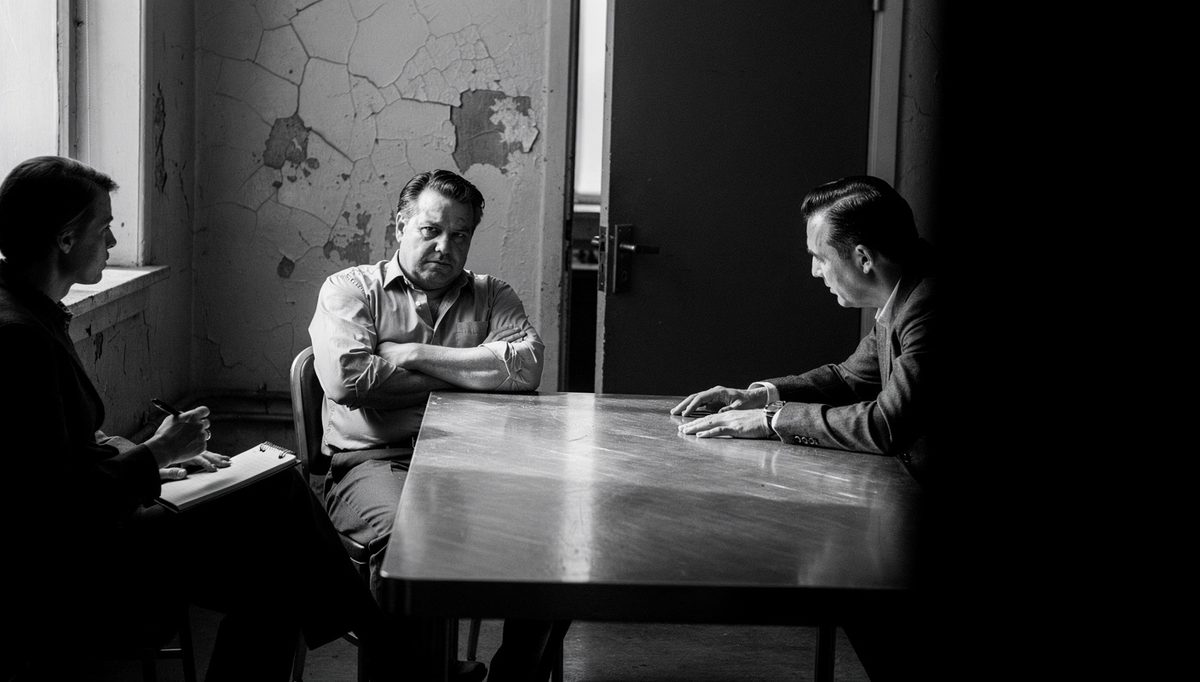
I have sat in sparse, uncomfortable rooms with people who had every reason not to trust each other or the process. What made the difference was never a clever intervention in the moment. It was always the work done before the door was closed. Apply your institutional mediation skills before the session, and the session itself becomes manageable. Skip that work, and no technique in the world will save you once things begin to unravel.
Frequently Asked Questions (FAQ)
What are institutional mediation skills?
Institutional mediation skills are the specific techniques a mediator uses to manage conflict inside structured, high-security environments such as prisons, hospitals, or detention centres. They include setting ground rules, managing power imbalances, using caucus sessions, and building agreements that hold within institutional constraints.
How do you prepare for mediation in a correctional setting?
Preparation means meeting each party separately before any joint session, assessing safety risks, confirming voluntary participation, and briefing the institutional authority involved. A mediator who skips this step enters a joint session without knowing the real conflict, and that is a serious liability in a correctional environment.
What is a caucus in mediation and when should you use it?
A caucus is a private meeting between the mediator and one party, held separately from the other. In institutional settings, use a caucus when joint conversation breaks down, when one party feels unsafe speaking freely, or when you need to reality-test an agreement before putting it back to both parties.
How do you handle power imbalances during institutional mediation?
Name the power difference openly, without blame. Adjust the structure so both parties have equal speaking time. Never let the higher-status person dominate the session. Use separate caucus meetings if direct conversation amplifies the imbalance rather than reducing it.
Can mediation work in a prison or detention setting?
Yes, but only under the right conditions. Both parties must participate voluntarily, the mediator must be genuinely neutral, and the institution must agree not to use anything said in mediation as disciplinary evidence. Without those three conditions, what you have is not mediation; it is a managed confrontation.
What should a mediation agreement include in an institutional setting?
A strong institutional mediation agreement names the specific behaviours each party commits to, sets a review date, and is written in plain language both parties can reread without help. Keep it short. Agreements that run to three pages are rarely honoured. One clear page, signed by both parties, is enough.
What are the most common mistakes in correctional mediation?
The three most common mistakes are starting a joint session before private preparation is complete, allowing institutional staff to remain in the room during sensitive dialogue, and writing agreements that are too vague to enforce. Each of these undermines the process before it can produce any lasting resolution.