
In Short
Eye contact works differently depending on whether you are with one person or twenty.
- In one-on-one coaching, sustained eye contact signals full presence and builds the trust that makes honest conversation possible.
- In group facilitation, your gaze becomes a management tool: you use it to distribute energy, invite quieter voices, and calm dominant ones.
- Using the wrong approach in either setting quietly undermines your credibility before you have spoken a word.
Eye contact coaching is the deliberate use of direct gaze in a one-on-one coaching conversation to signal full attention, build trust, and create the psychological safety that allows honest, productive dialogue between coach and coachee.
I once watched a skilled coach step in front of a room of fifteen managers to run a group workshop. She was outstanding in individual sessions. One-to-one, her eye contact was warm and steady, exactly what you want. But in front of the group, she did the same thing: held one person's gaze for long stretches, moved to another, held again. Within ten minutes, half the room felt invisible. Two people stopped contributing entirely. She had not changed her skill level. She had changed her context, and her eye contact had not changed with it.
This is the quiet confusion that trips up even experienced practitioners. Eye contact coaching and eye contact in group facilitation are not two versions of the same skill. They are genuinely different disciplines. What builds trust in a private conversation can fracture a group. What holds a room together would feel cold and evasive in a coaching session. Getting clear on the difference is not a minor refinement. It is fundamental to doing either well.
What Eye Contact Actually Does in a Coaching Conversation
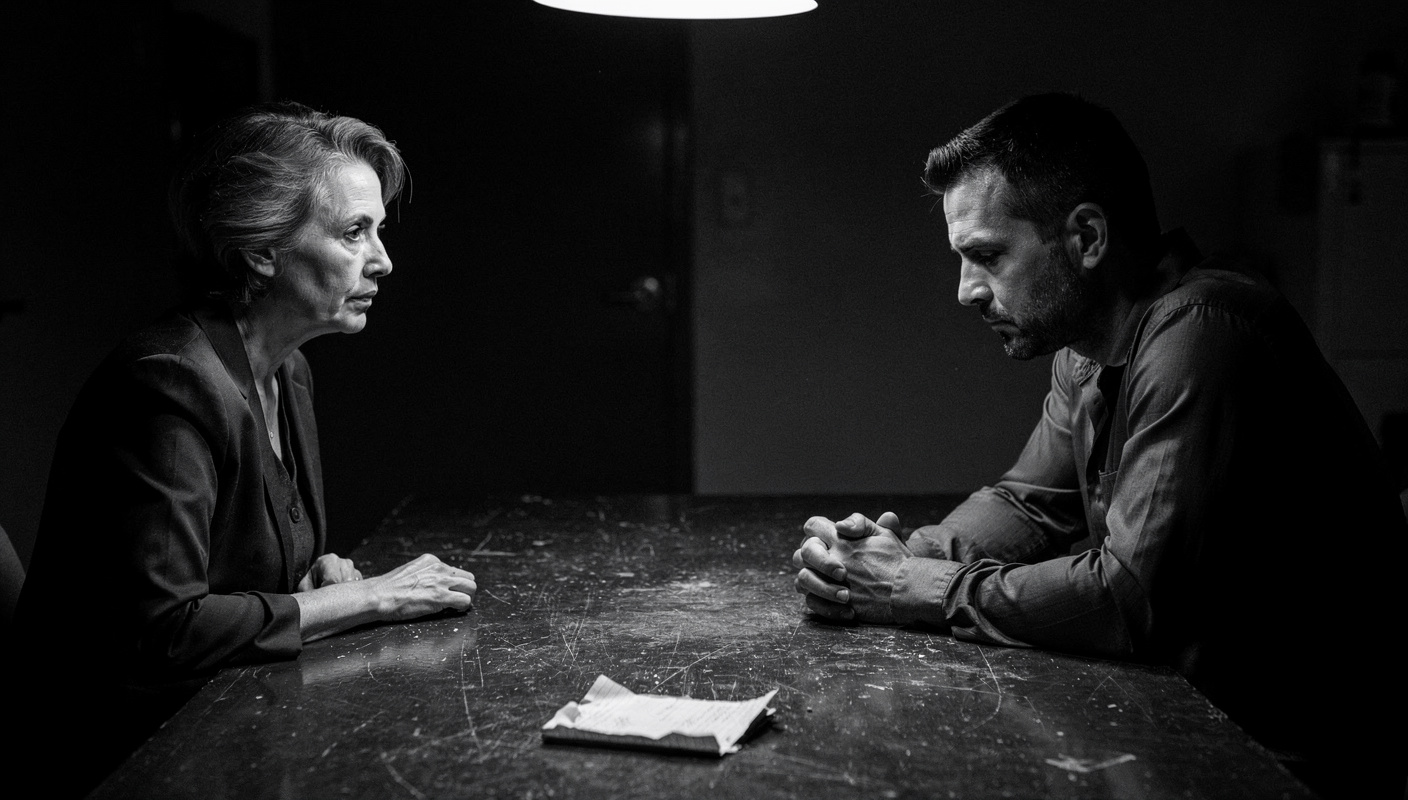
In a one-on-one coaching session, eye contact is the primary signal that you are fully present. The person across from you is often working through something difficult: a decision they are uncertain about, a conflict they cannot resolve, a pattern they are only beginning to see. They need to know you are with them, not waiting for your next question.
Sustained, natural eye contact tells them that. It communicates that nothing else competes for your attention. It makes the space feel contained and safe. In my experience, people say more, go deeper, and take more honest stock of their situation when the person listening holds their gaze steadily and without distraction.
The word "natural" matters here. Unbroken, rigid eye contact across an entire session creates pressure rather than safety. A skilled coach allows gaze to soften briefly, especially during moments when the other person pauses to think. The goal is not to stare. It is to remain visually present in a way that feels like a trusted friend, not an interrogator. That warmth, that quality of attention, is the essence of eye contact coaching done well.
"The Conversation You're Avoiding Is the One You Need to Have."
"The Conversation You're Avoiding
Is the One You Need to Have."
Stop rehearsing conversations you'll never have. Say It Right Every Time gives you 115 word-for-word scripts and 16 proven frameworks to speak with confidence in every conversation that matters.
How Your Gaze Becomes a Management Tool in Group Facilitation
Step into a room of twelve people, and your gaze changes its job entirely. It is no longer primarily about connection with one individual. It becomes a tool for managing energy, participation, and direction across the whole group.
When you look at someone during a facilitated discussion, you are doing one of several things: confirming that their point has landed, inviting them to speak, or, if you hold contact while they dominate, giving them permission to continue. Your eyes are constantly sending signals, whether you mean them to or not. The question is whether you are sending the ones you intend.
Skilled facilitators develop a deliberate gaze pattern. They scan the room in a way that includes everyone, not just the people nearest to them or most likely to respond. They make brief, direct eye contact with quieter participants before asking open questions, which acts as a silent invitation. They withdraw eye contact from dominant voices to redirect energy. You can read more about the dynamics of dominant voices in How to Deal with Dominant Voices in a Discussion.
The difference from coaching is significant. Where a coach offers sustained, personal attention, a facilitator distributes visual attention as a form of governance. Neither is superior. They serve different purposes in different rooms.
A Direct Comparison of the Two Approaches
| Dimension | Eye Contact in Coaching | Eye Contact in Facilitation |
|---|---|---|
| Primary purpose | Build trust and signal full presence | Distribute energy and manage participation |
| Duration per person | Sustained (3–5 seconds, naturally held) | Brief and deliberate (1–3 seconds per person) |
| Who you look at | One person, continuously | All participants, in rotation |
| What it communicates | "I am entirely with you" | "I see everyone; I am holding this space" |
| When to break contact | During reflection pauses | When withdrawing permission from a dominant speaker |
| Common error | Staring too intensely or looking away too often | Favouring one side of the room or fixing on one person |
| Risk if misapplied | Creates interrogative pressure or signals distraction | Leaves participants feeling excluded or unseen |
The table captures the structure. But the most important contrast runs deeper than mechanics.
In coaching, your gaze is personal. The person you are with feels you are attending to them specifically, as an individual. This intimacy is not incidental; it is the condition that makes coaching work. People do not open up to someone whose eyes are already thinking about the next question.
In facilitation, your gaze must feel impartial. The moment the room notices you consistently looking at certain people, or avoiding others, the group dynamic shifts. Quieter participants disengage. Louder ones feel rewarded. This is why facilitators who are excellent coaches sometimes struggle with groups: their instinct is to connect deeply with whoever is speaking, which inadvertently signals hierarchy rather than inclusion. For a broader look at how communication shapes what happens in group settings, The Role of Communication in Meeting Success is worth your time.
The Genuine Overlap Between the Two
Here is the truth of it: both disciplines require you to be deliberate about where you look. In neither case can you afford to let your gaze drift randomly or follow your own thoughts around the room. Unfocused eyes in a coaching session signal that you are elsewhere. Unfocused eyes at the front of a facilitated group signal that you have lost the room.
Both also use eye contact as a listening signal. Whether you are with one person or fifteen, the way you hold someone's gaze tells them their words are registering. This is why facilitators who learn good coaching presence, that quality of genuine visual attention, often become significantly better at running groups. The foundation is the same: your eyes must mean something. The application is what changes.
Tense situations sharpen this overlap considerably. When a coaching conversation becomes difficult, or when conflict surfaces in a group, your gaze is one of your most powerful tools for staying calm and holding the space. You can find practical guidance on that in Nonverbal Communication in Tense Situations.
Three Ways People Confuse These Two Approaches
Most of the errors I have seen come down to carrying habits from one context into the other, without noticing the shift.
The mistake: Using coaching-style sustained gaze during group facilitation.
Why it happens: If someone is strong at one-on-one work, sustained gaze feels natural and trustworthy, so they carry it into the group setting.
What to do instead: Treat your gaze as a resource to be shared. Set a quiet intention before the session to visit every person in the room with your eyes within the first five minutes.
The mistake: Using facilitation-style scanning during a coaching session.
Why it happens: Facilitators trained to scan a room can slip into that habit even when sitting opposite a single person, especially if they feel anxious or uncertain.
What to do instead: Before a coaching conversation, slow down deliberately. Remind yourself that your only job here is to be present to this one person. Let your eyes settle.
The mistake: Making eye contact with the most vocal person in the room, whether coaching or facilitating.
Why it happens: Engaged, responsive people draw our gaze naturally. It feels like good contact because they are giving us visual confirmation.
What to do instead: In a group, treat responsiveness as a reason to look away, not toward. In coaching, notice if you are drifting into eye contact patterns that track the conversation rather than the person. Good facilitation practice includes strategies for ensuring every voice gets space, which you can explore in How to Ensure Every Participant Gets Heard.
Practical Guidance for Each Setting
Before a Coaching Session
Take thirty seconds before the other person arrives. Decide that your eyes belong entirely to them for the duration of the conversation. If you find yourself glancing at your notes or a screen, use that break deliberately: look down, then return your gaze with intention. When you look back up, make it a conscious act of reconnection rather than a drift.
During Group Facilitation
Divide the room mentally into three or four zones and make a habit of moving your gaze through all of them, not just the centre or the side where the most action is happening. When you ask a question to the whole group, let your eyes travel the full width of the room before anyone answers. This signals that the question is for everyone. For deeper grounding in facilitation presence, Meeting Facilitation Skills for Managers offers strong practical guidance.
When Conflict Surfaces in a Group
Hold your gaze steady and calm. Rapid, uncertain eye movement during conflict tells the room you are rattled. Slow, deliberate scanning tells them you have it. Move your eyes toward the quieter participants, not toward the conflict itself. This distributes your authority across the room rather than concentrating it on the friction. You will find more support on this in How to Handle Conflict During Meetings.
In Virtual Settings
On a video call, looking at the camera, not at the person's face on your screen, creates the impression of direct eye contact for them. This is harder than it sounds and requires practice. In virtual group facilitation, you lose the ability to scan a physical room entirely, so deliberate camera-gazing becomes your primary tool for signalling attention. Best Practices for Virtual Meeting Communication covers this terrain well.
The Choice You Make Every Time You Walk Into a Room
Eye contact coaching is a skill built on intimacy and presence. You are offering one person the full signal of your attention, and that signal is the ground on which trust grows. It requires patience, warmth, and the courage to hold another person's gaze without flinching or filling the silence.
Group facilitation asks for something structurally different. Your gaze becomes a form of quiet leadership. You are not connecting with one person; you are holding a space in which everyone can connect. The discipline is in the distribution, in making sure no corner of the room feels forgotten.
I have spent decades watching people cross between these two roles without adjusting their eyes. A coach who forgets to scan leaves half a room cold. A facilitator who stares too long at one person makes everyone else feel like an observer rather than a participant. The fix in both cases is the same: know which room you are in before you walk through the door, and let your gaze match the work you are there to do. Mastering eye contact coaching, in both its forms, is not complicated. But it does require you to be deliberate, again and again, until it becomes second nature.
Frequently Asked Questions (FAQ)
What is eye contact coaching and why does it matter?
Eye contact coaching refers to the deliberate, sustained gaze a coach uses in one-on-one conversations to signal full attention and build trust. It matters because how long and how steadily you hold someone's gaze directly affects how safe and heard they feel during a conversation.
How long should eye contact last in a one-on-one coaching session?
In a coaching session, natural eye contact should last roughly three to five seconds before a brief glance away. Holding it longer can feel confrontational. Breaking it too often signals distraction. The goal is consistent, warm attention rather than an unblinking stare that creates pressure.
How does eye contact differ when facilitating a group versus coaching one person?
In group facilitation, eye contact becomes a management tool rather than a connection signal. You distribute your gaze across the room to include everyone, use direct eye contact to invite quieter voices, and break contact with dominant speakers to redistribute energy. In coaching, gaze is steadier and more personal.
Can too much eye contact during coaching damage trust?
Yes. Unbroken eye contact across an entire coaching conversation creates intensity that can feel interrogative rather than supportive. The person in front of you may become guarded instead of open. Skilled coaches allow natural gaze breaks, especially during moments of reflection, so the other person has space to think.
How do you use eye contact to manage dominant voices in a group?
When a dominant speaker takes over, avoid eye contact with them entirely. Shift your gaze to the quieter side of the room. This withdraws the visual invitation that tells a speaker to continue. Then make direct eye contact with someone who has not spoken, which acts as a silent cue to contribute.
Does eye contact work the same way in virtual coaching and facilitation?
No. On video calls, looking at the camera rather than the screen creates the illusion of eye contact for the other person, but you lose the ability to read their facial expressions. In virtual group facilitation, you cannot scan the room the same way, so deliberate camera-gazing becomes even more important for signalling attention.