
In Short
When a mask covers your lower face, your eyes become the sole carrier of trust, warmth, and intent. Most people do not adjust their gaze habits at all, and the gap shows.
- Gaze duration, direction, and expressiveness all need deliberate recalibration when wearing a face covering.
- Signals that your full face once shared automatically now depend entirely on your eyes.
- The mistakes are easy to make and easy to miss, but the cost to connection is immediate.
Eye contact demands refers to the increased communicative pressure placed on a person's gaze when a mask or face covering removes visible mouth, cheek, and jaw expressions from a conversation. The eyes must carry emotional, attentional, and relational signals that the whole face ordinarily distributes.
A nurse told me something I have thought about ever since. She said her patients stopped trusting her after she put on her mask. Not all of them. But enough that she noticed. She had not changed. Her voice was the same. Her warmth was the same. But something in the room had shifted. What had shifted were the eye contact demands. Her gaze was doing a job it had never been trained to do alone, and it was not keeping up.
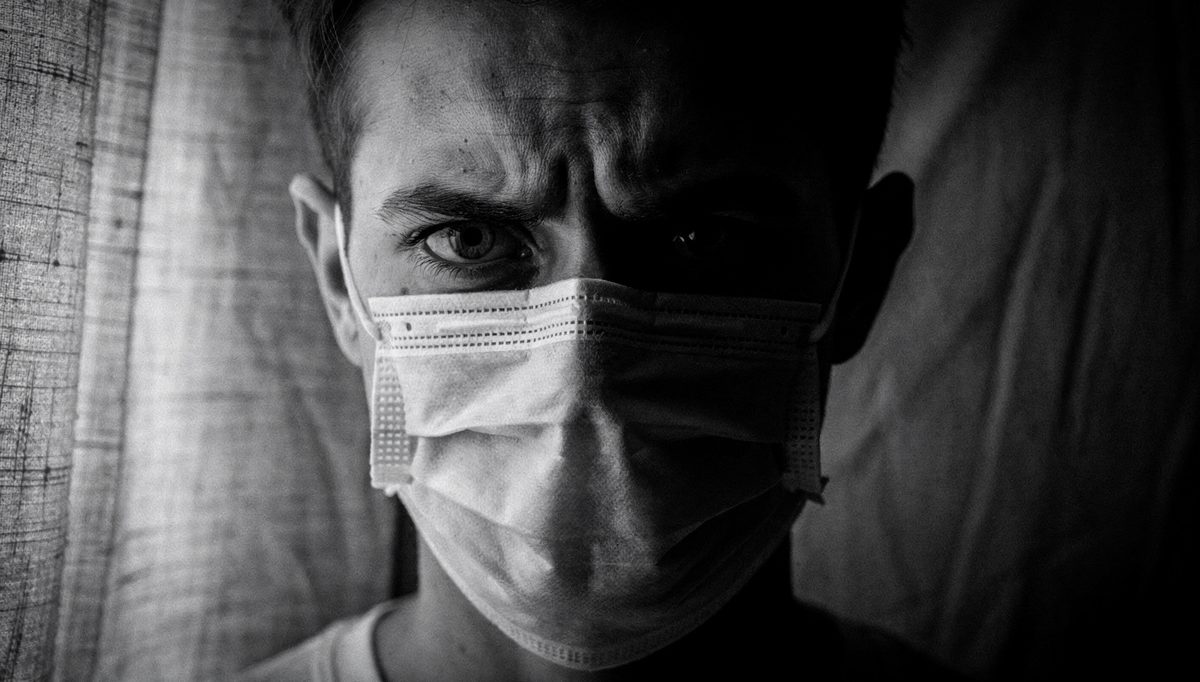
That is the problem this article addresses. When you wear a mask, the communicative load that your whole face once carried now falls entirely on your eyes. Most people never adjust. They keep the same gaze habits they always had, habits built for a world where a smile confirmed warmth, a tightened jaw signalled tension, and a relaxed mouth showed ease. Strip those away, and those habits become inadequate without you even noticing.
What follows will help you recognise the specific mistakes people make with eye contact when wearing a face covering, understand why each one happens, and know what to do about it before trust quietly drains away.
Why These Mistakes Go Undetected Until the Damage Is Done
The difficult thing about masked eye contact mistakes is that they feel invisible. You are still looking at people. You are still present. Nothing dramatic happens in the moment. Connection just slowly thins, like warmth leaving a room you did not know had a draft.
People also misread the cause. If a conversation feels flat, they blame the mask itself rather than their gaze. The mask becomes the excuse, and the actual problem goes unexamined. This is especially true in workplaces, where nonverbal communication in tense situations is already under strain.
Here is what makes it worse. Gaze habits are largely automatic. You learned them over decades without being taught them. Asking yourself to consciously recalibrate eye contact while also managing a conversation is genuinely hard. But hard does not mean impossible.
"The Conversation You're Avoiding Is the One You Need to Have."
"The Conversation You're Avoiding
Is the One You Need to Have."
Stop rehearsing conversations you'll never have. Say It Right Every Time gives you 115 word-for-word scripts and 16 proven frameworks to speak with confidence in every conversation that matters.
Six Specific Eye Contact Mistakes That Masks Expose
1. Keeping the Same Gaze Duration You Always Used
What it looks like: You hold eye contact for roughly the same length of time you always have, maybe two or three seconds at a stretch, then look away naturally.
Why it happens: That pattern worked before. It felt socially appropriate. You never had a reason to question it.
Why it matters: Without the confirming warmth of a visible smile, short gaze breaks read as disinterest or evasion. The other person is now watching your eyes for the reassurance your face once gave automatically. When that reassurance comes in shorter, weaker doses, they feel unseen.
What to do: Extend your gaze holds slightly. Four to six seconds of engaged, soft eye contact signals presence. Avoid staring, but resist the urge to look away the moment it feels comfortable to do so.
This much I know for certain: when the face is half-hidden, the eyes have to work longer shifts.
2. Forgetting That Your Eyebrows Are Still Fully Visible
What it looks like: You focus on your eyes but hold your eyebrows still, giving your face a flat, unreadable quality even when your gaze is steady and warm.
Why it happens: Most people think about their eyes as the point of contact. Eyebrows feel peripheral, something that moves on its own. But behind a mask, they are the primary carrier of expression.
Why it matters: A slight raise of the eyebrows signals openness and engagement. A gentle furrow shows focused attention. Without any eyebrow movement, your eyes look glassy, even when you mean well. This is the non-obvious one, and it matters more than almost anything else on this list.
What to do: Practice deliberate, natural eyebrow movement in a mirror while masked. It will feel exaggerated. It will not look exaggerated to the person across from you.
I spent six months working with a medical team during a period of mandatory masking. The people whose patients trusted them most moved their eyebrows constantly. The ones who forgot that detail looked cold, even when they were not.
3. Holding a Fixed Stare Instead of a Soft Gaze
What it looks like: You compensate for the mask by holding eye contact harder and longer than feels natural, resulting in an unblinking, intense stare.
Why it happens: You know more eye contact is needed, and you overcorrect. This is a reasonable mistake, and almost everyone makes it at some stage.
Why it matters: A fixed stare activates a threat response. It reads as confrontation, suspicion, or social aggression. The person you are trying to connect with becomes guarded. If you are managing conflict during meetings, this will make an already difficult situation harder.
What to do: Allow natural blinks. Let your gaze move briefly to the person's forehead or bridge of their nose before returning to their eyes. The break should be subtle and momentary, not a full look away.
4. Failing to Use Gaze to Signal Turn-Taking
What it looks like: Conversations behind masks become halting. People talk over each other more often, or awkward silences stretch because neither party knows when the other has finished speaking.
Why it happens: Without seeing whether someone's mouth is open or closed, or reading the muscle tension around their jaw and lips, the usual turn-taking signals vanish. People rely on visible facial movement to know when it is their turn to speak.
Why it matters: Disrupted conversational rhythm frustrates both parties. It makes the exchange feel disorganised and uncomfortable. In a meeting setting, it can silence quieter voices and let dominant ones take over, a problem explored in more depth in the guidance on how to deal with dominant voices in a discussion.
What to do: Use deliberate gaze shifts to signal turn-taking. A slight downward glance as you finish speaking, then a return to eye contact, signals you are done. A sustained, expectant gaze directed at the other person invites them to speak.
5. Looking Away When You Are Listening, Not Just When You Are Speaking
What it looks like: While someone else is talking, you look away frequently, to the side, at your hands, at the floor, in the same pattern you might when gathering your thoughts to respond.
Why it happens: Looking away while listening is a normal cognitive habit. It gives your brain processing space. Behind a mask, it sends a very different message.
Why it matters: Without a visible nodding mouth, or a slight smile of acknowledgment, your gaze is the only confirmation the speaker has that you are engaged. When you look away, they lose that confirmation entirely. They feel unheard. In any setting where ensuring every participant gets heard matters, this is a significant failure.
What to do: Shift your processing pauses. When you need to think, use a downward glance rather than a sideways look away. It reads as thoughtful rather than disengaged. Return your gaze to the speaker quickly.
6. Abandoning All Gaze Adjustment for Virtual Calls While Masked
What it looks like: You join a video call wearing a mask, perhaps in a shared office or healthcare setting, and revert to the same camera-avoidance habits most people have on screen.
Why it happens: Video calls already challenge natural gaze patterns. Adding a mask on top of that feels like too many variables to manage at once.
Why it matters: On a call, your masked face offers almost no readable signal to the people watching. If your eyes are also drifting to the screen rather than the camera lens, you look absent. You can find a full treatment of this problem in the guidance on best practices for virtual meeting communication.
What to do: On video calls while masked, prioritise camera eye contact more deliberately than ever. The camera lens is the one place your gaze registers as present.
The Root Condition These Mistakes Share
Every mistake on that list comes from the same place. People treat their gaze as a supplementary signal rather than the primary one. Before masks, that was correct. Your eyes contributed to a rich system: mouth, cheeks, jaw, brow, and gaze all working together to communicate one coherent message. The whole face shared the load.
A mask breaks that system. It does not reduce the load. It redistributes all of it onto your eyes. The mistakes above are what happens when your eyes are asked to carry that full weight without being prepared for it.
The adjustment is not complicated. But it must be conscious. Automatic gaze habits formed for a different context do not update themselves.
This same principle applies whenever a communication channel is reduced. The role of communication in meeting success depends on every participant using the signals available to them, not the signals they wish they had.
A Diagnostic Checklist for Masked Eye Contact
Read each statement. Answer honestly: Yes or No.
- My gaze holds comfortably for four to six seconds before a natural break.
- I move my eyebrows expressively during conversation, not just my eyes.
- I blink naturally and avoid a fixed, unblinking stare.
- I use deliberate gaze shifts to signal when I have finished speaking.
- When I am listening, my eyes stay on the speaker rather than drifting away to process.
- On video calls while masked, I look at the camera lens rather than the screen.
- I have practiced or reflected on my eye contact habits since wearing a mask regularly.
Scoring:
- 6 or 7 Yes: Your eye contact is well-adapted. Stay deliberate and keep practicing.
- 4 or 5 Yes: You have a foundation but specific gaps are costing you connection. Focus on your No answers first.
- 3 or fewer Yes: Your eye contact habits are out of alignment with your masked context. The trust cost is likely already showing. Start with mistakes 1 and 2 above.
Where to Begin If the Checklist Revealed a Gap
Start with your eyebrows. That is the most direct and highest-return repair you can make. Practice for five minutes in a mirror while wearing your mask. Raise your brows slightly as you imagine greeting someone. Let them relax naturally as you imagine listening. Notice how much expression survives.
Then work on gaze duration. Count quietly. Four seconds does not feel long in practice, but it will feel longer than what you are used to. That discomfort is the calibration working.
If you want a deeper framework for the situations where this matters most, the guidance on how the empathy bridge technique defuses tension before a difficult workplace conversation starts is worth reading alongside this one. Managing eye contact demands under emotional pressure is a specific skill, and that article gives you a concrete first structure to work with.
The truth of it is this: your mask has changed the rules of every face-to-face exchange. Your eyes are now doing the work your whole face once did together. Give them the attention that responsibility deserves, and the eye contact demands of masked communication become something you can meet with confidence.
Frequently Asked Questions (FAQ)
What are eye contact demands when wearing a mask?
Eye contact demands refer to the increased pressure on your gaze to communicate intent, emotion, and attention when a mask covers your lower face. Without visible mouth and cheek expressions, the eyes must carry the full communicative load that the whole face normally shares.
How do masks change eye contact in conversation?
Masks remove visible smiles, mouth movements, and jaw tension from the conversation. This means the other person reads your entire emotional state from your eyes alone. Gaze duration, blinking rate, and the direction of your attention all become far more significant signals than usual.
Why does eye contact feel harder when wearing a face covering?
A face covering eliminates the visual anchors people normally use to gauge listening and agreement. Without a visible smile or nod of the mouth, your conversation partner watches your eyes more intensely for reassurance. That added scrutiny makes eye contact feel more pressured and deliberate.
How long should eye contact last when you are wearing a mask?
Without a mask, natural eye contact in conversation runs roughly three to five seconds before a brief break. Wearing a mask, slightly longer holds of four to six seconds signal engagement without the supporting cues of a smile. Avoid staring but resist the urge to look away too quickly.
Can eye contact alone replace facial expression when wearing a mask?
Eye contact alone cannot fully replace the richness of a complete facial expression, but it can preserve trust and signal attention. Combining deliberate gaze with eyebrow movement, head nods, and vocal warmth compensates significantly for the lost cues below the mask.
What mistakes do people make with eye contact while wearing a mask?
The most common mistakes include looking away too frequently, forgetting that eyebrow movement is still visible, holding a fixed stare that feels threatening, and failing to signal turn-taking through gaze shifts. Each mistake erodes connection when the mask has already reduced the available signals.