
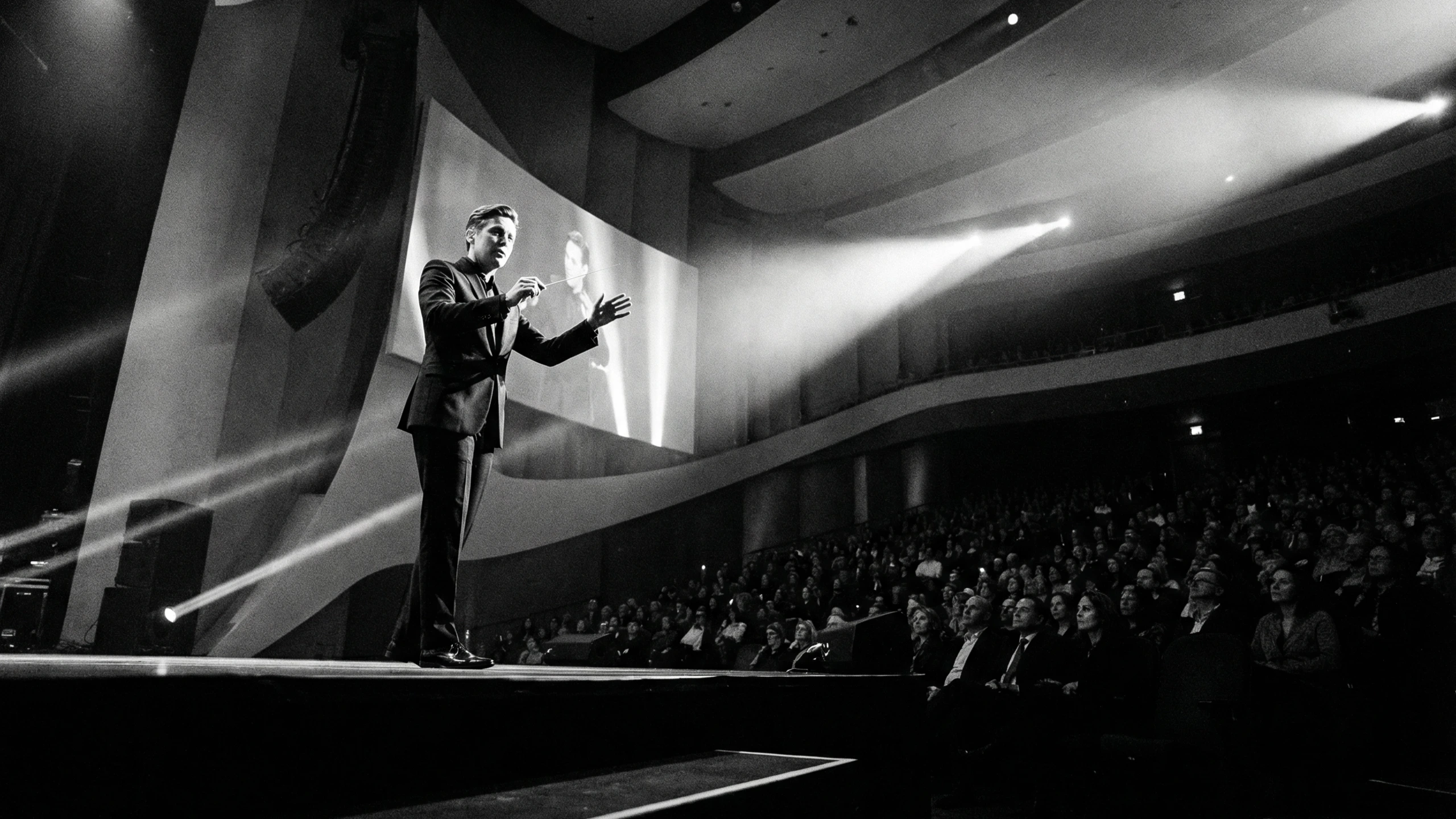
Presenter Stance
How your posture, stance, and physical positioning communicate confidence and credibility to audiences before and during a presentation.
The way a presenter stands sends a message before the first word is spoken. A collapsed posture signals anxiety and uncertainty. A rigid posture signals tension and discomfort. A grounded, open, and balanced stance signals the ease and confidence that makes audiences trust the person in front of them. Presenter stance is not about adopting a costume of power — it is about developing the physical habits that allow genuine confidence to be visible rather than hidden.
This subtopic explores presenter stance and physical positioning in detail: how to find and maintain a grounded, balanced standing position that communicates ease rather than effort, how to use weight distribution and physical stillness to project stability rather than nervous energy, how to position yourself in relation to the screen, the audience, and the space in ways that maintain connection and control, how to move purposefully rather than drift — the difference between movement that serves the presentation and movement that signals anxiety, and how to manage the physical self-consciousness that makes many presenters lose connection with their body and their audience simultaneously. You will find guidance on presenter stance for different physical environments — the stage, the boardroom, the front of a classroom — and on the physical warm-up and preparation practices that help establish a grounded stance before the presentation begins.
Presenter stance is the physical foundation of confident delivery. These articles develop it with observable, practical precision.
No articles yet
Check back soon for articles on Presenter Stance.