
In Short
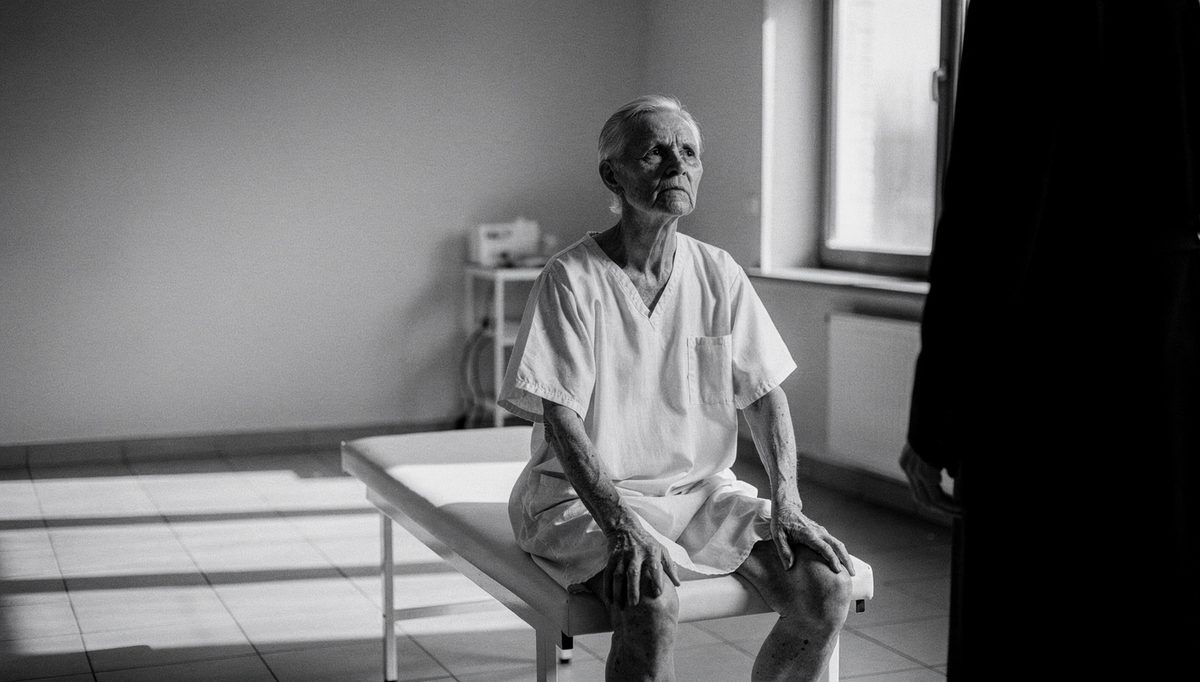
Clinical setting icebreakers are the first words a healthcare professional uses to signal safety to a frightened patient. They do not require warmth you do not feel or scripts that sound rehearsed. Done well, they lower a patient's defences, improve honest communication, and change the quality of care that follows.
Clinical setting icebreakers are brief, intentional opening exchanges used by healthcare professionals to ease patient anxiety before a clinical interaction begins. They signal that the patient is seen as a person, reduce the fear response, and build enough trust for honest, productive communication to follow.
What to Watch For Before You Read These Scenarios
Every example below involves a moment of first contact: the gap between a patient arriving and the clinical work beginning. That gap is where icebreakers live.
Watch for two things as you read. First, notice what the clinician or practitioner says. Second, and more importantly, notice how they say it and what they are doing with their body at the same moment. In clinical settings, patients under stress read physical signals faster than they process words. An icebreaker spoken to a computer screen is not an icebreaker. It is noise.
Also notice what happens in the seconds after the icebreaker. Does the patient's posture shift? Do they make eye contact? Do they offer something back? That response tells you whether the opening worked.
"The Conversation You're Avoiding Is the One You Need to Have."
"The Conversation You're Avoiding
Is the One You Need to Have."
Stop rehearsing conversations you'll never have. Say It Right Every Time gives you 115 word-for-word scripts and 16 proven frameworks to speak with confidence in every conversation that matters.
Example 1: The Ward Where Everyone Was Efficient
A busy general ward. A nurse with fifteen years of experience, fast and competent, moved through her morning checks with quiet precision. She knew every patient's chart. She arrived at each bed with the right information and left with the right data recorded. She was, by every clinical measure, excellent.
What she did not do was pause before she began.
She would arrive, glance at the patient, and move directly into the clinical task. "Right, I need to check your blood pressure. Can you extend your arm for me?" Efficient. Accurate. Complete.
One patient, a man in his sixties recovering from a cardiac procedure, told a junior nurse he was frightened to ask questions because the senior nurse "always seemed busy." He withheld a symptom for two days because he did not want to slow her down.
The senior nurse was not cold. She was simply unaware that entering without a brief human exchange had trained her patients to stay quiet. One sentence at the doorway, something as simple as "You look like you slept a bit better, how was the night?" would have changed what that man felt permitted to say.
Efficiency without entry is its own risk in clinical care.
Example 2: A Paediatric Waiting Room and One Observant Registrar
A registrar in a children's outpatient clinic noticed a boy of about seven sitting very still in the waiting room, gripping a small toy car. The mother beside him looked tense. The boy had been called in for a procedure he was clearly dreading.
The registrar crouched to eye level before she said a word. Then she said: "That's a good one. Does it go fast?"
The boy looked at the car, then at her, and said yes. They talked about the car for forty seconds. The mother's shoulders dropped. The boy walked into the consultation room without being pulled.
The registrar later said she almost did not bother because she was running behind. That forty-second exchange gave her a more cooperative patient, a calmer parent, and a cleaner procedure. She had not asked about the procedure, his fears, or his medical history. She had simply given him a moment to be a child before he had to be a patient.
That is the core truth about icebreakers in clinical settings: the subject of the exchange is rarely what matters. The signal it sends is everything.
Example 3: A Pre-Surgery Suite and the Wrong Kind of Cheerful
A surgical nurse in a pre-operative area made a habit of using upbeat, bouncy openers with patients before going into theatre. "Ready for your big day?" was a phrase she used often, delivered with a wide smile.
She meant it warmly. Patients experienced it differently.
One patient, a woman in her early fifties facing a procedure she was terrified of, heard "big day" and thought of weddings and birthdays. The gap between that association and where she was lying, in a hospital gown under fluorescent light, made the disconnect worse, not better. She smiled back, said nothing about her fear, and spent the procedure gripping the operating table.
The nurse's icebreaker was not wrong in content. It was wrong in calibration. A better read of the room would have led her somewhere quieter: "It can feel like a long wait in here. Is there anything you want to ask before we get started?" That gives the patient an opening rather than a cue to perform positivity she does not feel.
Emotional intelligence and tone are inseparable in clinical communication. Calibrating your tone to the patient's state, rather than your own preferred register, is the skill that separates a warm clinician from an effective one.
Example 4: A GP Who Always Started With the Room
A general practitioner in a rural practice had a quiet method he had used for twenty years. When a patient sat down, before he looked at his screen or opened the notes, he took two seconds to look at them and say something about what he actually noticed.
"You look like you've come a long way today." Or: "That's a heavy coat. Has the weather turned?" Or simply: "You're early. You must have wanted to make sure you got here."
None of these were profound. All of them were specific. He was not running a script. He was observing the person in front of him and naming something real. Patients consistently described him as a doctor who "really listened," even in appointments that lasted eight minutes.
His icebreaker was not about warmth as a performance. It was about evidence that he had looked. Patients in clinical settings are often terrified that they are invisible, that they are a number, a file, a procedure. One observed detail tells them they are not.
This is worth connecting to what makes psychological safety work in any setting: people open up when they believe they will not be dismissed. That GP's icebreakers built that safety in under thirty seconds.
Example 5: The Oncology Team That Learned Together
A team in an oncology unit noticed, after an informal debrief, that patients were arriving at consultations already defensive and closed. Information was being missed. Patients were not disclosing symptoms accurately. The team initially assumed it was the nature of the diagnosis, the weight of it.
What they eventually discovered was simpler. The walk from the waiting room to the consultation room was conducted in near-silence. Patients arrived at the chair already braced.
A senior consultant suggested a small change. Someone on the team would walk with the patient, not just lead them, and say something low-stakes during the thirty-second walk. "Have you been in this part of the building before?" or "Did you find parking alright?" Nothing clinical. Nothing heavy.
Within two months, the team reported patients arrived at the chair differently. Calmer. More ready. The consultant noted that the quality of information gathered in the first three minutes of the consultation improved measurably.
This connects directly to what the empathy bridge technique teaches: defusing tension before the hard conversation starts is not a kindness, it is a strategy. The oncology team had accidentally built that principle into their hallway without naming it.
What Recurs Across These Scenarios
Three patterns run through all five examples, regardless of the setting or the patient type.
First, timing matters more than content. Every effective clinical icebreaker happened before the clinical task began. The nurse who moved straight into blood pressure checks, the surgical nurse who used the gown-up period to deliver a cheerful line, both missed the moment because the clinical machine had already started.
Second, specificity outperforms warmth. The GP who named what he noticed, the registrar who spoke to the toy car, both worked because they referenced something real. Generic warmth is recognisable as a procedure. Specific observation is recognisable as a person.
Third, the patient's body tells you whether it worked. Watch for the shoulders, the jaw, the hands. A successful icebreaker produces a visible shift. If the patient's posture does not change at all, the opening did not land, and you have not yet created the safety needed for honest clinical exchange.
For healthcare teams looking to build this kind of intentional communication practice, the principles that make effective icebreakers in team meetings work apply here too: low stakes, genuine observation, specific rather than generic, and always before the formal agenda begins.
What This Means for How You Work Tomorrow
You do not need a new script for every patient type. You need one habit: look before you speak.
Before every first contact, take two seconds to observe the actual person in front of you. Age, posture, expression, what they are holding, how long they have waited. Then say one thing you genuinely noticed. Not a question from a checklist. Not a wellness performance. One observed thing.
If you want to think about this in terms of difficulty, begin with how to start a difficult conversation by removing some of the difficulty before it starts. An icebreaker in a clinical setting does exactly that. It is not a warm-up. It is preparation for honesty.
For those working in remote or telephone-based clinical settings, the same principle holds. The equivalent of looking before you speak is listening for thirty seconds before you move to the clinical agenda. A patient's pace, their hesitations, the small phrase they use before getting to the point, all of these are observable. Name what you hear, not what the chart says. The principles of maintaining connection in remote environments apply directly to telehealth: connection requires active attention, not just presence on the line.
If humour is part of your natural register, it can work in clinical settings, but calibrate carefully to the patient's state. Light self-deprecating humour about the clinical environment ("This chair is never as comfortable as it looks") is usually safer than humour directed at the patient's situation. When in doubt, warmth without wit is always sufficient.
The goal of clinical setting icebreakers is not to be liked. It is to make honest conversation possible. Every patient who feels safe enough to tell you the truth gives you better material to work with. That is not sentiment. That is good clinical practice.
Frequently Asked Questions (FAQ)
What are clinical setting icebreakers?
Clinical setting icebreakers are brief, low-pressure opening exchanges that a healthcare professional uses to ease a patient into conversation before an appointment or procedure. They reduce fear, build trust, and signal to the patient that they are seen as a person, not just a case.
Why do icebreakers matter for vulnerable patients in healthcare?
Vulnerable patients arrive carrying fear, pain, or uncertainty. A well-placed icebreaker signals safety before any clinical exchange begins. It lowers the patient's defensive response, which improves honesty, cooperation, and the quality of information a clinician can gather during the appointment.
How do you start an icebreaker with a frightened patient?
Observe before you speak. Notice something specific, a long journey, a waiting room wait, a visible sign of nerves, and acknowledge it directly. Keep it brief. One genuine sentence lands better than a rehearsed string of pleasantries that the patient can see straight through.
What makes a clinical icebreaker fail?
An icebreaker fails when it feels procedural rather than personal. Patients read tone faster than words. If the opener is delivered while the clinician is looking at a screen or moving papers, the patient registers the body language and discounts the words entirely.
Can icebreakers be used in high-pressure clinical moments like pre-surgery?
Yes, and they matter most then. Pre-surgery icebreakers should be simple and grounding, focused on the immediate physical environment. Something like noticing the warmth of the room or asking what the patient had for breakfast gives the patient something ordinary to hold onto amid the fear.
How long should a clinical icebreaker last?
Thirty seconds to two minutes is the right range. The goal is connection, not conversation. A good icebreaker creates enough trust to open the clinical exchange properly. If it runs longer, it risks becoming avoidance, for both the patient and the clinician.