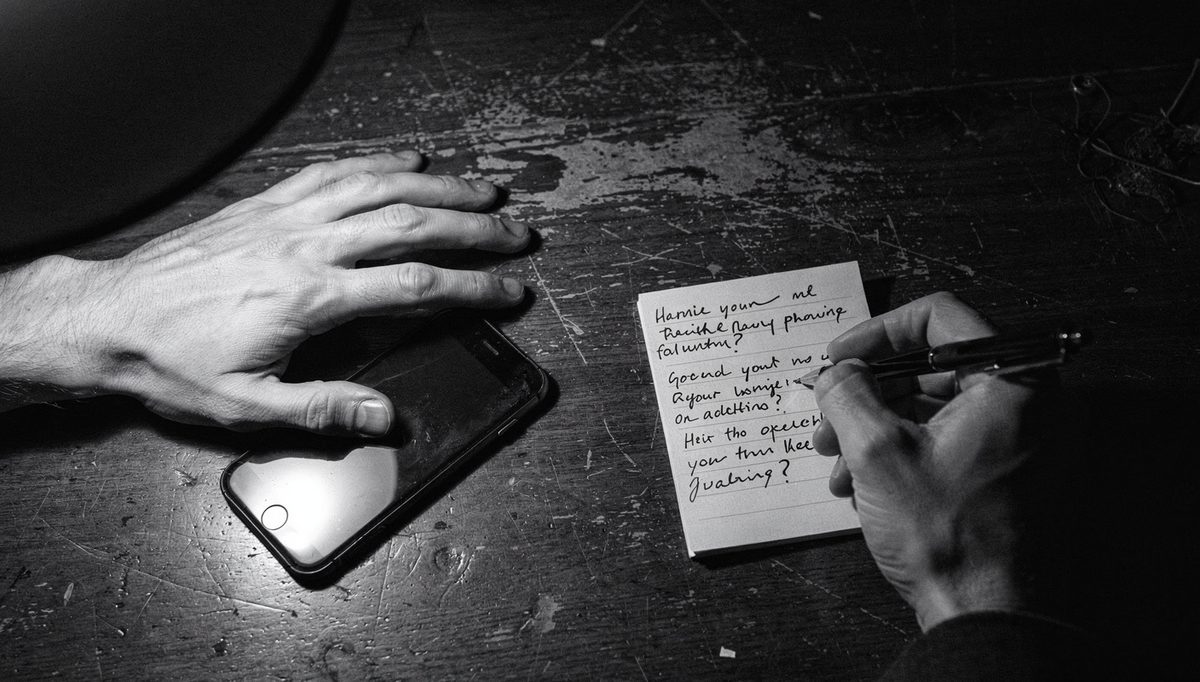

In Short
Icebreakers over text must carry the full weight of connection without tone, timing, or body language to help. A question that works face-to-face can land as cold or intrusive in a chat window.
- Specificity and low stakes make a digital icebreaker easy to answer.
- Silence after a text message is harder to read than silence in a room.
- The person who posts the icebreaker often needs to answer it first.
Icebreakers over text are short questions or prompts sent through messaging apps or chat tools to open conversation and build early connection. They replace the warmth of in-person cues with clear, inviting language that lowers the barrier to reply.
Why Text Strips Out Half the Signal
I once watched a new hire spend forty minutes deciding whether to respond to a Slack message. The message read: "Tell us something about yourself." Friendly enough in a meeting room. In a channel of twelve people she had never met, it felt like stepping onto a stage with no script and no wings. She closed the app. She never replied.
That moment is worth holding onto before you look at the examples below. Everything you rely on in person, a smile, a tilted head, the half-second pause that says I am genuinely curious about you, disappears in a chat window. What remains is the question itself. If the question is not built to carry that weight, it will not carry it.
Watch for four things as you read these scenarios. First, whether the question gives the reader a clear, low-effort entry point. Second, whether the person asking it creates an opening or just posts a demand. Third, how much silence factors in, and what people make of it. Fourth, whether the icebreaker serves the relationship or just ticks a process box. Those four things separate the examples that worked from the ones that did not.
"The Conversation You're Avoiding Is the One You Need to Have."
"The Conversation You're Avoiding
Is the One You Need to Have."
Stop rehearsing conversations you'll never have. Say It Right Every Time gives you 115 word-for-word scripts and 16 proven frameworks to speak with confidence in every conversation that matters.
Five Scenarios Where Digital Icebreakers Succeeded or Failed
1. A New Channel With Nothing to Say
A team of eight had just moved to a new project management platform. The team lead created a channel called #introductions and pinned a message: "Welcome everyone. Please introduce yourselves here."
Three people posted within ten minutes. Five did not post at all. After a week, the lead added a follow-up message: "Don't forget to introduce yourselves!" Two more people posted brief, stiff replies. The channel went silent.
What went wrong was not enthusiasm. The lead genuinely wanted the team to connect. What went wrong was the word introduce. It implied a formal statement, a performance. Nobody knew how long to write, what to include, whether humour was welcome, or whether the others would judge them. The blank page was too blank.
When the lead eventually rewrote the prompt to say, "What's one thing you're working on this week that you're actually enjoying?" the channel came alive within an hour. The icebreaker worked because it gave everyone a specific, bounded scope. A concrete question is a door with a handle. An open invitation is a door with no frame.
2. The First Reply That Changed Everything
A remote onboarding coordinator was bringing four new hires into a company chat. She posted in the welcome channel: "Quick question for everyone, new and old: what's one tool or shortcut you've discovered recently that made your work easier?" Then she answered it herself. She described a keyboard shortcut for resizing windows she had learned from a junior developer three months ago.
Two of the new hires replied within minutes. One of the existing team members added a reply that turned into a small thread. By the end of the day there were eleven responses, and two direct messages had been started between people who had not previously spoken.
The coordinator's decision to answer her own question first was the thing that made it work. It modelled the expected length, the tone, and the level of vulnerability. It said: this is not a test, here is exactly what kind of reply fits here. When you ask a question over text without answering it yourself, you leave people guessing whether the question is real or rhetorical. Answer first and you remove that friction entirely. For practical structure on how this kind of opening plays out in a meeting context, effective icebreakers for team meetings covers the mechanics in detail.
3. A Question That Arrived at the Wrong Moment
A project manager wanted to build rapport with a contractor who had just joined a fast-moving product launch. She sent a WhatsApp message: "Before we get into the brief, I'd love to know, what got you into this kind of work?"
The contractor was mid-task on a different client. She glanced at the message, felt uncertain whether to answer now or later, decided to wait for a natural moment, and then forgot. The project manager, receiving no reply, assumed she had overstepped. She became more formal in subsequent messages. The working relationship stayed professional but never warmed up.
This is what timing costs in a text-based environment. An icebreaker over text cannot read the room because there is no room to read. The question itself was excellent. The timing created a gap that neither person knew how to close. Choosing the right channel for workplace communication matters as much as the words you use, and timing is part of that choice. A brief note at the start of the message, "No rush on this, just curious when you get a moment," would have given the contractor permission to reply without pressure. Those eight words would have changed everything.
4. A Team Channel That Went Silent for Three Weeks
A hybrid team used a chat channel called #watercooler for casual conversation. For the first two months, a few people posted regularly. Then one of those regulars left the company. The channel went quiet. Someone occasionally posted a meme. Nobody replied. The channel stopped feeling like a place where conversation happened.
A new team member noticed this and posted: "Honest question, what's something you're finding hard about work right now? Mine is the three-hour time difference making afternoon calls brutal." Six people replied. Three of them mentioned things they had not said in any meeting. The channel came back to life and stayed active for the remainder of the quarter.
The icebreaker worked because it named a specific difficulty and attached a real, personal answer. It gave people permission to be honest rather than cheerful. This matters in text environments because people default to neutral or upbeat in group channels; the cost of appearing negative feels higher when you cannot soften it with a facial expression. That one message shifted the channel's culture. For more on maintaining that kind of warmth consistently, how to maintain connection in remote work environments is worth your time.
5. When Humour Misjudged the Audience
A team lead trying to warm up a Monday morning Slack channel posted: "Rate your Monday mood: 1 if you're running on coffee, 10 if you're an actual morning person (in which case, who are you?)."
Most of the team found it funny. One team member, who had just returned from bereavement leave, found it jarring. She did not reply, and she felt a small, unnecessary distance open between her and the team lead.
The lead had no way to know. That is the honest truth of it. But text-based icebreakers carry an additional risk: they cannot adjust in real time the way a person can in a room. Humour that reads the room brilliantly in person can miss by a margin in a chat, and there is no body language to soften the landing. Knowing how humour can ease workplace tension when used right means also knowing when to keep it simpler. The lower-risk version would have been: "One word for your Monday morning, go." Same lightness, less chance of catching someone on a hard day.
What These Scenarios Have in Common
Looking across five very different situations, three things surface repeatedly. First, specificity is the primary driver of response. Every icebreaker that worked gave the reader a bounded, concrete scope. Every one that failed asked something too broad or too open. Vague warmth does not translate through a screen; precise curiosity does.
Second, the sender's own participation matters more over text than it does in person. In a room, your presence signals your investment. In a chat window, your investment is invisible unless you show it. Answering your own question is not a trick; it is the fastest way to make the question feel real rather than procedural.
Third, silence is not neutral over text. In person, a moment of quiet in a conversation can be comfortable. In a group chat, silence after an icebreaker reads as rejection, indifference, or awkwardness. This means the window for reply matters; if you post an icebreaker at a moment when your audience is busy or distracted, you may never recover the thread. The quality of the question and the timing of its delivery carry equal weight.
These patterns hold whether you are onboarding a new hire, managing a hybrid team balancing online and in-person work, or simply trying to keep a remote team from drifting into silence between deadlines.
How to Assess Your Own Digital Icebreakers
Read the last five icebreaker messages you sent over text or chat. For each one, ask these three questions. Did it give the reader an obvious, low-effort way in? Did you model the reply you wanted? And did the timing work in the reader's favour, or yours?
If you struggle with email greetings that make the right impression, the same principles apply here: the opening line sets the temperature of everything that follows. A sharp, specific opening question in a chat takes the same skill and the same courage as a well-crafted email greeting. Neither happens by accident.
Best practices for virtual meeting communication often address what to do once people arrive in a meeting space. But the connection you build in a chat channel in the days before a meeting determines how that meeting actually feels. Text-based icebreakers are not a warm-up act. They are the first layer of trust.
The core of good icebreakers over text is this: the question must do the work that a face, a tone, and a room would normally do. That is a higher bar, not a lower one. Raise your standard for the words you choose, answer first, and keep the scope small enough that no one hesitates to step through the door.
Frequently Asked Questions (FAQ)
What are icebreakers over text?
Icebreakers over text are short, low-pressure questions or prompts sent through messaging apps or chat tools to start conversation and build early rapport. They replace the warmth of a handshake or smile with clear, inviting language that makes it easy for someone to respond.
How do you write a good text-based icebreaker?
Keep it short, specific, and easy to answer without overthinking. Ask about something low-stakes and concrete, like a current project, a recent win, or a simple preference. Avoid questions that feel like a test or require a lengthy, effortful reply.
Why do icebreakers over text often fall flat?
Without tone of voice or facial expression, a poorly worded question can feel intrusive, awkward, or simply ignorable. If the question demands too much effort or feels too personal too soon, people scroll past it. Clarity and warmth must come entirely from the words themselves.
What makes a digital icebreaker feel safe to answer?
Safety comes from low stakes and an obvious entry point. A question with a clear, simple scope, like a favourite tool, a recent challenge, or a quick preference, signals that a short answer is welcome. It does not demand vulnerability before trust has been built.
Can icebreakers over text work for large remote teams?
Yes, but they need structure. A single open question posted to a team channel works better than a complex prompt. When one person answers visibly, it lowers the barrier for others. The first reply is the hardest, so the person posting should often answer their own question first.
How are messaging app icebreakers different from in-person ones?
In person, a smile, a pause, and eye contact do much of the work. Over text, the question carries the full load. It must be warm, clear, and specific enough to invite a reply without demanding one. Silence after a digital icebreaker is also harder to read than silence in a room.