
In Short
After reading this, you will know how to use the V.A.L.U.E. Method to rebuild your team's synergy and present a stronger case to leadership.
- Reconnect your team to its collective value before you examine what the pitch lacked.
- Listen within the team first; synergy cannot survive a recovery built on unheard frustrations.
- Engage leadership as partners in a solution, not judges of a repeat performance.
Rebuild team synergy means restoring the coordinated trust, shared focus, and collective energy within a group after a setback has disrupted the working harmony that makes a team function as more than the sum of its individual parts.
Why a Failed Pitch Hits Team Synergy So Hard
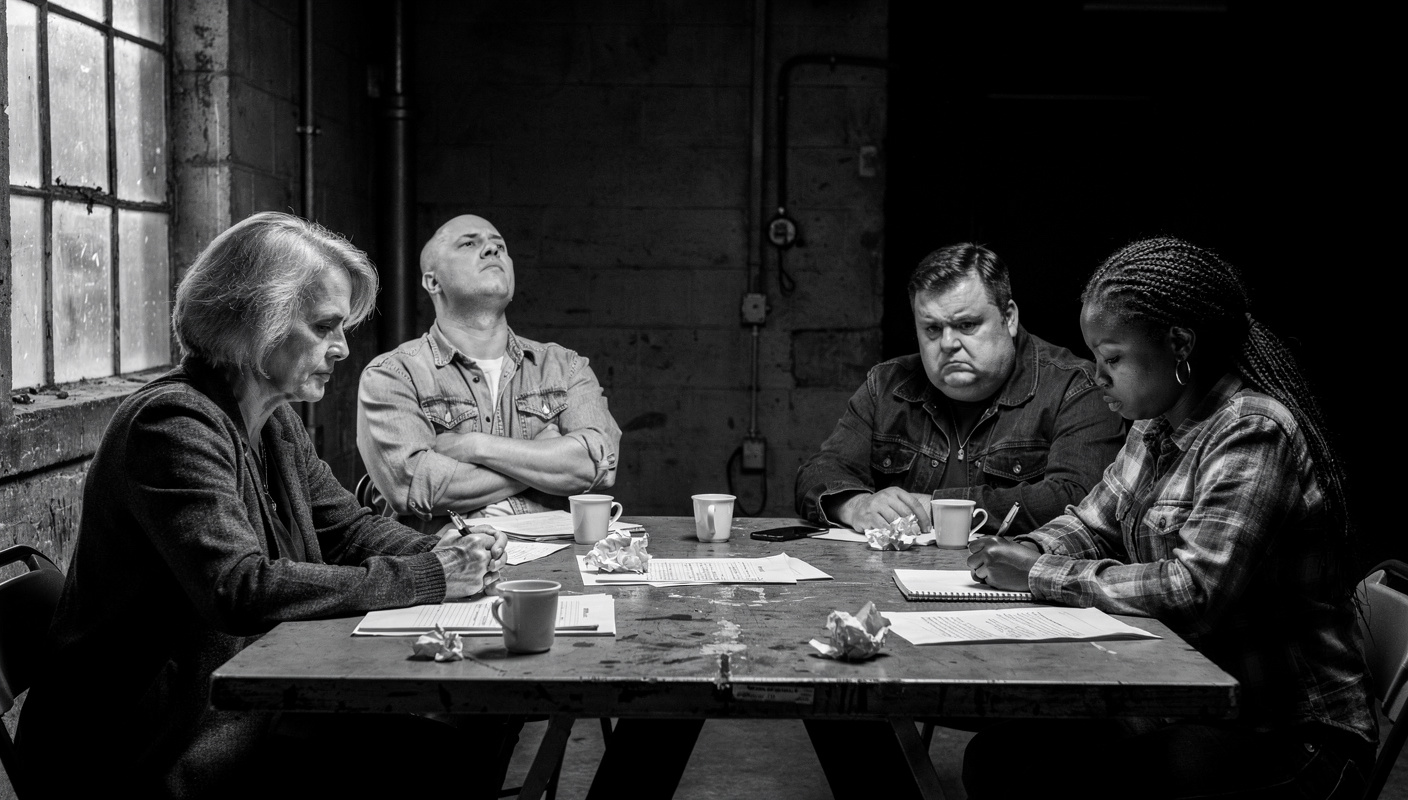
The room goes quiet on the way back from the meeting. Someone stares at their phone. Someone else says "it is fine" in a tone that means the opposite. You have just had your pitch rejected by leadership, and the team that walked in confident is walking out fractured.
I have watched this happen more times than I care to count. And the painful truth is that most teams make it worse in the hours that follow. They hold a debrief that turns into a blame session, or they avoid talking about it entirely. Neither approach helps you rebuild team synergy, because neither deals with what actually broke.
Here is what most people miss: a failed pitch does not just wound your proposal. It wounds the team's sense of shared purpose. People stop trusting each other's judgment. They second-guess who contributed what. The collaborative momentum that made the pitch possible in the first place quietly collapses. That is the real problem, and it has to be addressed before you even think about a second attempt.
In this guide, you will get a clear, practical process for using the V.A.L.U.E. Method to restore your team's cohesion and rebuild your collective case so that the next time you walk into that room, you walk in as a unit. If you want broader context on restoring group dynamics after disruption, How to Rebuild Team Synergy After Conflict or Organizational Change is a strong place to start.
"The Conversation You're Avoiding Is the One You Need to Have."
"The Conversation You're Avoiding
Is the One You Need to Have."
Stop rehearsing conversations you'll never have. Say It Right Every Time gives you 115 word-for-word scripts and 16 proven frameworks to speak with confidence in every conversation that matters.
Why Recovering Team Synergy Is Harder Than It Looks
Knowing that your team needs to recover is not the same as knowing how to make that happen. Most team leaders understand, in theory, that they need to regroup. The gap between knowing and doing is where things fall apart.
Here is why this particular challenge is so difficult in practice:
The failure feels personal, even when it is not. A rejected pitch can make individual contributors feel that their work was judged inadequate, which triggers defensiveness rather than honest reflection. This is not weakness; it is a very human response to public disappointment.
There is no obvious structure for recovery. Teams know how to prepare a pitch. Almost no one has a clear process for what to do after one fails. Without structure, recovery conversations become vague or emotional and produce very little.
Blame travels faster than analysis. When things go wrong, the instinct is to identify a cause quickly. In a team under stress, that cause often becomes a person rather than a process. This fractures trust faster than almost anything else.
People grieve differently. Some team members want to talk it through immediately. Others need time. Some want to start rebuilding right away. Others need acknowledgement first. These different rhythms create friction when the team has no agreed method for moving forward together.
The pressure to resubmit quickly makes everything worse. Leadership often wants a revised proposal faster than a team can genuinely recover its synergy. Rushing the recovery produces a surface-level patch, not a real rebuild.
The goal is not to eliminate these difficulties. It is to build a system that works in spite of them.
The Foundation: What You Need Before You Start
Before you begin working through any recovery process, there are three things that need to be clear.
Agreement to engage honestly. Every team member must commit to honest participation in the recovery, not just attendance. This means naming what went wrong without protecting anyone's ego, including your own. Without this agreement made explicit at the start, the process becomes a performance rather than a real repair.
A shared understanding of the goal. The goal is not to make leadership like you. The goal is to rebuild the team's collective strength so your next pitch reflects genuine alignment and clear value. Keep this visible. When recovery conversations drift into grievance, return to this shared goal.
A decision to separate the pitch from the people. The failed pitch was a document and a conversation. It was not a verdict on the people in the room. This distinction must be agreed before you start, because teams that conflate the two will spend their energy on the wrong problem. For a structured approach to resolving any interpersonal tensions that emerged, see How to Use the D.E.A.L. Method to Resolve Conflicts That Are Fracturing Team Synergy.
Get these right first. The steps that follow will not work without them.
Step 1: Value. Clarify What Your Team Actually Delivers
This step reconnects your team to its collective worth before you touch the failed pitch.
One of the most damaging effects of a rejected proposal is that the team begins to question its own value. That doubt spreads quietly and poisons everything that follows. You cannot build a stronger case from a position of collective self-doubt. So the first move is to articulate, clearly and specifically, what this team contributes that no other configuration of people could replicate.
- Write down three to five outcomes your team has delivered in the past twelve months that directly served the organization's priorities.
- For each outcome, attach a number: revenue protected, costs reduced, time saved, problems resolved, relationships preserved.
- Identify the specific combination of skills within your team that made those outcomes possible.
- Name what would have been lost or delayed without your team's particular way of working together.
- Post these contributions somewhere visible during every subsequent recovery session.
Here is what this looks like in practice. A project team I worked with had just had their proposal for a new client onboarding system rejected. In the debrief, I asked them to stop talking about the pitch and start talking about their record. They listed four completed initiatives over eighteen months. When they attached numbers, the total came to just under £800,000 in retained client contracts. Nobody in that room had said those numbers aloud together before. The energy in the room shifted. They were not starting from zero. They were starting from a proven record.
This step does not solve the problem. But it restores the confidence the team needs to approach the next steps honestly rather than defensively. That is the foundation everything else is built on.
Step 2: Accomplishments. Prove the Case With Evidence
This step converts your team's collective track record into a structured, credible body of evidence for the next pitch.
In Say It Right Every Time, I introduce the V.A.L.U.E. Method as a career negotiation framework built on a simple truth: listing responsibilities impresses no one, but quantified accomplishments change conversations. That principle applies with equal force when a team is rebuilding its case. Leadership did not reject your pitch because they dislike you. In most cases, they rejected it because the evidence was not compelling enough to justify the decision you were asking them to make. Chapter 4 of Say It Right Every Time covers this in full, including how to frame your case as an investment opportunity rather than a request for approval.
- Build a team "brag book": a single document listing every significant outcome your team has produced, with measurable evidence attached to each.
- For each accomplishment, note the organizational need it addressed, not just the task that was completed.
- Identify which accomplishments align most directly with the specific concern leadership raised when they rejected the pitch.
- Rank your accomplishments by impact, and lead your revised case with the three strongest.
- Remove any item from the list that cannot be supported with a specific, verifiable result.
The distinction between listing responsibilities and quantifying accomplishments is the difference between "we manage client relationships" and "we retained four at-risk accounts worth £320,000 in the last quarter." One is a job description. The other is a reason to say yes. Your team must make the same shift when you rebuild your case for leadership.
For a practical method of turning this evidence into a team improvement plan that leadership can see progress against, How to Use the G.R.O.W. Method to Turn Team Feedback Into a Synergy Improvement Plan is a useful companion here.
Step 3: Listen. Understand What Leadership Actually Needs
This step requires you to stop constructing your argument and start genuinely understanding the people you are trying to persuade.
In my experience, this is the step that most teams skip entirely, and it is the most important one. As I write in Say It Right Every Time: "The best negotiators do not just talk; they listen. They do not just assert their own value; they seek to understand the value they can create for others." That insight applies just as directly to a team recovering from a rejected pitch as it does to an individual negotiating a salary.
- Review the specific language leadership used when they declined the proposal, and write down every concern or question they raised.
- If the feedback was vague, request a brief follow-up conversation with the decision-maker to ask one focused question: "What would a successful proposal in this area need to demonstrate?"
- Identify the organizational pressures leadership is operating under right now: budget cycles, strategic priorities, board-level concerns.
- Map your team's proposal to those pressures rather than to your team's internal priorities.
- Ask each team member individually what they heard in the rejection that the group may have missed.
Here is a script that has worked well. After a failed pitch, the team leader requests fifteen minutes with the sponsoring director and opens with this: "Thank you for the time. I want to make sure we understand your concerns properly before we come back to you. When you mentioned the timeline concern last week, could you help me understand what is driving that? I want to make sure any revised proposal addresses what actually matters to you." That question alone has reversed more rejections than any revised slide deck ever did.
The information you gather in this step determines everything that comes next. Do not skip it to save time. It will cost you far more time if you do.
Step 4: Understand. Acknowledge Their Perspective Before You Present Yours
This step is about demonstrating, clearly and sincerely, that you have heard and respected leadership's position before you ask them to hear yours.
Teams often confuse listening with waiting to speak. This step is different. It requires your team to genuinely acknowledge the constraints and priorities that drove the rejection, and to reflect that understanding back to leadership before you present a revised case. The practical effect of this is that it removes the adversarial dynamic that a second pitch can easily create. You are no longer on opposite sides of a decision. You are trying to solve a shared problem together.
- Open your follow-up communication or meeting with a clear acknowledgement of the concerns raised, in leadership's own language, not your paraphrase of it.
- State explicitly that you have taken those concerns into account in your revised thinking.
- Identify any constraints that are genuinely non-negotiable for leadership and design your revised case to respect those constraints, not fight them.
- If your team disagrees with the feedback, do not lead with that disagreement. Acknowledge first, then open the door with: "I see it a little differently in one area. Could I share that perspective?"
- Ensure every team member is aligned on this approach before you engage leadership again, because one team member who presents as defensive will undermine the work of the entire group.
This step builds something more valuable than a better pitch. It builds the trust that makes leadership receptive before you say a word about your proposal. Trust is earned through demonstrated respect, not through better slides. For practical tools to ensure your team's communication strengthens rather than undermines this approach, How to Give Feedback That Strengthens Team Synergy Instead of Breaking It is worth reading before you prepare your team for this conversation.
Step 5: Engage. Collaborate Toward a Win-Win Solution
This is where your team stops defending a position and starts building something together with leadership.
The goal of the V.A.L.U.E. Method is not to win an argument. It is to reach a win-win solution, a result that serves both your team's needs and the organization's priorities simultaneously. As I explain in Chapter 4 of Say It Right Every Time, the most powerful position you can take in any high-stakes conversation is collaborative, not combative. You are not asking leadership to reverse a decision. You are inviting them to co-create a better one.
- Frame your revised proposal as a response to the specific concerns leadership raised, not as a rebuttal to their rejection.
- Present your quantified accomplishments from Step 2 as evidence that your team is a reliable investment, not a request for recognition.
- Offer two or three concrete options for how the proposal could be structured to accommodate leadership's constraints, giving them genuine choice rather than a single take-it-or-leave-it position.
- If you receive a second rejection, do not leave without a clear understanding of what a "not yet" requires: ask "What would we need to demonstrate in the next quarter to bring this back to you with a different outcome?"
- Close the meeting with a shared action: agree on a specific next step that both your team and leadership will take, however small.
Here is what this sounds like in practice. After rebuilding their case using the full V.A.L.U.E. Method, the project team I mentioned earlier returned to their director with this opening: "We have taken your timeline concern seriously and redesigned the proposal in two phases. Either option can be started within the current budget cycle. We would like your input on which structure fits your priorities better." The director chose one. The project was approved that afternoon. The team had not changed the fundamental ask. They had changed the conversation around it. That is what genuine engagement produces: a path forward that both sides helped build.
Adapting This Process for Remote or Hybrid Teams
Remote and hybrid teams face specific challenges when using the V.A.L.U.E. Method for pitch recovery, because the informal repair that happens naturally in a shared physical space simply does not occur over video calls.
Structured virtual debriefs matter more. In a physical office, people read the room and adjust. Over video, those signals disappear. Schedule a structured virtual debrief within 48 hours of the rejection, with a clear agenda and a designated facilitator. Without that structure, remote teams tend to process the failure in silos, which deepens the fracture rather than closing it. For a detailed recovery conversation framework, How to Use the R.E.C.O.V.E.R. Method When a Team Conversation Goes Wrong adapts well to virtual settings.
Listening must be more deliberate. In Step 3, gathering each team member's individual read on the rejection requires direct, one-to-one conversations in a remote context. Group video calls suppress honest dissent. A ten-minute individual call with each team member before the group debrief surfaces things that would never be said in front of the full team.
The brag book needs a shared digital home. Build your team's accomplishments document in a shared workspace that everyone can access and contribute to asynchronously. When team members in different time zones can add their evidence before the recovery session, the collective picture is richer and the session itself is more focused.
Written acknowledgement carries extra weight. In Step 4, consider sending a brief written summary of your understanding of leadership's concerns before any follow-up meeting. In hybrid environments, written communication reduces the risk that your acknowledgement is filtered through a noisy call or missed entirely.
The core process holds. Only the execution changes.
Common Mistakes to Avoid When Rebuilding Team Synergy
Let me tell you about the mistakes I see most often. I have made most of them myself.
The mistake: Holding a debrief that becomes a blame session.
Why it happens: When a pitch fails, anxiety seeks a cause and often finds a person. This feels like analysis but it is actually just pain looking for a target.
What to do instead: Open every debrief with a clear rule: we are evaluating the pitch, not the people. Ask "what did the pitch lack?" not "who let us down?"
The mistake: Skipping the listening step and going straight back to leadership with a revised slide deck.
Why it happens: The team wants to prove it can recover quickly, and speed feels like strength.
What to do instead: Take the time to understand exactly what drove the rejection before you revise anything. A faster second pitch that misses the mark is worse than a slower one that responds directly to leadership's actual concerns.
The mistake: Rebuilding the case without reconnecting the team first.
Why it happens: Task-focused teams default to the work because it is more comfortable than the conversation about what went wrong between people.
What to do instead: Address team cohesion before you address the content. A fractured team that presents a technically improved pitch will still feel fractured to the people in the room watching them present. For a structured approach to this repair work, How to Use the B.R.I.D.G.E. Method to Rebuild Synergy After a Team Breakdown provides a clear path.
The mistake: Treating a "not yet" as a "no."
Why it happens: Rejection is uncomfortable, and it is easier to walk away than to ask what it would take to succeed.
What to do instead: Always close a rejected pitch conversation by asking what a successful proposal would need to demonstrate. A "not yet" with a clear path forward is a completely different situation from a closed door.
The mistake: Letting one team member's visible frustration undermine the group's recovery.
Why it happens: Teams avoid uncomfortable conversations, so individual grievances go unaddressed until they surface at the worst possible moment.
What to do instead: Address individual concerns privately and early, before the team reconvenes as a group. For a framework to navigate these fractured dynamics, How to Use the C.O.R.E. Framework to Restore Team Synergy After a Breakdown is built exactly for this situation.
These are not character flaws. They are gaps in the system. Fix the system.
Your Practical Checklist
Use this checklist before you begin and after each cycle.
- The team has agreed to engage honestly in the recovery process, not just attend it.
- We have named our collective value in specific, measurable terms from the past twelve months.
- We have built a brag book with quantified accomplishments ranked by organizational impact.
- We have reviewed the exact language leadership used to reject the pitch and written down every concern raised.
- At least one team member has had a direct conversation with the decision-maker to clarify what a successful proposal would require.
- We have identified the organizational pressures driving leadership's decision and mapped our revised case to those pressures.
- Every team member has been heard individually about their reading of the rejection before the group reconvened.
- Our revised proposal opens with an acknowledgement of leadership's concerns in their own language.
- We are offering leadership at least two structural options, not a single revised ask.
- We have agreed on what question to ask if this pitch is rejected a second time.
- Every team member is aligned on the tone and approach before we re-engage leadership.
- We have scheduled a debrief within one week of the follow-up meeting, regardless of outcome.
If you cannot check most of these, that is your starting point.
Summary and Next Steps
You now have a five-step method for turning a failed pitch into the foundation of a stronger one, without losing the team cohesion you need to make it work.
- Reconnect your team to its collective value before you analyse what went wrong; confidence has to come before honest reflection can happen.
- Replace responsibilities with quantified accomplishments; leadership approves investments, not job descriptions.
- Listen to understand what leadership actually needs, not to confirm what you already planned to say.
- Acknowledge their perspective before you present your revised position; this one habit changes the entire dynamic of the room.
- Engage as a collaborator, offer genuine options, and if you receive another rejection, leave with a clear "not yet" path rather than a closed door.
- A failed pitch is not evidence that your team lacks value; it is evidence that the case was not yet built to match what the decision-makers needed to hear.
- The team that recovers well is almost always the team that had a clear process for recovery, not the team with the most talent in the room.
For the full framework behind the V.A.L.U.E. Method and the broader set of career-advancing conversations it supports, Say It Right Every Time covers the complete system in Chapter 4. If your team's challenge runs deeper than a single failed pitch, How to Rebuild Team Synergy After Conflict or Organizational Change addresses the structural conditions that make recovery harder than it needs to be. And if your team needs a method for handling the conversations that go wrong during recovery itself, How to Use the R.E.C.O.V.E.R. Method When a Team Conversation Goes Wrong is the tool for that moment.
To rebuild team synergy after a failure, you do not need a perfect new pitch. You need a team that trusts each other enough to build one honestly.
Frequently Asked Questions (FAQ)
What does it mean to rebuild team synergy after a failed pitch?
To rebuild team synergy after a failed pitch means restoring the collective focus, trust, and coordinated effort that allowed your team to function well before the rejection. It involves processing the failure together, identifying gaps, and realigning around a stronger shared case before approaching leadership again.
How do you rebuild team synergy when blame is fracturing the group?
Start by separating the process from the people. Hold a structured debrief focused on what the pitch lacked, not who caused the failure. When every team member has a clear role in the recovery plan, blame loses its grip and shared purpose takes over.
How long does it take to rebuild team synergy after a leadership rejection?
There is no fixed timeline. A small team with strong existing trust can rebuild synergy within one to two focused working sessions. Larger or more fractured teams may need several weeks of structured work before they are ready to present again with genuine collective confidence.
Can the V.A.L.U.E. Method rebuild team synergy in high-pressure environments?
Yes. The V.A.L.U.E. Method is designed specifically for high-stakes situations where a team must recover quickly and present a stronger case. Its structure reduces pressure by giving every team member a clear role and a defined process to follow, which restores confidence and momentum.
What is the first step to rebuild team synergy after a rejected pitch?
The first step is to clarify the unique value your team actually delivers, separate from the specifics of the failed pitch. Teams often lose synergy because the rejection feels personal. Reconnecting to your collective value as a unit restores confidence before you examine what went wrong.
How does listening help rebuild team synergy within a team?
Listening is what most teams skip in recovery. When team members feel genuinely heard about their frustrations and ideas, defensive walls come down. Structured listening within the team rebuilds the psychological safety that collective creativity and strong synergy depend on.