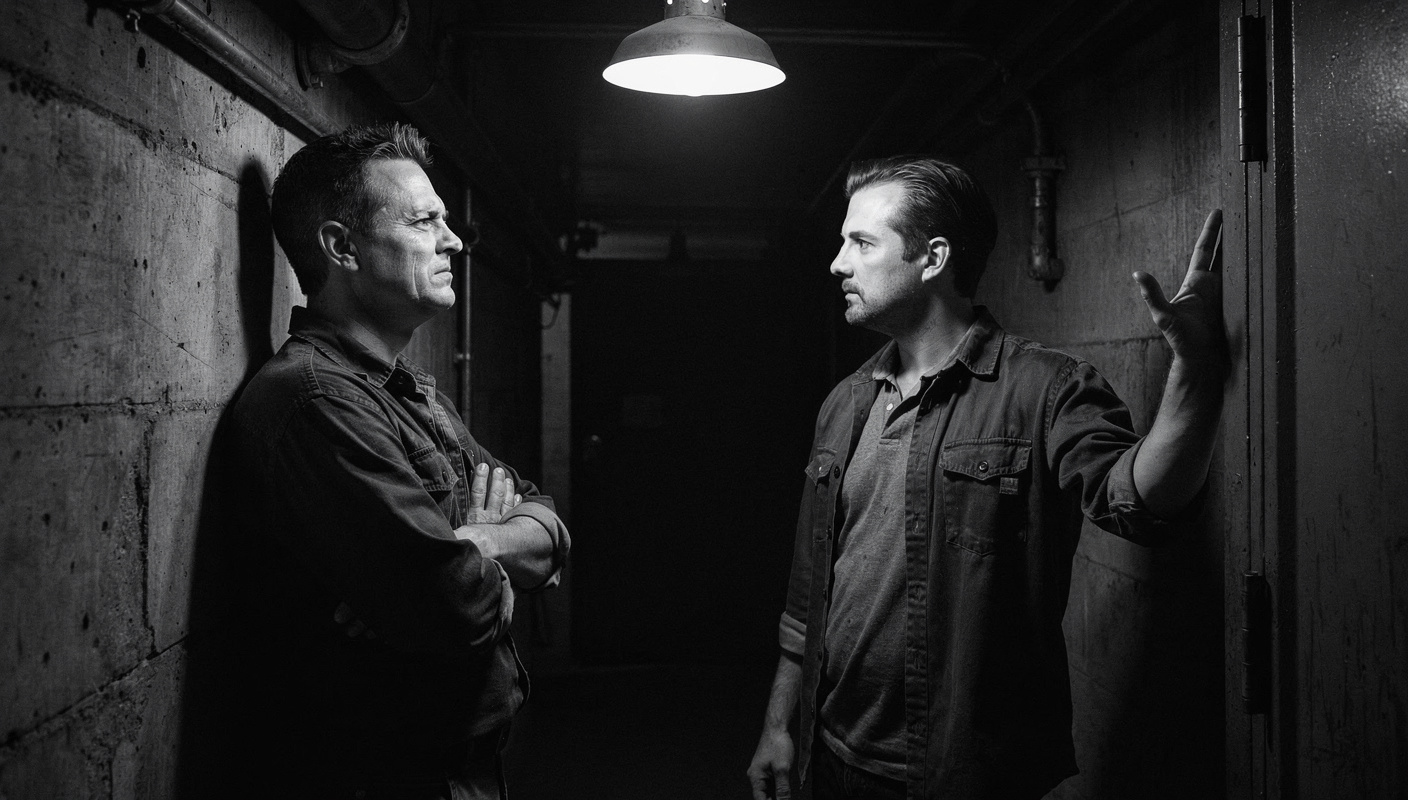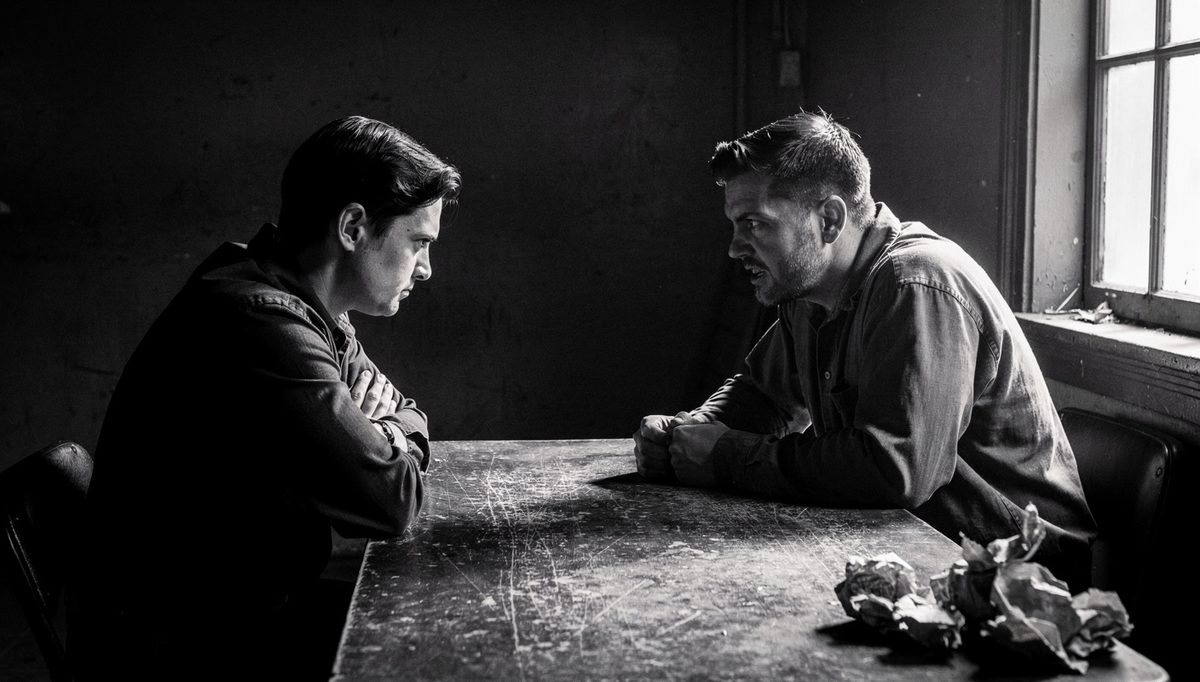

In Short
Silent treatment and open confrontation are opposites that cause the same problem: unresolved tension that outlasts the original conflict.
- Silent treatment buries the issue; open confrontation can inflame it. Neither resolves anything without intent and skill.
- The damage is not in which approach you choose. The damage is in choosing by instinct rather than by judgment.
- Lasting tension at work is rarely caused by the conflict itself. It is caused by how people respond to it.
Silent treatment at work is a pattern where conflict is met with deliberate withdrawal rather than communication. Open confrontation is the direct, often unfiltered expression of grievance. Both are responses to workplace tension; each carries its own risks when used without care or purpose.
I want to tell you about a manager I knew for many years. Sharp woman, good instincts, respected by her team. When a colleague publicly undermined her in a meeting, she said nothing. Not a word, not a glance. For three weeks. The silent treatment at work that followed did not protect her. It poisoned the team around her, confused her allies, and left the original slight completely unaddressed. She thought she was being composed. What she was actually doing was letting the wound fester.
I have also watched the other extreme. A team leader who, when frustrated, said exactly what he thought the moment he thought it. He called it honesty. Most of his team called it exhausting. People started editing themselves around him, staying quiet in meetings, routing around him rather than through him. The confrontation was real. So was the damage.
Both of these people were responding to tension. Neither of them was managing it.
What Silent Treatment Actually Does to Workplace Tension
Silent treatment is not the absence of communication. It is communication delivered through absence. When someone stops engaging after a conflict, the other person does not experience neutrality. They experience a message, even if they cannot decode it precisely.
The person on the receiving end typically fills the silence with the worst available interpretation. They assume anger, contempt, or rejection. They become guarded. They stop sharing information freely. The working relationship contracts, and the original problem sits untouched beneath everything.
Silent treatment at work tends to compound over time. What starts as a brief withdrawal, maybe a day or two of coldness after a disagreement, can calcify into a chronic pattern if neither person names it. Teams sense this kind of unresolved hostility even when they are not directly involved. Psychological safety drops. People begin managing around the rift rather than through it.
This is not the same as choosing to pause. If you step away from a heated moment to gather your thoughts, that is emotional regulation. That is sensible. The problem begins when the pause becomes permanent and the silence becomes a punishment or a protest.
"The Conversation You're Avoiding Is the One You Need to Have."
"The Conversation You're Avoiding
Is the One You Need to Have."
Stop rehearsing conversations you'll never have. Say It Right Every Time gives you 115 word-for-word scripts and 16 proven frameworks to speak with confidence in every conversation that matters.
What Open Confrontation Actually Does to Workplace Tension
Open confrontation, at its best, names the problem directly and creates the conditions for resolution. At its worst, it pours fuel on a fire that was smoldering rather than spreading.
The difference between useful directness and destructive confrontation is almost always a matter of timing and intent. If you address a conflict when you are still flooded with emotion, your words serve your feelings rather than the situation. The other person hears attack rather than concern, and they respond defensively. Now you have two people protecting themselves instead of one problem being examined.
Open confrontation also tends to go wrong when it happens in front of others. Public disagreement forces people to perform rather than engage. The confronted person protects their dignity before they consider your point. Nothing useful gets said. The tension deepens, and now it has an audience.
When confrontation is well-timed, private, and grounded in the actual issue rather than accumulated grievance, it can resolve tension faster than any other approach. That kind of directness requires courage and preparation in equal measure.
How the Two Approaches Compare
| Dimension | Silent Treatment | Open Confrontation |
|---|---|---|
| How tension is handled | Suppressed, buried beneath silence | Expressed, often before it is fully processed |
| Effect on the other person | Confusion, assumption of worst-case meaning | Defensiveness, especially if poorly timed |
| Effect on the team | Creeping unease, reduced collaboration | Visible disruption, short-term discomfort |
| Resolution likelihood | Low: the issue is never named | Variable: high with skill, low without it |
| Long-term damage | Chronic resentment, eroded trust | Lingering defensiveness, but often recoverable |
| When it works | As a brief pause before speaking clearly | When calm, prepared, and spoken privately |
| Root instinct | Self-protection through withdrawal | Self-protection through assertion |
The table above gives you the structure. But the numbers that matter are not in a table. They are in the weeks after.
Silent treatment rarely ends cleanly. It requires someone to break the silence without knowing why it started, which means they either push too hard, causing the withdrawal to deepen, or they stay quiet too, and now both people are managing around a tension that neither has named. I have watched this pattern stretch across months in otherwise functional teams. The original conflict becomes irrelevant. The silence becomes the problem.
Open confrontation, by contrast, tends to resolve faster even when it goes badly. People can recover from a difficult conversation. They can address what was said, apologise, clarify, and move forward. What they cannot recover from easily is the sustained experience of being shut out. If you want to understand which creates more lasting tension, that is your answer: silence outlasts confrontation almost every time.
But that is not permission to confront poorly. Confrontation without preparation is just aggression with better intentions. If you want to understand how to enter a difficult conversation with some structure behind you, the C.O.R.E. Framework was built exactly for that purpose.
The Grey Space Between Avoidance and Aggression
Here is the truth of it: most people are not choosing between these two approaches. They are sliding into one of them without realising it.
Silent treatment often begins as self-protection. You are hurt, or furious, or unsure what to say, and so you say nothing. That can be a reasonable starting point. The problem is that without a clear plan to re-engage, the silence drifts from tactical to permanent.
Open confrontation often begins as an attempt to clear the air. You are frustrated enough to finally say something, and that impulse is not wrong. But if the words come out before the emotion has settled, the clearing-the-air conversation becomes another conflict layered on top of the first.
The overlap between these two patterns is worth naming: both are driven by the same underlying discomfort with unresolved tension. One person escapes by going quiet; another escapes by going loud. Neither is addressing the actual problem. They are managing their own discomfort rather than the shared situation.
This is why tools like the D.E.A.L. Method are worth learning: they give you a structured path between the two extremes, so you are neither retreating into silence nor charging into confrontation unprepared.
When Silence Is the Right Call and When It Is Not
A deliberate pause is not the same as silent treatment. If you tell someone, "I need a few hours to think before we talk about this properly," that is a clear communication. The other person knows what is happening. They know a conversation is coming. The tension is acknowledged even if it is not yet resolved.
Silent treatment begins when the pause has no stated end, when the other person has no map for what is happening, and when your withdrawal is shaped more by punishment or avoidance than by genuine preparation.
Silence works when it is brief, transparent, and followed by genuine engagement. It fails when it becomes a method of control or an alternative to a conversation you are afraid to have.
If you are someone who tends toward silence in conflict, the question to ask yourself is: am I preparing to speak, or am I hoping the problem disappears? If the answer is the latter, the silence is not protecting anyone. It is just deferring the damage.
When Confrontation Resolves Tension and When It Makes It Worse
Direct confrontation earns its reputation when it is used with three things in place: the right moment, the right setting, and a clear focus on the issue rather than the person.
The right moment means both parties are calm enough to hear each other. Not necessarily comfortable, but regulated. If one of you is still at the point where your voice tightens and your arguments start looping, it is not the right moment.
The right setting means private. Almost every direct conversation about tension works better without an audience. People need room to back down, to acknowledge something, to show a little softness, without feeling that doing so costs them standing.
A clear focus on the issue means you come in with a specific grievance, not a accumulated case file. "What happened in Tuesday's meeting affected how our team sees my decisions" is a workable opening. "You always undermine me in front of people" is a fight waiting to happen.
If you want a practical framework for starting that kind of conversation without it sliding into a confrontation, this guide on starting difficult conversations will give you a reliable starting point.
Three Ways People Confuse These Two Responses
The mistake: Calling cold silence "professionalism."
Why it happens: People learn early that showing emotion at work is a liability, so suppressing it feels sophisticated.
What to do instead: Distinguish between composure, which is internal regulation, and withdrawal, which is relational punishment. You can be composed and still communicate directly.
The mistake: Calling emotional confrontation "honesty."
Why it happens: The impulse to confront often comes from a real and legitimate grievance. People confuse the validity of the feeling with the readiness to speak.
What to do instead: The grievance may be entirely justified. The timing may still be wrong. Wait until you can separate what happened from how it made you feel before you speak.
The mistake: Treating both approaches as equally damaging in all situations.
Why it happens: Workplace communication advice often presents a false symmetry: both extremes are bad, the middle is good. That oversimplifies it.
What to do instead: Assess by outcome, not by category. A brief, well-delivered confrontation can resolve tension in an hour. A week of silence can damage a relationship for a year. They are not equally weighted risks.
What the Situation Actually Calls For
These are not rules. They are patterns worth recognising.
If the tension is between two people who both know something went wrong but neither has named it: break the silence first. One sentence is enough to open the door. "I think we left that meeting with something unresolved between us. Can we talk?" That is not confrontation. That is courage.
If you are the one who has been confronting and the other person keeps shutting down: the problem may not be what you are saying but how you are arriving. Delivering feedback in a way that the other person can actually receive is a skill worth practising before the next difficult conversation.
If tension has been building for a while and you are managing a team rather than a bilateral conflict, the D.E.A.L. Method applied to team-level conflict offers a structured way through. Unmanaged tension across a team tends to surface in meetings as subtext, which is why running productive meetings becomes much harder when relational tension is present.
And if you want to understand why this kind of work matters beyond the immediate conflict, the connection between feedback culture and workplace growth makes the case plainly.
The Real Question Is What You Are Willing to Say Out Loud
Here is what six decades of difficult conversations have taught me. Silent treatment at work does not protect you from conflict. It just relocates it, into the silences between people, into the slowed decisions, into the email threads that replace direct speech. The tension does not leave. It settles.
Open confrontation, used badly, can burn things that take years to rebuild. But used with care and preparation, it is the only tool that actually addresses what happened rather than working around it.
The question is not which approach is safer. Both carry risk. The question is which one you can deliver with enough skill to actually resolve something. That is not a choice you make in the heat of the moment. That is a practice you build before the moment arrives. The good news is it can be built. This much I know for certain: silent treatment at work will outlast almost any confrontation in the damage it leaves behind. Choose the harder, clearer path.
Frequently Asked Questions (FAQ)
What is silent treatment at work?
Silent treatment at work is when someone responds to conflict or tension by deliberately withdrawing communication. Rather than addressing the issue, they go quiet, avoid eye contact, and disengage. It can feel like a neutral response but often signals unresolved tension and creates lasting damage to working relationships.
Is open confrontation better than silent treatment in the workplace?
Not always. Open confrontation handles tension directly, which can clear the air quickly. But if it is poorly timed or emotionally charged, it escalates conflict rather than resolving it. The better question is not which is better, but which one the situation actually calls for at that moment.
How does silent treatment at work affect team dynamics?
Silent treatment erodes psychological safety over time. When one person withdraws, others sense the tension even if they cannot name it. Work slows, collaboration shrinks, and resentment builds beneath the surface. Teams lose their ability to address problems openly because the emotional cost feels too high.
When does open confrontation make workplace tension worse?
Open confrontation escalates tension when it happens in public, when emotions are running too high for either person to listen, or when the confronting person prioritises being right over resolving the problem. Without preparation and clear intent, what starts as honesty can land as an attack.
Can silent treatment ever be appropriate at work?
Yes, briefly. A short pause to gather your thoughts before a difficult conversation is not the same as deliberate withdrawal. Choosing to wait until you are calm enough to speak clearly is a reasonable choice. The problem begins when that pause extends into days of silence that the other person cannot explain or address.
How do you address someone who is giving you the silent treatment at work?
Name it without accusation. Say something like: I have noticed we have not spoken directly since Tuesday and I would like to understand if something is wrong between us. Keep your tone steady and give them a clear, low-pressure opening to respond. If they remain closed, consider involving a trusted third party.