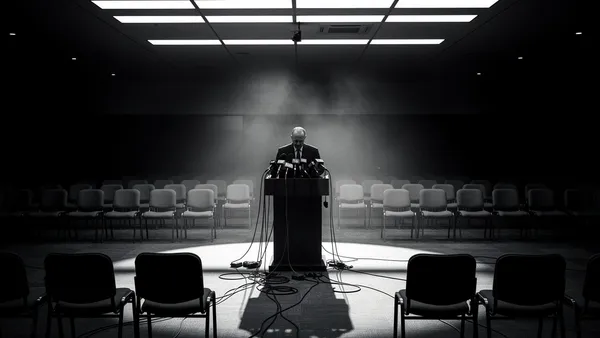

What Happened
A brand facing an online crisis has one shot at controlling its own story before the internet does it for them. MarTech recently covered the challenge companies face when digital reputations spiral, examining how businesses can prevent a single bad moment from becoming their permanent identity. The core problem: most brands react instead of respond, and that difference costs them everything.
The Communication Angle
Picture this. Your company wakes up to a hashtag. Not the good kind. Thousands of people are sharing a screenshot, a video, or a customer complaint that has somehow caught fire overnight. Your PR team is panicking. Your CEO wants a statement. And someone in the room says, "Let's wait and see how bad it gets."
That is the moment brands die online.
Waiting is not neutrality. It is a statement. When you go silent during a crisis, the internet fills that silence with its own narrative, and the internet is not generous. Every hour you delay, you are essentially handing the microphone to your harshest critics and telling them to keep talking.
The brands that survive crises online share one communication trait: they take control of the frame before someone else does. Framing is not spin. It is the act of clearly defining what the situation actually is, what you are doing about it, and what people can expect next. Three sentences. Done. You do not need a 900-word statement filled with corporate language and passive voice. You need specificity, ownership, and a next step.
Here is where most brands fail: they apologize for "any confusion" or "if anyone was offended." That language is a disaster. It signals that you are not actually sorry. You are sorry that people had feelings. Real ownership sounds like this: "We made a mistake. Here is specifically what it was. Here is what we are doing to fix it, and here is the timeline." That kind of statement does something remarkable. It gives people nothing left to argue with.
The second failure is inconsistency across channels. A company posts a heartfelt apology on Instagram while their customer service team is still sending defensive form emails. People notice. When your message changes depending on the platform, you do not look adaptable. You look dishonest. One voice, one message, every channel.
This is exactly the kind of scenario I break down in Say It Right Every Time. The chapter on owning difficult conversations gives you a framework for structuring an honest statement under pressure, specifically how to sequence acknowledgment, accountability, and action so that your words build trust instead of eroding it. The principles are the same whether you are talking to one person across a conference table or ten thousand people scrolling a feed.

Never Be Lost
for Words Again
Get word‑for‑word scripts for the conversations that shape your life, from job interviews and negotiations to difficult talks with family and partners, so you always know exactly what to say and how to say it.
Never Be Lost
for Words Again
Get word‑for‑word scripts for the conversations that shape your life, from job interviews and negotiations to difficult talks with family and partners, so you always know exactly what to say and how to say it.
Key Takeaway
Before your next crisis (and there will be one), write a single document you can update in real time: three lines that state what happened, what you own, and what your next action is. Keep it in a place every spokesperson can access immediately. When the moment hits, you are not drafting. You are editing. That difference can cut your response time from hours to minutes and your reputation damage from catastrophic to recoverable.