What Happened
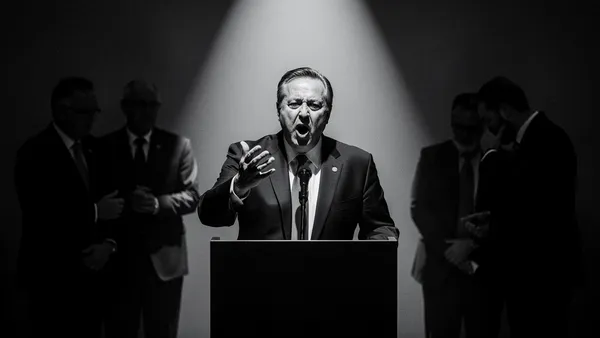
Green Party leader Zack Polanski ignited a political storm after suggesting on his podcast that people holding certain right-wing views should be excluded from parts of society rather than engaged in debate. The remarks drew immediate accusations of authoritarian thinking and shifted the conversation entirely away from any policy substance. Polanski's own words became the crisis.
The Communication Angle
Here is the first rule of high-stakes public speech: your message is not what you intend to say. It is what your audience hears and repeats. Polanski stepped into a podcast conversation and handed his opponents a weapon. The word "excluded" did all the damage. It carries a specific emotional charge, and anyone who works in political communication knows that charge belongs entirely to the listener, not the speaker.
The deeper failure is structural. Polanski was speaking on his own podcast. That is a controlled environment. He had every advantage: no hostile interviewer, no ambush question, no time pressure. When you have that kind of control and still produce a combustible soundbite, the problem is not the platform. The problem is the lack of a clear communication objective before the recording began.
What was his actual goal? If it was to signal boldness to his base, he succeeded partially but at serious cost. If it was to grow the Green Party's appeal beyond that base, he failed completely. Leaders in his position face a specific challenge: speaking to loyalists without closing the door on persuadable voters. That requires precision. You do not use sweeping language like "excluded from parts of society" when you mean something more targeted. You define your terms. You name the specific behavior you oppose, not the people.
There is also the podcast trap. Podcasts feel casual. They feel like conversation. That casual atmosphere lowers a speaker's guard and raises their candor past the level that serves them. Polanski likely spoke the way he might in a private meeting. But a podcast is not private. Every word is on record, searchable, and clippable. The format deceives you into thinking you are off the clock. You are never off the clock.
This is exactly the kind of scenario I break down in Say It Right Every Time. The chapter on Controlling Your Own Narrative gives you a framework for setting a communication objective before any public appearance, and then stress-testing your language against that objective. Polanski's situation is a textbook case of what happens when a speaker treats a public platform like a private brainstorm. The words you use define you faster than the ideas behind them ever will.

Never Be Lost
for Words Again
Get word‑for‑word scripts for the conversations that shape your life, from job interviews and negotiations to difficult talks with family and partners, so you always know exactly what to say and how to say it.
Never Be Lost
for Words Again
Get word‑for‑word scripts for the conversations that shape your life, from job interviews and negotiations to difficult talks with family and partners, so you always know exactly what to say and how to say it.
Key Takeaway
Before you record any podcast, give any interview, or sit down for any public conversation, write one sentence that answers this question: "What is the single thing I want the audience to walk away believing?" Then review every major point you plan to make against that sentence. If a point does not support it or actively contradicts it, cut it before you open your mouth. Polanski had no anchor sentence. That is why his words drifted somewhere he clearly did not want them to go.