
What Happened
While President Trump dominated headlines with provocative statements and public spectacle, his Cabinet was quietly executing one of the most significant shifts in American foreign policy in decades. The moves happened largely beneath the media radar, shielded by the constant churn of presidential attention-grabbing. Scholars studying presidential communication are now pointing to this gap between the public performance and the actual policy machinery as a defining feature of this administration.
The Communication Angle
Here is the question worth asking: Can deliberate noise function as a communication strategy, or does it always backfire?
The answer is: it depends entirely on who you are trying to reach and what you are trying to protect.
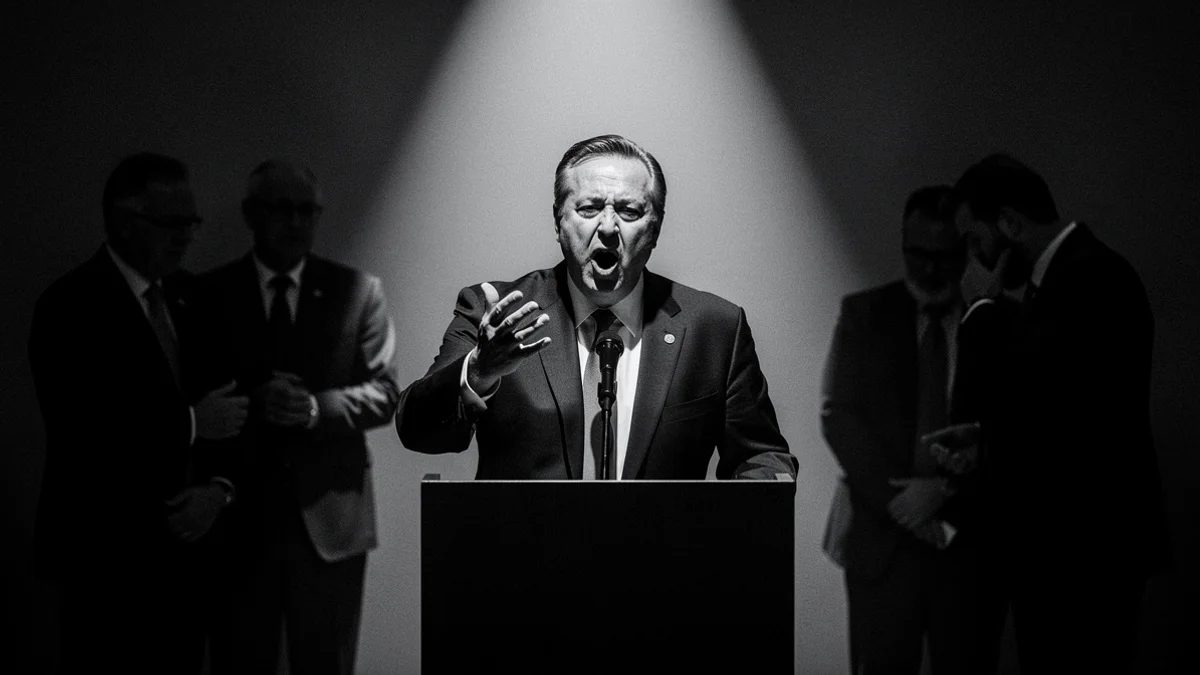
Trump operates as a human headline generator. Every outrageous statement, every combative post, every dramatic claim pulls the press corps like a magnet. That is not accidental. It is a redirection technique, and it works in a very specific way. When attention is finite, flooding the zone with spectacle means substantive policy moves get less scrutiny. The Cabinet did not succeed despite Trump's noise. They succeeded because of it.
This is a sophisticated (if ethically complicated) use of what I call message layering. You have a front-channel message, the loud, emotional, attention-consuming content, and a back-channel message, the actual decisions being made. Most communicators fail because they let their front-channel and back-channel messages compete with each other. Here, they were designed to operate on completely separate tracks.
But here is where it gets instructive for everyone else. The strategy only works when you have institutional power to act without consent. In a business meeting, in a negotiation, in a team briefing, flooding the zone with noise does not protect your real agenda. It destroys your credibility. People notice the misdirection and they stop trusting you. What works for a president with Cabinet-level execution power is a disaster for a manager trying to lead a team. The lesson is not "create distraction." The lesson is this: know which of your messages needs to be loud and which needs to be quiet, and never confuse the two.
Most professionals do the opposite. They bury their most important point in qualifications and small talk, then wonder why nobody acted on it. Your critical message should not compete for attention. It should own the room when it needs to, and disappear when it does not.
This is exactly the kind of scenario I break down in Say It Right Every Time. The chapter on message hierarchy gives you a framework for deciding which of your points deserves the spotlight and which ones should move quietly through the room. Most people treat all their messages as equal. None of them are. Rank them, or your audience will rank them for you, and they will get it wrong.

Never Be Lost
for Words Again
Get word‑for‑word scripts for the conversations that shape your life, from job interviews and negotiations to difficult talks with family and partners, so you always know exactly what to say and how to say it.
Never Be Lost
for Words Again
Get word‑for‑word scripts for the conversations that shape your life, from job interviews and negotiations to difficult talks with family and partners, so you always know exactly what to say and how to say it.
Key Takeaway
Before your next presentation or high-stakes conversation, identify exactly two things: your loudest point (the one that gets people leaning in) and your most important point (the one that actually needs to happen). Write them down separately. If they are the same point, great. If they are different points, you need a deliberate plan for how each one gets delivered, because leaving it to chance means your critical message gets buried under your most dramatic one every single time.