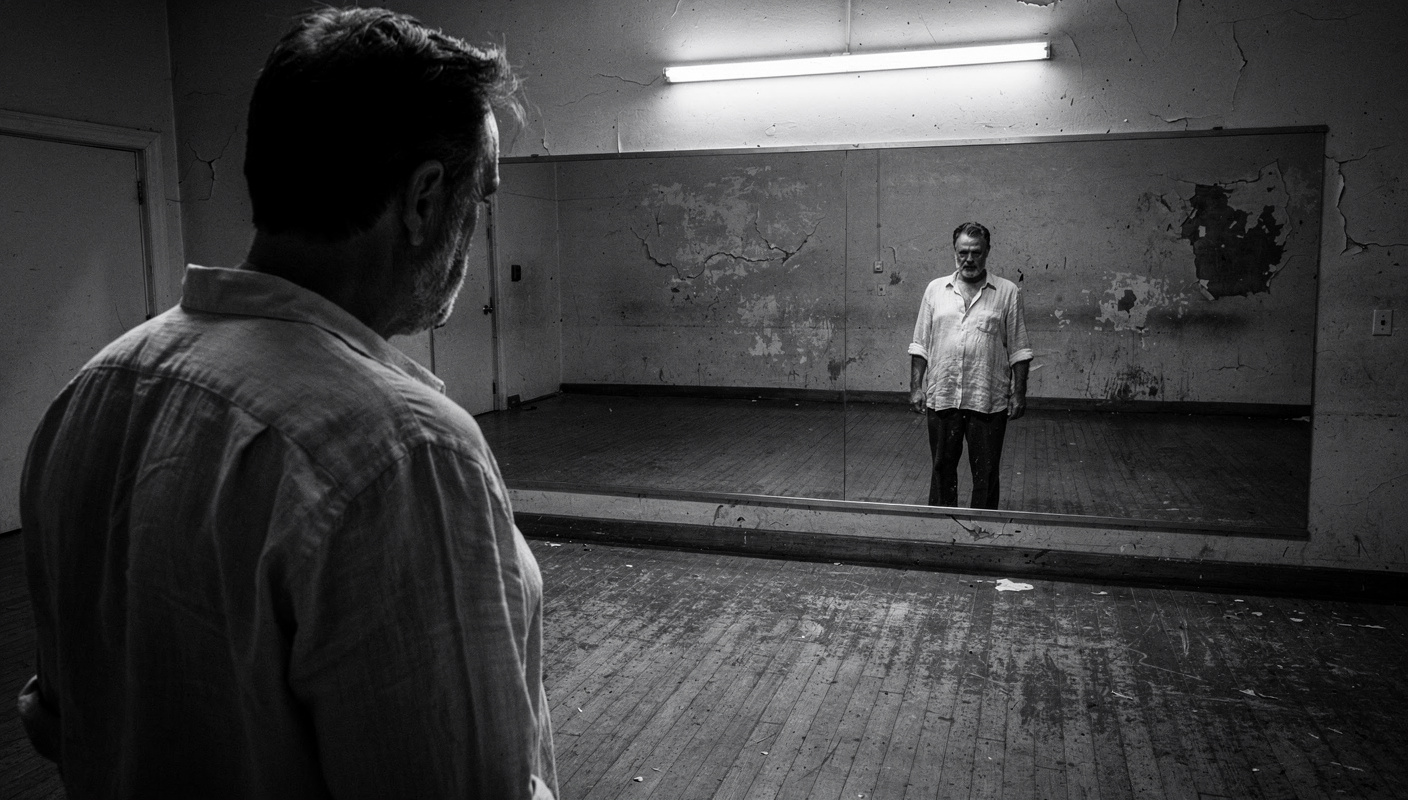

In Short
After reading this, you will be able to use the Conversation Pre-Mortem to rehearse and anchor your physical expression before any high-stakes talk.
- Identify the physical moments most likely to betray you under pressure
- Rehearse specific postures, gestures, and eye contact patterns until they become muscle memory
- Use a grounding ritual immediately before the talk to re-activate what you practised
Physical expression rehearsal is the deliberate practice of your posture, gesture, eye contact, and vocal tone before a high-stakes conversation. It uses structured preparation to ensure your body language supports, rather than contradicts, the message you intend to deliver.
You have prepared your words carefully. You know what you want to say. You sit down for the conversation, and within thirty seconds your shoulders have collapsed inward, your eyes are dropping to the table, and your voice has tightened to something that sounds nothing like the confident person you prepared to be. The message survives. The impact does not.
This is one of the most common failures I see in high-stakes communication, and it has nothing to do with intelligence or intention. The problem is deeper than nerves. Most people prepare what they will say and leave how their body will behave entirely to chance. Under pressure, the body defaults to protection, not projection. It closes, contracts, and signals uncertainty, regardless of how strong the words are.
In Say It Right Every Time, I call the preparation process that fixes this the Conversation Pre-Mortem, and I cover it in depth in Chapter 3. You can read the full framework at Say It Right Every Time. The concept originally comes from risk planning, but applied to physical expression rehearsal, it becomes one of the most powerful tools I know for high-stakes preparation.
In this guide, you will get a clear, practical process for physical expression that you can use immediately.
Why Physical Expression Is Harder to Control Than People Expect
Most people know that body language matters. Knowing that does not make it any easier to manage when the pressure is real.
There is a significant gap between understanding that your posture communicates confidence and actually holding an open, grounded stance when someone across the table is challenging your proposal, questioning your judgment, or delivering news you did not want to hear. Knowing and doing are separated by a considerable distance, and that distance grows the higher the stakes.
Here are the specific reasons physical expression is so difficult to manage in the moment:
The amygdala does not care about your preparation. When your brain perceives a social threat, it triggers the same physiological response as a physical threat: your shoulders rise, your chest closes, your eye contact breaks. This amygdala hijack happens faster than conscious thought, and it can unravel hours of preparation in seconds.
You cannot watch yourself while you talk. You know what you feel like from the inside. You do not know what you look like from the outside. Without external feedback, most people dramatically overestimate the confidence their body is projecting during a real conversation.
Anxiety redirects your attention inward. When you are nervous, your focus shifts to your own thoughts and feelings rather than to the other person. That inward focus tends to produce closed, self-protective posture and broken eye contact, exactly what you do not want.
Unrehearsed physical habits take over. Everyone has a stress default: tapping fingers, dropping the chin, crossing arms, or letting the voice flatten. Without deliberate practice, these habits emerge precisely when the stakes are highest.
Physical expression is rarely practised directly. People rehearse their words endlessly. Almost nobody deliberately rehearses how they will hold their body, where they will look, or how they will use their hands.
The goal is not to eliminate these difficulties. It is to build a system that works in spite of them.
"The Conversation You're Avoiding Is the One You Need to Have."
"The Conversation You're Avoiding
Is the One You Need to Have."
Stop rehearsing conversations you'll never have. Say It Right Every Time gives you 115 word-for-word scripts and 16 proven frameworks to speak with confidence in every conversation that matters.
The Foundation: What You Need Before You Start
Before you begin, there are three things that need to be clear.
Know your specific physical defaults under stress. You need to identify what your body actually does when pressure rises, not what you think it does. Watch a video recording of yourself in a difficult conversation, or ask someone you trust to observe you. Look for where your posture collapses, where your eye contact breaks, and where tension enters your voice. You cannot rehearse a correction for a habit you have not yet identified.
Define the physical signals you want to project. Be specific. "Confident body language" is not a target you can rehearse. "Feet planted shoulder-width apart, shoulders back and relaxed, eye contact held for at least three seconds at a time, hands visible and still unless gesturing" is. The more concrete your physical target, the more effectively you can practise reaching it. How Leaders Can Use the S.T.R.O.N.G. Method to Build Synergy Through Every Conversation covers how to set that kind of intention before a difficult exchange.
Accept that nervousness is fuel, not failure. In Chapter 3 of Say It Right Every Time, I make this point directly: conversation anxiety is a green light, not a stop sign. The physiological arousal you feel before a high-stakes talk is energy. The Conversation Pre-Mortem teaches you to channel that energy into physical readiness rather than letting it tighten your posture and hollow your voice.
Get these right first. The steps that follow will not work without them.
Step 1: Map the Moments Where Your Body Is Most Likely to Fail
This step gives you a specific target for your rehearsal by identifying the exact moments when your physical expression is most vulnerable.
Most people think of pre-conversation preparation as a single block of readiness. In practice, different moments within a conversation carry different physical risks. The opening thirty seconds. The moment you receive a challenge. The pause before you deliver difficult news. Each of these moments has a different stress profile and requires different physical preparation.
Sit down with a blank page before the conversation. Walk through the talk in your head from beginning to end, and mark every moment where you expect pressure to peak. For each moment, write down the specific physical reaction you are most likely to have.
- Write the opening of the conversation and note: will you break eye contact, rush your words, or let your shoulders rise?
- Write the moment of likely challenge or disagreement and note: will you cross your arms, drop your chin, or speed up your speech?
- Write the moment you need to hold your ground and note: will your voice flatten, will you lean back, will your hands fidget?
- Mark each identified moment with a P for "physical risk."
- Review the list and circle the two or three moments that concern you most. These become your rehearsal priorities.
Here is what this looks like in practice. A manager preparing to deliver a performance review she knew would be resisted worked through this exercise and identified three moments: the opening statement, the moment she named the specific behaviour that needed to change, and the moment the other person pushed back. She had watched herself collapse physically at each of those moments in past conversations. Naming them in advance meant she could rehearse specifically for them, not just for the conversation in general.
Once you have your map, you know exactly where to direct your physical preparation energy.
Step 2: Design the Physical Response You Will Anchor to Each Moment
This step turns your risk map into a rehearsal script for your body, not just your words.
For each high-risk moment you identified in Step 1, you are going to design a specific physical response. Not a general intention like "stay confident," but a precise, repeatable set of physical positions and actions. Think of it as choreography for a play: before performance night, every movement is decided in advance. This is the same principle applied to physical expression rehearsal.
- For the opening moment: decide your exact stance, where your hands will rest, and where your eyes will land first.
- For the challenge moment: decide whether you will pause before responding, whether you will lean slightly forward or hold your position, and what your hands will do.
- For the ground-holding moment: decide on a breath cue, a posture reset point, and a specific phrase paired with a particular physical position.
- Write each physical response down in specific, observable terms, the way a director would write a stage direction.
- Read the description aloud to yourself and physically adopt the position as you read it. This begins the pairing of language and body.
The reason this works is not mysterious. Rehearsing a physical position in a calm state, and repeating it enough times, begins to build the muscle memory that will make the position available to you even when your nervous system is activated. The body learns what the mind intends.
For teams preparing together, How to Prepare for a High-Stakes Team Conversation Using the M.A.S.T.E.R. Method covers a related preparation structure worth pairing with this work.
Step 3: Run the Conversation Pre-Mortem Through Your Body, Not Just Your Head
This is the step most people skip, and it is where the real anchoring happens.
In Chapter 3 of Say It Right Every Time, I describe the Conversation Pre-Mortem as a structured exercise where you imagine the worst-case physical scenario, assess its real likelihood, and then rehearse a confident physical recovery. Most people apply this only to their words. The physical dimension is equally important, and it is where the preparation pays off most visibly in the room.
Stand up. You cannot do this step sitting down.
- Speak your opening out loud in your chosen physical position. Hold it for the full duration of the statement. Notice where you feel the urge to shift, collapse, or break eye contact, and hold the position anyway.
- Say the most difficult line in the conversation, the one where you most expect resistance, while maintaining your designed physical response. Repeat it three times.
- Physically simulate receiving a challenge: let someone speak a pushback line out loud (use a recording or read it yourself), and rehearse your anchored physical response to that moment.
- Video yourself during at least one run-through. Watch with the sound off to evaluate your physical expression alone.
- After each run-through, note any moment where your body defaulted to its stress habit rather than your prepared response.
Here is what the pre-mortem looks like in practice for physical expression. A sales director I worked with had a consistent problem: when a client challenged his pricing, he would unconsciously lean back and reduce his eye contact, which communicated uncertainty before he had said a word. In rehearsal, he identified this moment, designed a forward lean with sustained eye contact as his anchored response, and rehearsed it physically until it became his automatic reaction. In the actual meeting, the challenge came. He leaned forward. He held eye contact. The client read confidence, not retreat. The deal closed.
The run-through is not about getting the words perfect. It is about training your body to know where to go when the pressure arrives.
Step 4: Install the Power Posture as Your Reset Point
This step gives you a physical anchor you can return to at any point during the conversation when you feel your expression beginning to drift.
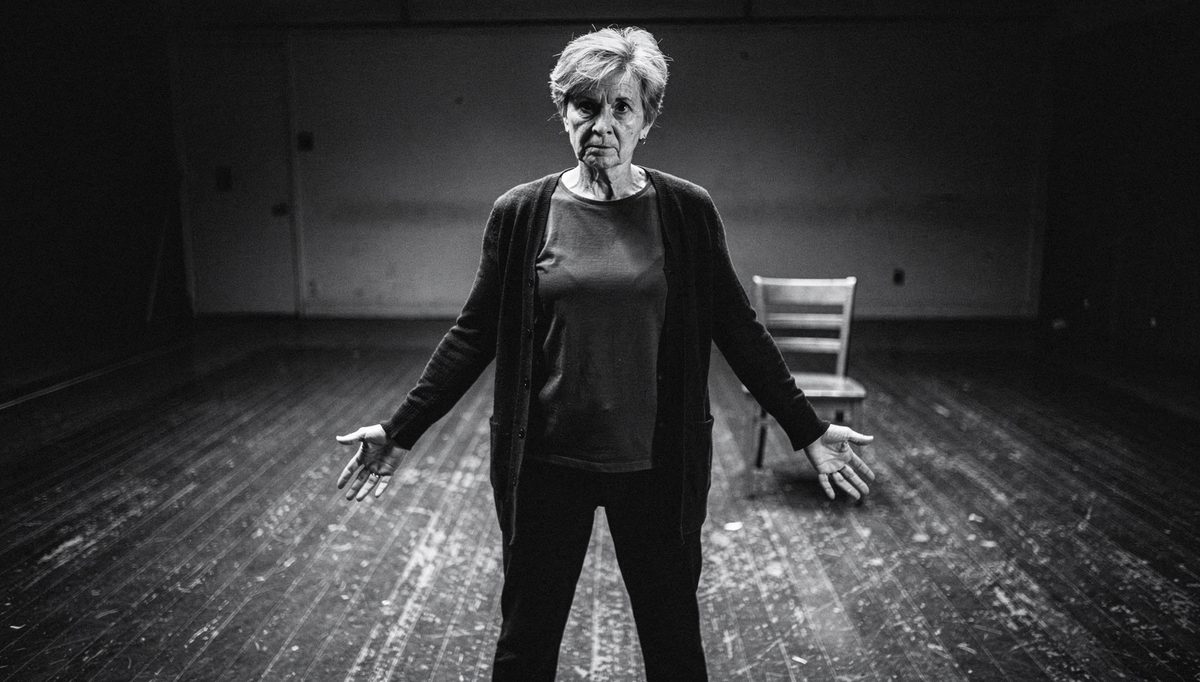
In Say It Right Every Time, I describe what I call power posture: a specific physical position that has measurable physiological effects on your internal state. Feet planted shoulder-width apart, spine long, chest open, chin level, hands visible and relaxed. This is not about performing confidence for an audience. It is about creating the internal conditions that allow confidence to emerge.
The power posture becomes useful as a reset point specifically because you rehearse it in advance. When you feel your shoulders beginning to rise or your voice starting to tighten, you have a practised physical reference to return to, rather than scrambling to recover with no anchor.
- Spend two minutes in your power posture before each rehearsal run. Let your body register the feeling of it as a baseline.
- During rehearsal, practise dropping out of the posture deliberately, then returning to it. Train the reset, not just the position.
- Pair a single breath with the return to posture. Inhale as you reset. This links the breath cue to the physical anchor.
- Rehearse the posture in the actual clothes you will wear for the talk. Different clothing affects how you hold yourself.
- On the day of the conversation, use the posture for two minutes before you enter the room.
This is not complicated. It is consistent. The posture only becomes an anchor through repetition, and repetition is entirely within your control.
Step 5: Rehearse the Three-Step Recovery for Physical Slip-Ups
Even with full preparation, your body will sometimes drift. This step teaches you to recover without losing the room.
In Chapter 3 of Say It Right Every Time, I describe the Three-Step Mistake Recovery process: Acknowledge, Correct, Move On. It is primarily framed around verbal slip-ups, but it applies directly to physical expression as well. If you catch your posture collapsing, your eye contact breaking, or your voice flattening, you do not need to stop the conversation or apologise. You need a practised physical recovery sequence that resets you without drawing attention.
The recovery is a micro-sequence, not a performance. Nobody in the room needs to know it is happening.
- Rehearse catching the drift. During your pre-mortem run-throughs, deliberately let your posture collapse at a risk moment, then notice the sensation and physically reset. You are training the awareness, not just the position.
- Practise the breath-and-reset as a single, seamless movement: one slow breath, shoulders drop and open, eye contact returns.
- For voice drift, practise slowing your pace deliberately as your reset cue. A slower tempo restores resonance and projects control.
- Script a mental phrase you will use internally when you catch the drift: "Reset, right now." Repeat it during rehearsal until it becomes the trigger for the physical sequence.
- Video one rehearsal run where you deliberately drift and recover at each risk moment. Watch it back and evaluate whether the recovery is visible or seamless.
Here is what recovery looks like when it is practised. During a board presentation, a department head I coached felt her voice tighten and her chin drop during a particularly hostile line of questioning. She had rehearsed her recovery sequence. She paused, drew one visible breath, reset her posture, and continued. The board read the pause as composure. She had practised that exact moment, and her body knew what to do.
Your ability to recover from a physical slip with confidence is often more impressive than never slipping at all. That line comes directly from Chapter 3, and I have seen it proved true more times than I can count.
Step 6: Run a Final Dress Rehearsal in the Actual Environment
This step removes the gap between rehearsal conditions and real conditions by making the physical environment part of your preparation.
The room you will speak in has a physical effect on your body. The chair height, the distance across a table, the quality of light, the temperature: all of these factors influence how you hold yourself and how your voice projects. Rehearsing in your kitchen and then walking into a boardroom introduces physical variables your body has not yet encountered. If you can reduce those variables in advance, you reduce one more source of drift.
- Visit the room before the conversation, if access is possible, and spend five minutes standing and speaking in your prepared physical positions.
- Sit in the chair you will use and check whether the height allows you to plant your feet flat on the floor. If not, adjust it in advance.
- Speak your opening statement aloud in the room and listen to how your voice sounds in that specific acoustic environment.
- If you cannot access the room, rehearse in a space of similar scale and formality, not in a relaxed, casual setting.
- Arrive at the actual conversation at least five minutes early. Use those minutes in your power posture, not on your phone.
This level of preparation may feel excessive. It is not. The physical environment is part of the conversation. How the M.A.S.T.E.R. Method Prepares Teams for High-Stakes Synergy Conversations makes a similar point about environmental preparation for team settings.
Adapting This Process for Remote and Video Conversations
Remote conversations present a distinct set of physical expression challenges that require specific adjustments to the pre-mortem process.
In a video call, your physical expression is compressed into a single frame, typically from the chest up. The signals that communicate presence and confidence in a room, a grounded stance, open body orientation, purposeful movement, are either invisible or actively distorted by a camera. What reads as composed in person can read as rigid on screen. What reads as relaxed can disappear entirely into a neutral, flat image.
Reframe your physical target for the camera. In a video conversation, your physical expression rehearsal must prioritise what the camera sees: facial expression, head position, eye contact with the lens rather than the screen, and shoulder openness. Rehearse these elements specifically, not just the full-body posture you would use in person.
Treat eye contact with the lens as a practised skill. Looking at the camera lens rather than at the person's face on your screen is deeply unnatural, and it feels wrong every time until you have practised it enough to override the instinct. Build deliberate lens-contact into every rehearsal run for a remote conversation. How to Use the Empathy Bridge Before Delivering Critical Feedback addresses connection-building across distance in ways that pair well with this physical work.
Control your physical environment as part of the preparation. Your background, lighting, and camera height all contribute to the physical impression you make. A camera placed below eye level communicates submission. Soft, frontal light produces a more open, present expression than overhead or backlit conditions. Build an environment check into your pre-mortem process for every remote high-stakes call.
Rehearse stillness more deliberately on video. Small movements that barely register in person are magnified on screen. Rocking, touching your face, and glancing away from the lens all read as nervousness in a way that is more pronounced in a compressed video frame. Your physical rehearsal for remote conversations must include practising sustained, deliberate stillness between gestures.
The core process holds for remote conversations. Only the execution changes.
Common Mistakes to Avoid
Let me tell you about the mistakes I see most often. I have made most of them myself.
The mistake: Rehearsing only the words, not the body.
Why it happens: Verbal preparation feels more controllable and more obviously connected to the message.
What to do instead: Treat your physical expression as a separate script. Stand up and run the conversation physically, not just mentally.
The mistake: Rehearsing in a relaxed, low-pressure state and assuming it will transfer.
Why it happens: Most people rehearse in private, without recreating anything resembling the real pressure of the conversation.
What to do instead: Introduce mild stress into your rehearsal deliberately. Ask someone to challenge you mid-rehearsal, use a countdown timer, or record yourself, all of which raise the stakes and test whether your physical anchors hold.
The mistake: Focusing only on posture and ignoring vocal tone.
Why it happens: Posture is visible; voice is harder to observe in yourself without a recording.
What to do instead: Record your rehearsal runs and listen back specifically to your vocal pace, pitch, and volume at the risk moments you identified.
The mistake: Abandoning the prepared physical response the moment the real conversation begins to feel different from the rehearsed version.
Why it happens: When the actual conversation diverges from the imagined one, the prepared responses can feel irrelevant or awkward.
What to do instead: Rehearse for the unexpected by running multiple versions of the conversation, not just the version you expect. How to Use the S.T.R.O.N.G. Method to Prepare Before a High-Stakes Feedback Conversation covers this kind of scenario planning well.
The mistake: Treating the power posture as a performance for the other person rather than a tool for your own internal state.
Why it happens: People focus on how they appear rather than on the physiological effect the posture is producing inside them.
What to do instead: Hold the posture and pay attention to what changes internally, breathing, heart rate, sense of steadiness. The posture works from the inside out.
These are not character flaws. They are gaps in the system. Fix the system.
Your Practical Checklist
Use this checklist before you begin and after each rehearsal cycle.
- Identified the three highest-risk physical moments in the upcoming conversation
- Defined a specific, observable physical response for each risk moment
- Written the physical responses in stage-direction language: position, gaze, hands, breath
- Stood up and run the conversation out loud at least twice, holding the prepared physical positions
- Video-recorded at least one rehearsal run and watched it with the sound off
- Noted where the body defaulted to its stress habit and repeated the anchored response until the correction felt natural
- Rehearsed the breath-and-reset sequence for physical recovery at least five times
- Spent two minutes in the power posture before each rehearsal run
- Checked the physical environment where the conversation will take place
- Arrived at the conversation location with at least five minutes to spare for a grounding reset
- For remote conversations: confirmed camera height, lighting, and a plan for lens-to-eye contact
If you cannot check most of these, that is your starting point.
Summary and Next Steps
You now have a structured process for preparing your physical expression before a high-stakes conversation, one that goes far beyond hoping your nerves stay manageable on the day.
- The Conversation Pre-Mortem, as I describe it in Chapter 3 of Say It Right Every Time, applies as directly to your body as it does to your words.
- Map the specific moments in the conversation where your physical expression is most likely to fail under pressure.
- Design a precise, repeatable physical response for each risk moment, then rehearse it standing up, out loud, on camera.
- Install a power posture as your reset point, and practise returning to it from a position of drift until the recovery is seamless.
- Rehearse the Three-Step Recovery sequence so that a physical slip becomes a composure signal rather than a confidence collapse.
- Adapt the process for remote conversations by shifting your physical target to what the camera frame captures.
- Practise in the actual environment when possible, and arrive early enough to ground yourself before the conversation begins.
For the underlying confidence framework that supports this physical preparation, read How to Use the Conversation Pre-Mortem to Prepare Your Team for High-Stakes Synergy Moments. If you are working on giving feedback specifically, How to Give Feedback That Strengthens Team Synergy Instead of Breaking It pairs well with the physical expression work you have done here. The full framework lives in Say It Right Every Time if you want to go deeper.
Your body has been in that room before your words have spoken a single syllable. Make sure it is saying what you intend.
Frequently Asked Questions (FAQ)
What is physical expression rehearsal before a high-stakes talk?
Physical expression rehearsal is the deliberate practice of your posture, gesture, eye contact, and vocal tone before a difficult conversation. The Conversation Pre-Mortem structures this process so your body is ready to project confidence even when your nerves are working against you.
How does the conversation pre-mortem help with physical expression?
The Conversation Pre-Mortem asks you to imagine what could go wrong physically during a talk, then rehearse a prepared response. It turns nervous energy into kinesthetic readiness, so your body has a practised default to return to when anxiety tightens your posture or breaks your eye contact.
How do you anchor physical expression so it holds under pressure?
Anchoring physical expression means pairing a specific body position with a calm, confident internal state during rehearsal. Repeat the posture and gesture combination enough times in practice, and your body learns to return to that position automatically when pressure rises during the real conversation.
Why does physical expression fall apart in high-stakes conversations?
Under social threat, the amygdala triggers a stress response that contracts your posture, breaks your eye contact, and raises your vocal pitch. Without rehearsal, your body defaults to these defensive signals, which undermine the confidence your words are trying to project.
Can you rehearse body language without a partner or audience?
Yes. Solo rehearsal in front of a mirror or recording yourself on video is highly effective for physical expression practice. The key is rehearsing the specific postures, gestures, and eye contact patterns you plan to use, not just running through your words.
How long before a high-stakes talk should you rehearse physical expression?
Rehearse the physical components at least 24 hours before the talk so the postures have time to feel natural rather than forced. A short grounding practice immediately before the conversation, lasting two to three minutes, is also recommended to re-activate the muscle memory you built in rehearsal.