
In Short
A competitive party treats mediation as a battlefield, and conventional process often rewards that behaviour. To manage them effectively, you must separate their positions from their interests, use private sessions deliberately, and keep the process itself neutral even when the person is not.
- Name the competitive dynamic early and set clear ground rules before it takes hold.
- Use reframing and caucus sessions to move them from positional demands toward underlying needs.
- Hold your neutrality absolutely; your calm is the only counterweight to their pressure.
Competitive party mediation refers to the practice of managing a dispute resolution session where one or more participants approach the process as a zero-sum contest. The mediator must redirect positional bargaining toward interest-based dialogue to create conditions where voluntary agreement becomes possible.
When One Side Arrives Ready to Win
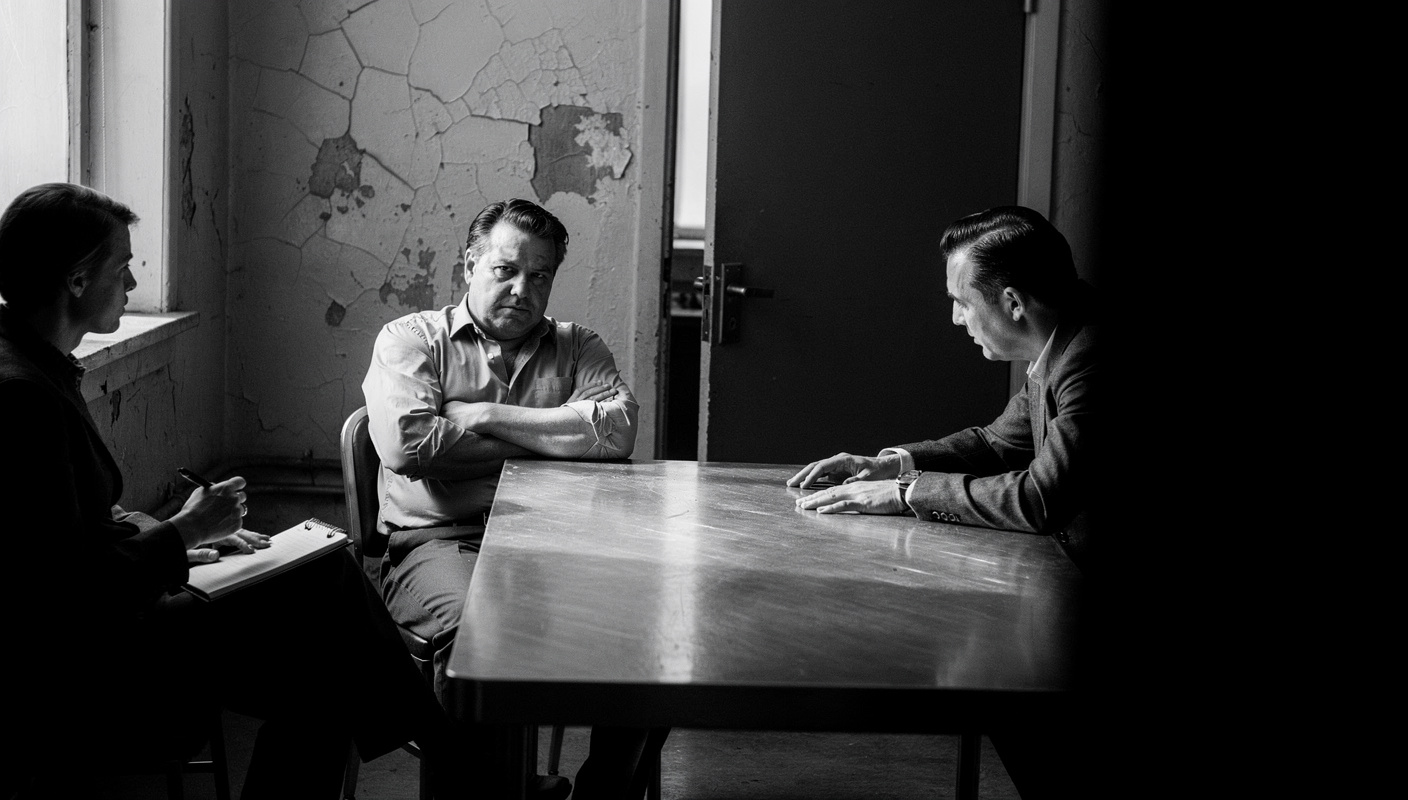
I watched a mediator lose control of a session inside the first eight minutes. The competitive party walked in, sat down, crossed his arms, and announced that he had already spoken to his solicitor and knew exactly what he was entitled to. The other side went pale. The mediator smiled and pressed on with her opening. She never recovered the room.
That moment stays with me because it captures what makes competitive party mediation genuinely difficult. The problem is not that one party is aggressive. It is that conventional mediation process, the kind designed for two willing participants, breaks down the moment someone decides they are there to win rather than to resolve. The whole architecture assumes good faith. A competitive party does not offer that.
If you have sat across from someone who treats every concession as weakness and every question as a trap, you know exactly what I mean. This article gives you a working process. Not theory. A sequence you can apply the next time you walk into that room.
"The Conversation You're Avoiding Is the One You Need to Have."
"The Conversation You're Avoiding
Is the One You Need to Have."
Stop rehearsing conversations you'll never have. Say It Right Every Time gives you 115 word-for-word scripts and 16 proven frameworks to speak with confidence in every conversation that matters.
What You Need to Have in Place Before the Session Starts
The biggest mistake mediators make with competitive parties is waiting until the dynamic has already taken hold before responding to it. By then, the other party is rattled, your neutrality is under question, and the competitive party has established the frame. You cannot recover that ground easily. You need to build your position before anyone sits down.
There are three things that must be in place first. You need a pre-session conversation with each party separately. You need a written or explicitly stated set of ground rules that all parties agree to before joint session begins. And you need a clear sense of your own caucus strategy, specifically, when you will pull the competitive party aside and what you will ask them in that private space.
The pre-session conversation is not a formality. It is where you listen for the competitive party's real interests beneath the stated position. They will tell you what they want to win. Your job is to hear what they actually need. Those two things are rarely the same.
A Step-by-Step Process for Managing the Dynamic
Step 1: Name the Process Framework Before Anyone Can Hijack It
Open every joint session by stating the purpose of mediation clearly and getting explicit agreement from all parties. Do not assume agreement. Ask for it.
Say something like: "Before we begin, I want to make sure we are all here for the same reason. Mediation is a voluntary process. Neither of you is required to agree to anything. My job is to help you both find an outcome that works for you. Does everyone understand and accept that?"
A competitive party will often agree in this moment because refusing looks unreasonable. That agreement becomes your anchor. You can return to it every time they start treating the session as a contest.
Step 2: Set Ground Rules With Specific Language
Ground rules protect the process. State them as shared agreements, not restrictions on the competitive party specifically, even if they are the reason the rules are necessary. Name them before the session escalates.
Good ground rules for a high-stakes session include: one person speaks at a time, no interrupting, each party will have equal uninterrupted time to speak, and all proposals are heard in full before anyone responds. Get a verbal or written yes from each person.
When a competitive party later interrupts or talks over the other side, you do not need to escalate. You simply say: "Let me bring us back to what we agreed. One person speaks at a time. You will have your turn." That is calm, clear, and grounded in their own agreement.
Step 3: Let Them State Their Position, Then Reframe It
This is where most mediators lose ground. When a competitive party makes a strong positional demand, the instinct is to challenge it or soften it immediately. Do not. Let them state it fully. Listen without flinching. Then reframe what they said as an underlying interest.
If they say: "I want full compensation and a written apology, and I will not settle for less," you do not argue the demand. You say: "So it sounds like being recognised for what happened here, and having that recognition documented, matters a great deal to you. Is that right?"
That is reframing. You are not agreeing with their position. You are translating it from a demand into a need, which is something the other party can actually engage with. It is one of the core skills in how to resolve interpersonal tension through empathy, and it works precisely because it does not require the competitive party to back down publicly.
Step 4: Use the Caucus as a Strategic Tool
A caucus is a private session with one party. Most mediators use caucuses reactively, when things have broken down. Use them proactively with a competitive party.
Request a private session early, before the dynamic entrenches itself. In that space, ask different questions than you ask in joint session. Ask: "What would a good outcome look like for you, not just in terms of what you win, but in terms of where you are six months from now?" Ask: "What is the one thing that, if it happened, would make you willing to move?"
Competitive parties often perform for the other side. In private, without an audience, many of them are willing to say what they actually need. Your job in the caucus is to find the interest beneath the position and help them see that pursuing the position at all costs may cost them the interest.
Step 5: Name the Pattern Without Blaming the Person
If the competitive party is dominating the joint session, interrupting repeatedly, or making the other party afraid to speak, you need to name that pattern. You do not name the person. You name what is happening.
Say: "I am noticing that we keep moving into a pattern where one side states a position and the other side responds with a counter-position, and we are not making much ground. I want to try something different."
That sentence redirects without attacking. It also gives the competitive party an exit from their own pattern without requiring them to admit fault. Face-saving matters enormously to competitive individuals. If you back them into a corner publicly, they will fight their way out. Give them a path that preserves their dignity, and they will often take it.
For a detailed framework that helps you stay steady during these charged moments, the C.O.R.E. framework for staying grounded during tense workplace conversations is worth keeping in your toolkit.
Step 6: Build Momentum With Small Agreements
A competitive party's power depends on maintaining a posture of total non-compromise. Your job is to make small agreements feel natural, not like concessions.
Find something, even something procedural, that both sides can agree on early. "Can we agree that both of you want this resolved today rather than dragged into further proceedings?" Almost always, the answer is yes. That first agreement is not trivial. It establishes a pattern of agreement, and patterns are powerful.
Each small agreement makes the next one slightly easier. This is how you move a competitive party without them realising they are moving. It is incremental, patient work, but it is far more effective than confronting their position directly.
For team-based conflicts where this pattern appears across multiple relationships, the D.E.A.L. method for resolving conflicts that fracture team synergy offers a structured approach you can adapt.
Step 7: Anchor Any Agreement in Interests, Not Positions
When movement happens, resist the urge to lock in a positional compromise. Anchor the agreement in the interests you surfaced earlier.
Instead of: "So you have agreed to X in exchange for Y," say: "So we have found a way to address your need for recognition and your need for a clear outcome going forward. Let us write that down in those terms."
An agreement anchored in interests is more durable than one framed as a win for one side. It also gives the competitive party a story they can tell: not "I gave ground," but "I got what I actually needed." That story matters. It is what determines whether they honour the agreement after they leave the room.
Adapting This Process for Remote Mediation Sessions
Remote mediation with a competitive party carries an added layer of difficulty. They have more control over the environment, they can turn off their camera, they can leave the session without the social cost of physically walking out, and they can send messages to the other party in the background without your knowledge.
The ground rules for remote sessions need to be more explicit. Cameras on throughout, no side communication on other channels during session, and a clear agreement on what happens if the connection drops or someone leaves unexpectedly. State these before the session begins.
The caucus becomes even more important remotely. Use breakout rooms early and often. Private conversation is harder to have in a remote format because it feels more formal, so you may need to signal more clearly that what is said in the breakout is genuinely private.
Watch body language carefully on camera. Competitive parties often reveal their real emotional state through their posture and facial expression even when their words are controlled. A crossed arm, a jaw set tight, eyes that keep moving to something off-screen: these are signals. Respond to the signal, not just the words.
If the conflict involves broader team dynamics feeding this competitive behaviour, how unmet needs drive team conflict offers context that can help you understand what is fuelling the pattern.
Where Mediators Go Wrong With Competitive Parties
The mistake: Matching the competitive party's energy to regain control.
Why it happens: When someone is aggressive, the instinctive response is to push back.
What to do instead: Lower your voice, slow your pace, and become more deliberate. Calm is not passive. It is the strongest signal of authority you have in that room.
The mistake: Arguing with a stated position instead of reframing it.
Why it happens: The position sounds unreasonable, and arguing feels like good process management.
What to do instead: Ask what need that position is trying to meet. Move the conversation to interests. The position becomes negotiable once the interest is named.
The mistake: Letting the competitive party dominate joint session because challenging them feels like taking sides.
Why it happens: Mediators fear losing neutrality if they interrupt an aggressive party.
What to do instead: Name the pattern, not the person. "I want to make sure both sides have equal time" is neutral. "You keep interrupting" is not. Both can redirect the same behaviour.
The mistake: Waiting too long to call a caucus.
Why it happens: Mediators hope the joint session will find its own rhythm.
What to do instead: Call the caucus before the dynamic has done damage. A short private conversation early is far less disruptive than a rescue operation later.
For word-for-word language that helps you redirect without escalating, these scripts for de-escalating tension with a colleague are directly applicable to mediation settings, even though they are framed for peer conversations.
Your Pre-Session Preparation Checklist
Use this before any mediation session where you expect a competitive party.
- Have you spoken with each party separately before the joint session?
- Do you know the competitive party's stated position and, separately, their likely underlying interest?
- Have you prepared your ground rules and planned how to get explicit agreement from all parties?
- Do you know at what point you will call a caucus, and what questions you will ask in it?
- Have you identified at least one area of potential early agreement, even procedural, to establish a pattern?
- Do you have a reframe ready for the competitive party's most likely opening demand?
- Have you prepared yourself to hold your neutrality even under direct pressure or personal criticism?
This checklist does not guarantee a smooth session. Nothing does. But it closes the gap between you and a mediator who walks in unprepared and loses the room in the first eight minutes.
If the conflict is boiling over in real time rather than in a structured session, how to handle conflict during meetings gives you a parallel framework for in-the-moment management. And when you want to address workplace tension before it reaches the mediation table at all, using the D.E.A.L. method to resolve workplace tension before it escalates is worth reading in full.
The One Thing a Competitive Party Cannot Fight
Here is the truth of it. A competitive party's strategy depends on keeping the contest alive. Every escalation, every refusal, every demand is designed to maintain the dynamic they know how to operate in. What they cannot fight is a mediator who refuses to be part of the contest.
Your calm process management is not a technique. It is your entire position. When you hold the structure clearly, name patterns without blame, and keep returning to interests rather than positions, you are doing something the competitive party has not planned for. You are making the contest irrelevant.
Competitive party mediation is hard work. But the parties who walk in like they own the room are often the ones who, in private, have the most to lose. Find that interest. Give them a dignified way to move. And hold your ground.
Frequently Asked Questions (FAQ)
What is competitive party mediation?
Competitive party mediation is the process of guiding a dispute resolution session where at least one participant treats the mediation as a contest to be won. The mediator must redirect positional bargaining toward interest-based dialogue before any real agreement becomes possible.
How do you set ground rules for a competitive party in mediation?
Set ground rules before the session begins, not during it. State them neutrally and frame them as protecting the process for everyone. Get explicit agreement from all parties. If a competitive party breaches the rules, name it calmly and return to the agreement rather than arguing.
What does reframing mean in mediation skills?
Reframing in mediation means restating a party's aggressive or positional demand as an underlying interest or need. It does not dismiss what they said. It translates it into language the other side can engage with, making dialogue possible without anyone losing face.
How do you handle a competitive party who refuses to compromise in mediation?
Request a private caucus. In that space, ask the competitive party what they genuinely need from this outcome, not what they want to win. Most positional demands dissolve when someone names the real interest underneath. Give them a face-saving way to shift position.
When should a mediator call a caucus with a competitive party?
Call a caucus when the competitive party is escalating in joint session, when the dynamic is damaging the other party, or when you sense a private conversation could unlock movement. Use it as a tool, not a retreat. Return to joint session with a plan.
What are the biggest mediation mistakes when one party is highly competitive?
The most damaging mistakes are arguing with the competitive party, matching their aggression, and letting them dominate joint sessions unchallenged. A mediator who loses neutrality loses credibility with both sides. Calm process management, not force, is what brings a competitive party into dialogue.