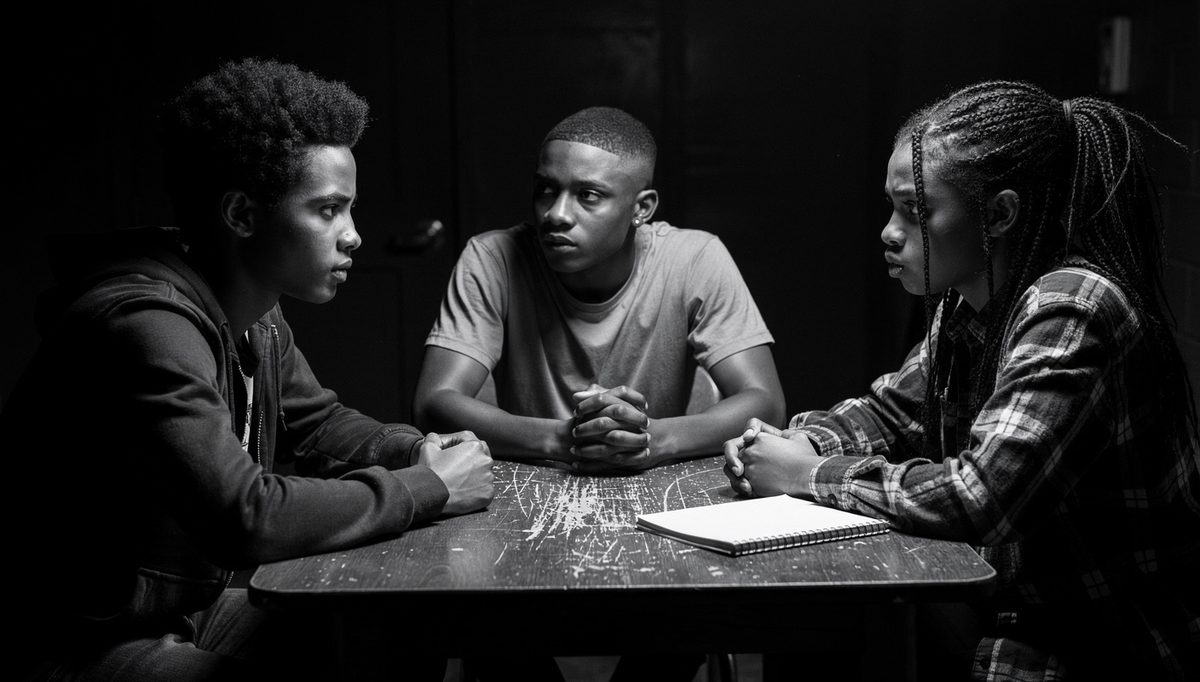

In Short
Peer mediation programs work when students are properly trained, carefully selected, and given a clear process to follow. Without structure, even willing students will default to judgment or advice-giving rather than genuine mediation.
- Train students in active listening, neutral questioning, and a step-by-step process before they handle a single case.
- Build adult supervision into the program from the start, not as a fallback but as a permanent feature.
- Start small, debrief every session, and let the program grow from demonstrated results.
Peer mediation programs are school-based systems where trained student mediators help classmates resolve interpersonal disputes through structured, voluntary conversation. A neutral student guides both parties to express their perspectives and reach their own agreement, without imposing a decision or taking sides.
Two fourteen-year-olds had been at each other for three weeks. A rumour, a misread text, a corridor confrontation. By the time a teacher finally sat them down, both girls had recruited half their year group. What started as a small misunderstanding had calcified into something much harder to shift. The teacher meant well. But she resolved it by telling them both what had happened and what they needed to do. Within a fortnight, it had reignited.
That is what happens when conflict gets managed instead of resolved. The young people never got to say what they actually needed. They were processed, not heard.
Peer mediation programs exist precisely to prevent this. When students are trained to mediate each other's disputes, they develop something far more durable than obedience to an adult decision: they develop the skill and confidence to work through disagreement themselves. This guide will show you how to build a program that holds together beyond the first enthusiastic term.
Why Setting Up Peer Mediation Programs Is Harder Than It Looks
Most schools that try to build peer mediation programs stall at the same point. They train a group of students, they put up a poster, and then they wait for referrals that never come. Or the referrals arrive and the student mediators, despite genuine goodwill, default to telling both parties what they should think. Neither outcome is mediation. Both are predictable failures of setup, not of intent.
The difficulty is structural. Mediation requires neutrality, and neutrality is genuinely hard for adolescents who move through the same social ecosystem as the people they are trying to help. It requires active listening at a level most adults cannot sustain, let alone teenagers who have had no training. And it requires a school culture that trusts the process enough to refer disputes to it, which takes time to build.
The second difficulty is institutional. School staff often want to support the program in principle while quietly bypassing it in practice, because it feels faster to step in. Until the program demonstrates results, it will always compete with the adult reflex to solve things directly.
"The Conversation You're Avoiding Is the One You Need to Have."
"The Conversation You're Avoiding
Is the One You Need to Have."
Stop rehearsing conversations you'll never have. Say It Right Every Time gives you 115 word-for-word scripts and 16 proven frameworks to speak with confidence in every conversation that matters.
What Has to Be in Place Before You Train Anyone
Do not train a single student until these three conditions are met. Missing any one of them will undermine everything that follows.
Leadership endorsement that is visible, not just verbal. The headteacher or principal needs to make a public commitment to the program, allocate protected time for mediator training, and be seen referring appropriate cases to the process. If leadership support stays behind closed doors, teachers will not refer cases, and students will not trust the program's legitimacy.
A clear referral scope. Peer mediation is designed for interpersonal disputes: friendship fallouts, rumours, misunderstandings, low-level social conflict. It is not appropriate for bullying with a power imbalance, safeguarding concerns, or anything involving physical threat. You must define the scope in writing before the first case arrives. When that boundary is clear, everyone, including students, can make confident decisions about what belongs in mediation.
A supervising adult who is committed for the long term. This is not a teacher who oversees the program when time allows. This is a named person, ideally with some background in restorative practice or conflict resolution, who attends debriefs, monitors case progress, and supports student mediators when a session gets difficult. Without this person, the program has no roots.
How to Build and Train Your Student Mediation Team
Selecting the Right Students
Resist the temptation to select the most popular students or the highest academic achievers. You are looking for students who are trusted across social groups, who listen before they speak, and who can sit with discomfort without needing to fix it immediately. Peer respect matters more than social status. Invite nominations from both students and staff, then hold a brief conversation with each candidate to assess how they listen. Trust your instincts on this.
Aim for a group that reflects the diversity of your school population. If your student mediators are drawn from one social group or year level, the program will be perceived as belonging to that group, and many students who need it will not use it.
The Training Sequence
Once you have your team, this is the order in which to build their skills.
Teach the mediation process as a sequence, not a set of principles. Students need to know exactly what they will say and do in each phase of a session. Give them a clear framework: opening, storytelling, identifying needs, exploring options, reaching agreement. A student who understands the sequence can return to it when a session gets tense. Abstract principles about empathy and fairness do not hold under pressure. A process does.
Train active listening as a distinct skill. Spend a full session on this before anything else. Have students practise reflecting back what they have heard, without adding opinion or advice. Use pairs, with one student speaking for two minutes about a genuine low-stakes frustration, and the other practising reflection only. Debrief what was hard about staying out of judgment. This is where most people discover how rarely they truly listen.
Teach neutral questioning. The questions that move a mediation forward are open and genuinely curious: "What happened from your point of view?" and "What do you need to feel like this is resolved?" are very different from "Don't you think you could have handled that better?" Practise distinguishing between questions that invite reflection and questions that lead the other person toward a predetermined answer.
Role-play realistic scenarios. Write four or five scenarios drawn from actual disputes at your school, anonymised. Have students take turns playing the mediator and the disputants. Stop the role-plays mid-session and ask the group: what is working here, and what is not? The debrief after a role-play teaches more than the role-play itself.
Practise the opening statement until it is natural. The first words of a mediation session set everything that follows. A student mediator's opening should cover: who they are, that this is voluntary, that everything said stays in the room unless there is a safety concern, and that their role is to help both parties talk, not to decide who is right. Practise this until it sounds like a person speaking, not a script being recited.
Introduce the caucus. A caucus is a brief, private conversation with each party separately during a session that has stalled. Student mediators need to know when to call one, how to keep it brief, and how to reconnect both parties afterward. This is an advanced skill, but not including it in training leaves mediators without a tool when they need it most.
Practise writing agreements. A mediated agreement is a short, specific document that both parties write and sign together. It is not a list of rules imposed from outside. Practise drafting agreements with the role-play groups: "I will not share information from our group chat with people outside the group" is a good agreement. "We will be nicer to each other" is not.
Running the First Real Cases
Start with the most straightforward referrals you receive, regardless of how long the waiting list becomes. Putting new mediators into a complex case early is how you burn out good students before they find their confidence.
Each session should have two student mediators, not one. This is standard practice in restorative work for good reason: one mediator can observe while the other leads, and they can support each other through a difficult moment without the session losing its footing. It also prevents a single student from carrying too much responsibility.
After every session, hold a short debrief with the supervising adult. Ask three questions: What went well? Where did the process stall? What would you do differently? This reflection is where real mediation skill is built. How to Ensure Every Participant Gets Heard offers useful frameworks for facilitating these debrief conversations, many of which translate directly to the school context.
Adapting the Program for High-Conflict School Environments
Some schools are starting this work in environments where interpersonal tension runs high, where social media conflict spills into corridors daily, and where students have had little experience of disputes being resolved rather than suppressed. In these settings, the standard model needs adjustment.
Begin with a longer pre-mediation preparation phase. Before both parties sit down together, the supervising adult or a trained staff member meets with each student separately. This conversation has one purpose: to help each person identify what they actually need from the process, so they arrive at the joint session with something to say beyond their grievance. Without this preparation, high-conflict sessions collapse into repeated accusations.
Shorten your initial sessions. Forty-five minutes is a realistic ceiling for students who are not accustomed to sustained difficult conversation. Plan to hold two sessions rather than one if the situation warrants it.
The student mediators themselves will need more intensive supervision in high-conflict environments. Consider pairing each student mediator with a staff mentor who checks in after every case, not just at weekly debriefs. The emotional weight of mediating serious conflict between peers should not rest on a teenager without regular, real support. How to Resolve Interpersonal Tension Through Empathy is worth reading alongside your mediator training materials for this reason.
Where Schools Get This Wrong
Three mistakes appear so consistently in peer mediation setups that they deserve direct attention.
The mistake: Selecting mediators based on behaviour record or teacher favourites, rather than genuine peer trust.
Why it happens: Schools default to rewarding "good" students with responsibility, which is a reasonable instinct in most contexts.
What to do instead: Ask students across year groups: "Who do you think would be fair if you had a problem with someone?" The names that come up repeatedly are your candidates.
The mistake: Training students and then running no further development sessions for the rest of the year.
Why it happens: The setup feels complete after initial training, and scheduling further sessions is administratively inconvenient.
What to do instead: Build four to six follow-up sessions into the school calendar before training begins. These are not optional extras. They are where the real skill development happens. How to Handle Conflict During Meetings contains de-escalation techniques that transfer well into a student mediator development session.
The mistake: Referring cases to peer mediation without telling both students it is voluntary.
Why it happens: Staff frame the referral as a consequence rather than a choice, often without realising it.
What to do instead: Build a standard referral script for teachers that makes voluntary participation explicit: "There is a process called peer mediation that some students find helpful for situations like this. It is completely your choice whether to try it."
Understanding what drives people to conflict in the first place can sharpen how student mediators approach their work. How Unmet Needs Drive Team Conflict and What to Say to Restore Synergy frames this in a workplace context, but the core insight applies equally in schools: most conflict is a signal of an unmet need, not a character flaw.
Your Peer Mediation Setup Checklist
Use this before you begin. If you cannot check every item, address the gap before you proceed.
Foundations
- Leadership has made a public, visible commitment to the program.
- The referral scope is written and shared with all staff.
- A named supervising adult is committed for a minimum of one full academic year.
- A dedicated space for mediation sessions exists and is consistently available.
Student mediator selection 5. Selection was based on peer trust across social groups, not academic achievement or behaviour record. 6. The group reflects the diversity of the school population. 7. Each candidate had a listening-based conversation before selection.
Training 8. Students have been trained in the full mediation sequence, not just general principles. 9. Active listening and neutral questioning have each received dedicated practice time. 10. Role-play with realistic scenarios has been completed and debriefed. 11. Every student mediator can deliver the opening statement naturally. 12. Students know how to draft a written agreement.
Operations 13. Every session will be co-mediated by two students. 14. A debrief with the supervising adult follows every case. 15. Follow-up development sessions are already in the school calendar. 16. A standard referral script that makes voluntary participation explicit is in teachers' hands.
Building Something That Lasts
The programs that endure are not the most elaborate. They are the ones built on honest preparation and real ongoing support. I have seen schools invest heavily in a launch event, produce lanyards and certificates, and then watch the program quietly dissolve by February because nobody had committed to the supervision structure.
Start smaller than you think you need to. Train six students rather than twenty. Take three cases in the first term rather than thirty. Let the quality of those early sessions build the trust that brings more referrals. Mediation skill, like any real skill, grows through practice with reflection, not through volume alone.
For further grounding in the structured approaches that underpin good mediation practice, the D.E.A.L. method for resolving workplace conflict and the C.O.R.E. framework for staying grounded in tense conversations offer practical tools that experienced school mediators can adapt. Similarly, using the D.E.A.L. method before tension escalates is worth exploring when you move into teaching your students early intervention skills.
The goal is not a program. The goal is a school where students trust that conflict can be worked through, where they have seen it happen, and where some of them know how to help it happen. That is a different kind of place to grow up in. Peer mediation programs, built well and sustained with care, are one of the most direct routes to it.
Frequently Asked Questions (FAQ)
What are peer mediation programs in schools?
Peer mediation programs are structured processes where trained students help their classmates resolve disputes through guided conversation. A neutral student mediator facilitates the discussion, helping both parties express their needs and reach a voluntary agreement without teacher or administrator intervention.
How do you start a peer mediation program in a school?
Begin by securing leadership support, then select and train a small group of student mediators in active listening, neutrality, and a clear mediation process. Pilot the program with low-stakes disputes before expanding. Build in regular supervision and debrief sessions for student mediators from the start.
What skills do student mediators need?
Student mediators need active listening, the ability to stay neutral under pressure, clear questioning techniques, and the confidence to guide a structured conversation. They also need to know how to de-escalate tension, summarise what they hear, and help both parties reach a voluntary agreement.
How long does it take to train a peer mediator?
A solid foundational training takes eight to twelve hours, typically spread across two or three sessions. That includes instruction, modelled examples, and role-play practice. Mediators continue learning through supervised casework and regular group debriefs, which build skill far faster than classroom training alone.
What makes peer mediation programs fail?
Most programs fail because schools skip the supervision structure, treat mediator selection as a popularity contest, or deploy students in cases too serious for peer-level resolution. Programs also collapse when student mediators receive no ongoing support after initial training and are left to manage conflict without adult guidance.
Can peer mediation work in secondary schools?
Yes, and it often works better in secondary schools than in primary ones. Older students have the emotional vocabulary and social awareness to hold a genuine mediation process. The key is rigorous training, careful case selection, and consistent adult oversight without removing student ownership of the process.