
In Short
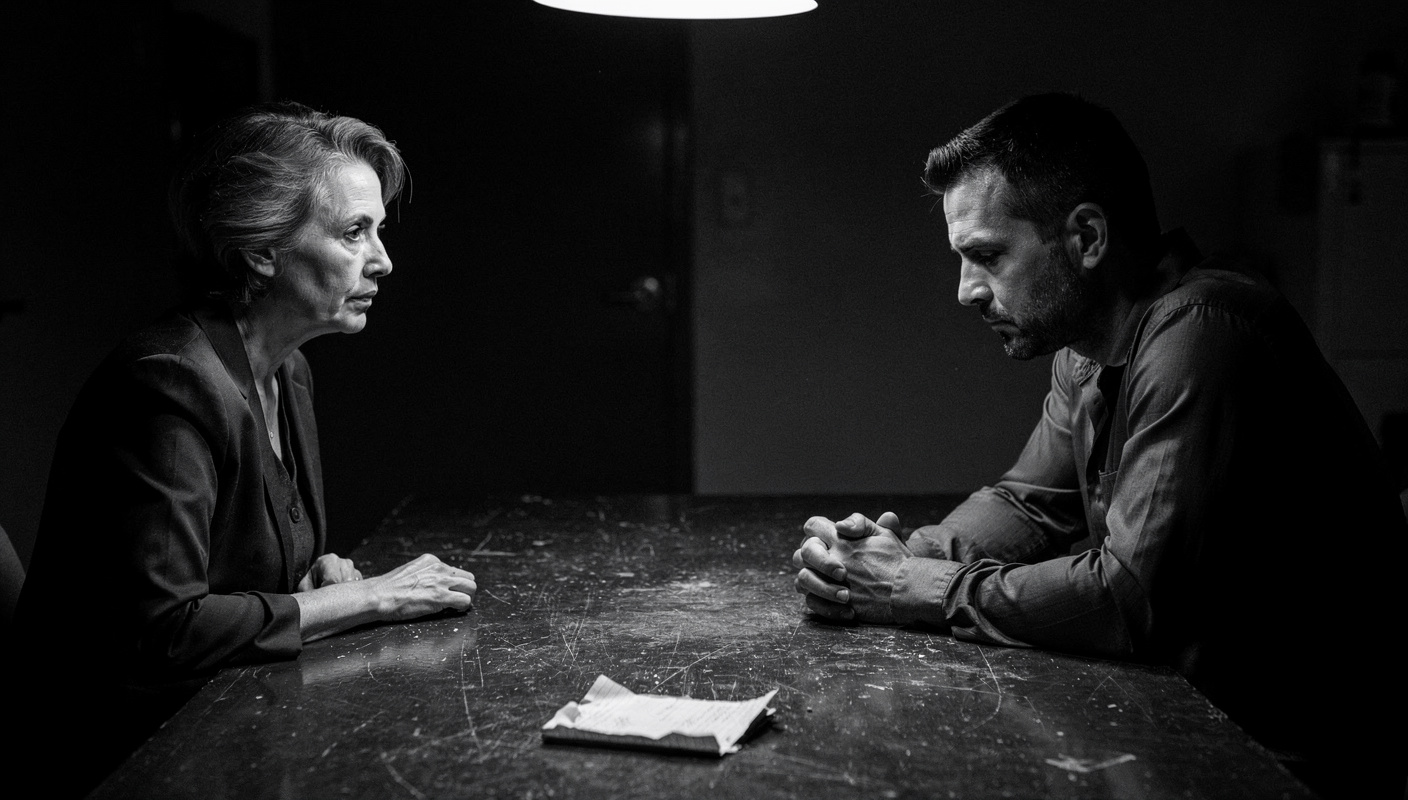
Direct gaze and indirect gaze are not opposites on a scale of confidence. They are different cultural languages, each carrying its own logic of respect, power, and trust.
- In many Western settings, holding someone's gaze signals honesty, engagement, and confidence.
- In many Asian, African, Middle Eastern, and Indigenous cultures, averting your eyes is a deliberate act of respect, not evasion.
- Reading the wrong meaning into either behaviour causes real damage to professional relationships.
Direct vs indirect gaze describes the degree to which a person sustains or averts eye contact during conversation. Direct gaze involves holding another person's eyes steadily; indirect gaze involves deliberately looking away or downward. Both are culturally shaped signals of respect, attention, and social position.
Why Gaze Gets Misread Across Cultures
I watched a senior manager from the United States write off a Thai colleague as untrustworthy after a single meeting. His reason: she would not look him in the eye. She was, in fact, showing him respect in the most deliberate way she knew. He missed it entirely, and so did she miss what his sustained stare was communicating to her.
Cross-cultural meanings of direct vs indirect gaze sit at the heart of more professional misreadings than almost any other nonverbal signal. The gaze feels so instinctive, so involuntary, that most people never question whether their interpretation of it might be entirely wrong. It is not a universal code. It is a learned cultural behaviour, and the meanings it carries differ sharply depending on where you grew up and who taught you what eyes are supposed to do in conversation.
By the time you finish reading this, you will be able to name the difference, recognise why both patterns make complete sense within their own cultural logic, and stop misreading the gaze of the people you work with.
"The Conversation You're Avoiding Is the One You Need to Have."
"The Conversation You're Avoiding
Is the One You Need to Have."
Stop rehearsing conversations you'll never have. Say It Right Every Time gives you 115 word-for-word scripts and 16 proven frameworks to speak with confidence in every conversation that matters.
What Direct Gaze Actually Communicates
Direct gaze means holding another person's eyes during conversation, steadily and with clear intention. It is not a stare. It involves natural, periodic breaks, but the baseline is sustained visual contact, a signal that you are present, engaged, and willing to be seen.
In most Northern European, North American, and Australian professional settings, this is the default expectation. It signals confidence, openness, and respect for the other person's presence. When a job candidate holds your gaze during an interview, the cultural message is: I have nothing to hide, and I take this seriously.
Direct gaze also carries authority. In Western business settings, the person who holds eye contact longest in a negotiation is often read as the more confident party. This is part of what makes it so seductive as a default. It works, in the cultures where it works, with tremendous efficiency.
The trouble is that it does not work the same way everywhere. When you carry this expectation into a cross-cultural conversation, you are not reading the other person correctly. You are projecting your own gaze norms onto them and drawing conclusions from a map that does not fit the territory.
What Indirect Gaze Is Doing Instead
Indirect gaze means deliberately averting your eyes during conversation, looking downward, to the side, or at a point near but not at the other person's face. It is not avoidance. It is not weakness. In the cultures where it is the norm, it is an act of careful social intelligence.
Across many East Asian, South Asian, Middle Eastern, African, and Indigenous cultures, sustained direct eye contact with a superior, an elder, or someone in a position of authority reads as a challenge or a sign of disrespect. Dropping your gaze is how you communicate that you recognise and honour the status difference. It is deference expressed through the eyes.
In some cultures, indirect gaze during active listening is also a signal of concentration. You look away not because you are disengaged, but because you are focusing entirely on the words. The eyes looking downward mean: I am giving you my full attention, not my performance of attention.
This matters in nonverbal communication in tense situations, where misreading a deferential gaze as evasiveness can escalate a conflict that had no real cause.
Direct vs Indirect Gaze: A Side-by-Side View
| Dimension | Direct Gaze | Indirect Gaze |
|---|---|---|
| Cultural prevalence | Northern Europe, North America, Australia | East Asia, South Asia, Middle East, many African and Indigenous cultures |
| Primary signal | Confidence, honesty, engagement | Respect, deference, attentiveness |
| Power context | Signals equality between speakers | Signals recognition of hierarchy |
| Risk of misreading | Read as aggression or dominance in some cultures | Read as dishonesty or weakness in other cultures |
| Listening behaviour | Eyes stay on the speaker | Eyes may avert during active listening |
| In authority relationships | Expected equally from both parties | Lower-status person typically averts more |
| Emotional register | Associated with assertiveness and openness | Associated with humility and deference |
The table above gives you the framework. But the nuance that matters most goes deeper than any grid can capture.
The key insight is this: both patterns are acts of respect. They are just different theories about what respect looks like. Direct gaze says: I honour you enough to face you fully and let you see me. Indirect gaze says: I honour you enough to subordinate my presence to yours. Neither is more evolved, more honest, or more professional. They are culturally specific grammars of the same underlying intention.
Where the damage happens is in the gap. A Western manager reads averted eyes as guilt or disengagement. A Japanese professional reads prolonged direct staring as aggression or social clumsiness. Both people are drawing on real experience within their own cultural frame. Both are wrong about what the other person intends.
Understanding how to manage tension when cultural differences are at the root of the conflict starts with exactly this kind of gaze-level awareness.
The Grey Area: Where These Two Patterns Overlap
Here is the truth of it: no culture practises pure direct or pure indirect gaze. Every person in every culture breaks eye contact periodically. The real difference is in the baseline, the default position your eyes return to when nothing is pulling them away.
In Western settings, the default is toward the other person's eyes, with breaks. In many East Asian or South Asian settings, the default is toward a neutral point, with periodic eye contact to signal emphasis or connection. The overlap is in those moments of shared, deliberate eye contact that almost every culture uses to mark a significant point: to signal agreement, to transfer the speaking turn, or to signal that something important has just been said.
Both patterns also shift with intimacy and context. A person who uses indirect gaze with authority figures may use much more direct gaze with peers or close colleagues. Gaze norms are not fixed rules; they are contextual behaviours that respond to relationship, setting, and emotional stakes.
Where Gaze Confusion Does the Most Damage
Three specific misreadings come up again and again in cross-cultural professional settings, and I have seen each of them break a working relationship before either person understood what was happening.
The mistake: Reading indirect gaze as dishonesty or evasion.
Why it happens: In Western cultures, people who avoid eye contact while giving an account of something are often judged as untrustworthy. That association runs deep.
What to do instead: Before you draw a conclusion, ask yourself whether this person is from a cultural background where indirect gaze is the default respectful posture. If so, their averted eyes are evidence of courtesy, not concealment.
The mistake: Reading direct, sustained gaze as aggression or disrespect.
Why it happens: In cultures where gaze aversion is standard among juniors and seniors, a subordinate who holds your gaze steadily may read as challenging your authority, even if they learned that behaviour in a different cultural setting.
What to do instead: Recognise that what feels like confrontation may be confident engagement. Do not penalise directness simply because it does not match your gaze expectations.
The mistake: Trying to mirror unfamiliar gaze behaviour too quickly or mechanically.
Why it happens: People learn that mirroring builds rapport, and they apply it without enough cultural knowledge to do it well. The result is gaze behaviour that feels performed and creates more unease than the original mismatch did.
What to do instead: Follow the other person's lead gradually rather than making a sudden, obvious shift. Ease your gaze down a register if you sense tension; do not overcorrect into a stare or an obvious avoidance pattern.
The role of communication in meeting success depends heavily on these micro-moments of nonverbal attunement. Get them wrong and the substance of the conversation fights against the relationship context.
Reading the Room: When Each Gaze Pattern Serves You Better
Direct, sustained gaze serves you well in Western professional settings where you need to project confidence, signal that you are engaged, and hold your ground in a negotiation. It also works when you are speaking to a peer or equal across cultures who shares your gaze norms, and when you are making a point you need to land with weight. In those moments, looking away reduces your impact.
Indirect, softened gaze serves you better when you are in a hierarchical conversation with someone whose culture associates averted eyes with respect. It also helps in moments of high tension, where sustained direct eye contact reads as challenge rather than connection. When you need to de-escalate, softening your gaze is often faster and more powerful than any words you could choose.
This kind of situational awareness matters enormously when you are dealing with dominant voices in a discussion or trying to handle conflict during meetings. The person whose gaze you soften at the right moment often becomes more willing to listen.
The safest practical rule I know: watch how the other person uses their own eyes with others in the same setting before you decide which register to use. People reveal their own gaze norms constantly. You just need to pay attention before you respond.
When you are unsure of the cultural context, the empathy bridge technique is a useful tool for opening a difficult conversation with enough warmth that gaze differences become less likely to trigger a misreading. And if tension is already present, the neutral problem statement can take the heat out of the interaction before gaze behaviour has a chance to make it worse.
What to Carry Into Your Next Cross-Cultural Conversation
You do not need a comprehensive guide to every culture's gaze norms. What you need is the habit of questioning your first interpretation, especially when something in the other person's eyes makes you uneasy.
Before you decide that someone is being evasive, ask whether you are reading a deferential gaze through the wrong lens. Before you read sustained eye contact as aggression, ask whether you are in the presence of someone whose culture treats that directness as plain courtesy. The pause before the judgement is the whole skill.
Prepare before high-stakes cross-cultural conversations by learning the gaze norms of the specific culture you are entering. Not a stereotype, but a genuine orientation. Then trust what you observe in the room over what you read in advance.
Knowing the cross-cultural meanings of direct vs indirect gaze is not a small detail of professional polish. It is one of the fastest ways to earn trust across cultural difference or, if you ignore it, to lose it without ever knowing why.
Frequently Asked Questions (FAQ)
What is direct vs indirect gaze in cross-cultural communication?
Direct vs indirect gaze refers to whether someone holds sustained eye contact or deliberately averts their eyes during conversation. In many Western cultures, direct gaze signals confidence and honesty. In many Asian, African, and Indigenous cultures, indirect gaze signals respect and attentiveness.
Does avoiding eye contact always mean someone is being dishonest?
No. This is one of the most damaging cross-cultural assumptions you can make. In many cultures, avoiding eye contact is a deliberate sign of respect, particularly toward authority figures or elders. Reading it as dishonesty reflects a cultural bias, not an objective truth.
How does power distance affect gaze behaviour across cultures?
In high power-distance cultures, subordinates often avert their eyes when speaking to someone senior as a gesture of deference. In low power-distance cultures, mutual direct gaze is expected and signals equality. The same averted eyes carry completely different meanings depending on the social hierarchy at play.
When should you use indirect gaze intentionally in a professional setting?
Use a softer, less sustained gaze when you are in a high-stakes conversation with someone from a culture where direct eye contact reads as confrontational. Breaking gaze periodically while still facing someone shows you are engaged without applying unintended pressure.
Can you learn to read cross-cultural gaze differences in real time?
Yes, but it takes practice and preparation. Learn the gaze norms of the specific cultures you work with regularly. Watch how people from that culture interact with each other. Adjust your own gaze behaviour, and when uncertain, follow the other person's lead rather than imposing your own defaults.
What happens when two people from different gaze cultures misread each other?
Misreading gaze across cultures creates real damage. One person reads sustained eye contact as aggression; the other reads averted eyes as evasiveness or weakness. Neither reads the situation correctly. Without awareness, this kind of misreading erodes trust before a single word of substance is spoken.