
In Short
When a senior stakeholder publicly contradicts you, your leadership voice is not lost. It is tested. How you respond in the next thirty seconds shapes how the room sees you for months.
- Pause before you speak. Your first instinct is wrong.
- Acknowledge the challenge without surrendering your position.
- Restate your point with calm, specific language and let it stand.
Leadership voice in a meeting is the capacity to communicate with clear authority and composure, hold your position under challenge, and retain the room's trust even when someone more senior publicly disagrees with you. It is earned through preparation, practice, and a disciplined response under pressure.
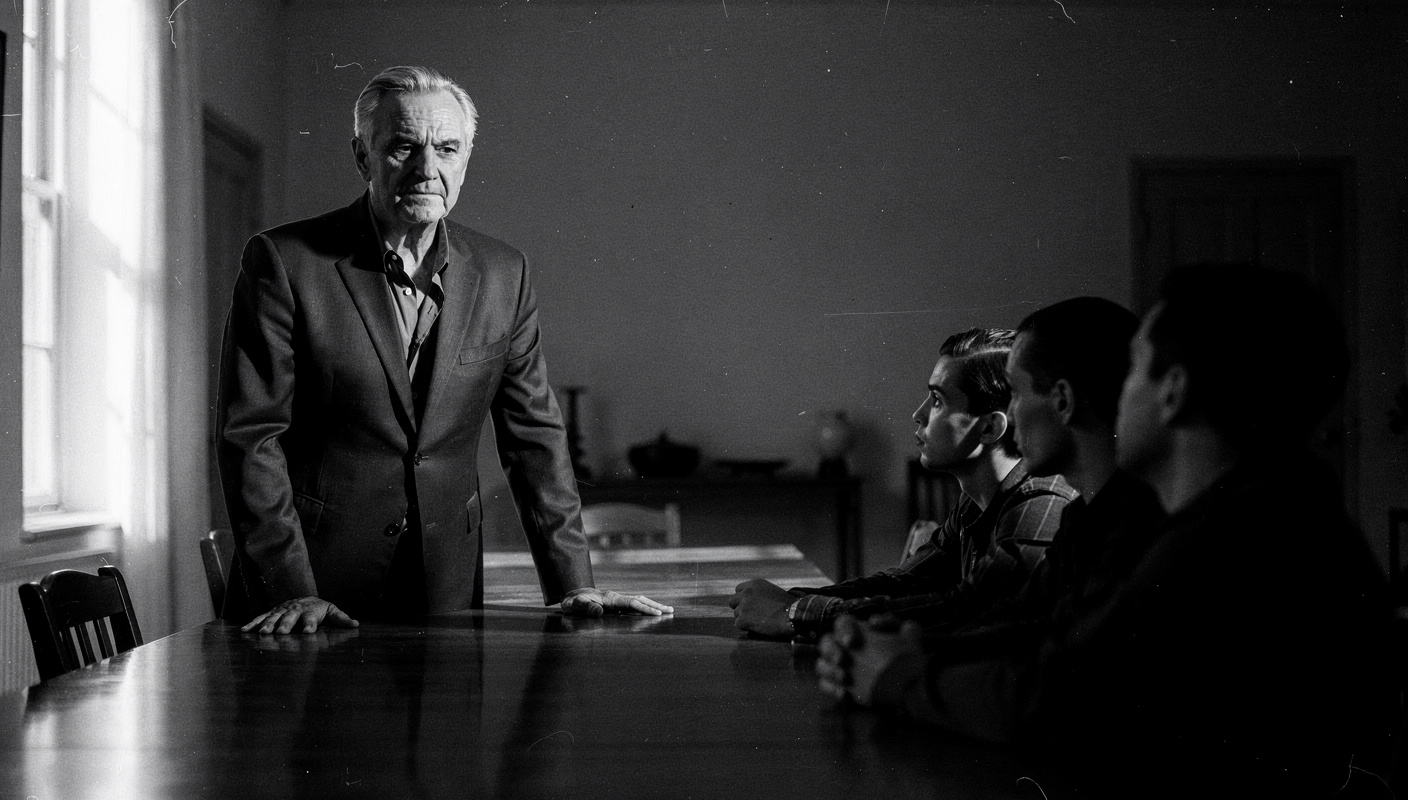
There is a moment most people remember. You are mid-sentence, making a point you know is solid, and a senior figure across the table cuts across you. They say you have got it wrong, or that the data does not support your view, or simply that they see it differently. The room goes quiet. Every face turns to see what you do next.
Your leadership voice is on trial in that moment. Not your competence, not your data, and not your career standing. Just your ability to stay present and respond with authority when the pressure is highest. I have watched talented people collapse in that silence, and I have watched others hold steady and earn genuine respect by how they handled it. The difference was not intelligence or seniority. It was preparation and a clear method for what to do next.
This is that method.
Why Holding Your Ground in Public Feels So Hard
The difficulty is not a character flaw. It is biology working against you.
When someone with authority contradicts you in front of others, your body reads it as a threat. Your speech speeds up. Your voice rises in pitch. Your instinct is either to fight, which comes out as aggression, or to fold, which looks like weakness. Neither serves your leadership voice or your standing in the room.
There is also the social weight of the moment. Everyone is watching. You feel the pull to defer, not because the senior person is right, but because deference feels safer than conflict. I have sat in rooms where the wrong decision went unchallenged for exactly that reason, and the consequences came later when they always do.
The trap is that both common responses, fighting and folding, damage your credibility. Aggression alienates the room. Capitulation signals that your positions are negotiable under social pressure, which means no one will fully trust them again. You need a third path.
"The Conversation You're Avoiding Is the One You Need to Have."
"The Conversation You're Avoiding
Is the One You Need to Have."
Stop rehearsing conversations you'll never have. Say It Right Every Time gives you 115 word-for-word scripts and 16 proven frameworks to speak with confidence in every conversation that matters.
What Must Be True Before the Meeting Starts
The steps below will not work if you walk into a meeting unprepared. Your leadership voice in a difficult moment depends on groundwork laid before the room fills.
Know your material specifically. Not broadly, specifically. If you are presenting a position, know the two or three strongest reasons behind it, the data that supports it, and the most likely objection. If you cannot state your core point in one clear sentence before the meeting starts, you will not be able to restate it calmly under fire.
Know who is likely to challenge you. If you have any reason to expect pushback from a senior figure, read their previous positions on the subject. Think about where your view and theirs are likely to collide. This is not about anticipating conflict so you can avoid it. It is about knowing the terrain so you are not surprised by it.
If a senior stakeholder tends to dominate discussions in meetings, factor that into your preparation. The more clearly you understand how that person operates, the more composed you will be when they challenge you.
How to Maintain Your Leadership Voice Meeting: A Six-Step Response
Step 1: Stop. Breathe. Do Not Fill the Silence.
The silence after a public contradiction feels unbearable. Your instinct is to fill it immediately, to defend yourself, to explain, to qualify. Resist that.
Take one deliberate breath. A real one, not a gasp. That breath does two things: it slows your nervous system, and it signals to the room that you are not rattled. Two seconds of composed silence communicates more authority than ten seconds of scrambled explanation.
Step 2: Acknowledge the Challenge Without Conceding the Point
This step is the one most people skip, and it is the one that changes everything.
You are not agreeing with the senior stakeholder. You are showing that you heard them. There is a significant difference. Try a phrase like this: "I hear that we see this differently." Or: "I understand that is a different read on it." These sentences buy you composure time, keep the tone professional, and signal that you are not rattled.
What they are not: an admission that you were wrong.
If you skip this step and go straight to your counter-argument, the room hears defensiveness. When you acknowledge first, they hear confidence.
Step 3: Restate Your Position in One Clear Sentence
This is the core of maintaining your leadership voice. After acknowledging the challenge, restate your position. Once. Calmly. With the same conviction you had before the interruption.
Do not add new information here. Do not elaborate. Do not hedge. Stick to the one sentence that captures your point most clearly.
A practical script: "My position remains that [X], and that is based on [one specific reason]."
The specificity matters. Vague restatements invite further challenge. A position anchored to one concrete reason is much harder to dismiss.
Step 4: Invite a Real Conversation, Not a Debate
Once you have restated your position, open the door rather than close it. This moves you from conflict to dialogue, and it does so on your terms.
Try: "I am happy to walk through the reasoning in more detail if that would help." Or: "If there is information I am missing, I want to hear it."
These phrases do two things. They show confidence in your position, because a person who is uncertain does not invite scrutiny. And they show respect for the other person, which keeps the room on your side. This is not softness. It is intelligent leadership.
For situations where you need to de-escalate arguments during meetings, this step does most of the work.
Step 5: Read the Room and Choose Your Next Move
After your restatement and invitation, you have a decision to make. Can this be resolved in the meeting, or does it need to move offline?
If the senior stakeholder has new information you genuinely had not considered, say so directly: "That is a factor I had not accounted for. Let me look at how it affects the position." This is not capitulation. This is intellectual honesty, and it strengthens your leadership voice rather than weakening it.
If the disagreement is a matter of interpretation or strategy rather than fact, and the meeting is not the place to resolve it, say that too: "I think we need a separate conversation on this one. I do not want to hold the room up." Then move on. This signals control, not retreat.
Step 6: Follow Up with the Senior Stakeholder Privately
The meeting is not where this ends. Your leadership voice depends on what happens in the hours after.
Request a one-to-one conversation with the senior stakeholder. Keep your framing neutral: "I wanted to follow up on the disagreement in today's meeting. I think it is worth talking through properly." This does three things. It shows you are serious about the substance, it gives you a chance to present your reasoning without a public audience, and it builds the relationship rather than leaving the tension unresolved.
For giving upward feedback to your manager that actually gets heard, the private conversation is almost always more effective than the public one.
When the Meeting Is Remote
The steps above apply in remote settings, but three things change.
The silence of Step 1 is harder to hold. On a video call, a pause can look like a technical glitch. You may need to signal it verbally: "Give me a moment." That is perfectly acceptable, and it still communicates composure.
Body language matters more, not less. On a screen, the room sees your face and nothing else. Keep your camera on. Sit upright. Do not look away from the lens when you restate your position. Your eyes are your only leadership signal in a remote setting.
And the follow-up conversation of Step 6 becomes critical. The informal corridor exchange does not happen after a video call. You have to schedule it deliberately, and you have to do it within twenty-four hours before the contradiction becomes the established version of events.
Three Ways People Undermine Their Own Authority
The mistake: Apologising before restating a position, as in "Sorry, but I still think..."
Why it happens: It feels like softening the conflict, but the apology frames your position as an imposition.
What to do instead: Drop the apology entirely. "I still think" is a complete and confident sentence.
The mistake: Over-explaining to the point of losing the core point.
Why it happens: Anxiety fills space with words. The more nervous you are, the more you talk.
What to do instead: Return to your single clear sentence. More words do not add authority. Fewer, better words do.
The mistake: Looking around the room for validation while restating a position.
Why it happens: It feels like building support, but it reads as uncertainty.
What to do instead: Address the senior stakeholder directly. Your credibility comes from your conviction, not from the number of heads nodding.
For more on managing the atmosphere after a difficult exchange, how to manage tension after a public disagreement in a team meeting covers the recovery process in detail.
Your Pre-Meeting Readiness Check
Use this before any meeting where a public challenge is possible.
- Can you state your core position in one clear sentence? Write it down.
- Do you know the one or two strongest reasons behind your position? Confirm them.
- Do you know the most likely objection, and do you have a specific response to it?
- Have you thought through who might challenge you and how they typically operate?
- Do you know whether this disagreement should be resolved in the meeting or taken offline?
- Have you prepared a follow-up script for a private conversation if needed?
If you can answer yes to all six, you walk into that room with genuine preparation behind your leadership voice. Preparation is not a guarantee. But it is the closest thing to one.
To ensure your voice is not the only one being protected, it is equally worth knowing how to ensure every participant gets heard in the meetings you run.
Staying Grounded When the Pressure Is Real
There is a broader skill underneath all of these steps. It is the ability to stay grounded when the ground feels uncertain. I have seen it described as composure, as presence, as self-regulation. Whatever you call it, it is the thing that makes every other step possible.
If you want a structured approach to that specific skill, how to use the C.O.R.E. Framework to stay grounded during a tense workplace conversation gives you exactly that. It pairs well with the process above because it addresses what happens inside you while these steps address what you do and say.
For the wider challenge of handling conflict during meetings at every level, that foundation is the same.
The Truth About Being Contradicted in Public
Here is the truth of it: a senior stakeholder who contradicts you publicly is not always doing it to diminish you. Sometimes they are wrong. Sometimes they have information you do not. Sometimes it is habit, or ego, or the pressure of the room. You will not always know which.
What you can know is how you respond. Every time you stay composed, restate your position clearly, and follow through with a private conversation, you build something. Not a reputation for winning arguments. A reputation for being someone whose positions can be trusted, whose voice does not waver when the pressure comes on, whose leadership voice is real rather than a performance reserved for easy moments.
That reputation is built one meeting at a time. Practice these steps. Apply them when the stakes feel low so they are ready when they are high. Your leadership voice in a meeting is not something you are born with. It is something you earn.
Frequently Asked Questions (FAQ)
What is leadership voice in a meeting?
Leadership voice in a meeting is the ability to communicate with calm authority, hold your position under challenge, and keep the room's trust even when someone more senior disagrees with you publicly. It combines composure, clear language, and deliberate body language.
How do you maintain your leadership voice when contradicted?
Pause before responding, acknowledge the challenge without conceding your position, and restate your point with calm clarity. Avoid defensive or apologetic language. The goal is to stay grounded and keep the conversation productive, not to win an argument in front of the room.
What should you say when a senior stakeholder disagrees with you publicly?
Use a framing phrase that acknowledges their view without abandoning yours. Try: "I understand we see this differently. My position is based on X, and I'm happy to walk through that in more detail." This keeps your leadership voice intact without escalating the tension.
How do you recover your leadership voice after being contradicted in a meeting?
Steady your posture, lower your voice slightly, and return to your core point with one clear sentence. If the moment has passed, use the follow-up conversation to restate your position privately with the senior stakeholder and clarify the record with your team.
Why do people lose their leadership voice when challenged by authority?
The response is partly biological: a public challenge from someone with more power triggers a threat response that speeds up speech, raises pitch, and creates defensive body language. Preparation and a clear response framework help you override that reflex and stay composed.
Should you push back on a senior stakeholder who contradicts you in a meeting?
Yes, if your position is well-founded. Staying silent signals agreement and damages your credibility over time. The key is how you push back: calmly, specifically, and without personalising the disagreement. Your leadership voice depends on being respected, not just liked.