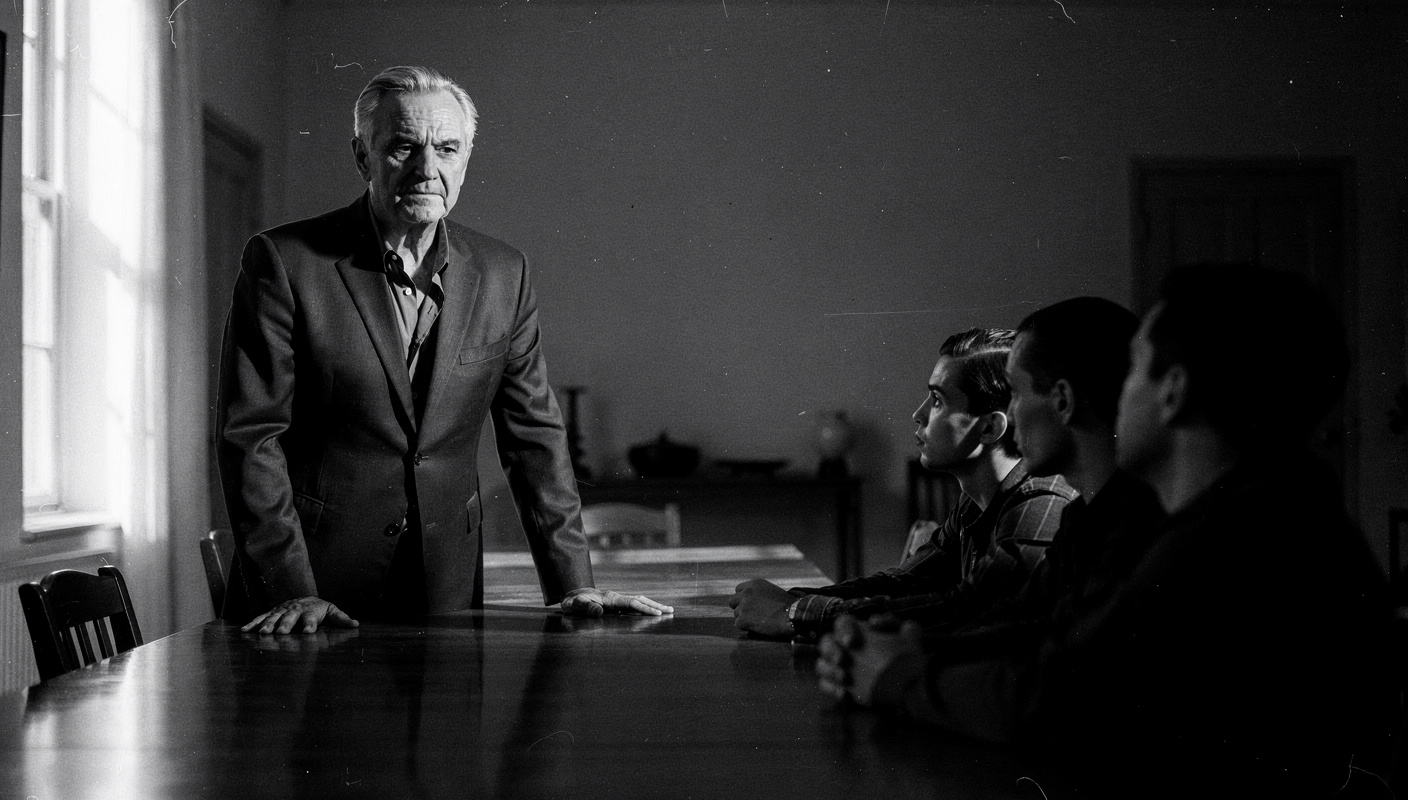

In Short
Terminating someone is not a failure of leadership. How you do it is the measure of your leadership voice.
- Preparation is not optional: your words, tone, and composure must be ready before you enter that room.
- Directness is a form of respect: evasion and softening cause more pain than a clear, compassionate statement.
- Authority does not come from power over someone; it comes from the way you hold yourself when the moment is hardest.
Leadership voice termination is the deliberate, disciplined use of tone, language, and composure to end an employment relationship with clarity and professional dignity. It is the skill of delivering a final, difficult message without cruelty, confusion, or the erosion of your own authority as a leader.
The Conversation That Separates Real Leaders from Reluctant Managers
I watched a manager once spend eleven minutes getting to the point. He talked about the business, the economy, the team restructure. He used words like "transition" and "right-sizing" until the person sitting across from him finally said, quietly: "Am I being let go?" The manager nodded, relieved, as if the person had done him a favour by asking. He had not lost his composure. He had never had it.
That is not a leadership voice. That is avoidance dressed as kindness.
Terminating someone is the hardest test of your leadership voice, because everything in you wants to soften it, delay it, or hand the weight of understanding to the other person. Most managers who struggle with terminations are not cruel people. They are people who have never been taught how to hold authority and compassion in the same breath.
What follows is the process I have built and refined over decades: for saying the words that need saying, saying them clearly, and leaving the other person with their dignity intact while you keep yours.
"The Conversation You're Avoiding Is the One You Need to Have."
"The Conversation You're Avoiding
Is the One You Need to Have."
Stop rehearsing conversations you'll never have. Say It Right Every Time gives you 115 word-for-word scripts and 16 proven frameworks to speak with confidence in every conversation that matters.
What Must Be in Place Before You Enter That Room
The conversation itself is only as strong as what precedes it. I have seen good leaders stumble badly not because they lacked the right words, but because they walked in unprepared.
Before any termination meeting, confirm three things. First, HR and legal have reviewed the decision and the documentation is complete. You are not the final decision-maker in isolation; this must be verified, not assumed. Second, you have a written record of the performance issues or conduct violations that led here, and you know them well enough to speak to them clearly without reading from a sheet. Third, you know exactly what happens next for the employee: their final pay, their notice period, the return of company property, and any outplacement support available.
When you can answer every practical question the person is likely to ask, your leadership voice carries a different quality. It is the voice of someone who has done the work, not someone winging it and hoping the conversation ends quickly.
One more thing: never conduct a termination on a Monday morning or a Friday afternoon if you can avoid it. Both extremes add unnecessary difficulty. Mid-week gives the person space to act quickly on practical matters and access support.
How to Use Your Leadership Voice Through the Termination Conversation
This is the process. Follow it in order. Every step matters, and the later ones are where most leaders lose the thread.
State the purpose immediately. Walk in, sit down, and within the first two sentences make the purpose of the meeting clear. Do not begin with "How are you?" Do not build to it. A direct opening sounds like this: "I asked you to meet with me today because I need to tell you that we are ending your employment. This is the conversation where I will explain the decision and what happens next." That is a hard sentence to say. It is also the most respectful thing you can do. The person deserves to know within thirty seconds why they are in the room.
State the reason clearly and briefly. Give one clear, factual reason for the decision. Not a list. Not a timeline of everything that went wrong. One central reason, stated plainly. "We have discussed your performance targets in three separate meetings over the past five months. The required improvement has not happened, and we have made the decision to end your employment." If it is a redundancy, say so directly: "Your position has been eliminated as part of a restructure. This is not a reflection of your personal performance." Specificity protects both of you. Vagueness creates confusion and sometimes grounds for dispute.
Allow silence. After you deliver the decision, stop talking. This is the step most leaders skip because the silence feels unbearable. It is not unbearable. It is necessary. The person needs a moment to absorb what they have just heard. Your job is to stay still, keep your expression steady, and let them have that moment. If they cry, let them cry. If they say nothing, wait. A pause of thirty or forty seconds may feel like five minutes. Let it run.
Acknowledge the emotion without losing the thread. When the person responds, hear them. If they are upset, say: "I can see this is hard. That makes sense." Then pause, and continue with the practical information. You are not their therapist in this moment, and trying to fix their feelings will blur the clarity of the conversation. What they need from your leadership voice here is steadiness, not sympathy speeches. One sincere, brief acknowledgement is worth more than three minutes of reassurance.
Cover the practical information with precision. Now, and only now, move through the logistics: final pay date, notice period or payment in lieu, benefits continuation, the return of equipment, access to outplacement support if it is available. Have this written down and hand it to them. A person in emotional shock will not retain everything you say. The document is a form of respect. It says: I prepared for this. Your situation matters enough that I thought it through.
Give them agency over the next ten minutes. Ask them how they would like to handle the immediate next steps: collecting their belongings, saying goodbye to colleagues if they choose, or leaving quietly. Do not assume. Some people want to walk straight out. Some want a few minutes alone. Give them the choice. This is a small act, and it matters more than most leaders realise. It is where your leadership voice demonstrates that authority and compassion are not opposites.
Close the conversation with a clear, brief statement. End it. Do not let the conversation trail off into awkward small talk or loop back to relitigating the decision. A closing that works: "I want to thank you for your time here. I am sorry it has come to this, and I wish you well." Then stand, if that signals the close naturally, and follow through on whatever comes next. Clarity at the end is as important as clarity at the beginning.
When the Meeting Happens on a Screen
Remote terminations are harder. You lose the physical authority of your presence: no eye contact in the full sense, no body language that reads clearly, no ability to read the room with your whole self. If you are leading a remote team and this situation falls to you, handling conflict during meetings and managing elevated emotion through a screen are skills worth sharpening beforehand.
For the termination itself: use video, always. A phone call is insufficient. An email is unacceptable. Choose a private time when the person will be at home, not in a coffee shop or open-plan office. Look directly into the camera when you speak the decision, not at their image on screen. That is the closest you get to eye contact, and it matters.
Speak more slowly than you think you need to. Digital fatigue and emotional shock combine to reduce comprehension. Pause longer between your statements. After the conversation, send the written documentation by email within the hour. Do not let the logistics float in uncertainty while they process the news.
Where Leaders Go Wrong in Termination Conversations
I have made some of these mistakes myself, and I have watched others make all of them.
The mistake: Burying the decision in preamble and softening language.
Why it happens: The discomfort of the moment pulls you toward delay. It feels kinder to ease in.
What to do instead: Practise your opening sentence aloud three times before you walk in. Hearing your own voice say the words is the best preparation for saying them clearly under pressure.
The mistake: Saying "This wasn't my decision" or "HR made me do this."
Why it happens: You want to distance yourself from the pain you are causing. It feels like it removes blame.
What to do instead: Own the conversation. Even if the decision involved others, you are the leader in this room. Deflecting destroys your leadership voice and offers the person nothing solid to hold onto.
The mistake: Apologising for the decision itself, not just the difficulty.
Why it happens: Apology feels like compassion. It signals that you are not a bad person.
What to do instead: Express genuine regret for the difficulty: "I know this is painful." Do not apologise for the decision. An apology implies the decision might be wrong, which creates false hope and extends suffering.
The mistake: Allowing the conversation to reopen the decision.
Why it happens: The person pushes back, and it feels disrespectful to hold firm.
What to do instead: Acknowledge their perspective, then return to the facts. "I hear you, and I understand this feels unfair. The decision has been made, and I am here to help you understand what happens next." Repeat this as many times as necessary.
For situations where emotion escalates significantly, the approaches in how to de-escalate arguments during meetings apply directly and are worth reviewing before a difficult meeting of this kind.
Before You Walk In: Your Leadership Voice Checklist
Use this before every termination conversation. It takes five minutes. It is worth every one of them.
- The decision has been reviewed by HR and is fully documented.
- I can state the reason for the decision in one clear sentence.
- I know the full practical details: final pay, notice period, equipment return, support available.
- I have prepared my opening two sentences and practised them aloud.
- I have a written summary of the practical information to hand to the person.
- I know where the meeting will happen and that it is private.
- I have a colleague or HR representative present if required by policy or prudence.
- I am prepared to allow silence and to acknowledge emotion without losing clarity.
- I know how I will close the conversation.
- I have not scheduled anything immediately after that would pressure me to rush.
If you cannot check every item, delay the meeting until you can. A rushed termination causes damage that takes months to repair, to your team's trust in you, and to the person leaving.
If the person leaving is someone you have given corrective feedback to previously, that process shapes this conversation. The approaches in how to use the S.B.I. Method to give team members feedback that unifies instead of divides and how the S.B.I. method reduces tension when giving corrective feedback are the foundation this conversation builds on. When feedback has been clear and specific throughout, a termination is rarely a surprise, and the conversation goes differently.
For the deeper dynamics of high-stakes conversations, including how tone and pacing shift the room, advanced feedback techniques covers the psychology that matters here.
The Ground You Stand On When the Room Goes Quiet
Here is the truth of it. The reason termination conversations fail is rarely a lack of information. It is a failure of nerve at the moment of greatest pressure. The manager who spent eleven minutes circling the point was not confused about what to say. He was afraid of what would happen when he said it.
Your leadership voice is not a performance. It is the expression of your preparation, your clarity, and your willingness to hold a difficult moment without flinching or fleeing. When you sit across from someone and deliver hard news with directness and compassion, you are not being cold. You are giving them something real to stand on.
That is what they will remember, long after the sting of the moment fades.
If you want to strengthen the foundation that this kind of conversation demands, how to use the C.O.R.E. framework to stay grounded during a tense workplace conversation is the place to start. And if team conflict has been part of the picture leading to this moment, how to use the D.E.A.L. method to resolve conflicts that are fracturing team synergy gives you the earlier-stage tools worth having in hand.
Leadership voice termination is, in the end, an act of courage. Prepare for it. Practise it. Then trust yourself to deliver it.
Frequently Asked Questions (FAQ)
What is leadership voice termination?
Leadership voice termination means using your tone, language, and composure to end someone's employment with clarity and dignity. It is the ability to deliver a difficult, final message without cruelty, evasion, or the loss of your professional authority. It is a communication skill you can prepare and practise.
How do you start a termination conversation using your leadership voice?
State the purpose of the meeting within the first two sentences. Do not build up to it with small talk or preamble. A direct opening, such as naming the reason you are meeting and what the outcome of this conversation is, protects both parties and signals that you are in control of the room.
How do you stay calm during a leadership voice termination meeting?
Prepare your opening statement word for word, and practise it aloud before the meeting. When emotion rises in the room, slow your breathing and reduce your pace. Silence is a legitimate tool. Staying physically still, with hands visible and voice steady, signals composure far more powerfully than any particular phrase.
What should you never say during a termination conversation?
Never say it was not your decision, never apologise for the decision itself, and never offer false hope that the outcome could change. These phrases feel kind in the moment but they strip authority from your leadership voice and create confusion that can cause real harm to the person you are letting go.
How does a leadership voice termination differ when done remotely?
On a video call, you lose the physical authority of your presence. Compensate by preparing your environment carefully, looking directly into the camera when you speak, and allowing longer pauses than you would in person. Send written confirmation immediately after the call. Never use email, phone, or messaging as the primary channel for a termination.
How do you handle tears or anger during a termination conversation?
Acknowledge the emotion directly and briefly, then return to the facts. You might say: I can see this is hard, and that makes sense. Then pause, and continue. Do not try to fix the person's feelings or talk them out of their reaction. Your composure is the anchor the conversation needs.