
In Short
Your leadership voice does not just carry your words. It sends biological signals that your team's brains process before conscious thought begins. Certain patterns of tone, pace, and rhythm trigger genuine psychological safety in listeners. Others trigger threat responses that shut down honest communication, no matter how good your words are.
- The brain scans vocal tone for safety signals before it processes the words being spoken.
- Specific patterns in your voice, such as steady pace, controlled pitch, and deliberate pausing, directly reduce the threat response in people listening to you.
- These patterns are learnable, and practising them changes how your team thinks, speaks, and trusts.
Leadership voice patterns are the recurring combinations of tone, pace, pitch, and rhythm that a leader uses when speaking. They function as unconscious biological signals that either activate threat responses in listeners' brains or create the conditions for psychological safety, clear thinking, and honest communication.
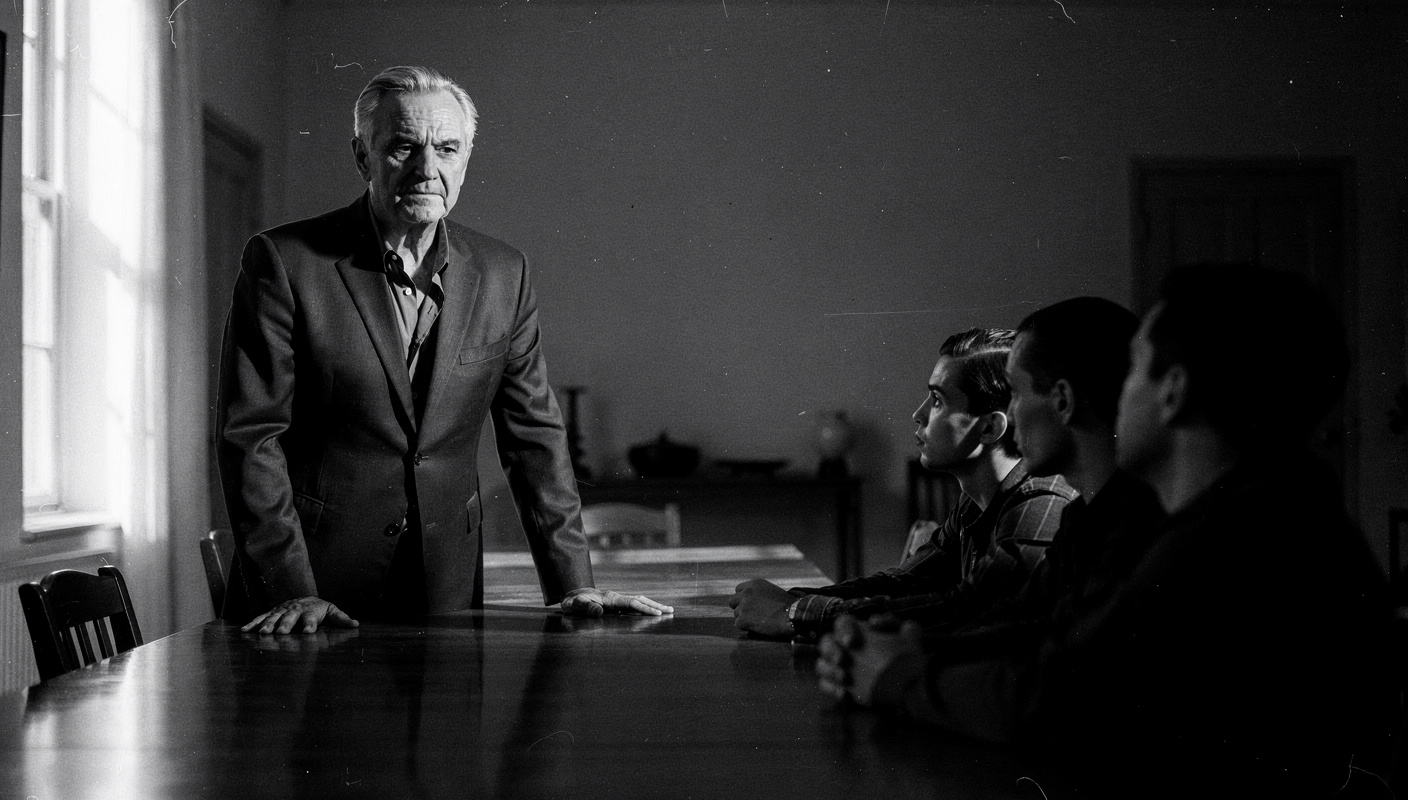
There is something I have watched happen in meeting rooms for six decades, and it never stops being striking. A leader walks in, says almost nothing, and the whole atmosphere in the room changes. Not because of the words. Because of how they sound when they speak. The pace, the weight, the quality of the tone. Something in the room shifts before the first sentence is finished.
Leadership voice patterns are at the centre of that shift. Most people think of voice as the vehicle that carries their message. The real function is older and deeper than that. Your voice is a biological broadcast. Every person in the room is receiving it at a level below conscious thought, and their nervous systems are making a decision: safe or not safe. That decision shapes everything that follows. Whether people speak up. Whether they take risks. Whether they tell you the truth.
This article explains exactly why that happens and what you can do about it.
What the Brain Is Actually Doing When It Hears You Speak
Long before the meaning of your words lands, the brain has already processed how you sound. The part of the brain responsible for detecting threat responds to vocal tone in milliseconds. It is scanning for signals: is this situation safe, or do I need to protect myself?
This is not metaphor. The brain's threat-detection system evolved to read the sounds of the environment, including human voices, for signs of danger. A raised pitch, a clipped and pressured pace, an unpredictable shift in rhythm: these register as warning signals. The system does not wait for context. It reacts, and then the body follows.
When the threat response fires, real changes happen in the listener. Stress hormones rise. Attention narrows. The parts of the brain responsible for creative thinking, honest self-expression, and open dialogue become less available. People become more guarded, more defensive, and less likely to say the difficult things that teams need to hear. If you want to understand why psychological safety is so fragile in most workplaces, start here.
The reverse is equally true. When the brain receives vocal signals it reads as safe, the threat response quiets. Cognitive resources become available. People can think more broadly, speak more honestly, and engage with uncertainty without shutting down. The leader's voice, quite literally, changes the quality of thought happening in the room.
"The Conversation You're Avoiding Is the One You Need to Have."
"The Conversation You're Avoiding
Is the One You Need to Have."
Stop rehearsing conversations you'll never have. Say It Right Every Time gives you 115 word-for-word scripts and 16 proven frameworks to speak with confidence in every conversation that matters.
The Specific Patterns That Signal Safety to a Listening Brain
Not all voices create the same effect. After decades of watching communicators succeed and fail, I have come to recognise that the difference often lives in a small set of specific patterns.
Pace as a Regulator
When leaders speak quickly under pressure, they broadcast urgency. The listener's nervous system reads urgency as a sign that something is wrong. The brain accelerates. Threat vigilance increases. People in the room become less able to think and more focused on surviving the conversation.
Slowing your pace does the opposite. A measured, unhurried delivery tells the room that there is no emergency, even when the subject is serious. This is one reason experienced leaders often seem to slow down precisely when things are most tense. It is not performance. It is biology. Steady pace is a direct regulator of the listener's nervous system.
Pitch and the Authority Signal
A rising pitch at the end of statements, what linguists call high-rising terminal intonation, sends a signal of uncertainty. The brain reads uncertainty in a leader as potential instability. That triggers a search for steadiness, and when people cannot find it in the leader's voice, anxiety fills the gap.
A falling or level pitch on declarative statements sends the opposite signal. It says: I know where we stand. Even if the news is hard, a controlled and grounded pitch tells the listener that the situation is being held. That is a safety signal. People can think clearly when they feel held. They cannot when they feel unmoored.
Rhythm and Predictability
The brain finds predictability deeply comforting. Chaotic rhythm in speech, lurching between fast and slow, loud and quiet, clipped and flowing, creates low-level alarm even when the content is neutral. The listener's system is working too hard to track the pattern, and that effort takes resources away from genuine engagement.
Leaders with strong vocal authority tend to have a recognisable rhythm. Not monotony: variation exists, but it follows a logic. The listener's brain can anticipate and settle. This is why some voices make a room feel calm within thirty seconds of the person speaking, while others generate unease even when saying reasonable things.
The Power of the Pause
Nothing in leadership voice is more underestimated than silence. A genuine pause before responding tells the room several things at once: that the listener was genuinely heard, that thought is being applied, and that there is no pressure to rush. These are among the most powerful safety signals a leader can send.
I have watched many leaders destroy trust not through what they said but through the speed with which they said it. Snapping back instantly with answers signals that listening was not really happening. A pause of even two or three seconds changes the entire quality of the exchange. It is a gift to the person who just spoke.
For practical guidance on building the kind of conversations where these pauses become possible, look at how to start a difficult conversation that is blocking your team's synergy. Getting the opening right determines whether the pause lands as strength or as awkwardness.
Where This Goes Wrong in Real Situations
Let me give you three situations I have seen play out hundreds of times.
A leader is delivering disappointing results to the team. The news is real and serious. But they deliver it quickly, with a tight, pressured pace, their pitch rising as they rush toward the reassuring close. The team hears the tension before they process the words. Defences go up. The leader wonders afterward why the team seemed distant and why nobody asked good questions.
A manager is giving feedback to a direct report who made a visible mistake. The manager's tone is controlled, but clipped. Short sentences, no pause, flat rhythm. The report receives the feedback, nods, and says nothing. The manager assumes acceptance. What actually happened is that the report's threat response fired, and they went into protection mode. The feedback never got through.
A senior leader runs a monthly update meeting. She speaks in a grounded, unhurried tone, even when covering difficult territory. She pauses before answering questions. Her pitch stays level and clear. People in that meeting speak up. They raise concerns. They disagree, occasionally. The leader has created a room where the brain's threat response is not continuously firing, and real conversation becomes possible. This is what productive meetings that don't waste time actually feel like from the inside.
Why Leaders Miss This Completely
Here is the truth of it: most leaders are thinking about their content. They prepare what to say. They refine their arguments. They choose their words. And then they deliver all of that carefully chosen content on top of vocal patterns that undo it entirely.
The voice is treated as a delivery system. It is actually the primary message. The words are secondary. This is hard to accept, because we are conditioned to believe that rational content is what moves people. It is not. Not primarily. People decide whether to open up or close down based on how safe they feel, and they feel safe or unsafe based on signals that arrive faster than thought.
There is also a performance trap. Many leaders believe that energy, urgency, and forward momentum are signs of strength. They speak fast because it signals drive. They keep the pace high because slowing down feels like weakness. In reality, they are continuously activating the threat responses of everyone listening, and then puzzling over why honest communication is so hard to get. The root causes of workplace tension often trace directly back to this dynamic.
The third reason is stress contagion. When a leader is under pressure, their own nervous system dysregulates. The voice tightens, the pace accelerates, the pitch rises. This is automatic. And because the brains of everyone in the room are picking up those signals, the leader's internal state becomes the room's internal state. A leader who cannot regulate their own voice under pressure is, without knowing it, spreading their anxiety to every person they lead.
How You Build These Patterns Through Practice
The good news is that leadership voice patterns are not fixed. They are practised. I know this from my own failures. Early in my working life, I spoke fast when I was nervous, which was often, and then wondered why my words never seemed to land the way I intended. It took years of deliberate repair to change those habits.
The S.T.R.O.N.G. method for building synergy through every conversation offers a framework that addresses several of these patterns directly, and it is worth studying alongside what you are reading here.
Start with a single practice: slow down the first sixty seconds of every important conversation. Not artificially, but with intention. Let your pace set the room before the content arrives. This alone will change the quality of what follows.
The second practice is to build pauses into your delivery, especially after someone else has spoken. Resist the pull to respond immediately. Count to two, silently, before you speak. You will feel the discomfort. Stay with it. The pause is doing real work.
Third, pay attention to your pitch at the end of important statements. If you are stating something clearly, let the pitch fall. Practise saying sentences of consequence with a level, grounded close. Notice the difference in how they feel, and how they land.
This matters in every channel where your voice is present. How leaders stay visible in virtual workspaces covers the specific adaptations voice requires when the medium is digital, where those patterns carry differently and need even more care.
Effective feedback also depends on these same vocal foundations. The right words delivered in a pressured, urgent tone will activate defensiveness before the content has a chance. Effective feedback as the backbone of workplace growth explores the broader case for why the delivery of feedback matters as much as its content.
The Thing You Cannot Fake
This much I know for certain, after sixty years of watching people communicate: you cannot sustain vocal patterns that contradict your internal state. A leader who is genuinely calm under pressure does not have to manufacture the right vocal qualities. They emerge naturally. A leader who is internally anxious, resentful, or dismissive will produce vocal patterns that leak those states, no matter how carefully they choose their words.
The deepest work on leadership voice patterns is therefore not vocal training. It is the internal work of building genuine equanimity, genuine respect for the people you lead, and genuine belief that the conversation matters. When those things are real, the voice follows. The pace settles. The pitch grounds. The pauses become natural rather than performed. And the people listening feel it, before they have processed a single word.
That is not a small thing. It is, in my experience, the difference between a leader people trust and a leader people merely tolerate.
Frequently Asked Questions (FAQ)
What are leadership voice patterns?
Leadership voice patterns are the recurring combinations of tone, pace, pitch, and rhythm that a leader uses when speaking. These patterns send unconscious biological signals to listeners, either activating threat responses in the brain or creating the conditions for psychological safety and open thinking.
How do leadership voice patterns trigger psychological safety?
When a leader speaks with a steady pace, controlled pitch, and predictable rhythm, the listener's nervous system reads these as safety signals. The brain reduces its threat-scanning activity, allowing people to think more clearly, speak more honestly, and engage more fully with the conversation.
Can you train your leadership voice to build psychological safety?
Yes. The specific patterns that trigger safety in listeners are learnable. Slowing your pace under pressure, lowering your pitch when delivering difficult news, and pausing before responding are all concrete practices that signal calm authority and reduce the threat response in people around you.
Why does a leader's tone of voice affect the whole team?
Your nervous system is contagious. When a leader speaks with tension, urgency, or unpredictability, those signals spread through the group. The brain processes vocal tone before it processes words, so your team is reacting to how you sound before they have consciously heard what you said.
What leadership voice mistakes destroy psychological safety?
The most common mistakes are speaking too fast under pressure, raising pitch when delivering bad news, and using a clipped or closed vocal quality that signals impatience. Each of these activates the listener's threat-detection system and shuts down the open, honest communication that good leadership requires.
How is leadership voice different from simply speaking confidently?
Confidence is one element, but leadership voice patterns go deeper. They include the specific rhythms, pauses, and tonal qualities that regulate the nervous systems of people listening. A leader can sound confident while still triggering alarm in listeners if the underlying vocal patterns carry tension or unpredictability.