
In Short
Double standards in senior workplaces penalise women for the same direct, confident communication that earns men respect. Your leadership voice is not about being louder or softer. It is about precision: knowing exactly what to say, how to pace it, and how to hold your ground when the room pushes back.
- Prepare your key messages in advance so pressure cannot dismantle your clarity.
- Use deliberate pacing and strategic framing to command authority without triggering bias.
- Recover from interruptions quickly and without apology.
Leadership voice tips are practical communication strategies that help women in senior roles project authority, hold ground under pressure, and navigate attribution bias. The goal is a voice that earns respect consistently, even when the environment applies unequal standards to how women speak.
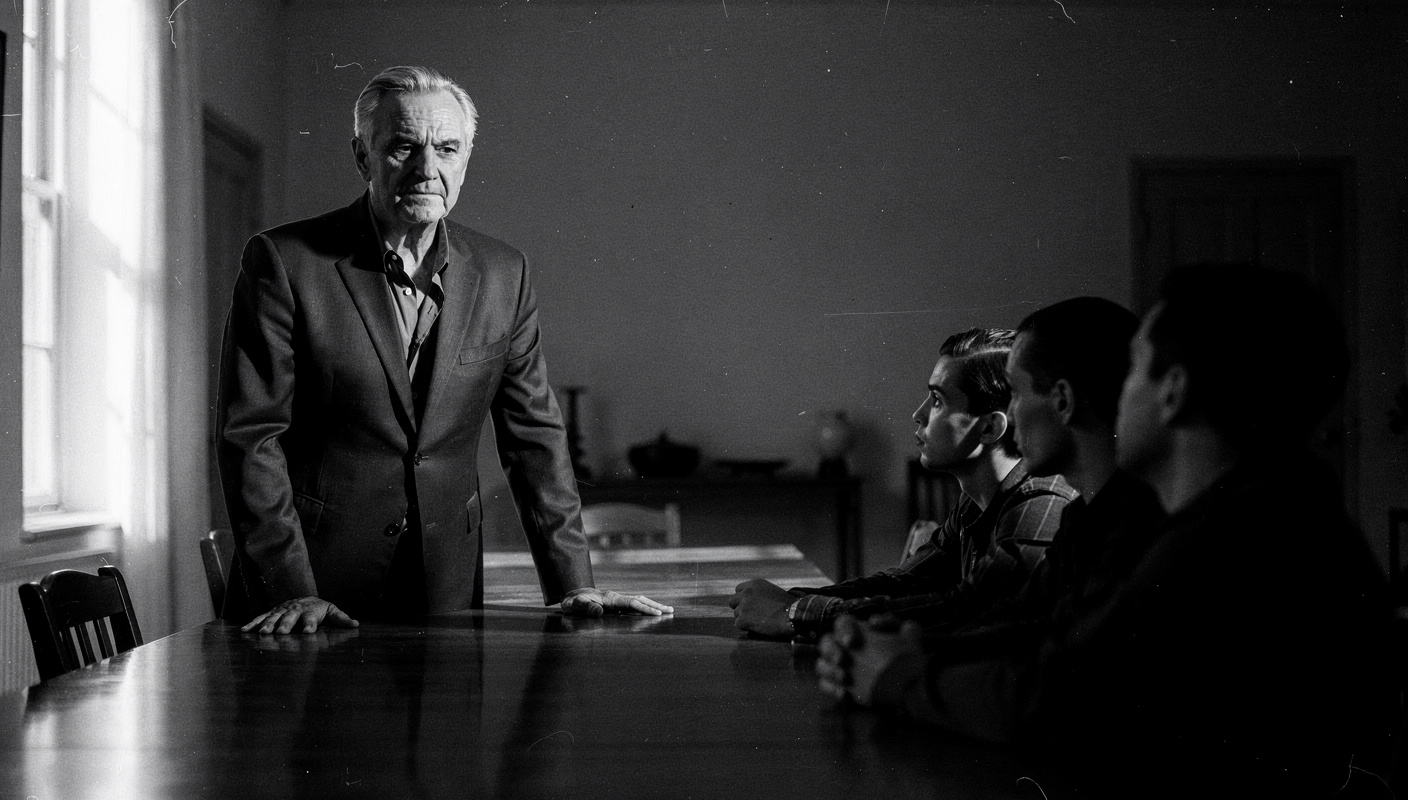
She had the data. She had the room. She had been right before, and everyone in that boardroom knew it. But the moment she pushed back on the proposal, one of the senior men leaned over and murmured to his colleague, and the energy shifted. She pressed on, slightly louder. They talked over her. By the end, her idea was adopted, credited to someone else, and she sat quietly furious, wondering what she had done wrong.
She had done nothing wrong. That is the particular cruelty of the double standard.
Leadership voice tips for women in senior environments have to start from that truth. The challenge is not a lack of confidence or skill. It is a communication environment that reads the same behaviour differently depending on who displays it. Speak directly and you are aggressive. Soften your approach and you are not taken seriously. Finding the path between those two penalties takes a specific, repeatable process. That is what this article gives you.
Why the Double Standard Makes This Harder Than It Looks
There is a name for what that woman in the boardroom was up against: attribution bias. The same assertive sentence lands differently on the ear depending on who speaks it. Decades of workplace norms have wired people to associate authority with a particular kind of voice, and that voice was not built around women.
The trap is that awareness alone does not solve it. You cannot simply decide to ignore the bias. If you mirror the communication style rewarded in men, you risk being labelled difficult. If you pull back, your ideas get absorbed by others. The penalties sit at both ends of the scale, and the narrow path between them has to be navigated consciously, sentence by sentence.
This is also why generic confidence advice falls flat. Being told to "speak up more" or "own the room" does not account for the real cost of doing so without a system behind it. What you need is not a mindset shift. You need a method.
"The Conversation You're Avoiding Is the One You Need to Have."
"The Conversation You're Avoiding
Is the One You Need to Have."
Stop rehearsing conversations you'll never have. Say It Right Every Time gives you 115 word-for-word scripts and 16 proven frameworks to speak with confidence in every conversation that matters.
What Needs to Be in Place Before Anything Else
Before you build the process, two things must be honest.
First, you need to know exactly where you are losing ground. Is it in formal presentations, where you struggle to hold the floor? Is it in smaller meetings, where your ideas are adopted once someone else repeats them? Is it with a specific colleague who consistently talks over you, or with a room that goes quiet when you challenge the consensus? The steps ahead work. They work better when aimed precisely.
Second, you need at least one trusted colleague who will give you honest feedback. Not praise. Honest observation. Someone who will tell you when your pacing collapsed under pressure, or when your final sentence rose into a question when it should have stayed flat. If that person does not exist yet, your first parallel task is to find one. Building strong team dynamics is part of what makes this kind of feedback possible.
The Six-Step Process for Building Real Vocal Authority
Step 1: Script Your Three Non-Negotiable Points Before Every Meeting
Walk into nothing unprepared. Before any meeting where your voice matters, write down the three most important things you need to communicate. Not ten points. Three. Commit them to memory in plain language, not the compressed shorthand of your notes.
When pressure arrives, which it will, your prepared sentences are what hold. Improvisation under stress produces the verbal habits that undermine you: the over-qualification, the trailing pitch, the unnecessary apology before a direct question. Preparation eliminates the conditions where those habits appear.
For a budget review, your three points might be: "This initiative returns value within two quarters," "The alternative costs more in the long run," and "I need a decision by Thursday." Practise saying all three aloud, at a natural pace, before you walk in. They become the spine the rest of your communication hangs on.
Step 2: Control Your Pace, Especially When You Feel Rushed
This much I know for certain: the moment you feel pressure to fill silence or prove yourself quickly, your pace accelerates, your pitch rises, and your authority drains. The room reads speed as anxiety. It reads deliberate stillness as confidence.
Practise pausing for one full second before your most important sentences. This feels unnatural. It feels longer than it is. It gives your words the weight they deserve. A slow, clear "No, I think we need to revisit that" lands harder than a rushed paragraph explaining the same thing.
In your next high-stakes conversation, pick one moment to pause before speaking. Just one. Notice how the room adjusts to wait for you. That adjustment is the beginning of earning the floor, not fighting for it.
Step 3: Frame Before You Assert
Attribution bias is triggered most sharply when assertion appears without context. When you move straight to your position, a biased room reads it as aggression. A brief frame changes the read without weakening the substance.
The frame is not a hedge. It is a signal of reasoning. "I want to address the cost assumption in the proposal before we proceed" is not softening your challenge; it is organising it. The challenge that follows lands with the same force, but the room has been given a reason to receive it rather than to resist it.
A useful script: "Before we move on, I want to address [specific issue]. My concern is [direct statement]. What I am recommending instead is [concrete alternative]." Three sentences. Clear, direct, framed. The difference between this and blunt assertion is not weakness; it is precision.
Step 4: Recover from Interruptions Without Conceding the Floor
This is where many women lose ground permanently, not in a single dramatic moment but in a hundred small concessions. Someone speaks over you. You pause. They finish. You do not return to your point. The thread is gone.
Here is the repair: re-enter immediately, calmly, and without apology. "I will finish that thought" or "Let me complete that point" spoken at a steady volume as soon as there is half a breath of space. Do not summarise what was said over you. Do not acknowledge the interruption beyond claiming the floor. Pick up from exactly where you stopped and continue to your full stop.
Practise this sentence: "Let me finish." Two words. Flat tone. Not a shout, not a whisper. If the interruption recurs, you say it again. You are not being aggressive. You are holding your ground, which is what leaders do. Knowing how to ensure every participant gets heard is a skill you deserve to claim for yourself as much as you model it for others.
Step 5: End Your Sentences Like Statements, Not Questions
One habit erases authority faster than any other: the upward pitch at the end of a declarative sentence. "I think we should move forward with the proposal?" is not a statement. It is a request for permission. The room hears the question mark even if you did not write one.
Record yourself speaking in a low-stakes meeting. Listen back for the pitch pattern at the end of your sentences. If your voice rises when you are stating something, practise the same sentence with a flat or slightly downward close. The meaning does not change. The authority does.
Your key statements in any meeting should close on a period. Full stop. Flat delivery. Let the silence sit after. Resist the urge to fill it with qualification. The discomfort of that silence is the room adjusting to your authority, not evidence that you have done something wrong.
Step 6: Build a Visible Pattern of Following Through
Authority in a senior environment is not built in a single meeting. It is built by being the person whose statements consistently prove reliable. If you say you will deliver by Thursday, deliver by Thursday. If you name a problem, bring a proposed resolution at the next meeting.
This sounds simple. In practice, it is the work that outlasts bias. Attribution bias is a first-impression mechanism. It struggles to maintain itself against evidence. The woman who has been right four times running has built a track record the room must reckon with. Sustaining that credibility through change is what separates early wins from lasting influence.
Adapting This Process for Virtual and Hybrid Senior Settings
The double standard does not disappear on a video call. In some ways it intensifies, because the visual cues that communicate composure, the grounded posture, the held gaze, are compressed into a small rectangle on a screen.
In virtual meetings, pace becomes everything. You cannot use physical presence to signal authority, so your voice carries the full weight. Speak slightly more slowly than feels natural. Pause before key points. Keep your camera at eye level or slightly above, not below, which reads as deference. Use your participant name professionally rather than nicknames.
Prepare two or three key statements in advance and drop them clearly into the discussion rather than reacting to everything in the moment. When you are talked over in a virtual setting, the recovery script changes slightly: "I was mid-point when I lost the floor. My point was this," said calmly after a momentary pause. How leaders stay visible in virtual workspaces covers the broader visibility question; the voice work here is the foundation underneath it.
The Habits That Quietly Undermine You
After decades of watching this, I have learned that it is rarely one large mistake that costs a woman her authority in a room. It is a pattern of small habits, each of which seems reasonable in isolation.
The mistake: Beginning statements with "I just wanted to say" or "This might be wrong, but."
Why it happens: It feels like politeness, or a way to soften the blow before a challenge.
What to do instead: Start with the substance. "The data shows a gap in this proposal" is stronger than the same sentence preceded by six words of pre-apology.
The mistake: Raising questions as requests for permission rather than as genuine challenges.
Why it happens: Direct challenge feels risky when you know the room may read it harshly.
What to do instead: Frame the challenge before asserting it (Step 3 above), then hold the frame. "I am not convinced by the timeline. Can you walk me through how you reached it?" is both direct and respectful. If conflict escalates, knowing how to handle conflict during meetings gives you a structured recovery.
The mistake: Over-explaining a decision once you have already made it.
Why it happens: Anticipating pushback leads to pre-emptive justification, which reads as uncertainty.
What to do instead: State the decision, give one clear reason, stop. If challenged, address the specific challenge. Do not re-explain the whole decision from the start.
The mistake: Letting a subordinate or peer repeat your idea and receive the credit without naming what happened.
Why it happens: Naming it feels confrontational, and the risk feels high.
What to do instead: Use a clear attribution claim in the moment: "Yes, that builds on the point I raised earlier about X. To add to that..." You are not accusing anyone. You are simply connecting the dots for the room. When a manager dismisses the problem entirely, the V.A.L.U.E. method for advocating with a dismissive manager gives you a structured path forward.
Your Pre-Meeting Voice Checklist
Use this before any high-stakes meeting. It takes three minutes.
- Have I written down my three non-negotiable points in plain, direct language?
- Have I practised saying each point aloud at a controlled pace?
- Do I know the one moment in this meeting where I am most likely to feel pressure and rush?
- Do I have my interruption recovery phrase ready: "Let me finish that point"?
- Have I checked my framing sentence for the one challenge I expect to face?
- Am I prepared to let silence sit after my strongest statement without filling it?
Keep this list on a card or in your notebook. Run through it before you walk into the room. It takes less time than the cost of entering unprepared.
If the meeting involves a tense situation that could escalate, how to de-escalate arguments during meetings gives you a parallel set of tools for when the temperature rises unexpectedly.
The Work Ahead Is Worth Doing
Let me tell you something I have watched across many years. The women who build lasting authority in senior environments are not the ones who found a way to stop the bias. They are the ones who built a voice so consistent, so clear, and so reliably followed through that the bias had less and less to anchor to.
That is not a small thing. It is not a quick fix. It takes the kind of patient, deliberate practice that produces real mastery over months and years. But the tools above are real, and they work, and every meeting is a place to apply one of them. Leadership voice tips are only useful if they enter the room with you. Pick one step this week. Practise it until it holds under pressure. Then add the next. That is how a leadership voice is built: not in a single conversation, but in the accumulation of a hundred small, well-made choices.
Frequently Asked Questions (FAQ)
What are leadership voice tips for women in senior roles?
Leadership voice tips for women focus on deliberate pacing, strategic framing, and interruption recovery. The goal is to communicate authority without triggering the double standard penalty for being too assertive or too soft. Consistency of tone and clear sentence structure are the practical foundations.
How do you develop a strong leadership voice at work?
You develop a strong leadership voice through deliberate practice: scripting your key messages in advance, controlling your pacing under pressure, and recovering cleanly when interrupted. It is built sentence by sentence, meeting by meeting, over months of consistent application.
Why do women face double standards around voice and authority?
Attribution bias means the same assertive behaviour is read differently depending on who displays it. A woman who speaks directly is often labelled abrasive, while a man using the same tone is called decisive. Understanding this bias helps you design communication that commands authority while managing the perception gap.
What is the best way to reclaim the floor after being interrupted?
The most effective method is calm, immediate re-entry without apologising or raising your voice. Use a short phrase such as "I will finish that point" and continue from where you stopped. Do not summarise what was said over you; simply pick up your thread as if the interruption did not happen.
How can women use leadership voice tips in virtual meetings?
In virtual settings, pacing and deliberate pausing carry more weight because visual cues are reduced. Speak slightly more slowly than feels natural, use your camera and framing to signal authority, and prepare two or three key statements in advance so you are never scrambling for words under pressure.
What mistakes weaken a woman's leadership voice in senior environments?
The most common errors are over-qualifying statements before making a point, apologising before asking a direct question, and raising pitch at the end of declarative sentences. Each habit signals uncertainty. Replacing them with direct sentence structures and steady pacing builds credibility over time.