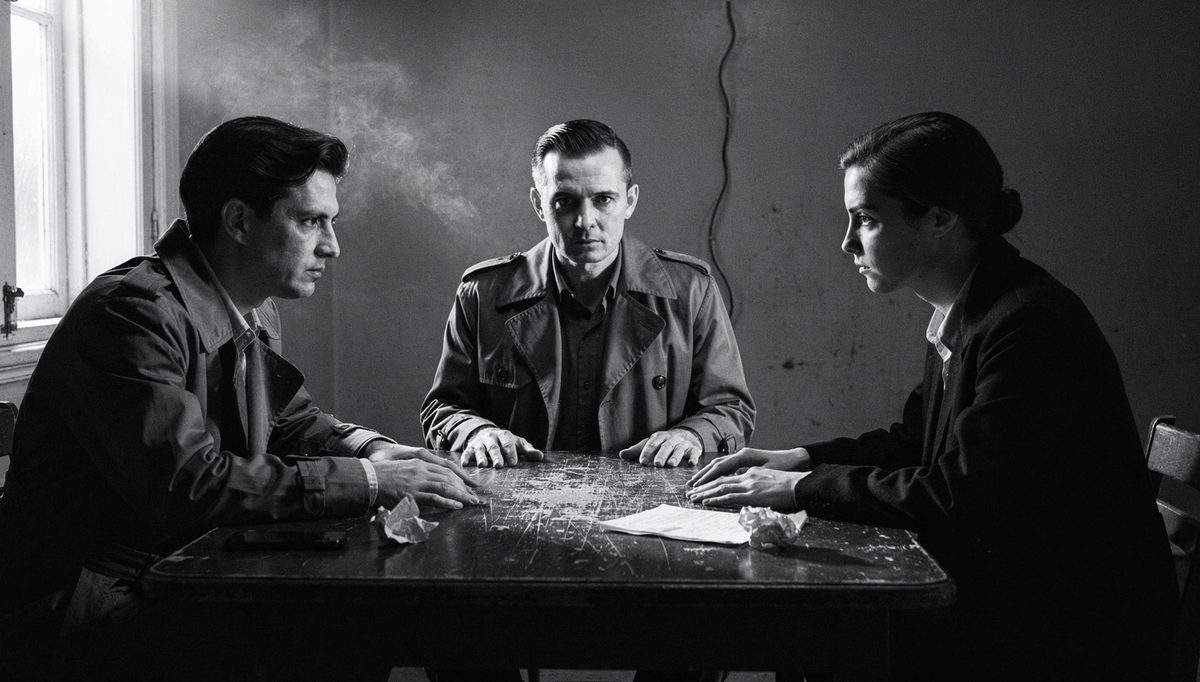

In Short
Mediating between two strong personalities is not just about keeping the peace. The mistakes that sink these sessions are often invisible in the moment: neutrality that quietly tilts, speed that skips genuine understanding, and silence that gets misread as agreement.
- Taking sides without realising it is the most common error, and the hardest to catch.
- Moving too fast destroys trust on both sides before resolution has any ground to stand on.
- Letting one dominant voice control the room is a structural failure, not a personality problem.
Tension management mistakes are the specific errors that mediators, managers, and team leaders make when trying to resolve interpersonal conflict between two assertive individuals. These missteps typically worsen the dispute, erode trust, and leave both parties feeling unheard or manipulated.
You thought it went well. Both of them stayed in the room. Nobody shouted. You walked out feeling like you had done something useful. Then, three days later, the conflict was worse than before, and one of them was avoiding you.
Mediating between two strong personalities is one of the hardest tension management challenges any workplace leader faces. The difficulty is that the mistakes rarely feel like mistakes while you are making them. They feel like good instincts: moving the conversation forward, keeping things civil, nudging toward agreement. But instinct without structure can quietly make everything worse.
This article names the specific errors that derail mediation sessions before they have a chance to work, explains why each one happens, and gives you something concrete to do differently. Some of what follows will surprise you.
Why Mediation Between Dominant Communicators Feels Harder Than It Is
Strong personalities do not make bad mediation subjects. They make honest ones. The challenge is that their directness, their confidence, and their comfort with disagreement create social pressure that pulls mediators off course without warning.
Most of us are trained, consciously or not, to restore harmony quickly. When two assertive people are in the same room, that pull toward rapid resolution becomes almost irresistible. We interpret silence as danger. We interpret agreement as success. We mistake the absence of shouting for the presence of understanding.
Before you can avoid the mistakes below, you need to accept one thing: your job in that room is not to make people feel comfortable. Your job is to make them feel heard. Those are not the same thing, and confusing them is where most of the errors begin.
"The Conversation You're Avoiding Is the One You Need to Have."
"The Conversation You're Avoiding
Is the One You Need to Have."
Stop rehearsing conversations you'll never have. Say It Right Every Time gives you 115 word-for-word scripts and 16 proven frameworks to speak with confidence in every conversation that matters.
The Six Tension Management Mistakes That Derail Mediation
1. Siding with the most recent speaker
What it looks like: You nod more, lean forward slightly, or use affirming language after the second person speaks, because their point is freshest in your mind.
Why it happens: It is not bias in the traditional sense. It is simply how working memory operates under social pressure. The last argument you heard feels the most vivid.
Why it matters: Both people are watching you far more closely than you realise. Any perceived tilt in your body language or tone will be registered and remembered. The person who noticed it will disengage or escalate.
What to do: Before each person speaks, reset your physical posture to neutral: feet flat, hands still, eye contact shared equally. After each statement, reflect it back in the same number of words and the same tone. Keep a rough mental tally of air time.
This much I know for certain: people in conflict are extraordinarily sensitive to fairness signals. They will forgive a lot. They will not forgive a mediator who appears to have already chosen.
2. Resolving the presenting issue instead of the actual one
What it looks like: You reach an agreement on the specific disagreement that brought them to the room, everyone shakes hands, and the underlying dynamic remains completely untouched.
Why it happens: Surface issues are concrete and resolvable. The real issue, usually a pattern of disrespect, unspoken competition, or a felt power imbalance, is harder to name and more uncomfortable to sit with.
Why it matters: The conflict returns, often within weeks, dressed in different clothes. Each recurrence makes resolution harder and erodes your credibility as a mediator.
What to do: Before closing any session, ask both parties directly: "Is there anything about how you two work together, not just this specific issue, that we have not named yet?" Give them time to answer. The silence after that question is productive.
I have made this mistake more times than I care to admit. You think you have solved it. You have only postponed it.
3. Treating equal air time as sufficient neutrality
What it looks like: You give each person the same number of minutes to speak and believe that constitutes fairness. One person, however, is a more skilled communicator and uses their time far more effectively.
Why it happens: Mediators default to procedural fairness because it is measurable and defensible. But procedural fairness and felt fairness are not identical.
Why it matters: The less verbally dominant person leaves feeling that the session was technically fair but practically loaded against them. They comply with any outcome while quietly resenting it.
What to do: Pay attention to the quality of expression, not just the quantity. Ask clarifying questions that help the less articulate person sharpen their point: "Can you say more about that?" or "What would it look like if that changed?" This is not interference; it is calibration. You can find more on creating genuine psychological safety in difficult conversations in How to Start a Difficult Conversation That's Blocking Your Team's Synergy.
Here is the truth of it: equal time with unequal skill is not equal at all.
4. Filling every silence
What it looks like: The moment a pause appears in the conversation, you introduce a new question, summarise what was just said, or redirect to the next topic.
Why it happens: Silence in a tense room feels dangerous. Most mediators interpret it as breakdown. It rarely is.
Why it matters: Silence is often where the real processing happens. When you fill it, you rob both parties of the moment where they might actually begin to understand each other. You also signal your own discomfort, which undermines your authority.
What to do: Let silences run to at least ten seconds before you intervene. If the silence extends beyond that, a single gentle question is enough: "What are you thinking right now?" Not "So, moving on..." Understanding the signals your body sends during these moments matters too; the guidance in Nonverbal Communication in Tense Situations gives you a practical read on what your posture is communicating when words stop.
Ten seconds of silence feels like a minute when you are in the room. Let it run.
5. Pre-meeting privately with one party and not the other
What it looks like: One person catches you in the corridor before the session and gives you their version of events. You listen. You do not offer the other person the same opportunity.
Why it happens: It feels like useful preparation. You want context. And the person who approached you made it easy.
Why it matters: You have now entered the room with a shaped perspective. Even if you actively try to compensate, the asymmetry affects your judgment in ways you cannot fully track. The person who did not speak to you privately will often sense that something is off.
What to do: Either offer both parties a brief pre-meeting conversation on equal terms, or decline both. If someone corners you informally, be honest: "I want to hear your side fully, and I want to give the same opportunity to the other person. Let us keep this for the session." The How to Use the C.O.R.E. Framework to Stay Grounded During a Tense Workplace Conversation gives you a reliable method for keeping your own footing when someone is working to tilt the frame before the conversation begins.
The most dangerous bias is the one you walked in with before anyone said a word.
6. Moving to solutions before both people feel genuinely understood
What it looks like: The moment the tension drops slightly, you pivot to: "So what can we agree on going forward?" Both people nod. Neither means it.
Why it happens: A drop in emotional intensity looks like readiness. It is often just exhaustion or conflict avoidance wearing the mask of resolution.
Why it matters: Agreements reached before both parties feel heard are fragile. They collapse under the first pressure because the underlying resentment was never discharged. The How to Use the D.E.A.L. Method to Resolve Conflicts That Are Fracturing Team Synergy is built on exactly this principle: understanding must precede resolution, not follow it.
What to do: Before moving to solutions, ask each person directly: "Do you feel the other person genuinely understands your position?" If either answers with hesitation or qualifications, you are not ready to move forward. Stay in the understanding phase.
A quiet room is not the same as a resolved room. I have confused them often enough to know the difference now.
7. Confusing your discomfort with theirs (the counterintuitive one)
What it looks like: You intervene to soften language, redirect rising emotion, or de-escalate a tense exchange that is actually productive. Both parties were beginning to get to something real. You pulled them back.
Why it happens: Mediators are often people with a strong aversion to conflict. That is, paradoxically, one of the least useful traits in a mediation room. When you feel uncomfortable, you act to relieve your discomfort rather than to serve the conversation.
Why it matters: This is the mistake most mediators never catch, because it masquerades as professional skill. Interrupting a heated but honest exchange and calling it "keeping the session productive" is a rationalisation, not a strategy.
What to do: Before you intervene in a rising exchange, ask yourself one question: "Who am I doing this for?" If the honest answer is yourself, sit still. Intervene only when the conversation becomes personal, contemptuous, or circular. Raised voices and strong emotion are not the same as a session breaking down. Knowing how to read feedback dynamics and behavioral change helps you distinguish productive heat from destructive noise.
The hardest thing I ever learned as a mediator was to stay in my chair when everything in me wanted to rescue the room.
The Root Beneath These Errors
Every mistake above shares a common root: the mediator's need for the session to go smoothly overriding the participants' need for the session to go honestly. Speed, surface resolution, premature agreement, and managed silence all serve the mediator's comfort, not the conflict's resolution.
Strong personalities do not need to be managed. They need to be witnessed. When both dominant voices feel genuinely seen and heard by an impartial third party, the pressure drops naturally. The mediator's real job is to create the conditions for that to happen, then get out of the way.
When you stop trying to control the room and start trusting the process, something shifts. The tension finds its own level. This connects directly to how you show up structurally in difficult conversations: How to Run Productive Meetings That Don't Waste Time covers the structural discipline that stops any session from running away from you, mediation included.
A Quick Diagnostic: Are You Making These Mistakes?
Read each statement. Answer yes or no based on your last mediation or conflict conversation.
- I prepared by speaking informally with one party beforehand but not the other.
- I intervened at least once to soften an exchange that was emotionally intense.
- I moved to "what can we agree on" within the first half of the session.
- I was not certain, by the end, that both parties felt genuinely understood.
- I filled most silences within five seconds of them appearing.
- I noticed I was more engaged or agreeable with one person's points than the other's.
- I addressed the specific dispute but did not ask whether there was a deeper pattern.
Scoring:
- 0 to 1 yes: You are operating with real discipline. The one yes is your focus for next time.
- 2 to 3 yes: You are making the predictable mistakes. The good news: they are all correctable with deliberate practice.
- 4 or more yes: The session was shaped more by your comfort than by their needs. Before the next conversation, read through the mistakes above and pick one to work on specifically.
Where to Go From Here
The clearest first move after reading this is to choose one mistake from the list above and make it your single focus in the next conflict conversation you facilitate. Not all seven. One.
If you are unsure which to start with, start with number six: moving to solutions too fast. It is the most common, the most damaging, and the most repairable. Before your next session, set a simple rule for yourself: no solutions until both people have confirmed they feel understood. Use those words exactly. "Do you feel the other person genuinely understands your position?" Then wait for the real answer.
For the specific language and structure to deliver feedback that actually shifts behavior in the aftermath of mediation, How to Use the S.B.I. Method to Give Feedback That Actually Changes Behavior gives you a reliable framework to use once the session is done and accountability needs to follow.
The tension management mistakes covered in this article are common precisely because they are human. You will make some of them again. What changes is how quickly you catch yourself, and what you do next.
Frequently Asked Questions (FAQ)
What are the most common tension management mistakes in mediation?
The most common tension management mistakes include taking sides without realising it, trying to resolve the conflict too quickly, and letting the loudest voice control the room. Each of these errors undermines trust and often makes the original dispute worse.
How do you stay neutral when mediating two strong personalities?
Staying neutral requires conscious effort with your words, your body language, and your time allocation. Give each person equal air time, mirror both positions back to them in the same tone, and resist the pull to agree with whoever spoke most recently.
Why do tension management mistakes happen even with experienced mediators?
Even experienced mediators make tension management mistakes because strong personalities create social pressure that is hard to resist. The urge to restore calm quickly, to side with whoever seems more reasonable, or to avoid silence all lead to poor decisions under pressure.
What should you never do when mediating a workplace conflict?
Never promise a specific outcome before the session begins, never meet privately with one party without offering the same to the other, and never assume you understand the dispute fully before both people have spoken at length without interruption.
How long should a mediation session take between two strong personalities?
There is no fixed time, but rushing is one of the most damaging tension management mistakes you can make. Most genuine workplace conflicts between strong personalities need at least 60 to 90 minutes for both parties to feel genuinely heard before any resolution becomes possible.
What is the first move when tension management fails in mediation?
When mediation stalls, the first move is to separate the two parties briefly and meet with each one individually. This breaks the performance dynamic, lets each person speak more honestly, and gives you fresh information about where the real blockage sits.